
Corn Borer
Ostrinia nubilalis
About Corn Borer
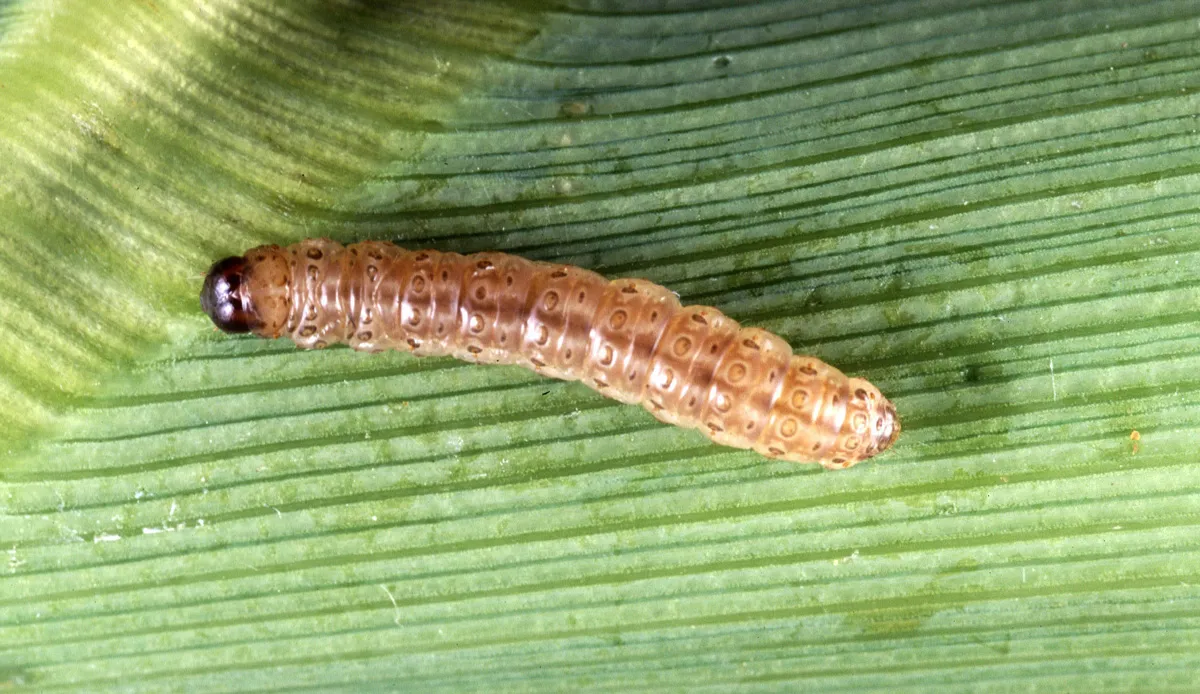
The European Corn Borer (*Ostrinia nubilalis*), a highly destructive foliar-chewing and stalk-boring caterpillar belonging to the grass moth family *Crambidae* under the order *Lepidoptera*, is a premier pest of sweet corn, maize, and various herbaceous crops globally. First introduced to North America in the early 20th century, this pest causes extensive economic damage. While young larvae feed externally on leaves, older larvae bore directly into plant stems, whorls, and corn ears. This internal feeding systematically hollows out stalks, disrupting nutrient transport and leading to severe lodging (stalk breakage).
Identifying a corn borer infestation involves checking leaves for early feeding and stalks for entry holes. Early damage appears on leaves in the whorl as a distinctive line of small, circular 'pinholes' chewed across the blade. As the larvae grow, they bore into the stalks, leaving behind visible entrance holes plugged with sawdust-like fecal waste called 'frass.' Slicing open an infected stem reveals long, hollowed-out galleries containing the 2.5-cm, flesh-colored or pale-grey caterpillars with small dark spots. Feeding inside ears causes broken tassels and rotted, insect-damaged kernels.
While sweet corn and field maize are the primary hosts, corn borers are highly polyphagous, targeting over 200 species of vegetables, ornamentals, and weeds.
| Affected Crops / Plants | Severity Rating | Damage Symptoms |
|---|---|---|
| Sweet Corn, Field Maize | Extreme (⭐⭐⭐) | Stalk tunneling, broken tassels, lodged stems, kernel rot in ears |
| Bell Peppers, Potatoes, Tomatoes | High (⭐⭐) | Bored fruits, entry wounds causing soft rot, stem lodging |
| Dahlias, Gladiolus, Zinnias | Medium (⭐) | Stem tunneling, hollowed flower stalks, localized wilting |
Corn borers overwinter as mature larvae inside old crop stalks left in the field. In late spring, they pupate and emerge as yellowish-brown adult moths. Females lay flat, fish-scale-like white egg masses on leaf undersides, hatching in 3 to 7 days, with 1 to 4 overlapping generations per year depending on the climate. Organic management relies on shredding and plowing under corn stubble in winter, releasing *Trichogramma* parasitic wasps to destroy eggs, or applying *Bacillus thuringiensis* (Bt) into the leaf whorls when larvae are young and feeding externally. Chemical control uses foliar spinosad or permethrin, though timing is critical before larvae bore inside stems. For complete agricultural guides, browse our Plant Disease Identifier Hub, or explore similar chewing pest profiles like Cutworms, Armyworms, and Bagworms.
Taxonomy & Features
- Internal Stalk Boring: Caterpillar bores directly inside corn stalks and pepper fruits, hollowing them out and causing stem breakage and ear rot.
- Diagnostic Pinholes: Symmetrical lines of small pinholes chewed across emerging leaf blades indicate active early larval feeding in whorls.
- Stalk Frass Plugs: Entry holes on stems are visibly plugged with wet, sawdust-like golden-brown fecal waste called frass.
- Stubble Overwintering: The caterpillar spends the winter inside dry, untreated corn stalks left standing in the field after harvest.
- Trichogramma Bio-Control: Releasing parasitic Trichogramma wasps destroys up to 90% of corn borer eggs before the destructive larvae hatch.
- Lethal Bt Whorl Spray: Applying biological Bacillus thuringiensis (Bt) directly into the leaf whorl targets young caterpillars while they feed externally.
Seasonal Outbreak Calendar
Outbreak risk and activity timeline for Corn Borer based on seasonal climate patterns:
Names in Different Languages
Affected Plant Species
Vegetables & Crops
- Sweet Corn
- Bell Pepper
- Potato
- Tomato
- Snap Beans
- Celery
Flowers & Ornamentals
- Dahlias
- Gladiolus
- Zinnias
- Chrysanthemums
- Cosmos
Fruits & Berries
- None
Prevention & Cure
Natural & Organic Methods
- Winter Crop Sanitation: Chop, shred, and plow under all corn stalks and vegetable stubble at least 6 inches deep in autumn to kill overwintering larvae.
- Trichogramma Wasps: Release Trichogramma parasitic wasps (Trichogramma ostriniae) in early summer to target and consume borer eggs.
- Bt Dusting: Apply biological Bacillus thuringiensis (Bt subsp. kurstaki) granules or liquid directly into leaf whorls as soon as pinhole damage is seen.
- Resistant Varieties: Grow certified Bt-maize hybrids that express insecticidal proteins, or select tolerant sweet corn cultivars.
Chemical & Professional Control
- Foliar Spinosad: Spray spinosad directly onto foliage and leaf whorls during active flight periods to eliminate feeding caterpillars.
- Pyrethroid Sprays: Apply contact sprays like bifenthrin, permethrin, or esfenvalerate when moths are actively laying eggs.
- Timing Limitation: Avoid chemical sprays once caterpillars have bored inside the stalks; they are completely shielded from surface contact sprays.
Frequently Asked Questions
Why is chemical control so difficult for corn borers?
Borer caterpillars only spend a very brief period feeding on the outer leaf surfaces after hatching. Within a few days, they tunnel directly inside the corn stalk, whorl, or fruit. Once they are inside, they are completely shielded from contact chemical sprays, making preventative timing or systemic treatments critical.
What is the 'shepherd's crook' or tassel breakage in corn?
As corn borer larvae feed inside the upper stem, they hollow out the tissue just below the corn tassel. The weakened stem can no longer support the weight of the tassel, causing it to bend sharply or break off completely under wind pressure. This broken tassel is a primary visual indicator of boring activity.
How do corn borers affect bell pepper crops?
In peppers, the adult moth lays eggs directly on the leaves or fruit calyx. The emerging caterpillar bores directly into the pepper fruit. Once inside, they feed on the seeds and inner walls, leaving behind fecal frass. This entry hole acts as a gateway for soft-rot bacteria, causing the fruit to rot and drop prematurely.
Recommended diagnostics based on crop family and symptoms:
Remedy Disclaimer & Safety Notice
This disease guide is for educational screening purposes only. Pathogen behavior, severity, and host susceptibility can vary dramatically based on seed variety, weather conditions, and regional microclimates. Chemical pesticides and organic treatments are subject to strict regional environmental regulations and registration mandates. Please verify all chemical registrations and review manufacturer safety labels carefully with local certified agronomists or agricultural extension service offices before applying.