
Iron Deficiency
Ferrum Deficientia
How to Identify Iron Deficiency on Tomato

Visible Symptoms
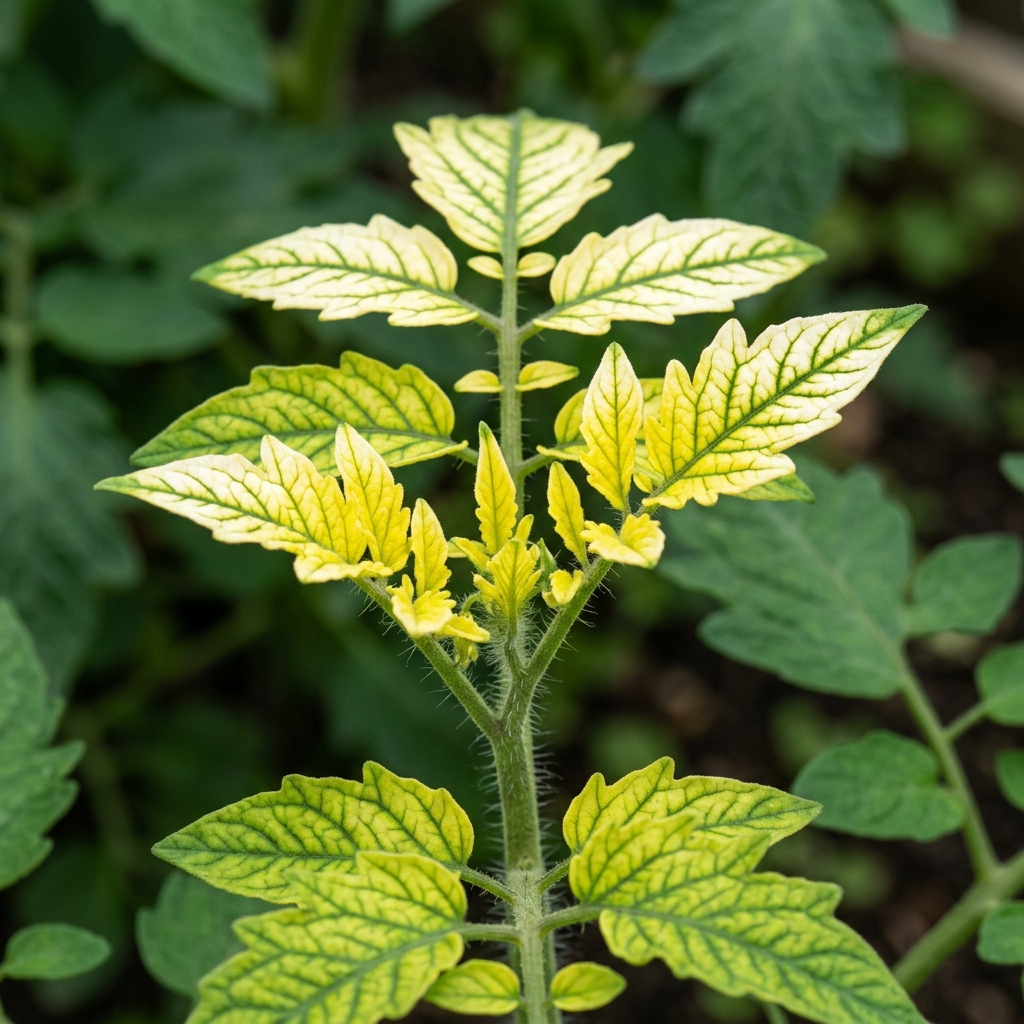
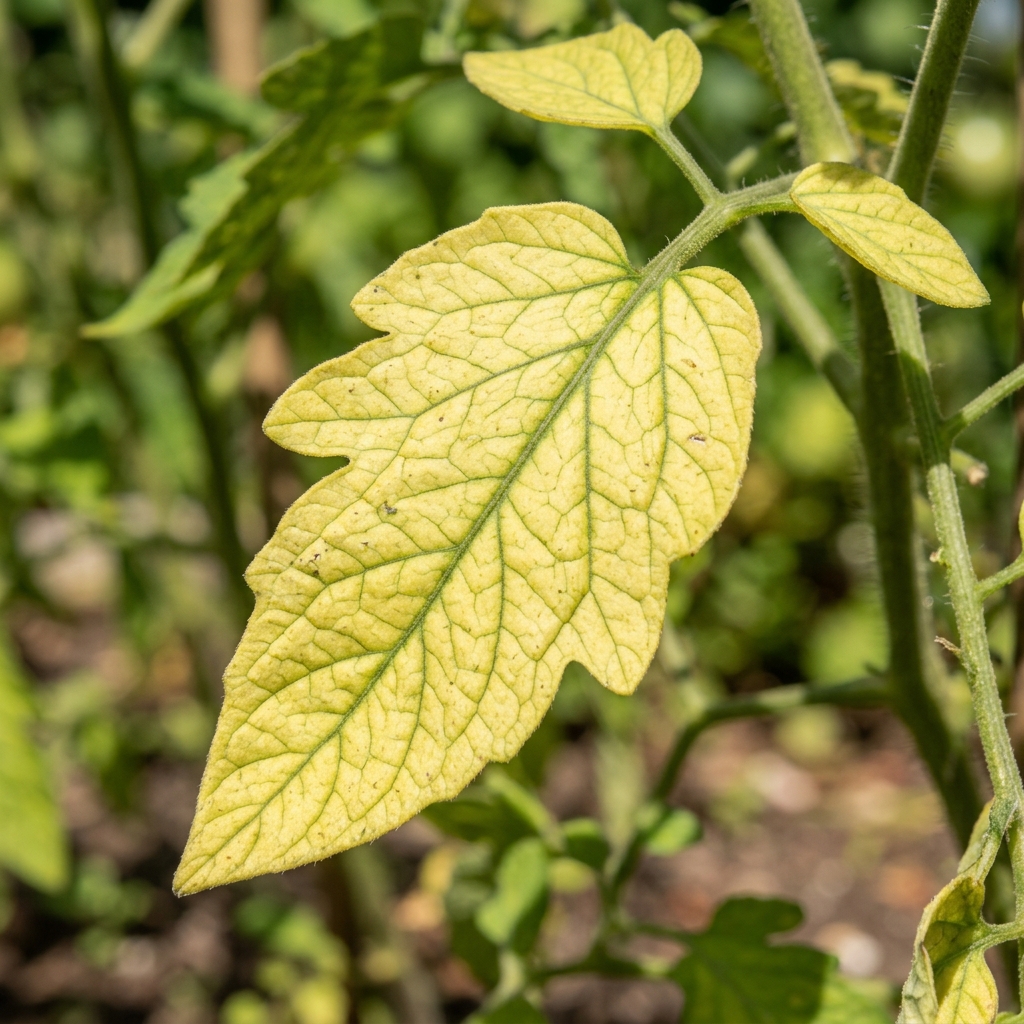
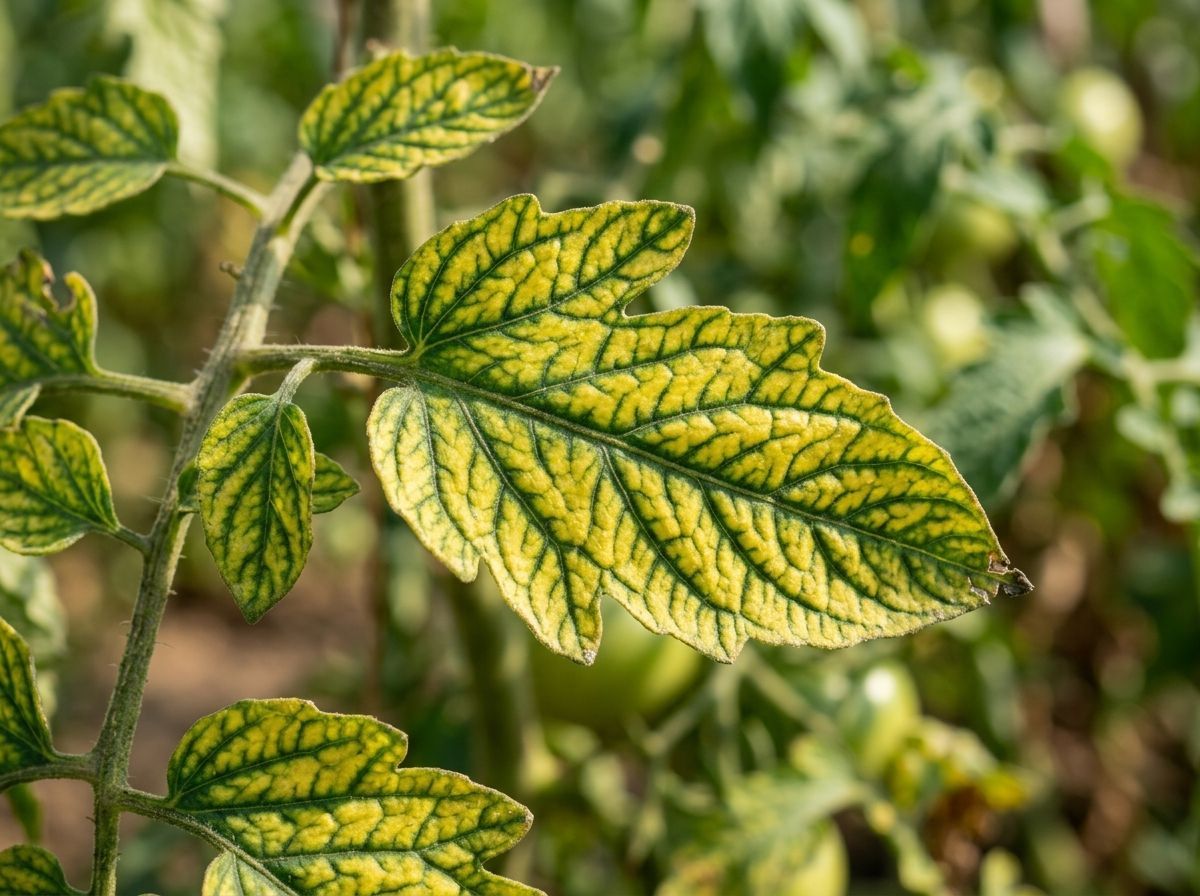
Interveinal chlorosis develops on the youngest, emerging leaves at the top of the plant. The leaf blade turns pale yellow or white, while even the finest veins remain dark green. In severe cases, new leaves emerge completely bleached.
About Iron Deficiency
Iron deficiency typically occurs in calcareous or alkaline soils (pH > 7.0) where iron becomes insoluble. Because iron is immobile in plant tissue, symptoms appear on young leaves first.
Nutrient Role & Deficiency Cause
Iron deficiency typically occurs in calcareous or alkaline soils (pH > 7.0) where iron becomes insoluble. Because iron is immobile in plant tissue, symptoms appear on young leaves first.
Seasonal Outbreak Calendar
Outbreak risk and activity timeline for Iron Deficiency based on seasonal climate patterns:
Treatment & Correction Guide
Natural & Organic Methods
Chemical & Professional Control
Frequently Asked Questions
Why do new top leaves turn yellow with green veins in tomatoes?
This classic symptom is interveinal chlorosis caused by iron deficiency. Iron is required for chlorophyll synthesis but cannot move from older tissues to new growth. The areas between veins turn yellow while veins remain dark green.
Which iron chelate should I use: Fe-EDTA or Fe-EDDHA?
Use Fe-EDDHA if your soil is alkaline (pH > 7.0) or calcareous, as Fe-EDDHA stays stable and plant-available up to pH 9.0. If your soil pH is below 6.5 or for direct foliar spraying, Fe-EDTA (12%) is effective and more economical.
Can over-watering cause iron chlorosis in tomatoes?
Yes, frequently. Waterlogged soil causes root hypoxia (oxygen starvation) and bicarbonate accumulation, which chemically deactivates iron uptake by tomato roots even when iron is abundantly present in the soil.
How quickly does foliar iron chelate work on tomato leaves?
Foliar applied Fe-EDTA or buffered ferrous sulfate begins restoring green pigment between the veins within 48 to 72 hours, with significant visual improvement across the growing tips in 5 to 7 days.
Does sulfur fix iron deficiency in tomatoes?
Elemental sulfur indirectly fixes iron deficiency in alkaline soils by biological oxidation into sulfuric acid, lowering the soil pH below 7.0 and liberating native locked iron for root uptake over 3 to 6 weeks.
Recommended diagnostics based on crop family and symptoms:
Remedy Disclaimer & Safety Notice
This disease guide is for educational screening purposes only. Pathogen behavior, severity, and host susceptibility can vary dramatically based on seed variety, weather conditions, and regional microclimates. Chemical pesticides and organic treatments are subject to strict regional environmental regulations and registration mandates. Please verify all chemical registrations and review manufacturer safety labels carefully with local certified agronomists or agricultural extension service offices before applying.