The Diagnostic Challenge: Why Accuracy Matters
For any gardener or commercial farmer, walking into a field or greenhouse to find sick, yellowing, or drooping leaves triggers an immediate urge to act. However, applying the wrong remedy can be catastrophic. Spraying a chemical fungicide on leaves that are actually suffering from a magnesium deficiency will not solve the issue and will contaminate your soil. Conversely, applying heavy nitrogen fertilizer to solve general leaf yellowing when the real culprit is root rot from overwatering will suffocate your plant's roots and accelerate its death.
Many distinct plant stressors—fungal pathogens, viral infections, insect pests, nutrient starvation, and watering issues—manifest in nearly identical visual symptoms. To save your plants, you must train your eye to look for subtle differentiators, such as leaf age, spot shapes, margins, symmetry, and turgor patterns.
This guide breaks down the ten most common visual symptoms, provides side-by-side visual comparisons using dynamic crop-specific examples, and offers clear paths to target treatment options.
Symptom Disambiguation Matrix
Use this master diagnostic table to identify the likely category of your plant's symptoms:
| Visual Symptom | Fungal / Bacterial Disease | Nutrient Deficiency | Watering / Environmental Stress |
|---|---|---|---|
| Yellowing on Lower Leaves | Water-soaked spots with yellow halos | Symmetrical yellowing starting from tips | Flaccid, limp leaves (soil saturated or bone dry) |
| Dark / Purplish Leaves | Spindle-shaped dark spots | Symmetrical purple margins/veins on older leaves | Purplish tint due to cold stress or soil compaction |
| Yellowing on Upper Leaves | Mottled, irregular mosaic patches | Sharp yellowing between green veins | Bleached or scorched leaf tops (sunscald) |
| Symmetrical Edge Scorch | Irregular, necrotic edge patches | Uniform brown margins on older foliage | Crisp brown margins on all leaves (wind/salt burn) |
| Drooping / Wilting | Sudden droop while leaves stay green | Stunted growth with drooping petioles | Limp leaves on dry soil, or yellowing on wet soil |
| Cracking & Hollow Stems | — | Corky, brown hollow stems/cores | Splitting outer skins due to sudden water surges |
1. Uniform Lower Leaf Yellowing (Chlorosis)
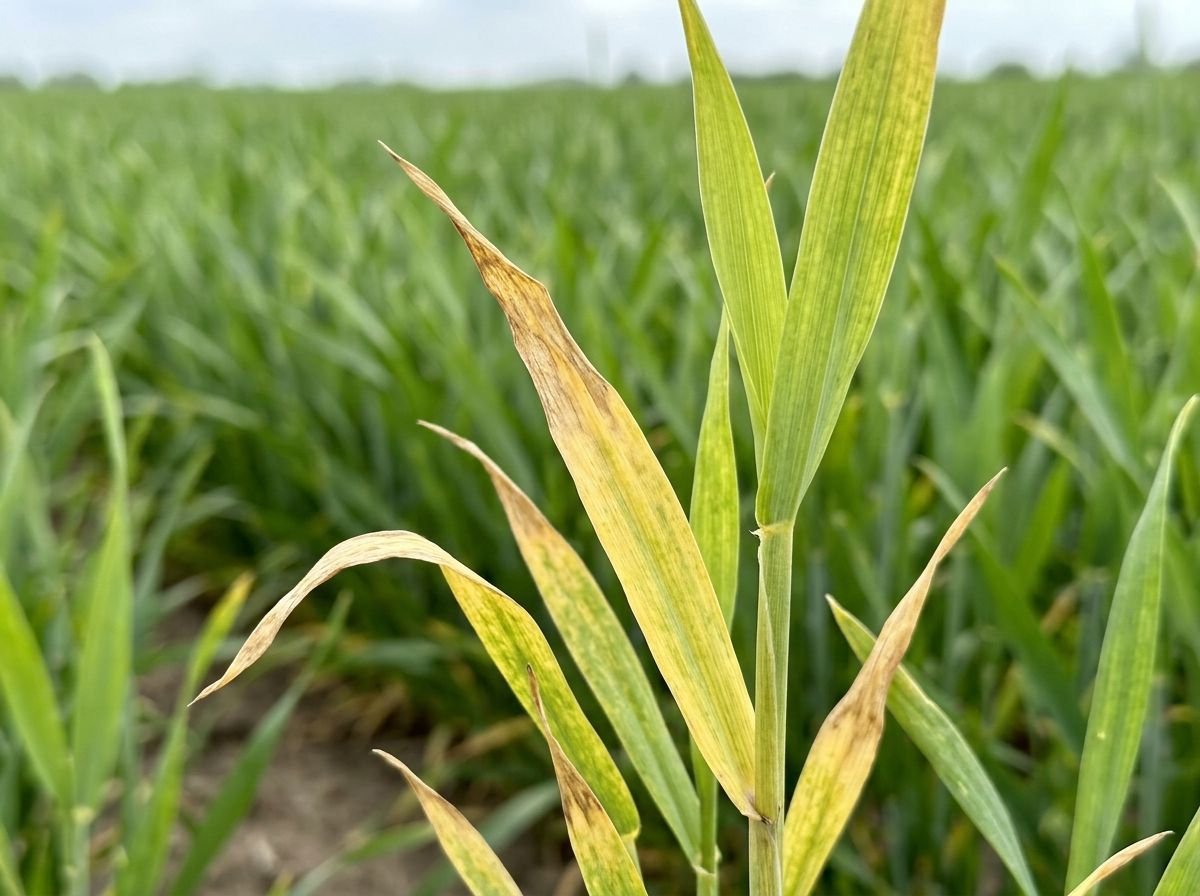
Overall yellowing of older, lower leaves is the plant's way of redirecting mobile nutrients (like nitrogen) from older foliage to support new shoots. However, it can also indicate roots suffocating from water saturation.
How to Tell the Difference
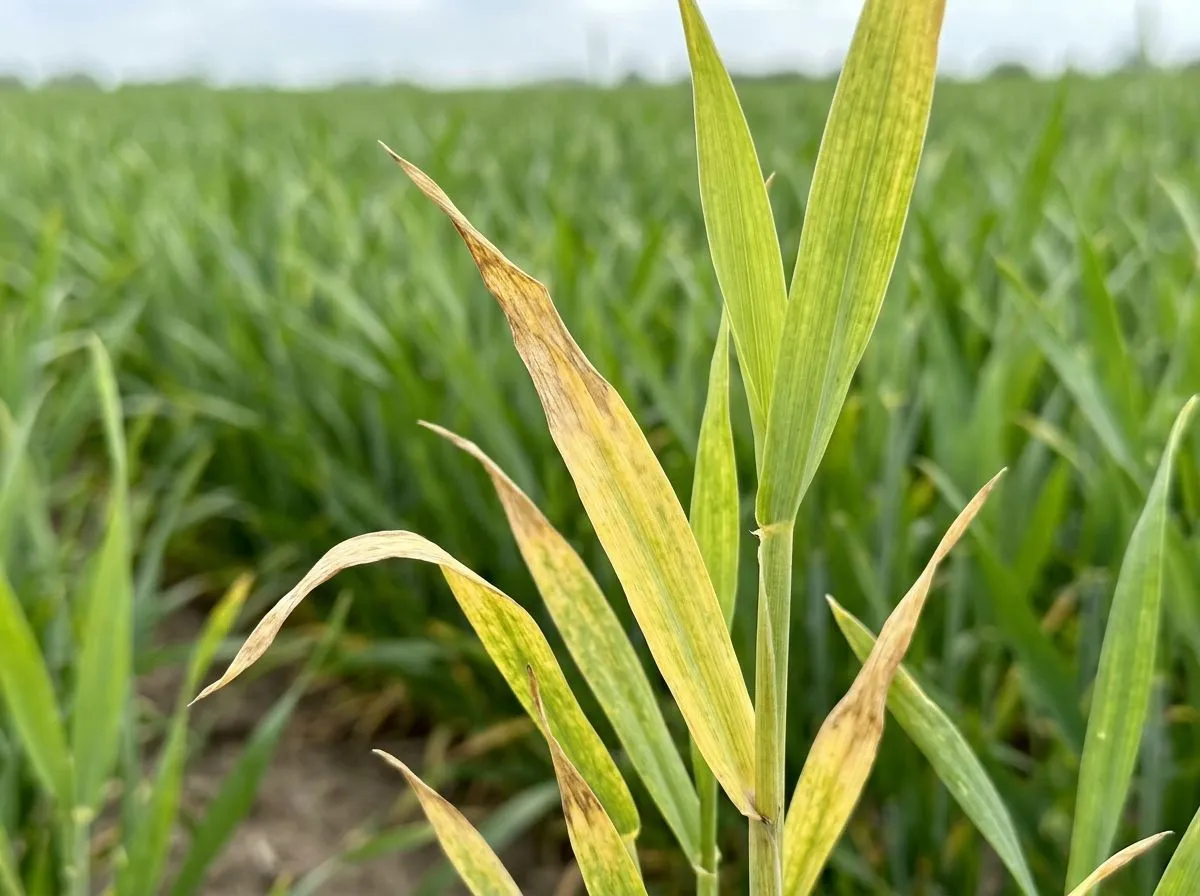
- Nitrogen Deficiency: Symmetrical yellowing that starts at the very tip of the leaf and moves down the central midrib in a V-shape. The leaf gradually dries up and falls off. The soil is usually dry or normal.
- Overwatering / Root Rot: The leaves turn pale yellow uniformly, but remain soft, limp, and bloated. Stalks feel mushy near the base. The soil is persistently saturated or muddy, emitting a sour, stagnant smell.
- Susceptible Crops: Wheat, Rice, Corn, Tomatoes, Potatoes.
- Treatment & Action: For Nitrogen starvation, apply a split-dressing of Urea or organic compost (detailed in Wheat Crop Hub). For overwatering, suspend irrigation immediately and aerate the soil.
- Prevention Tip: Avoid over-watering by letting the top 2 inches of soil dry completely between irrigations, and split nitrogen fertilizer into multiple small doses throughout the season to prevent leaching.
2. Dark Purplish Leaf Coloration (Anthocyanin Accumulation)
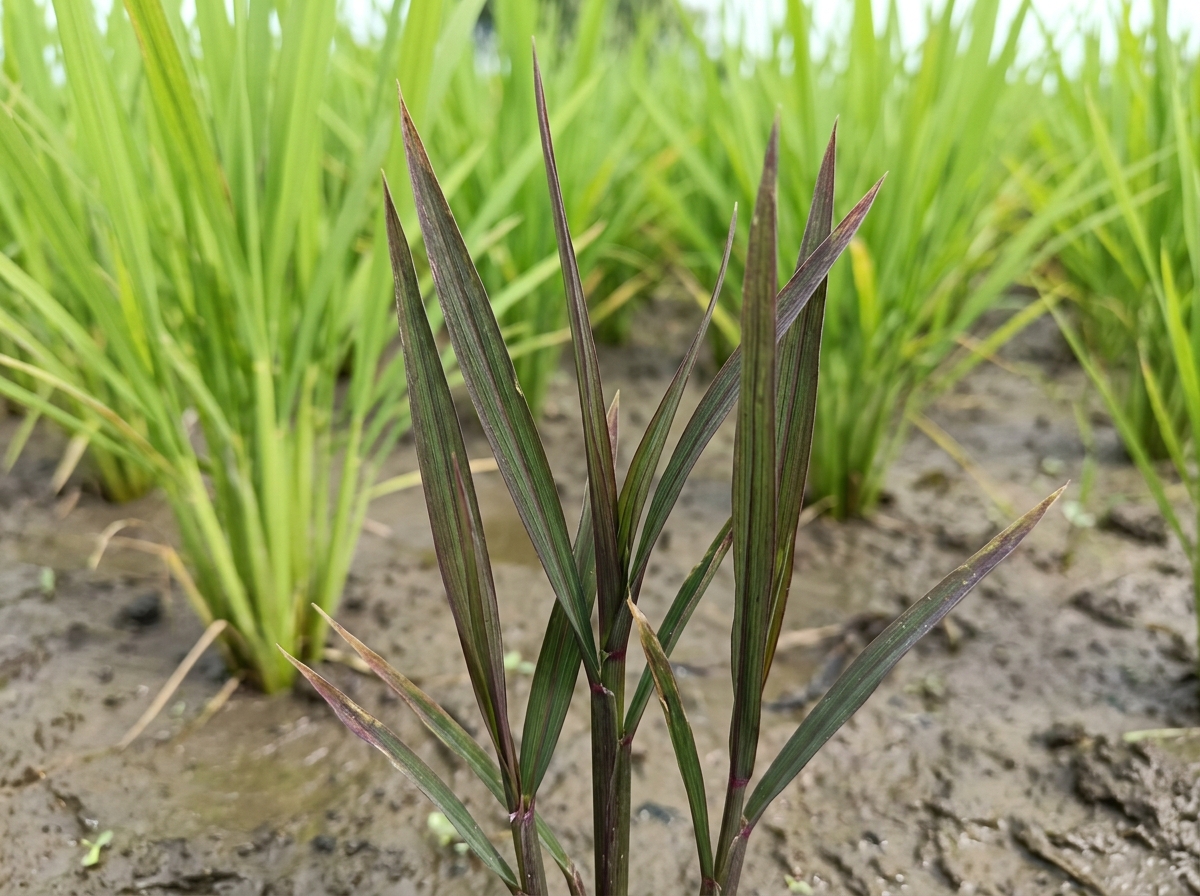
Abnormal accumulation of purple or reddish pigments (anthocyanin) in leaves is a distress signal, but it is critical to separate systemic nutrient starvation from localized fungal spotting.
How to Tell the Difference
- Phosphorus Deficiency: Leaves turn an abnormally dark green or dirty green, and develop a red-purple tint starting from the leaf tips and margins. Anthocyanin accumulation is uniform along the margins. The entire plant is severely stunted, stems are thin, and tillering is poor. No lesions are present.
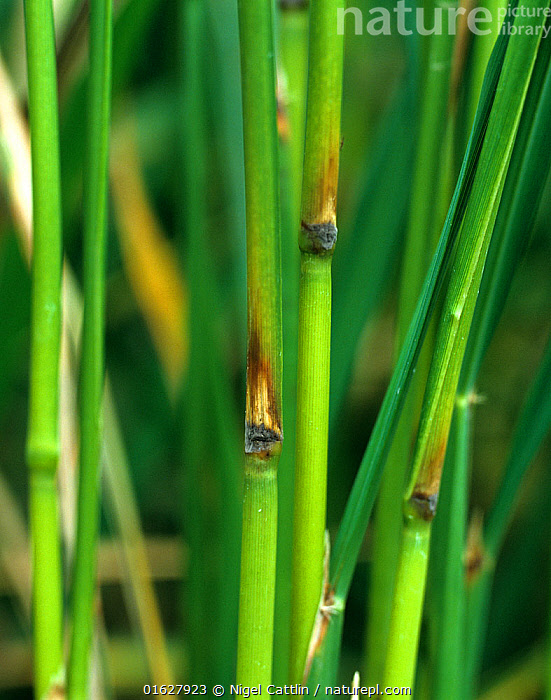
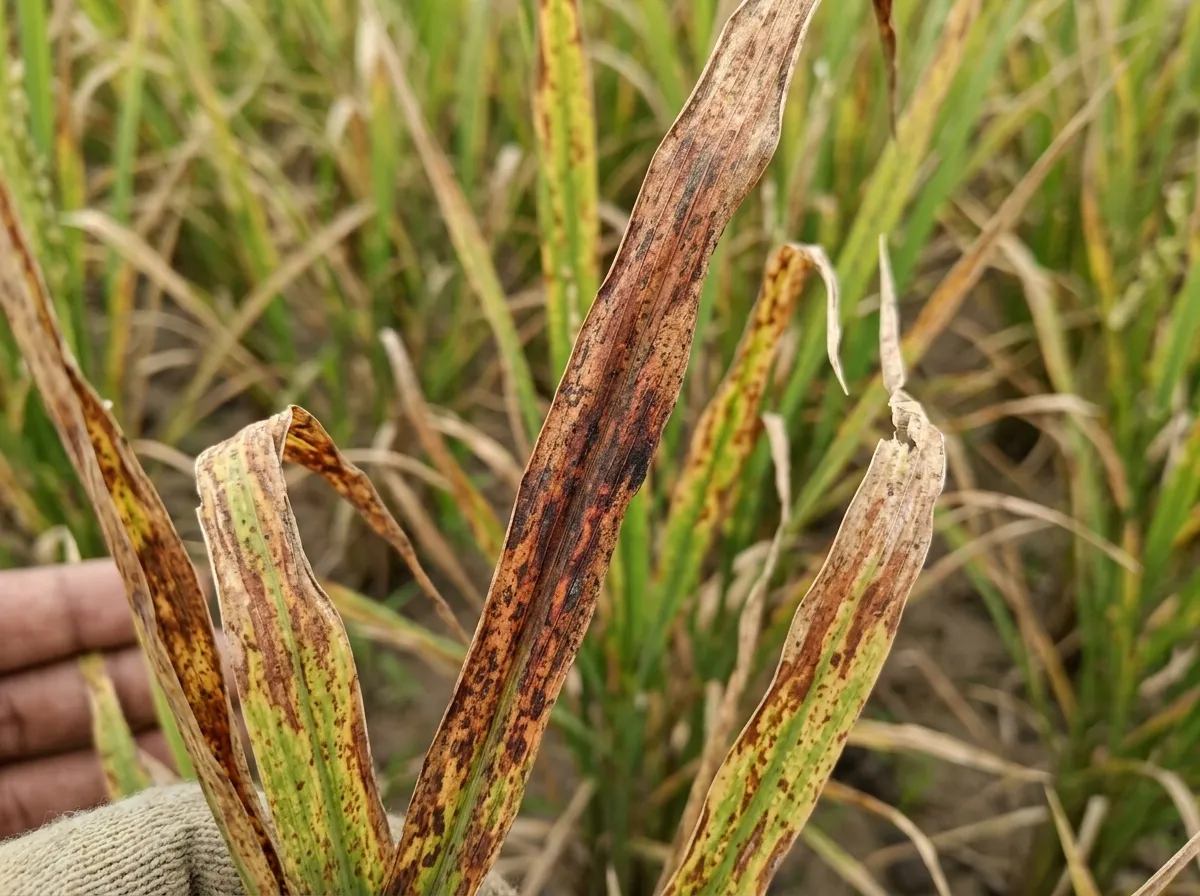
- Rice Blast: Spindle-shaped or diamond-like eye spots with ash-grey or whitish centers and dark reddish-brown borders. Spots are scattered irregularly across the leaf blade and can coalesce, causing the leaf to dry out and collapse.
- Susceptible Crops: Rice (Paddy), Wheat, Corn, Tomatoes.
- Treatment & Action: For Phosphorus deficiency, apply rock phosphate, bone meal, or Diammonium Phosphate (DAP) basal dressing (detailed in Rice Crop Hub). For Rice Blast, apply Pseudomonas fluorescens bio-sprays or organic copper-based fungicides (detailed in Rice Blast Profile).
- Prevention Tip: Keep soil pH close to neutral (6.0–7.0) to prevent phosphorus from binding with iron/aluminum, and ensure adequate plant spacing to limit humidity built-up that favors blast spores.
3. Young/Upper Leaf Yellowing (New Growth)
When the youngest, emerging leaves at the top of the canopy turn yellow while the rest of the plant remains green, it points to immobile elements that the plant cannot relocate from old cells.
How to Tell the Difference
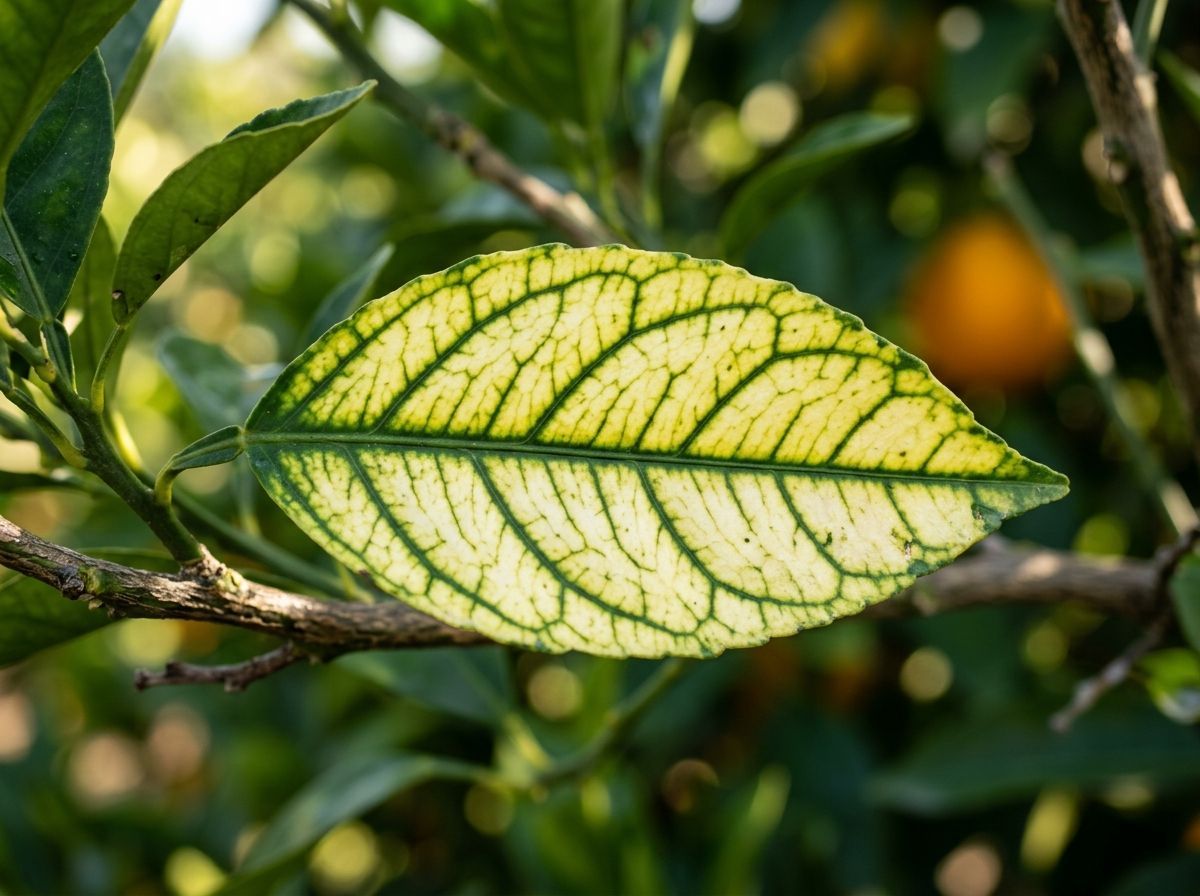
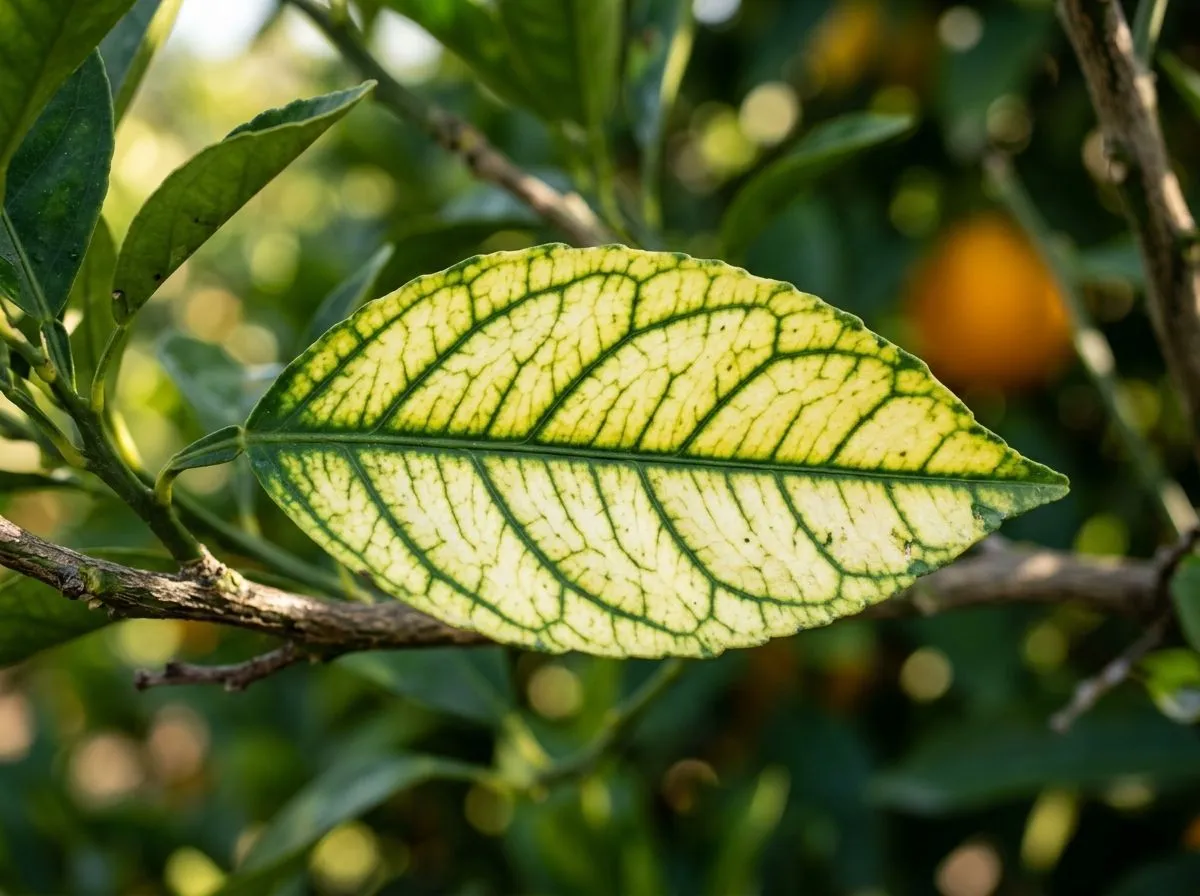
- Iron Deficiency: Interveinal chlorosis affecting new growth first. The leaf blade turns bright ivory-yellow or bleached white, but the network of veins remains sharp, detailed, and dark green. Growth is smooth.
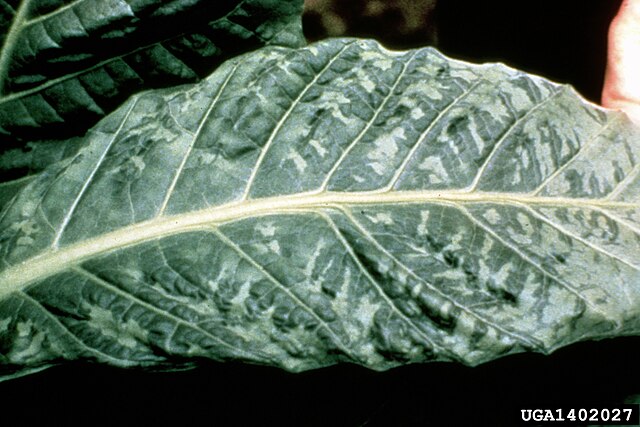
- Mosaic Virus: The yellowing is irregular, forming mottled green and yellow mosaic patches, mottling, or rings. Leaves are often warped, blistered, crinkled, or narrow.
- Susceptible Crops: Lemon/Citrus, Mango, Apple, Tomato, Pepper.
- Treatment & Action: For Iron chlorosis, apply foliar sprays of Chelated Iron (EDTA-Fe) or lower soil pH (detailed in Wheat Crop Hub). For Mosaic Virus, there is no cure; infected plants must be uprooted immediately to prevent vectors (aphids/whiteflies) from spreading the virus (detailed in Mosaic Virus Profile).
- Prevention Tip: Maintain soil pH between 6.0 and 6.5 to keep iron soluble, and use protective insect net covers to exclude the aphids and whiteflies that carry the mosaic virus.
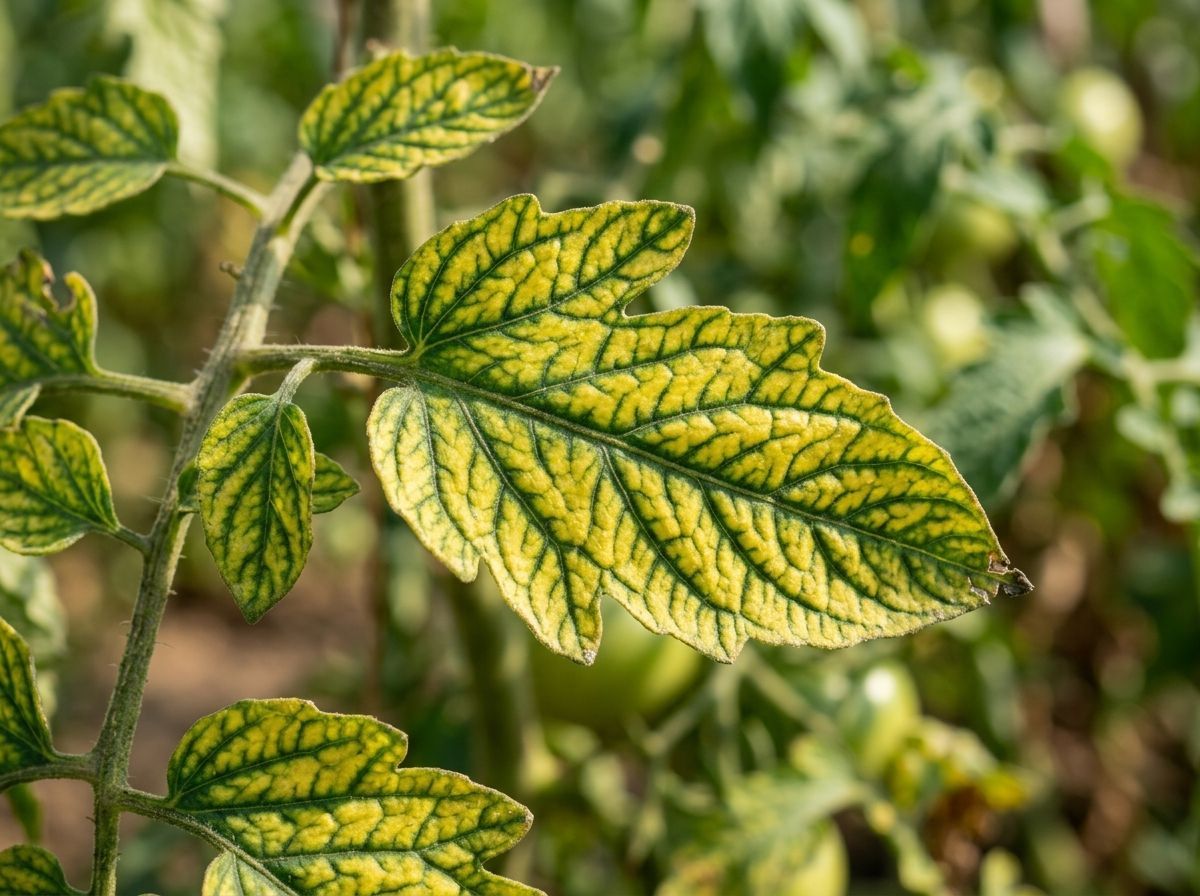
4. Interveinal Chlorosis (Green Veins, Yellow Blade)
Interveinal chlorosis occurs when leaves lack chlorophyll between their structural veins. Differentiating which leaves are affected is key to diagnosing the specific mineral missing.
How to Tell the Difference
- Magnesium (Mg) Deficiency: Chlorosis develops on older, lower leaves first. The area between the veins turns yellow, and sometimes red or purple, but a prominent V-shaped green area remains at the base of the leaf. Midribs stay dark green.
- Iron (Fe) Deficiency: Chlorosis is located on the youngest, top leaves first. Veins are highly detailed, but the interveinal tissue fades quickly to pale white.
- Susceptible Crops: Tomatoes, Potatoes, Grapes, Citrus, Blueberries.
- Treatment & Action: For Magnesium deficiency, apply Epsom Salt (Magnesium Sulfate) foliar spray (10g/L water) (detailed in Tomato Crop Hub). For Iron, apply chelated iron foliar complexes.
- Prevention Tip: Incorporate organic compost rich in dolomite limestone to supply magnesium, and avoid excessive potassium fertilization which blocks magnesium uptake.
5. Leaf Drooping & Wilting (Turgor Loss)
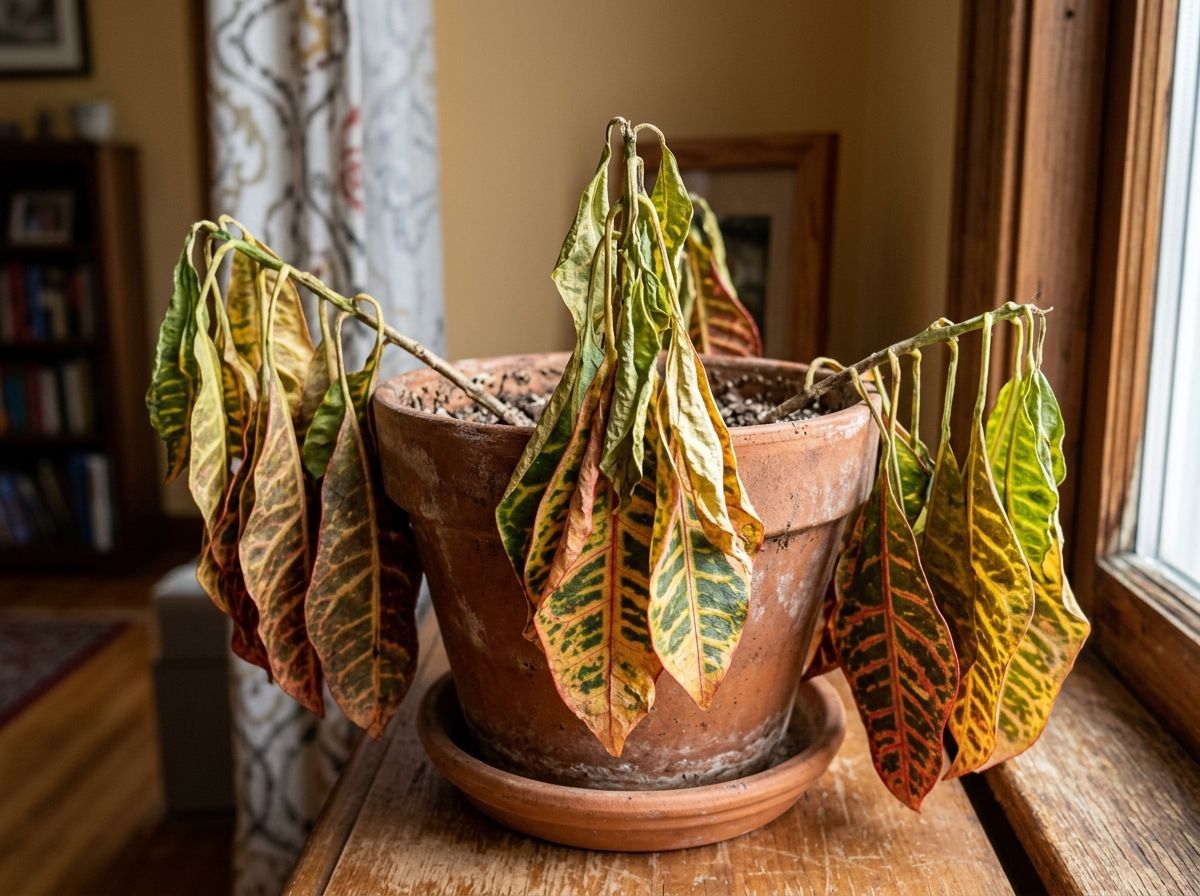
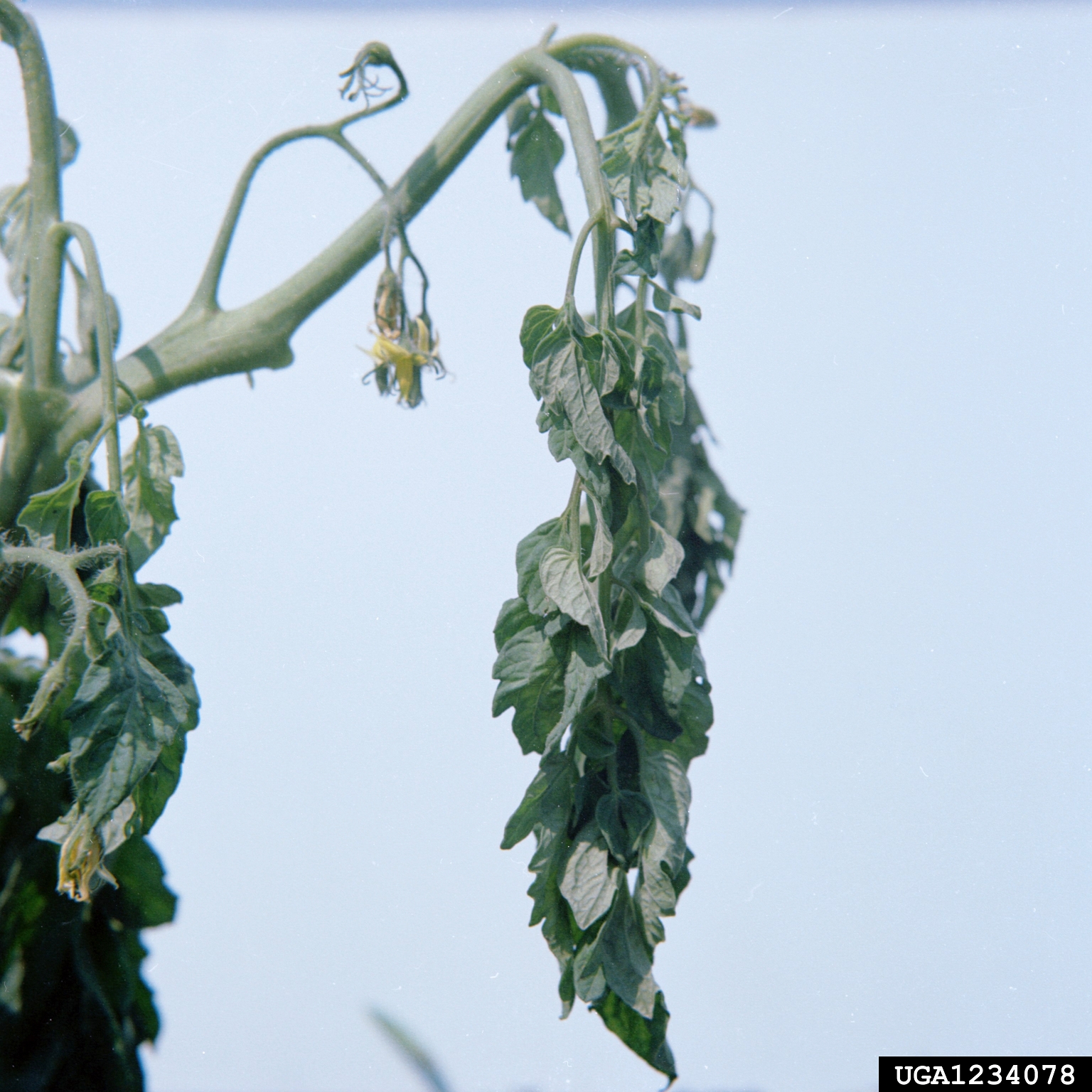
Drooping occurs when the pressure within the plant cells drops, causing leaves to sag. While dry soil is the obvious suspect, root-destroying diseases or insects blocking the stem can trigger the same response.
How to Tell the Difference
- Underwatering: Leaves of drooping-sensitive ornamental plants (like Crotons) look limp, sag downwards, and feel papery dry. The soil is bone-dry. The plant recovers turgor and perks back up within hours of a thorough watering.
- Bacterial Wilt: Leaves droop rapidly while remaining completely green, often starting with the youngest leaves. The plant does not recover after watering because bacterial cells (Ralstonia solanacearum) have physically clogged the stem's water-transporting xylem tubes. Cutting the stem reveals a brown ring inside.
- Susceptible Crops: Crotons, Tomatoes, Eggplants, Chili/Peppers.
- Treatment & Action: For underwatering, establish a consistent watering schedule. For Bacterial Wilt, immediately remove and burn the plant, solarize the soil, and do not plant susceptible solanaceous crops in the same area for 3 years (detailed in Bacterial Wilt Profile).
- Prevention Tip: Apply organic mulch around base zones to retain soil moisture, and select wilt-resistant crop varieties while practicing a strict 3-year crop rotation.
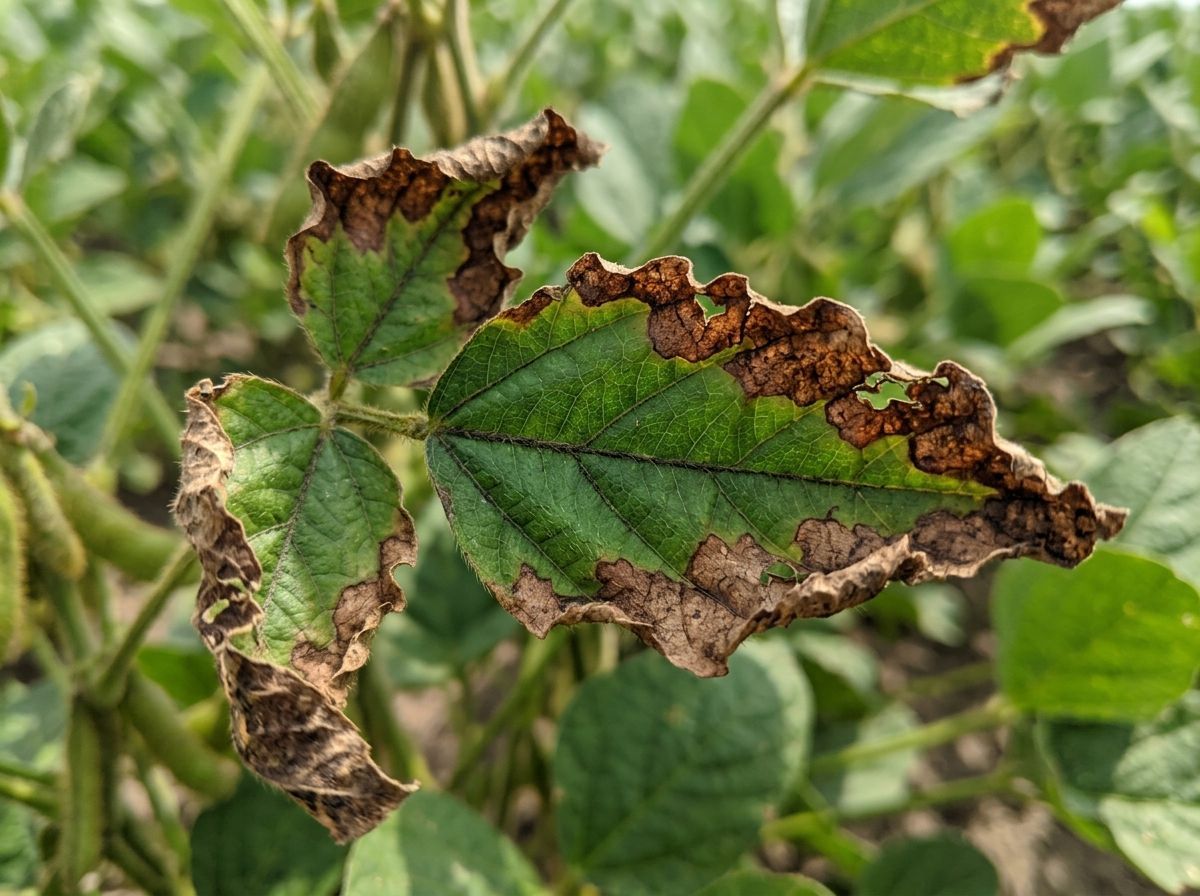
6. Symmetrical Tip and Edge Burning (Leaf Scorch)
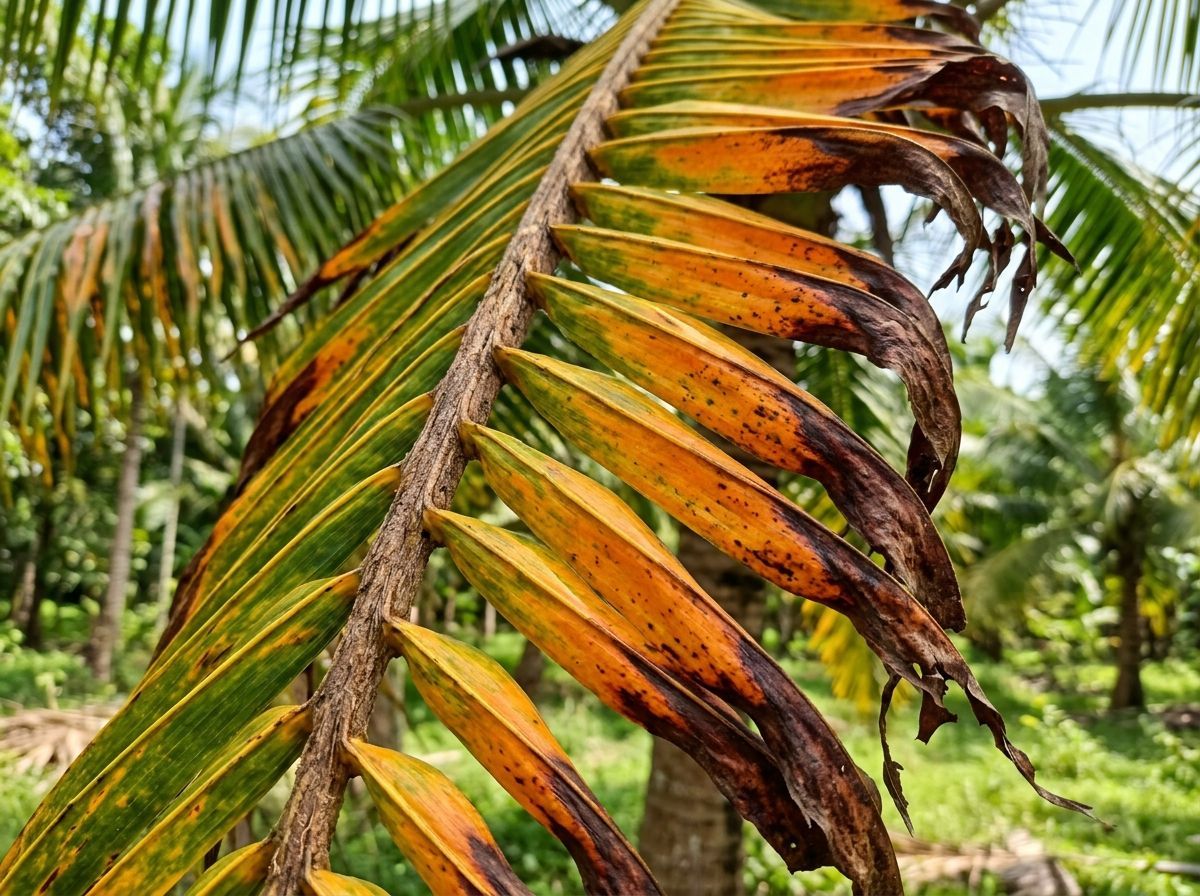
Crisp, brown, or burnt leaf margins are common visual defects, but identifying if they appear uniformly across the plant or irregularly tells the story.
How to Tell the Difference
- Potassium Deficiency: Scorching begins at the leaf tip and progresses symmetrically down the margins of older leaves. Leaf margins turn yellow, then brown and dry. Stems become weak, and in grains, crops collapse (lodging).
- Fertilizer / Salt Burn: Margins turn crispy brown and curl upward or downward in a highly irregular, non-symmetrical pattern across both old and new leaves simultaneously. White salt crusts may appear on the soil surface.
- Susceptible Crops: Coconut, Banana, Tomato, Cotton, Soybean, Wheat.
- Treatment & Action: For Potassium deficiency, apply Muriate of Potash (MOP) or Sulfate of Potash (SOP) (detailed in Coconut Crop Hub). For fertilizer burn, flush the soil with generous amounts of clean water to leach out excess salts.
- Prevention Tip: Apply potassium in small split dressings rather than a single large application, and flush soil periodically with rain or RO water to leach out built-up chemical fertilizer salts.
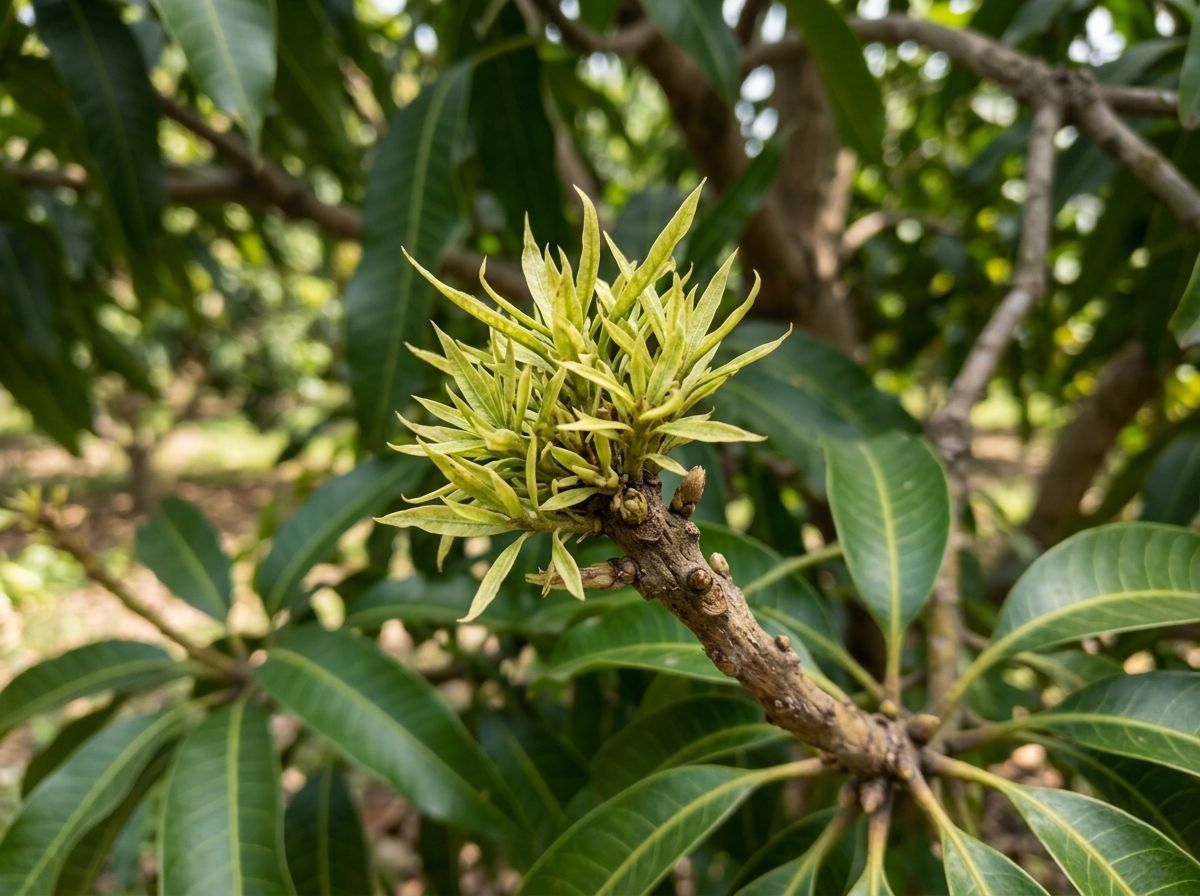
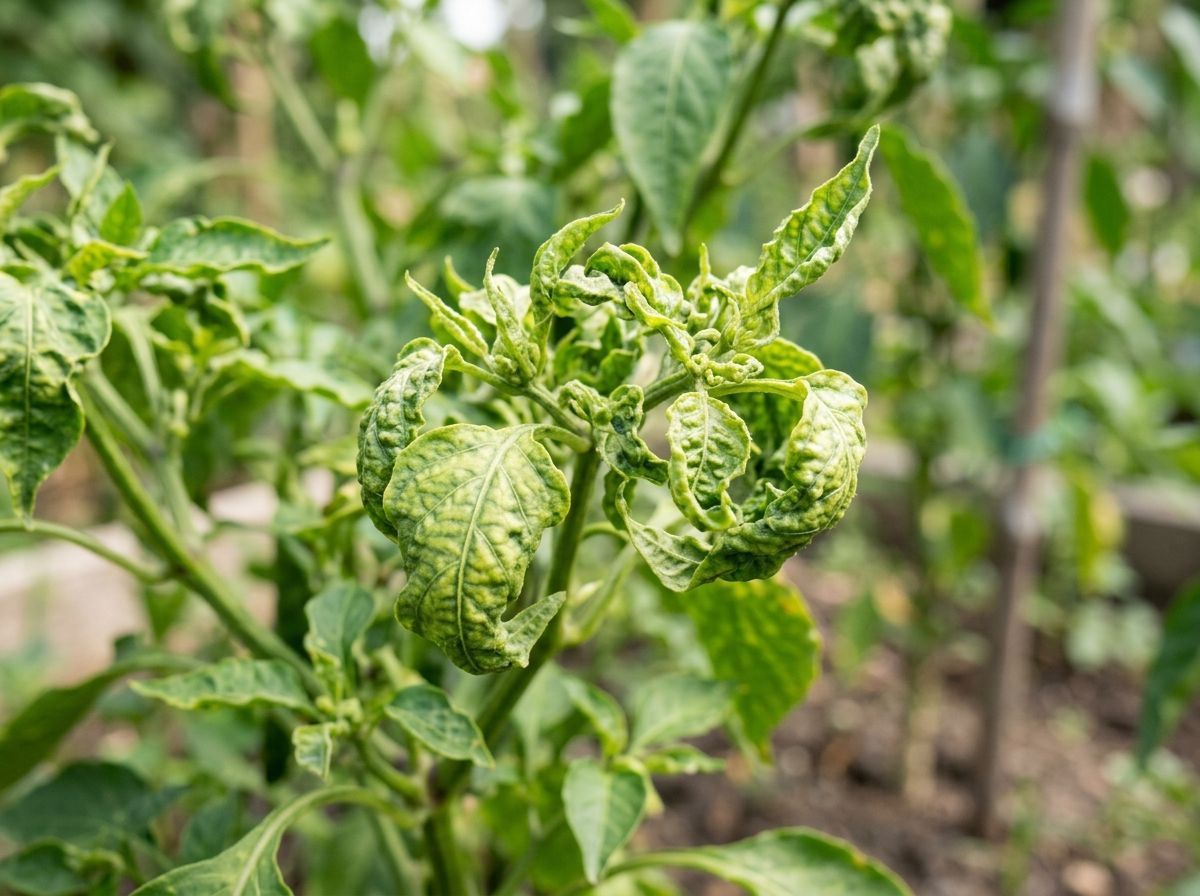
7. Leaf Curling, Twisting, & Rosetting
When a plant stops growing vertically and starts producing tightly bunched, wrinkled, or curled leaves, the problem lies with cell expansion hormones or sucking insects.
How to Tell the Difference
- Zinc Deficiency: Triggers a condition known as 'Little Leaf' or 'Rosetting'. Stems fail to elongate between nodes, causing leaves to grow extremely small, narrow, and clustered in a tight, rosette-like bundle. The leaves are small but have regular flat margins.
- Viral Leaf Curl: Leaves are twisted, curled heavily upwards or downwards, puckered, and show green-yellow mottling. Look for tiny, active insects (aphids, thrips, or whiteflies) on the undersides of the leaves that vector the virus.
- Susceptible Crops: Mango, Citrus, Guava, Chili, Tomato, Eggplant.
- Treatment & Action: For Zinc deficiency, spray 0.5% Zinc Sulfate (ZnSO₄) twice at 15-day intervals (detailed in Mango Crop Hub). For viral leaf curl, apply organic insecticide sprays (Neem oil, sticky traps) to control the insect vectors.
- Prevention Tip: Apply chelated zinc during early vegetative stages, and spray cold-pressed neem oil weekly to suppress sucking thrip and whitefly vectors before they can transmit leaf curl virus.
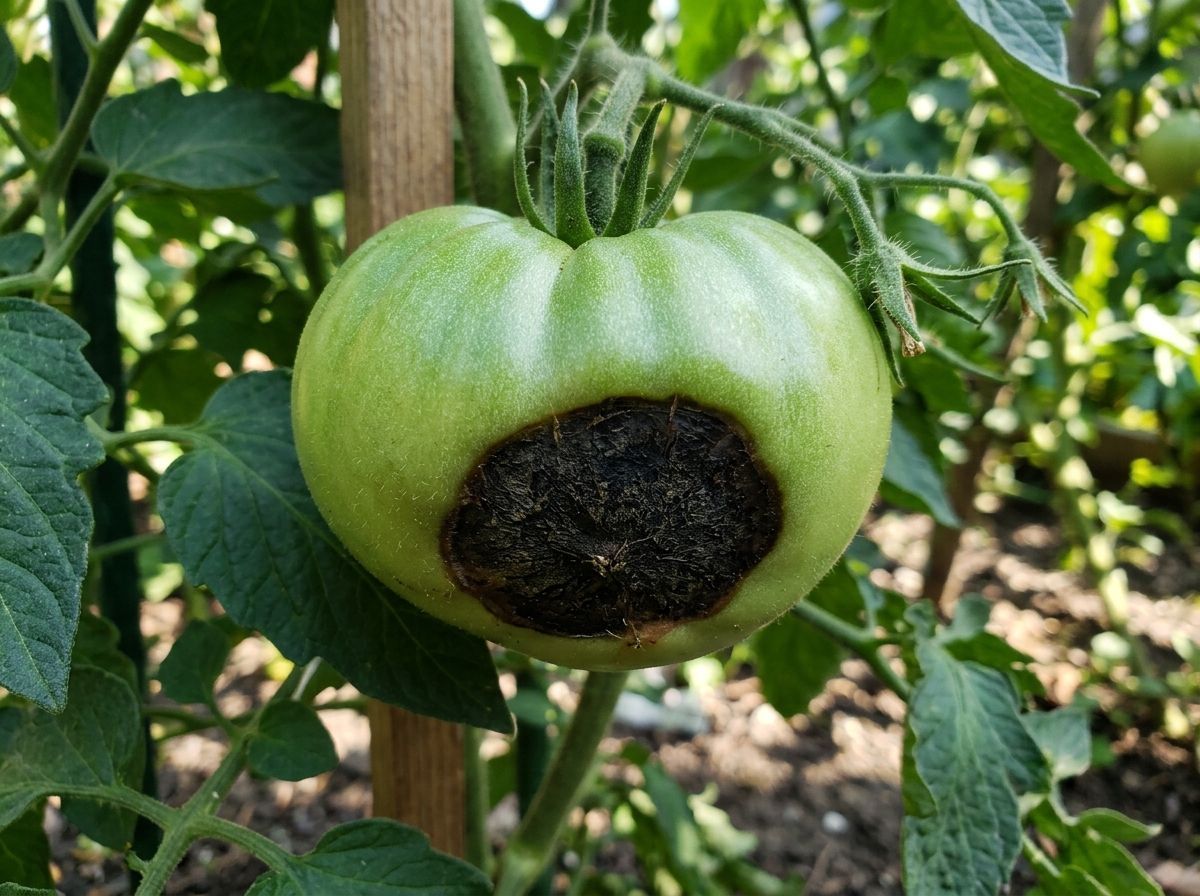
8. Blossom End Rot & Bottom Rot
Black or brown patches at the blossom end (bottom) of developing fruits are highly frustrating, but the root cause could be a calcium transport block rather than a fungal rot.
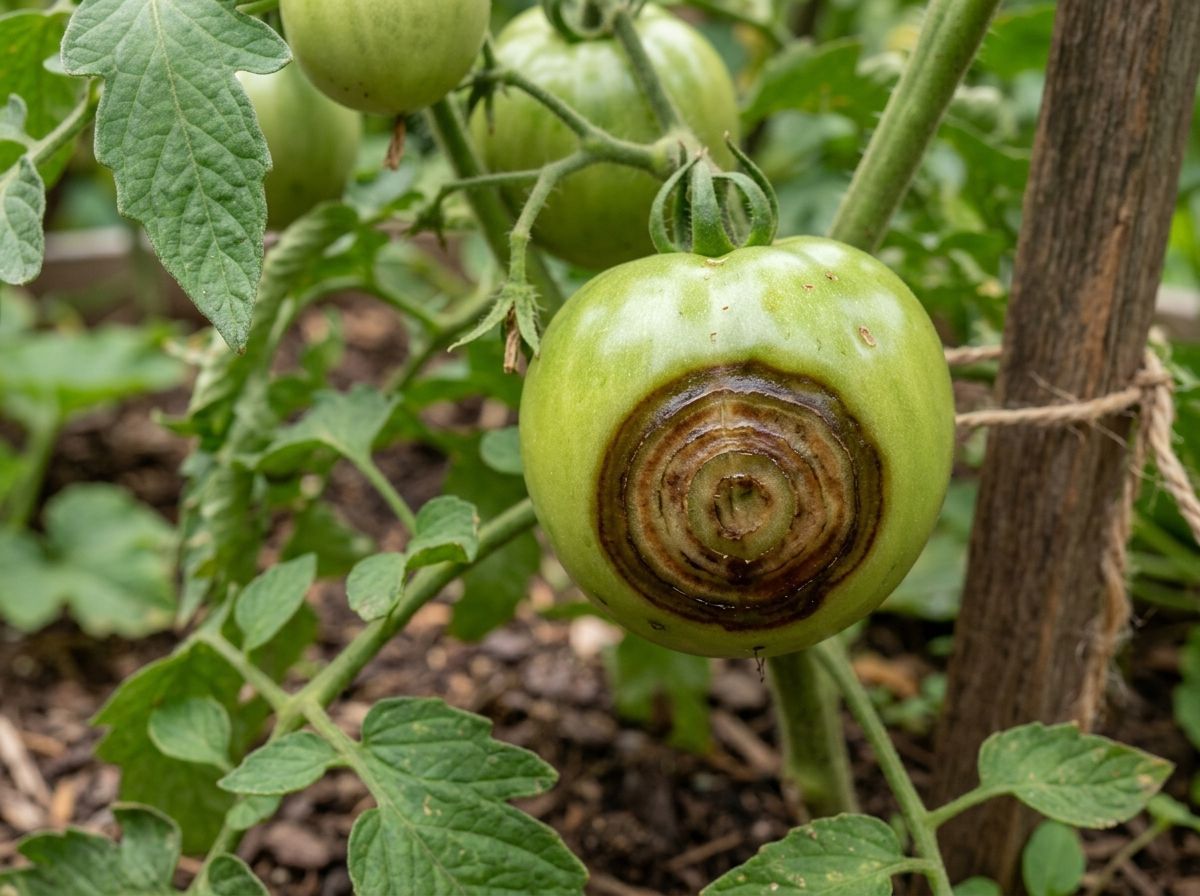
How to Tell the Difference
- Blossom End Rot (Calcium Deficiency): A flat, dry, leathery, sunken black or dark brown patch strictly located at the bottom (blossom end) of the fruit. This is caused by lack of calcium in the fruit tissue, often driven by irregular watering.
- Phytophthora Buckeye Rot: An irregular, water-soaked, soft rot that can appear anywhere on the fruit surface. It forms distinct concentric light and dark brown rings (resembling a buckeye) and turns the fruit mushy. It thrives in wet soil.
- Susceptible Crops: Tomatoes, Chili, Peppers, Eggplant.
- Treatment & Action: For Blossom End Rot, apply gypsum (Calcium Sulfate) to the soil, water consistently, or apply a foliar spray of 0.5% Calcium Nitrate (detailed in Tomato Crop Hub). For Buckeye Rot, improve soil drainage and apply organic copper fungicides.
- Prevention Tip: Provide steady, uniform irrigation to ensure uninterrupted calcium transport, and plant crops on raised beds to keep developing fruits off wet soil.
9. Fruit/Bulb Cracking & Hollow Centers
When developing fruits or vegetable bulbs split open or grow hollow inside, it represents a breakdown in tissue integrity.
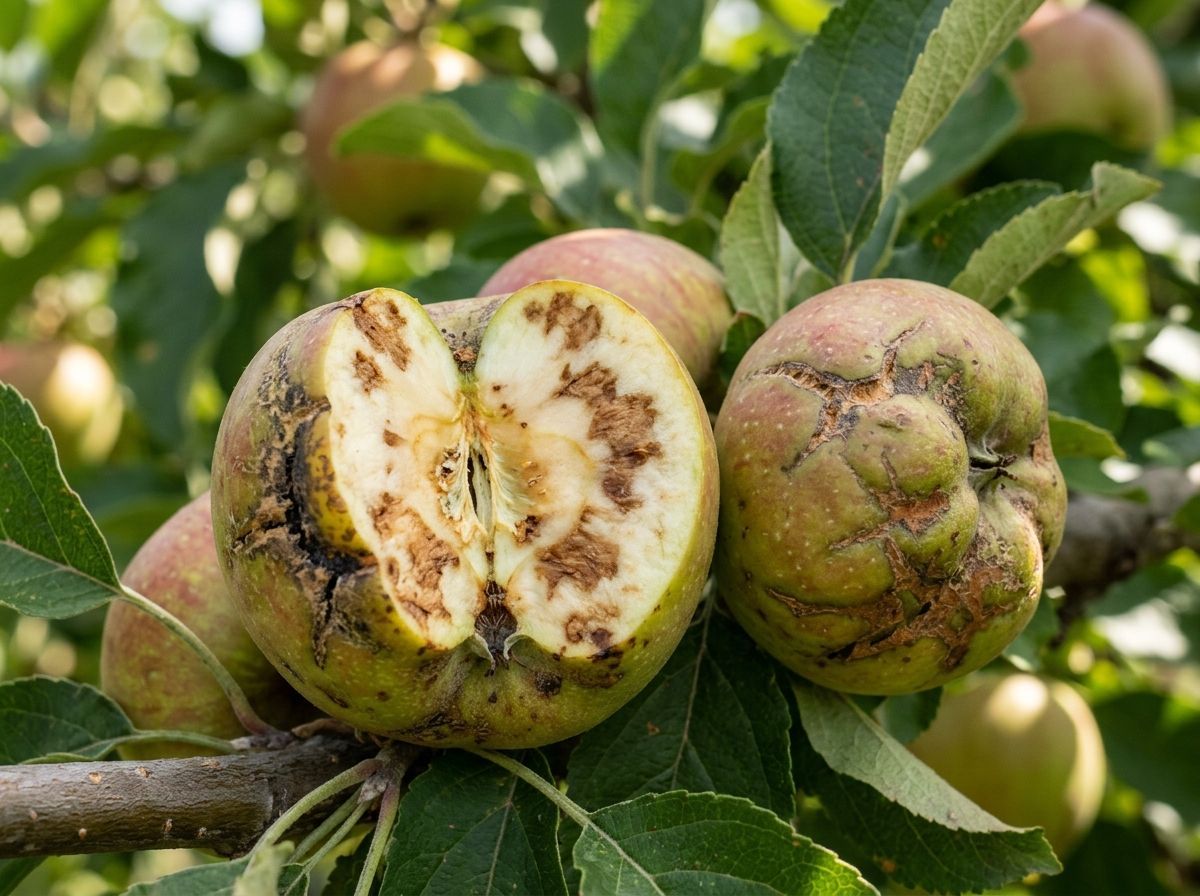
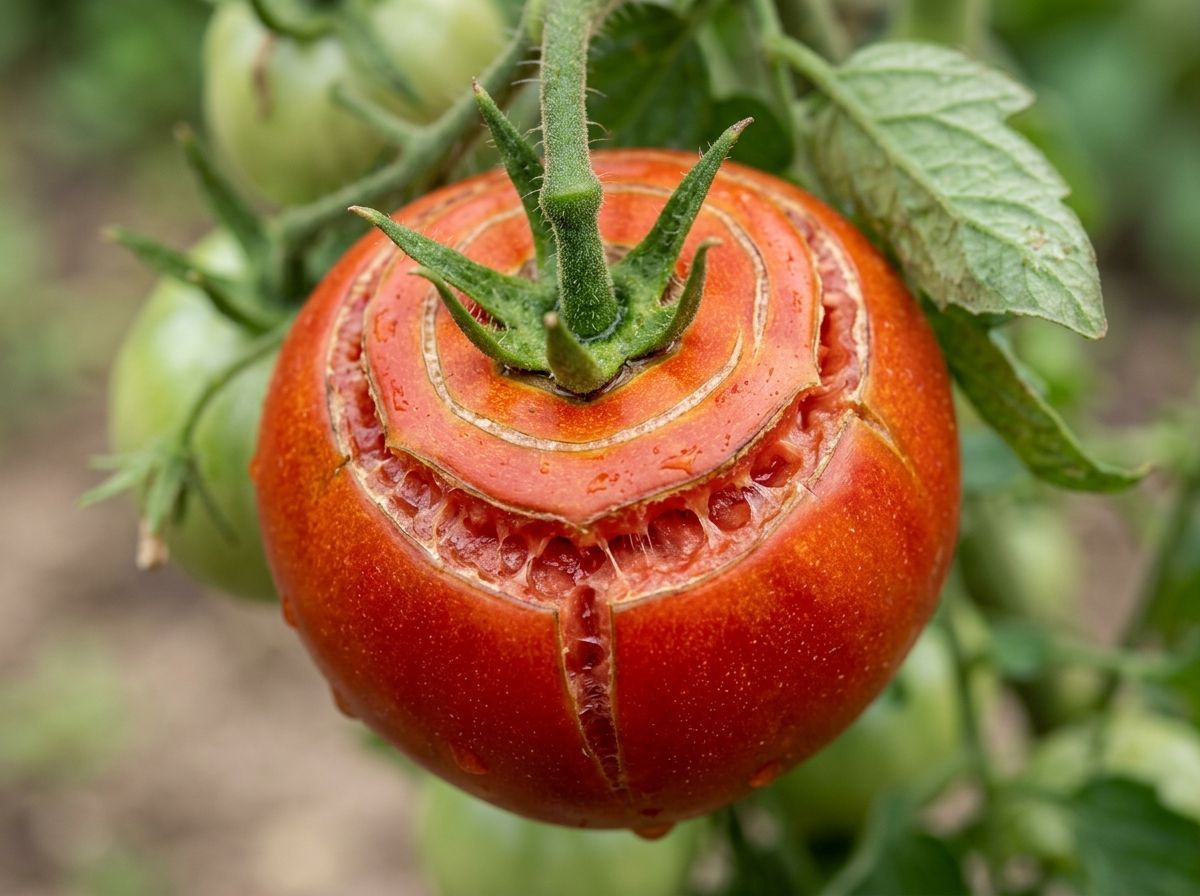
How to Tell the Difference
- Boron Deficiency: Fruits develop irregular cracking paired with corky, brown internal dead tissue. In cabbage and cauliflower, stems grow hollow and turn brown inside. Onion bulbs develop soft, corky centers.
- Water Splitting: Fruits (especially tomatoes) show clean, vertical or concentric splits in the outer skin. The internal pulp is healthy, sweet, and firm. This occurs when a heavy watering or rain follows a dry spell, forcing the pulp to expand faster than the skin can stretch.
- Susceptible Crops: Apple, Mango, Onion, Cabbage, Cauliflower, Tomato.
- Treatment & Action: For Boron deficiency, apply Borax (Sodium Tetraborate) at active flowering/growth stages (detailed in Onion Crop Hub). For water splitting, maintain consistent soil moisture and mulch beds to prevent moisture fluctuations.
- Prevention Tip: Apply borax at active flowering according to soil tests, and water crops deeply prior to expected heavy summer rainstorms to prevent sudden fruit skin splitting.
10. Defined Spots with Yellow Halos
Leaf spots are the most common symptom of plant infections. Differentiating if they are scattered irregularly or uniformly tells you if a pathogen is multiplying.
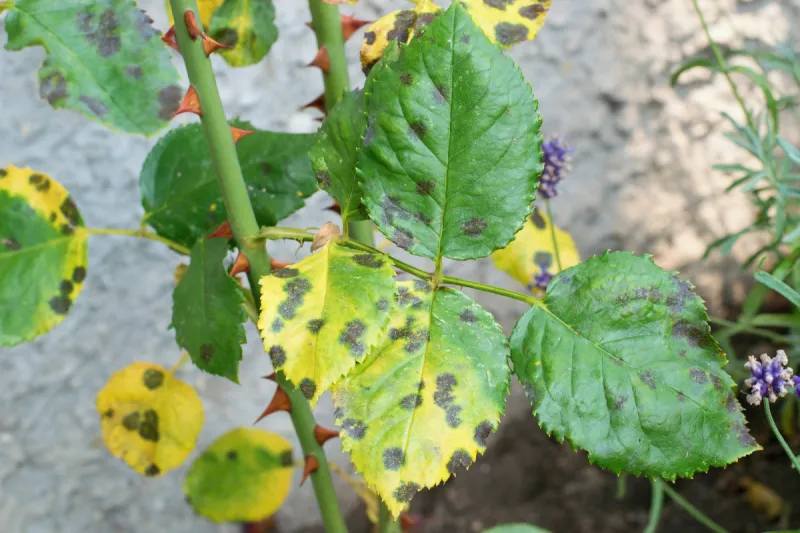
How to Tell the Difference
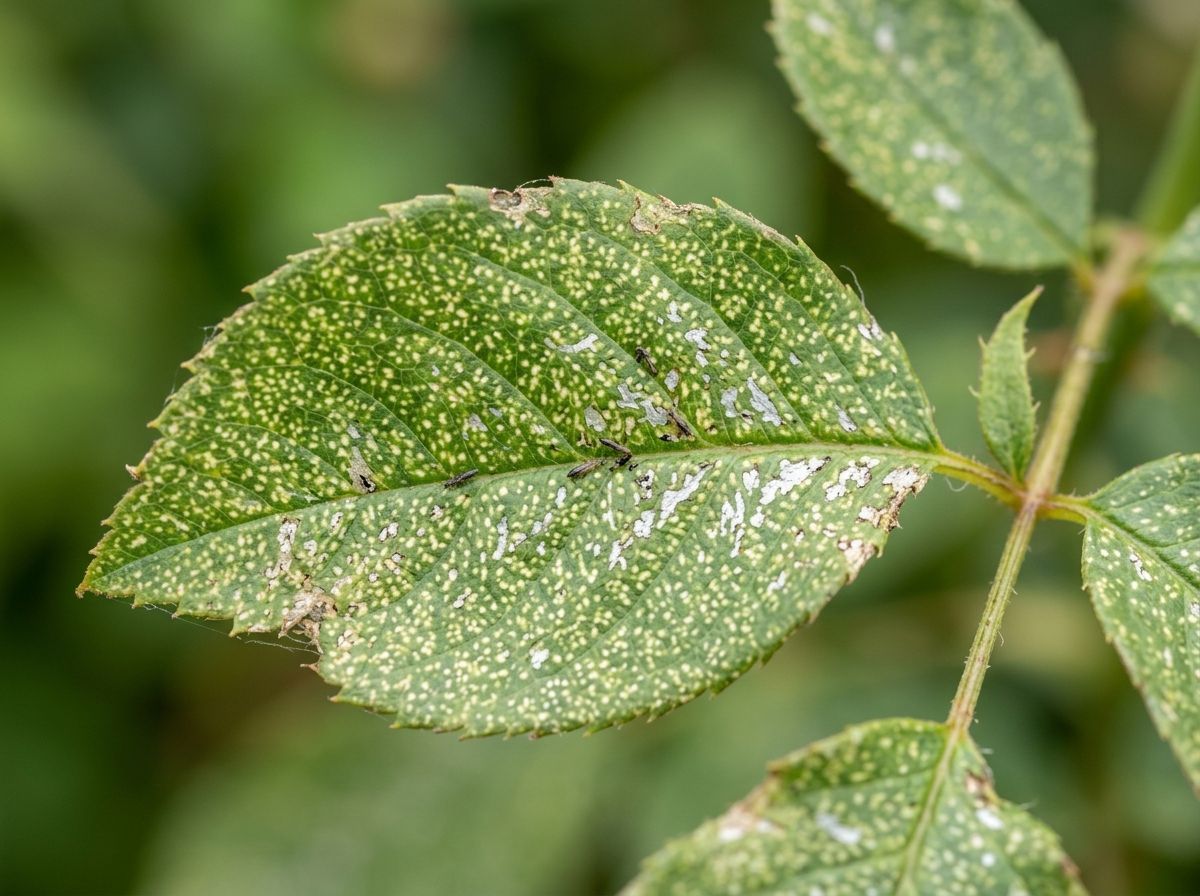
- Fungal / Bacterial Leaf Spot: Lesions are circular or spindle-shaped with defined borders, yellow halos, or dark concentric rings. Fungal mold or fuzz may be present on the undersides of the spots during humid weather.
- Pest Feeding Spotting: Damage shows up as tiny, scattered yellow-white stippling dots or silvery flecks across the leaf blade. Turn the leaf over to look for webbings (spider mites) or tiny crawling insects (thrips, aphids).
- Susceptible Crops: Grains (Rice Blast), Roses, Potatoes, Apples.
- Treatment & Action: For fungal diseases, apply organic copper fungicides or bio-sprays (detailed in Rice Blast Profile). For insect pests, apply Cold-Pressed Neem oil sprays.
- Prevention Tip: Ensure wide crop spacing for adequate canopy air circulation, avoid overhead watering, and release beneficial predatory insects to control pest thrips naturally.
Soil pH: The Hidden Driver of Nutrient Deficiencies
Many nutrient deficiencies are actually pH-driven. This means the nutrient is physically present in the soil, but is chemically locked and unavailable to the plant's roots due to soil acidity or alkalinity. Testing and correcting your soil's pH is often a necessary first step before applying fertilizers.
| Nutrient | High-Risk Soil pH | Global Regional Impact & Soil Behavior |
|---|---|---|
| Nitrogen (N) | pH < 5.5 (Highly Acidic) | Nitrification bacteria (which convert organic nitrogen to plant-available nitrates) are severely inhibited in highly acidic soils. Common in acidic forest soils globally (e.g., Pacific Northwest, Northern Europe, Southeastern US). |
| Phosphorus (P) | pH < 5.5 (Acidic) or pH > 7.5 (Alkaline) | Highly sensitive to pH. Below 5.5, phosphorus binds with Aluminum and Iron (e.g., tropical soils of South America's Amazon Basin/Brazil's Cerrado, Southeastern US red clays). Above 7.5, it binds with Calcium (e.g., calcareous soils of Western US, Mediterranean Basin, parts of North India). Optimal availability is pH 6.0–7.0. |
| Potassium (K) | pH < 5.0 (Very Acidic) | Potassium ions (K⁺) are easily leached from highly acidic, sandy soils due to low cation exchange capacity. Common in coastal plains and sandy soils globally (e.g., Western Australia, Southeastern US sandy plains, Western Europe). |
| Calcium (Ca) | pH < 5.5 (Acidic) | Leaches away rapidly under heavy rainfall in acidic soils, leading to Blossom End Rot in fruits and tip burn. Common in high-rainfall tropical/subtropical soils (e.g., Central Africa, Southeast Asia, South American rainforest belts). |
| Magnesium (Mg) | pH < 5.5 (Acidic) | Leached out in acidic, highly weathered soils. Often aggravated by heavy potassium fertilization which competes for root absorption. Common in acid-sandy soils globally. |
| Sulfur (S) | pH < 5.5 (Acidic, Sandy) | Easily leaches as sulfate (SO₄²⁻) in highly acidic sandy soils lacking organic matter. Common in highly weathered sandy soils worldwide. |
| Iron (Fe) | pH > 7.0 (Alkaline/Calcareous) | Soluble iron precipitates into insoluble forms at high pH. Common in alkaline/calcareous soils (e.g., US Midwest/Great Plains, Southern Europe, Middle East, Punjab/Haryana in South Asia, Western Australia). |
| Zinc (Zn) | pH > 7.5 (Alkaline / Waterlogged) | Zinc solubility drops by 100-fold for every unit increase in pH. Highly common in alkaline soils globally (e.g., Western US, Mediterranean soils) and flooded rice paddies post-waterlogging. |
| Boron (B) | pH > 7.5 (Alkaline) or pH < 5.5 (Acidic) | Leaches rapidly from acidic sandy soils; chemically locked up in alkaline calcareous soils. Critical for fruit/nut set globally (e.g., apple orchards of Pacific Northwest, coconut palms in sandy tropical soils). |
| Molybdenum (Mo) | pH < 5.5 (Acidic) | Unlike other micronutrients, Molybdenum availability decreases as pH drops, causing "whiptail" symptoms in brassicas. Common in acidic clay soils (e.g., Eastern Australia, parts of Southern Africa). |
Cross-Deficiency & Environmental Stress Confusion Pairs
Sometimes, it is easy to mistake one nutrient deficiency for another, or confuse a nutritional deficiency with environmental stress (like cold temperatures or soil salinity). Use this comparison matrix to tell them apart:
| Symptom Pattern | Commonly Confused With | How to Tell Apart |
|---|---|---|
| General yellowing (chlorosis) | Nitrogen (N) vs. Sulfur (S) deficiency | Nitrogen deficiency starts on the older, lower leaves first (nitrogen is mobile). Sulfur deficiency starts on the youngest, upper leaves first (sulfur is immobile). |
| Interveinal chlorosis on older leaves | Magnesium (Mg) vs. Potassium (K) deficiency | Magnesium starvation shows yellow patches between dark green veins. Potassium deficiency does not stay between veins; it quickly turns into dry, brown, scorched leaf margins. |
| Interveinal chlorosis on young leaves | Iron (Fe) vs. Zinc (Zn) vs. Manganese (Mn) | Iron causes severe, uniform yellowing/bleaching of young leaves while veins stay green. Zinc causes severely stunted, small, narrow leaves clustered in a rosette ("little leaf"). Manganese leaves show a detailed, netting "herringbone" pattern of green veins. |
| Leaf tip and margin burn | Potassium (K) deficiency vs. Salt (Sodium) toxicity | Potassium burn affects older leaves first and progresses symmetrically. Salt toxicity appears as widespread leaf margin browning across the entire plant canopy, typically linked to hard irrigation water or poor drainage. |
| Purple/bronze foliage discoloration | Phosphorus (P) deficiency vs. Cold weather stress | Cold stress causes temporary purplish anthocyanin build-up which disappears when the weather warms up. Phosphorus starvation causes persistent purpling accompanied by stunted stems and poor root development. |
| Fruit drop & poor fruit set | Boron (B) vs. Calcium (Ca) deficiency | Boron deficiency affects pollination, causing flowers to drop and young fruit to split. Calcium deficiency affects fruit cells after they have set, causing Blossom End Rot at the bottom. |
Summary N-P-K Deficiency Visual Key
- Nitrogen (N): Symmetrical yellowing starting from tips on older leaves.
- Phosphorus (P): Dark dirty green leaves with distinct purple or bronze undertones.
- Potassium (K): Dry, scorched leaf edges on older foliage.
- Calcium (Ca): Sunken, leathery black patches at the bottom of fruits (blossom end rot) and distorted, hook-tipped new leaves.
- Magnesium (Mg): Interveinal chlorosis (yellow blades, green veins) starting on older, lower leaves.
- Zinc (Zn): Extremely small, narrow, clustered leaves in a tight rosette (Little Leaf).
- Boron (B): Corky, hollow stems or internal browning combined with irregular fruit cracking.
Put Your Diagnosis to the Test
While this symptom checklist is highly effective, the absolute fastest and most reliable way to identify plant anomalies is to utilize our dynamic, camera-based AI Diagnostic Tool today!
Launch AI Disease & Deficiency Scanner
Snap or upload a clear photo of infected leaves, stems, or crop panicles to receive an instant AI disease diagnosis, severity score, and organic treatment recommendations.
Explore Rice Crop Health Hub
Explore the dedicated BioLens Mango Crop Hub for in-depth agronomic guidance on Zinc 'Little Leaf' rosetting, Boron internal necrosis, seasonal spray schedules, and organic orchard protection.
Explore Wheat Crop Health Hub
Explore the dedicated BioLens Mango Crop Hub for in-depth agronomic guidance on Zinc 'Little Leaf' rosetting, Boron internal necrosis, seasonal spray schedules, and organic orchard protection.