
Tomato Hornworm
Manduca quinquemaculata
About Tomato Hornworm
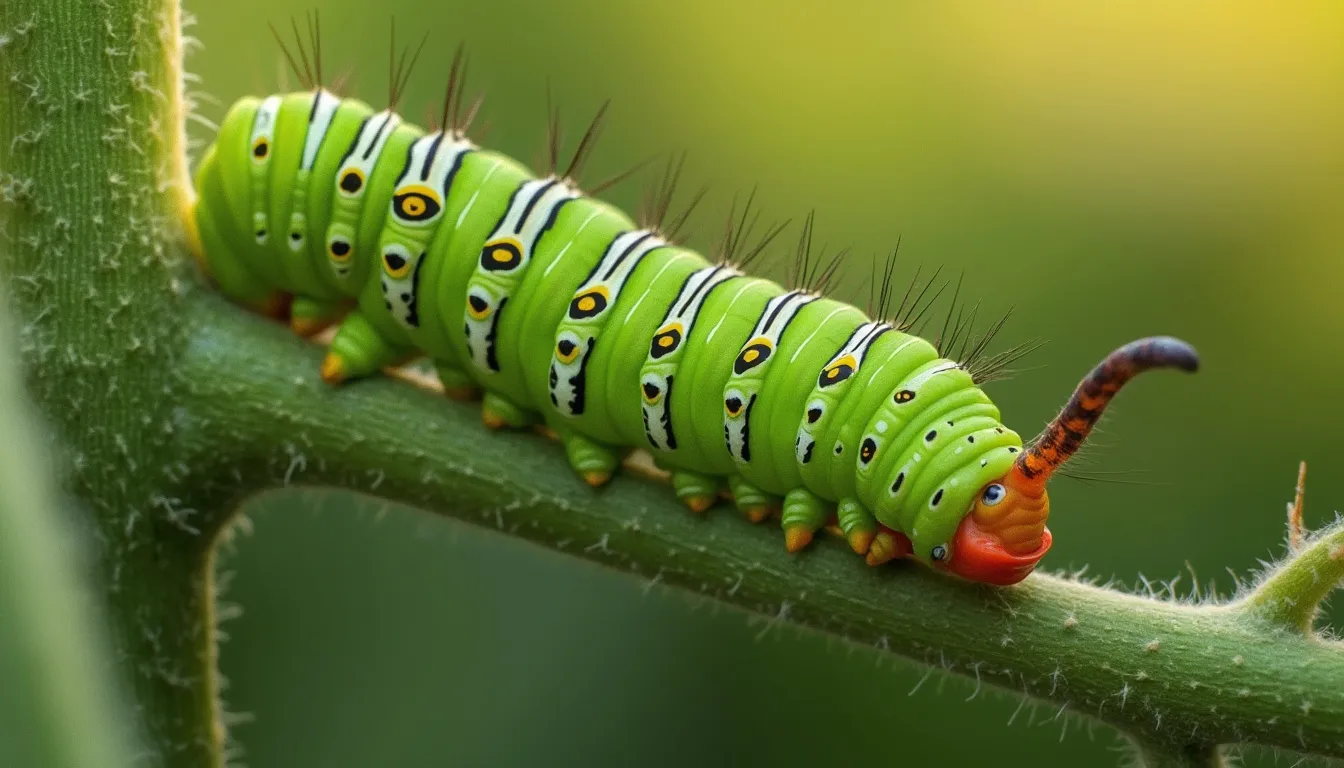
The Tomato Hornworm (*Manduca quinquemaculata*), belonging to the sphinx moth family *Sphingidae* under the order *Lepidoptera*, is one of the largest and most destructive chewing pests found in home gardens. These massive caterpillars feed voraciously on solanaceous crops, including tomatoes, eggplants, peppers, and potatoes. Due to their immense size, a single caterpillar can defoliate an entire mature tomato plant in a matter of days, chewing through leaves, stems, and immature green fruit.
Identifying tomato hornworms is simple once located, although their bright green coloration provides excellent camouflage against tomato leaves. The larvae grow up to 10 cm (4 inches) long, with eight V-shaped white markings along their sides and a prominent, dark blue-to-black horn-like projection on their rear. Their presence is usually signaled by rapid defoliation of the upper branches, leaving only bare stems, and large, dark green-to-black barrel-shaped droppings (frass) on the leaves below.
Tomato hornworms devour solanaceous garden crops.
| Crop/Plant Type | Severity Rating | Impact Description |
|---|---|---|
| Tomato & Tobacco | Extreme (⭐⭐⭐) | Total defoliation, chewed growing tips, and large deep cavities eaten into green fruits |
| Peppers & Eggplants | High (⭐⭐) | Heavy leaf loss, chewed flower buds, and skin damage to developing peppers |
| Potatoes & Petunias | Medium (⭐) | Moderate foliar stripping; plants usually recover unless infestations are dense |
Management is highly effective through handpicking due to the pest's large size. Under-canopy releases of predatory braconid wasps (*Cotesia congregata*) provide natural biological control; if you see a hornworm covered in tiny white rice-like cocoons, leave it in place so the wasps can multiply. Foliar sprays of *Bacillus thuringiensis* (Bt) or spinosad are highly effective organic options for young larvae. For complete solanaceous health advice, refer to our Plant Disease Identifier Hub, or see profiles like Late Blight, Early Blight, and Cutworm.
Taxonomy & Features
- Giant Green Body: Bright green body growing up to 10 cm (4 inches) long with a distinctive horn on the tail end.
- V-Shaped White Markings: Features 8 V-shaped white stripes along the sides of the body (distinguishing it from the tobacco hornworm).
- Heavy Droppings (Frass): Deposits large, dark green-to-black barrel-shaped droppings on leaves and beneath host plants.
- Wasp Cocoon Parasitism: Often parasitized by Braconid wasps, which spin tiny white cottony cocoons all over the caterpillar's back.
- Leaf and Fruit Devastation: Chews huge holes in leaves and eats large cavities directly out of green tomatoes.
- Night Sphinx Moth: Metamorphoses into the Five-Spotted Hawkmoth, a large grey-brown moth that hovers like a hummingbird.
Seasonal Outbreak Calendar
Outbreak risk and activity timeline for Tomato Hornworm based on seasonal climate patterns:
Names in Different Languages
Affected Plant Species
Vegetables & Crops
- Tomato
- Pepper
- Eggplant
- Potato
- Tomatillo
Flowers & Ornamentals
- Petunias
- Flowering Tobacco (Nicotiana)
Fruits & Berries
- None
Prevention & Cure
Natural & Organic Methods
- Braconid Wasp Support: Leave hornworms covered in white braconid cocoons alone to foster wasp populations.
- Handpicking: Walk through the garden daily and manually remove caterpillars from tomato branches.
- Bacillus thuringiensis (Bt) Spray: Spray Bt liquid suspension to poison caterpillars when they digest treated leaves.
Chemical & Professional Control
- Spinosad Application: Spray spinosad onto foliage for fast contact and ingestion-based control.
- Bifenthrin Spraying: Apply pyrethroids like bifenthrin for rapid knockdown in severe crop infestations.
- Soil Rototilling: Till the garden soil in late fall or spring to destroy burrowed overwintering pupae.
Frequently Asked Questions
How do I tell a Tomato Hornworm apart from a Tobacco Hornworm?
Tomato Hornworms have 8 V-shaped white markings on their sides and a black/blue horn. Tobacco Hornworms have 7 diagonal white stripes and a red horn.
Do hornworms bite or sting with their horn?
No. Despite their aggressive appearance and thrashing behavior when disturbed, the horn is completely soft and harmless to humans and pets.
How can I spot hornworms easily at night?
Use a UV blacklight flashlight at night. Tomato hornworms glow a brilliant fluorescent green under UV light, making them extremely easy to locate and remove.
Recommended diagnostics based on crop family and symptoms:

Remedy Disclaimer & Safety Notice
This disease guide is for educational screening purposes only. Pathogen behavior, severity, and host susceptibility can vary dramatically based on seed variety, weather conditions, and regional microclimates. Chemical pesticides and organic treatments are subject to strict regional environmental regulations and registration mandates. Please verify all chemical registrations and review manufacturer safety labels carefully with local certified agronomists or agricultural extension service offices before applying.