
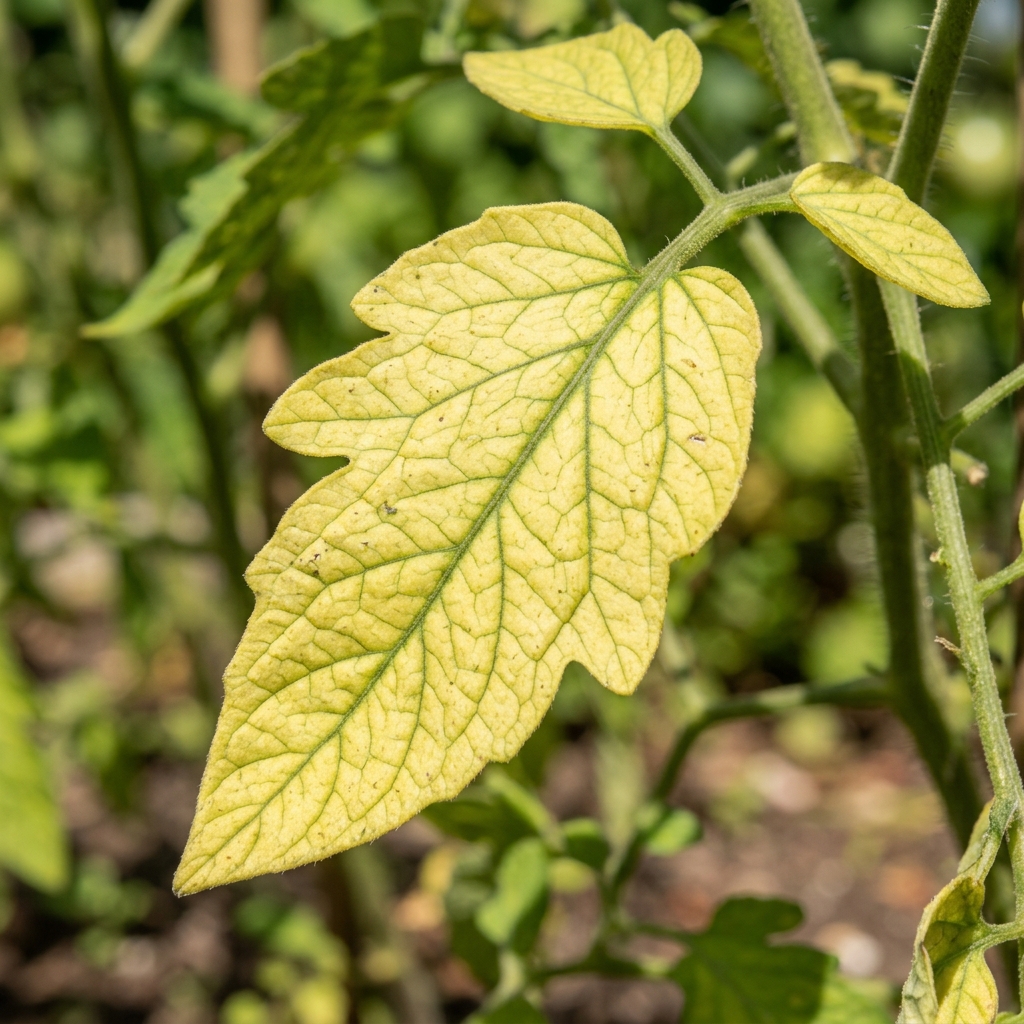
Nitrogen Deficiency
Nitrogen Deficientia
How to Identify Nitrogen Deficiency on Tomato

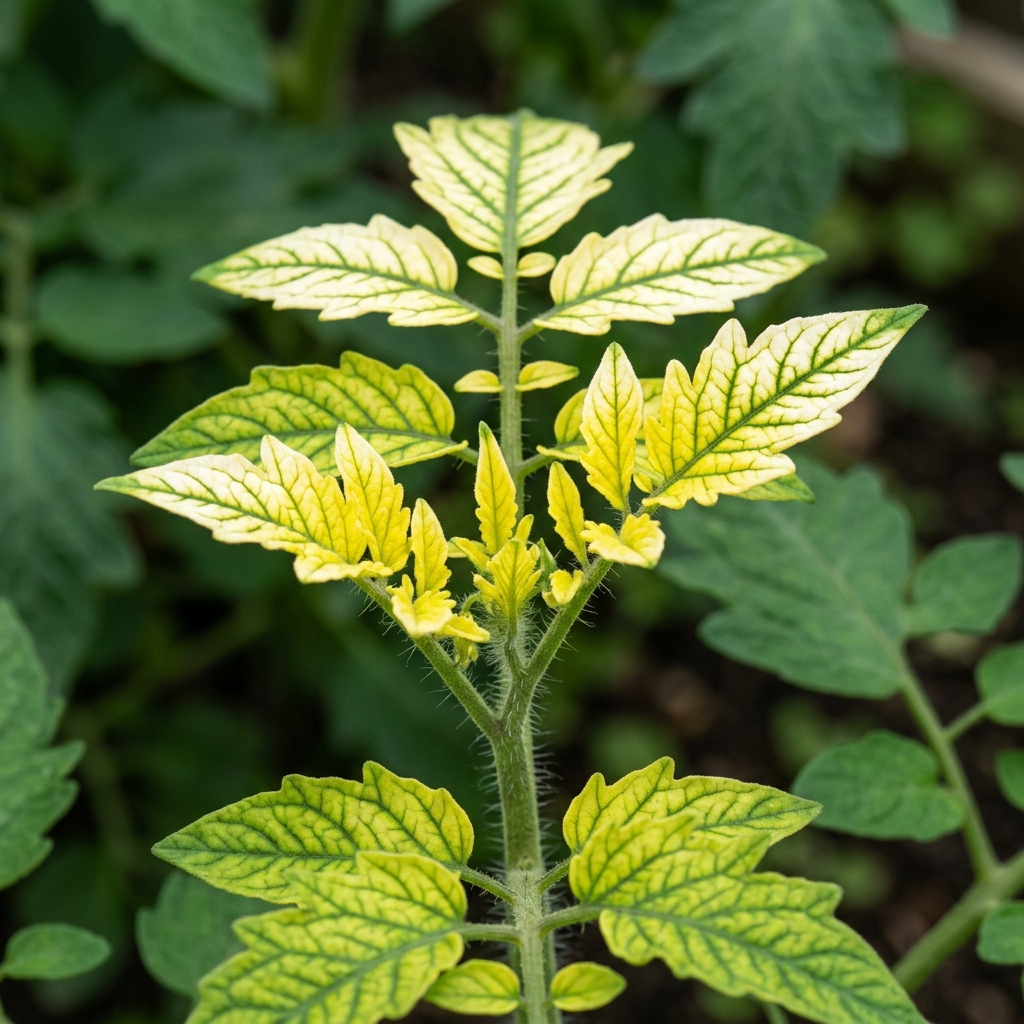
Visible Symptoms
Lower leaves turn a uniform pale light yellow. Stems become thin, fibrous, and may develop a purplish color due to anthocyanin accumulation. Yield and fruit size are drastically reduced.
About Nitrogen Deficiency
Nitrogen deficiency is a common limitation in tomatoes. As nitrogen is a key mobile nutrient, plants redirect it from older bottom leaves to support young developing shoots and fruits, leading to lower leaf senescence.
Nutrient Role & Deficiency Cause
Nitrogen deficiency is a common limitation in tomatoes. As nitrogen is a key mobile nutrient, plants redirect it from older bottom leaves to support young developing shoots and fruits, leading to lower leaf senescence.
Seasonal Outbreak Calendar
Outbreak risk and activity timeline for Nitrogen Deficiency based on seasonal climate patterns:
Treatment & Correction Guide
Natural & Organic Methods
Chemical & Professional Control
Frequently Asked Questions
Why are only the bottom leaves of my tomato plant turning yellow?
Nitrogen is a mobile nutrient in tomato plants. When the root system cannot absorb sufficient nitrogen from the soil, the plant scavenges stored nitrogen from its oldest bottom leaves and transports it to new growing tips, causing the lower leaves to turn pale uniform yellow first.
How fast can a tomato plant recover from nitrogen deficiency?
With a foliar spray of water-soluble 19:19:19 (4-5 g/L) or a soil drench of Calcium Ammonium Nitrate, noticeable greening begins within 48 to 72 hours, with full vegetative recovery in 7 to 10 days. Severely yellowed lower leaves may not fully re-green and can be pruned once new foliage is thriving.
What is the best organic fertilizer to cure nitrogen deficiency in tomatoes?
Fish Amino Acid (FAA) at 30 ml/10L as a foliar spray provides the fastest organic nitrogen uptake (5–7 days). For the soil, vermicompost enriched with neem cake or fermented mustard cake tea provides steady, bioavailable nitrogen without burning roots.
Can over-watering look like nitrogen deficiency in tomatoes?
Yes. Waterlogged or compacted soil suffocates tomato roots, halting nutrient absorption and leaching mobile nitrate below the root zone. Ensure proper soil drainage and let the top 2 inches dry between watering before adding nitrogen fertilizer.
What is the difference between nitrogen deficiency and iron deficiency in tomatoes?
Nitrogen deficiency causes uniform yellowing on older lower leaves, while iron deficiency causes interveinal chlorosis (yellow tissue with sharp green veins) strictly on the youngest new leaves at the top of the plant.
Recommended diagnostics based on crop family and symptoms:
Remedy Disclaimer & Safety Notice
This disease guide is for educational screening purposes only. Pathogen behavior, severity, and host susceptibility can vary dramatically based on seed variety, weather conditions, and regional microclimates. Chemical pesticides and organic treatments are subject to strict regional environmental regulations and registration mandates. Please verify all chemical registrations and review manufacturer safety labels carefully with local certified agronomists or agricultural extension service offices before applying.