
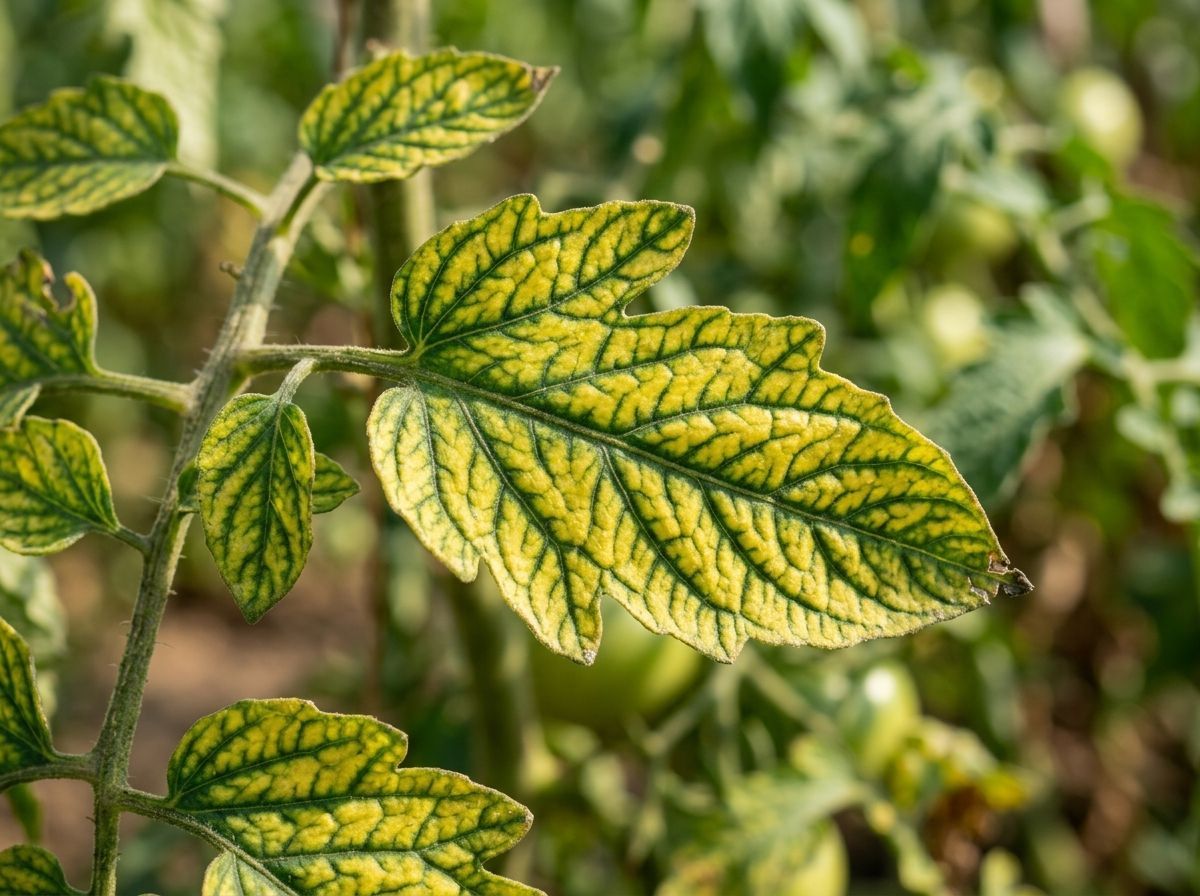
Magnesium Deficiency
Magnesium Deficientia
How to Identify Magnesium Deficiency on Tomato

Visible Symptoms
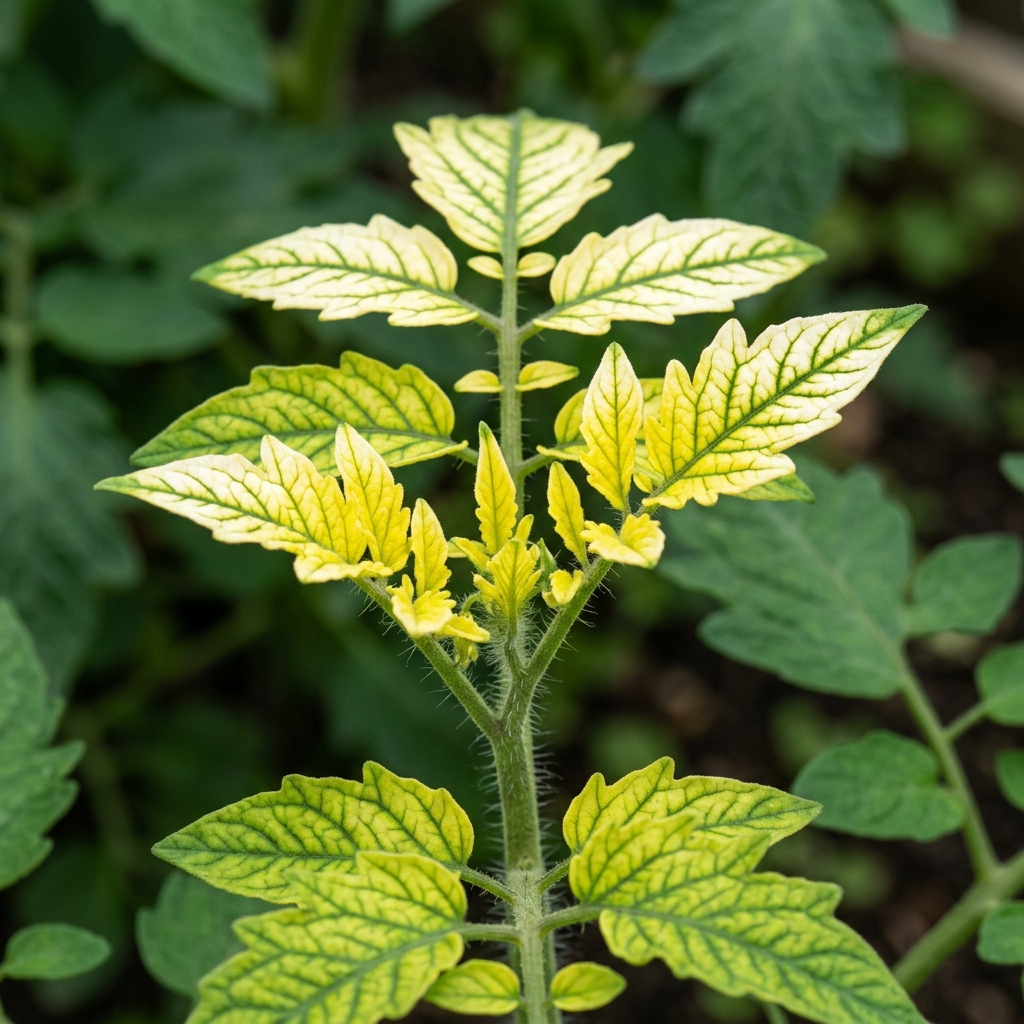
Interveinal chlorosis (yellowing between the veins) begins on older lower leaves. The main veins remain green, creating a sharp green network pattern. In severe cases, leaf margins curl upward and turn brittle.
About Magnesium Deficiency
Magnesium deficiency commonly occurs in light, sandy, or highly acidic soils. Excessive potassium or calcium application can also induce magnesium deficiency by blocking root uptake.
Nutrient Role & Deficiency Cause
Magnesium deficiency commonly occurs in light, sandy, or highly acidic soils. Excessive potassium or calcium application can also induce magnesium deficiency by blocking root uptake.
Seasonal Outbreak Calendar
Outbreak risk and activity timeline for Magnesium Deficiency based on seasonal climate patterns:
Treatment & Correction Guide
Natural & Organic Methods
Chemical & Professional Control
Frequently Asked Questions
How do I mix Epsom salt spray for tomato plants?
Dissolve 15 grams of Epsom salt (magnesium sulfate) per 1 Liter of water (or 1.5 tablespoons per gallon). Spray early in the morning when stomata are open and temperatures are cool, covering both upper and lower leaf surfaces.
Can too much potassium cause magnesium deficiency in tomatoes?
Yes, very frequently. High levels of soil potassium (K+) competitively inhibit root uptake of magnesium (Mg2+). Keep the soil K:Mg ratio balanced at roughly 3:1 to 4:1 by avoid excessive potash applications during early vegetative growth.
What is the visual difference between magnesium and iron deficiency in tomatoes?
Magnesium deficiency begins on older and middle-tier leaves because magnesium is mobile. Iron deficiency appears exclusively on the very youngest, top-most leaves because iron is immobile in plant tissue.
How quickly does Epsom salt foliar spray work?
Tomato leaves absorb magnesium sulfate rapidly through their cuticle. Faint greening between veins is visible in 3 days, with major interveinal color restoration within 5 to 7 days.
Can I add Epsom salt to the soil instead of spraying?
Yes. Soil application works well for long-term prevention (15–20 g per plant base every 14 days), but foliar spraying is 4 times faster at halting active chlorosis in heavily fruiting vines.
Recommended diagnostics based on crop family and symptoms:
Remedy Disclaimer & Safety Notice
This disease guide is for educational screening purposes only. Pathogen behavior, severity, and host susceptibility can vary dramatically based on seed variety, weather conditions, and regional microclimates. Chemical pesticides and organic treatments are subject to strict regional environmental regulations and registration mandates. Please verify all chemical registrations and review manufacturer safety labels carefully with local certified agronomists or agricultural extension service offices before applying.