
Armyworm
Spodoptera frugiperda
About Armyworm
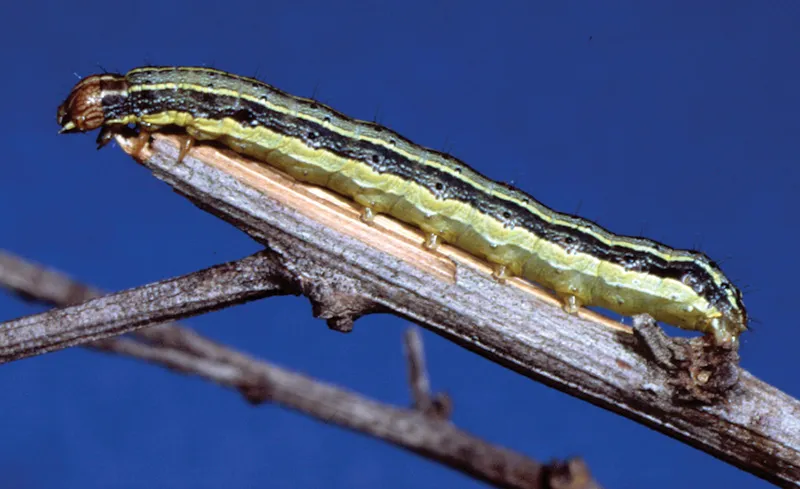
The Armyworm (primarily the Fall Armyworm, *Spodoptera frugiperda*, family Noctuidae) is a highly destructive, migratory pest capable of causing rapid agricultural devastation. Named 'armyworms' because they congregate in massive numbers and march across fields like an invading army, they consume all green foliage in their path. The adult is a nocturnal moth, but the larval caterpillar is the destructive stage. The caterpillar is characterized by a dark body with light stripes and an inverted 'Y' mark on its head. This pest targets over 350 plant species, showing a preference for grasses, corn, sorghum, and sugarcane, threatening global food security.
Identifying armyworm damage is vital because they can defoliate entire crop fields in a single night. Early symptoms include 'windowpane' damage on leaves where young larvae scrape away green tissue, leaving clear membranes. As caterpillars grow, they chew large, ragged holes, starting from leaf margins. In corn crops, they chew deep into the whorl, leaving ragged leaves and sawdust-like droppings (frass). The caterpillars are dark-green to black with prominent stripes, four dark dots forming a square on the eighth abdominal segment, and an inverted white 'Y' on their dark heads.
Armyworms thrive in warm, humid climates, with populations exploding in late summer. Moths are strong flyers, traveling hundreds of miles on wind currents. Females lay dome-shaped eggs in large clusters (100–200 eggs) covered in grey, moth-like scales. Larvae hatch and feed for 2 to 3 weeks before pupating in the soil.
| Host Crop / Grass | Severity Rating | Field Damage Description |
|---|---|---|
| Sweet Corn & Field Maize | Extreme (⭐⭐⭐) | Whorl destruction, cob tunneling, leaf skeletonization |
| Lawn Turf, Rice & Wheat | Extreme (⭐⭐⭐) | Brown circular dead patches, rapid blade chewing |
| Sorghum & Sugarcane | High (⭐⭐) | Ragged defoliation, destroyed central shoots |
Eradicating armyworms requires rapid action due to their fast feeding rate. For organic control, apply *Bacillus thuringiensis kurstaki* (Btk) or Spinosad foliar sprays, which are highly effective against caterpillars. Releasing beneficial parasitic wasps (*Trichogramma spp.*) targets and destroys armyworm eggs before they hatch. Deep soil plowing after harvest exposes pupae to birds and cold weather. Chemical options include foliar sprays of chlorantraniliprole, indoxacarb, or emamectin benzoate for commercial fields. For more crop defense guides, consult our Plant Disease Identifier Hub, or explore related guides on Cotton Bollworm, Cutworms, and Pink Bollworm. For specialized diagnosis of related crop threats, see our guide on Snails & Slugs.
Taxonomy & Features
- Inverted White 'Y' Head: Larvae feature a highly diagnostic white inverted 'Y' mark on their dark head capsule.
- Four Dots on Tail: Diagnostic pattern of four dark spots forming a perfect square on the eighth abdominal segment.
- Windowpane Feeding: Young larvae scrape green leaf cells, leaving a thin, transparent, windowpane-like leaf membrane.
- Nocturnal Marching Habits: Caterpillars feed at night or on cloudy days, marching in large groups to seek fresh fields.
- Scaly Egg Clusters: Females lay large egg masses (100–200 eggs) on leaves, covered in protective grey body scales.
- Bt Caterpillar Kill: Highly susceptible to Bacillus thuringiensis (Bt) sprays, which target caterpillar guts.
Seasonal Outbreak Calendar
Outbreak risk and activity timeline for Armyworm based on seasonal climate patterns:
Names in Different Languages
Affected Plant Species
Vegetables & Crops
- Sweet Corn
- Tomato
- Beans
- Cabbage
- Potato
- Onion
- Spinach
Flowers & Ornamentals
- Ornamental Grasses
- Gladiolus
- Carnations
- Chrysanthemums
Fruits & Berries
- Strawberry
- Peach
- Apple
- Grape
- Citrus Shoot Plugs
Prevention & Cure
Natural & Organic Methods
- Btk Sprays: Spray Bacillus thuringiensis kurstaki (Btk) during early evening to target feeding caterpillars.
- Parasitic Wasps: Release Trichogramma parasitic wasps to seek and destroy armyworm egg clusters.
- Deep Tillage: Deep plow fields in late autumn to expose pupae to soil-dwelling birds and frost.
- Pheromone Monitoring: Hang pheromone traps to capture adult moths and predict caterpillar outbreaks.
Chemical & Professional Control
- Chlorantraniliprole: Apply foliar systemic sprays to provide long-lasting chewing crop protection.
- Indoxacarb: Spray foliage to target larger caterpillars and disrupt their nervous systems.
- Emamectin Benzoate: Use on commercial crops for rapid, targeted contact knock-down of heavy swarms.
Frequently Asked Questions
Why is the Fall Armyworm called a 'migratory' pest?
The Fall Armyworm moth cannot survive freezing winter temperatures. Instead, it overwinters in tropical areas. In spring and summer, the moths use high-altitude winds to migrate thousands of miles northwards, invading crops across entire continents each season.
How can I tell armyworms apart from other caterpillars?
Look closely at the caterpillar's head and tail: armyworms have a distinct white or yellow inverted 'Y' mark on their dark head, and four dark spots forming a perfect square on the top of their second-to-last body segment. They also travel and feed in large groups.
Can armyworms ruin my lawn turfgrass?
Yes. Armyworms are notorious turf pests. They feed in large groups on grass blades, leaving brown, circular, dead-looking patches in lawns. They can chew a healthy lawn down to the soil line in just 2-3 days if not controlled quickly.
Recommended diagnostics based on crop family and symptoms:

Remedy Disclaimer & Safety Notice
This disease guide is for educational screening purposes only. Pathogen behavior, severity, and host susceptibility can vary dramatically based on seed variety, weather conditions, and regional microclimates. Chemical pesticides and organic treatments are subject to strict regional environmental regulations and registration mandates. Please verify all chemical registrations and review manufacturer safety labels carefully with local certified agronomists or agricultural extension service offices before applying.