How to Test Tomato for Adulteration (Calcium Carbide, Ethephon, Lead)
⚡ Quick 60-Second Tomato Freshness & Dye Verdict
Synthetic Greening & Artificial Ripening: Green tomatoes are dipped in hot ethephon baths to turn red overnight, or immature varieties are washed with copper sulfate to preserve simulated freshness.
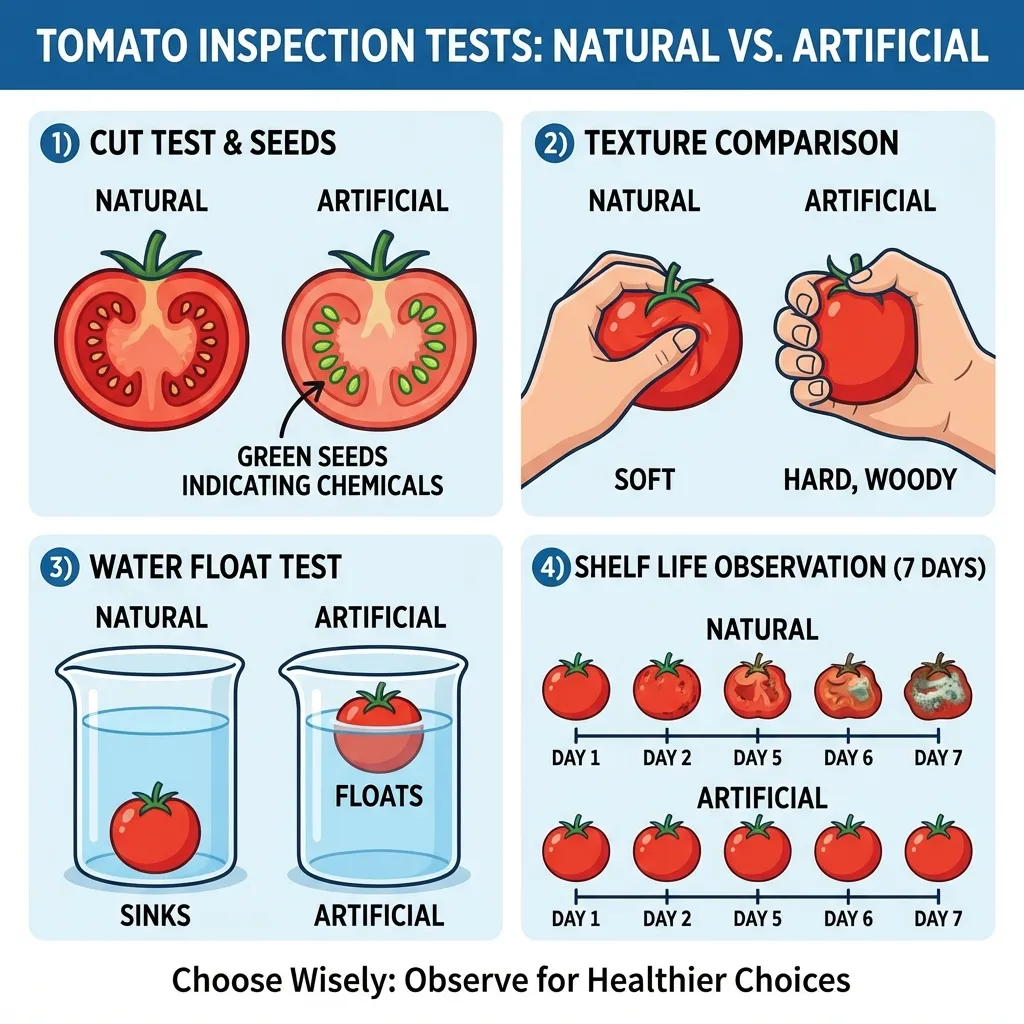
Slice horizontally. In naturally ripe tomatoes, seeds are surrounded by juicy green/amber jelly. In chemically ripened ones, seeds are immature white/dry.
Examine the top stem scar. Naturally vine-ripened tomatoes have soft red shoulders and rich earthy scent. Gassed tomatoes are rock-hard with yellow/orange halos.
Place in water. Vine-ripened tomatoes sink due to high sugar density (>1.02 g/cm³); artificially forced tomatoes float.
To learn more about food safety tests and home adulteration detection, read our guides on Coriander Leaves (Cilantro), Green Peas, and Tomato Ketchup & Puree. Also check our guide on Oregano.
Drop Tomato photo here to test purity
or click to browse • Supports JPG, PNG, WEBP • Paste with Ctrl+V
Inspection Guide
Click to enlarge
Tomato Purity & Ripening Audit
Tomatoes are frequently ripened artificially with Calcium Carbide or Ethephon to meet market demand, resulting in fruits that look red but are nutritionally deficient and contain toxic residues.
1. The Internal Color Check:
Cut the tomato in half. A naturally ripened tomato is red throughout, including the seeds and jelly-like substance. In an artificially ripened tomato, the outer skin is bright red but the seeds and inner core remain green or yellowish.
2. The Texture and Feel:
Naturally ripened tomatoes are soft and slightly yielding when pressed. Artificially ripened tomatoes have a tough, hard exterior despite their bright red color.
3. The Taste and Aroma:
A natural tomato has a distinct, fresh, and slightly tangy aroma and a sweet-tart flavor. Artificially ripened tomatoes are often tasteless, "mealy," and lack the characteristic tomato scent.
4. The Water Wash (Residue Check):
Soak tomatoes in warm water for 15 minutes. If a white or greyish residue settles at the bottom of the bowl, it indicates the use of Calcium Carbide "Masala" for ripening.
Quick Safety Tips
- Avoid tomatoes that are bright red on the outside but green inside
- Check for a tough, hard texture in "ripe-looking" tomatoes
- Soak in warm water with salt to remove surface chemical residues
- Select tomatoes with a natural, earthy aroma near the stem
Primary Chemical Concerns
Health Risks & Impacts
Multilingual Local Names
Common Storage Pests
Tomato Fruit Borer
medium riskCaterpillars that bore into the fruit and eat the internal pulp.
Detection
- Small entry holes near the stem
- Internal browning and presence of larvae
Prevention
- Inspect for holes before buying
- Store in a cool, well-ventilated area
Corrective Action: What to do?
Discard infested tomatoes as they rot quickly and can contain pathogens.
Regulatory Corner: FSSAI (Food Safety and Standards Authority of India) / Codex Alimentarius (CXS 293-2008)
Regulation: Food Safety and Standards (Contaminants, Toxins and Residues) Regulations 2011, Schedule 2: MRLs for Solanaceous Vegetables
Legal Limit:Chlorpyrifos: Max 0.5 ppm; Mancozeb/Dithiocarbamates: Max 3.0 ppm; Non-permitted artificial color dyes (Rhodamine B, Sudan): 0.0% (Strictly prohibited); Rotten / blighted fruits: Max 2.0%
Report Adulteration to FSSAI (Food Safety and Standards Authority of India) / Codex Alimentarius (CXS 293-2008)