
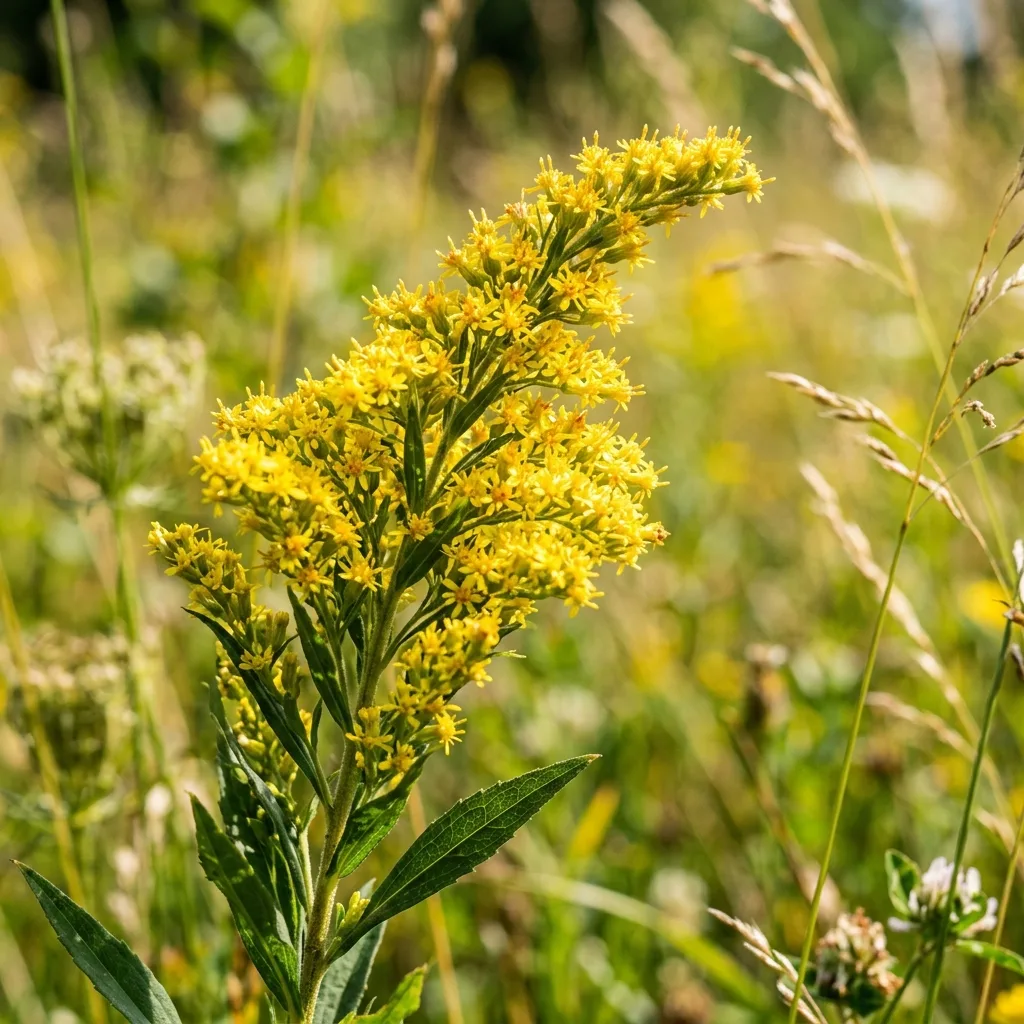
Goldenrod
Solidago canadensis
How to Identify Goldenrod
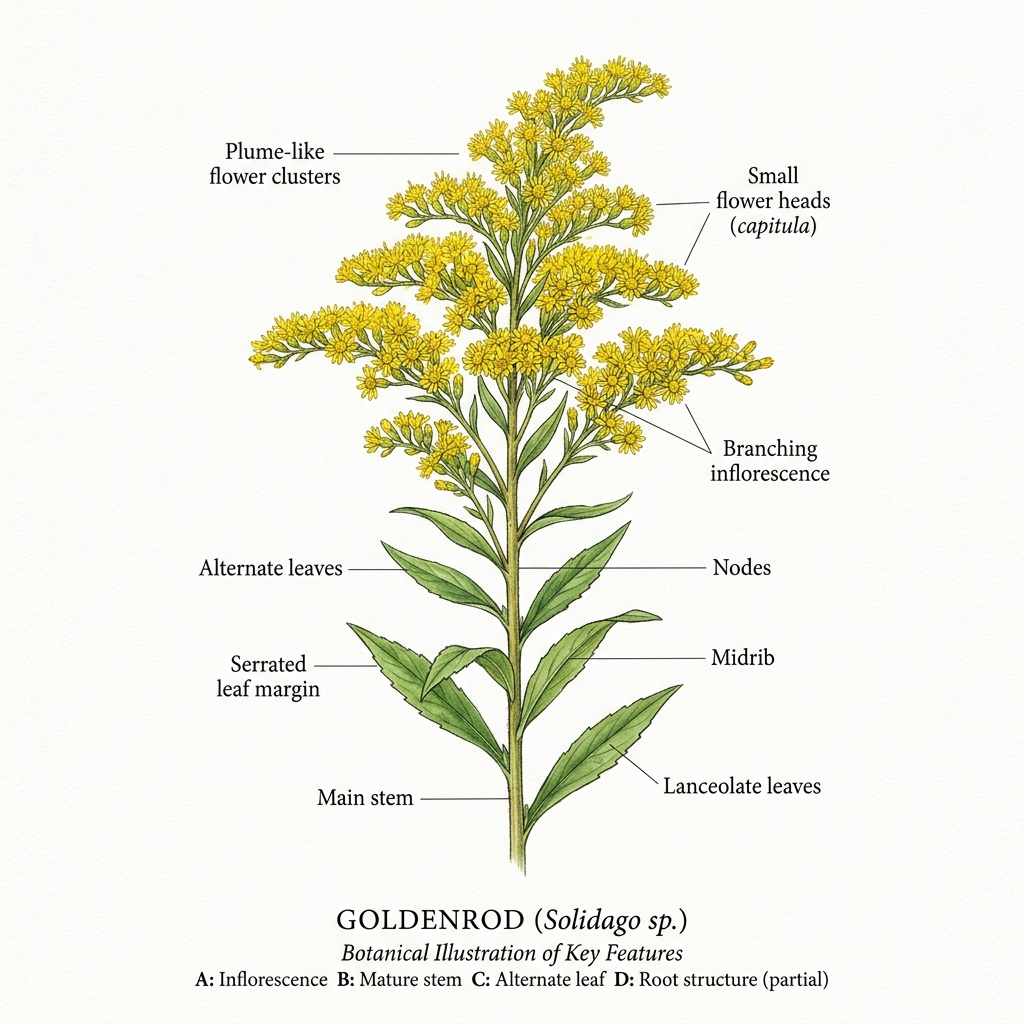
A detailed guide to identifying Goldenrods (Solidago speciosa) by its key features:
- Feathery Golden Plumes: Dense, branching terminal clusters (panicles) of hundreds of tiny, bright yellow flower heads.
- Alternate Lanceolate Leaves: Narrow, sharply pointed leaves with serrated margins arranged alternately along the stem.
- Erect Slender Stems: Tall, woody-based stems growing in clumps up to 3 to 6 feet tall.
- Fibrous Root System: Clumping, rhizomatous roots that form expanding golden colonies.
Care & Growing Guide
Goldenrod Care Guide:
- Light: Full sun (6+ hours daily)
- Soil: Tolerates poor, sandy, clay, or rocky soils — thrives without fertilizer
- Water: Drought-tolerant once established; avoid overwatering
- Maintenance: Cut back to 6 inches in early spring. Divide clumps every 3 years to manage spread.
Seasonal Blooming & Hardiness
Seasonal Blooming Calendar:
- Peak Bloom: August–October across most of the US
- US Range: USDA Zones 3–9; native throughout eastern US, Midwest, and Great Plains
- Winter Interest: Dry seed heads persist, feeding birds through winter
Bloom Timeline
About Goldenrod
Goldenrod (Solidago spp.) is one of the most ecologically important and visually spectacular native wildflowers of North America, producing brilliant cascading plumes of tiny golden-yellow flowers from late summer through autumn. With over 100 species native to the Americas (most concentrated in the eastern United States), Solidago is a cornerstone of the late-season prairie and meadow ecosystem, providing critical nectar for migrating Monarch butterflies, native bees, and countless other pollinators at a time when most other flowers have finished blooming.
Despite its ecological value, Goldenrod has been unjustly maligned for decades as an allergen, with many people blaming it for their hay fever. This is a persistent and well-documented myth. Goldenrod pollen is large, sticky, and heavy — designed to be carried by insects, not wind. It is ragweed (Ambrosia spp.), which blooms at the same time and produces fine, airborne pollen, that is the true cause of late-summer allergies. Because Goldenrod blooms brilliantly in golden-yellow at the exact same time as ragweed, it gets the blame for symptoms it does not cause.
The plants grow as robust, upright perennials, typically reaching 2 to 5 feet tall, with lance-shaped, alternate leaves and densely packed terminal clusters of tiny composite flower heads. The arching, one-sided flower plumes of Solidago canadensis (Canada Goldenrod) are particularly dramatic, bending gracefully under the weight of thousands of miniature blooms. The leaves are often rough or hairy to the touch, a characteristic that helps distinguish species. In autumn, the spent seed heads persist on dry stems, providing important winter food for small birds such as finches and sparrows.
Goldenrod has a long and respected history in North American herbalism. Native American tribes including the Cherokee, Iroquois, and Ojibwe used various species medicinally to treat urinary tract issues, inflammations, fevers, and wounds. In European herbal traditions, it was prized as a 'wound herb' and exported from North America under the name 'Herba solidaginis.' It remains an ingredient in many commercial herbal teas and European phytomedicines today. In the garden, modern native plant cultivars like 'Fireworks,' 'Golden Fleece,' and 'Little Lemon' offer the same ecological benefits in a more compact, garden-friendly form.
Floral Formula & Features
Ebracteate composite head; ray and disc florets; pappus replaces calyx; 5 fused petals; 5 fused stamens; 2 fused carpels with inferior ovary
- Scientific Name & Classification: Solidago spp. (Asteraceae, tribe Astereae). Over 100 species native to North America. S. canadensis (Canada Goldenrod) is the most widespread.
- Identification Markers: Dense, arching, one-sided golden-yellow flower plumes atop upright stems 2–5 ft tall. Alternate, lance-shaped leaves, often rough or hairy. Blooms late summer through fall.
- Floral Formula (EBr ⊕ ☿ K∞ [C(5) A(5)] G̅(2)): Radially symmetrical composite flower heads; tiny individual florets with pappus (modified calyx), 5 fused petals, 5 stamens, 2-carpellate inferior ovary.
- Growing Requirements: Full sun; tolerates poor, dry, sandy, or clay soils. Excellent drought tolerance once established. USDA Zones 3–9. Spreads by rhizomes — space appropriately.
- Cultural Significance: Nebraska's state flower. Symbol of resilience and the American prairie. Monarch butterfly nectar source during fall migration. Completely innocent of causing hay fever.
- Safety & Toxicity: NON-TOXIC. Completely safe for cats, dogs, and humans. Used in herbal medicine (urinary tract support) for centuries. Not to be confused with ragweed.
- Common Look-alikes: Most commonly confused with Ragweed (Ambrosia). Goldenrod has visible yellow flowers; ragweed has tiny, inconspicuous green flowers. Also confused with Tansy (Tanacetum).
- Internal Links: Pairs magnificently with Black-Eyed Susan and Purple Coneflower in a native prairie garden. See more in our Flower Identifier.
Names in Different Languages
Botanical Classification: Goldenrod belongs to the Asteraceae family. Learn how to identify its floral symmetry, stamen arrangement, and structural formulas in our Botanical Family Classification Guide.
Toxicity & Safety
Frequently Asked Questions
What is Floral Formula?
A floral formula is a symbolic representation of a flower's structure using letters, numbers, and special symbols. It provides a concise way to describe the arrangement and number of floral parts.
This formula describes the flower's symmetry, sepals, petals, stamens, and carpels in a standardized format.
Formula Sequence
- Bract: Br or Ebr
- Bracteole: Brl or Ebrl
- Symmetry: % (Radial) or ⊕ (Bilateral)
- Sex: ♀ (Female), ♂ (Male), or ⚥ (Bisexual)
- Calyx/Sepal: K<number> (Free or Fused)
- Corolla/Petal: C<number> (Free or Fused)
- Androecium: A<number> (Free or Fused)
- Gynaecium: G<number> (Superior or Inferior Ovary)
Symbol Meanings
- Numbers: Indicate quantity of parts
- Parentheses (): Parts are fused together
- Plus (+): Parts in different whorls
- Underline: Superior ovary position
- Overline: Inferior ovary position
- ∞: Numerous parts (too many to count)
Understanding floral formulas helps botanists quickly identify and classify flowers based on their structural characteristics.
Similar Flowers
Discover flowers that share botanical characteristics
Same Family
4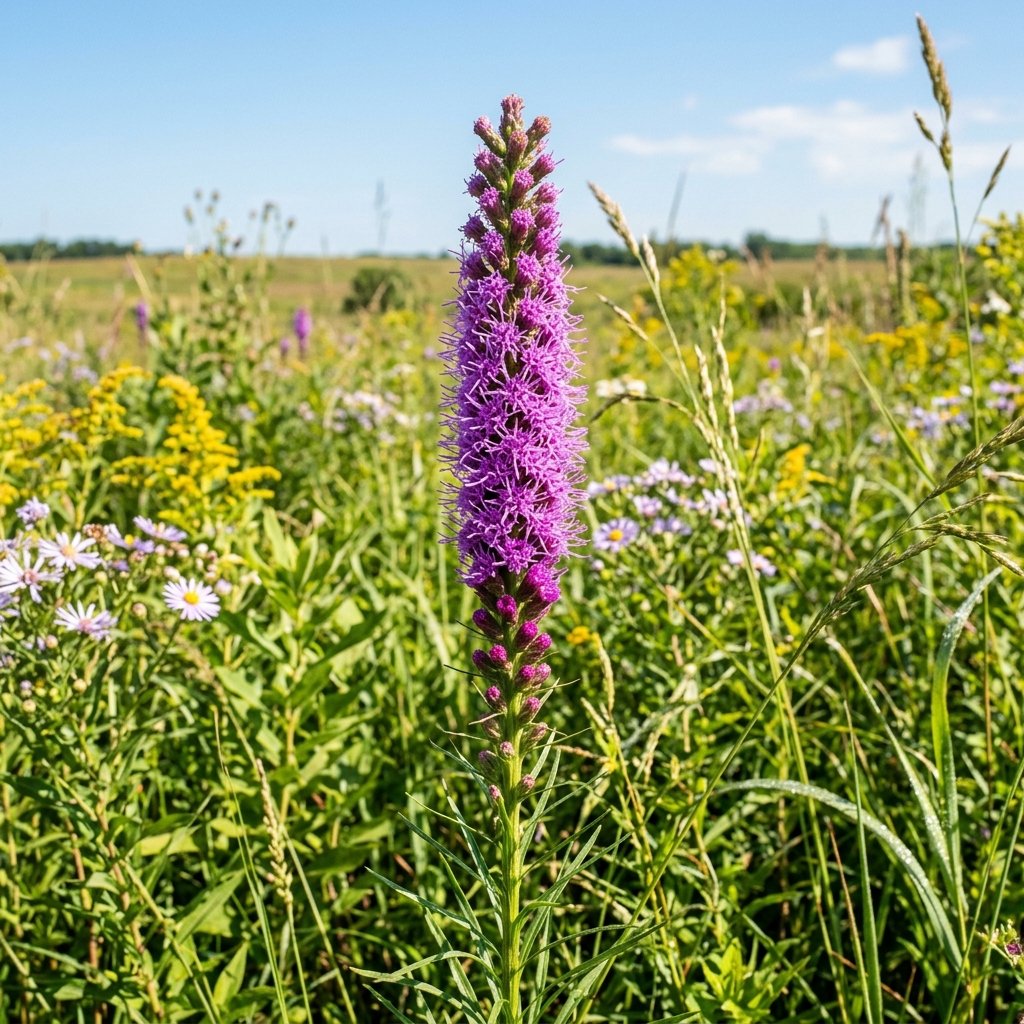
Blazing Star (Liatris)
Liatris spicata
Blazing Star, or Liatris (*Liatris spicata* and related species), is one of the most distinctive and architecturally striking native wildflowers of the North American prairie and meadow, producing tall, rigid spikes of rosy-purple to magenta flower heads that bloom from the top of the spike downw...
Oxeye Daisy
Leucanthemum vulgare
The Oxeye Daisy, botanically classified as Leucanthemum vulgare and historically celebrated as the Moon Daisy or Dog Daisy, is an exceptionally cheerful, rhizomatous herbaceous perennial belonging to the Asteraceae (daisy or composite) family. Native to the sweeping fields, dry pastures, and sunn...
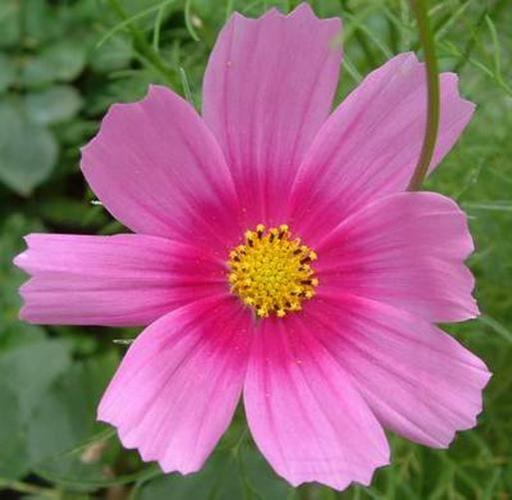
Mexican Aster
Cosmos bipinnatus
The Mexican Aster, botanically designated as Cosmos bipinnatus and commonly referred to as Garden Cosmos or simply Cosmos, is an exceptionally graceful, fast-growing, and heavy-blooming annual. Belonging to the family Asteraceae (the daisy or composite family), this beautiful plant is native to t...
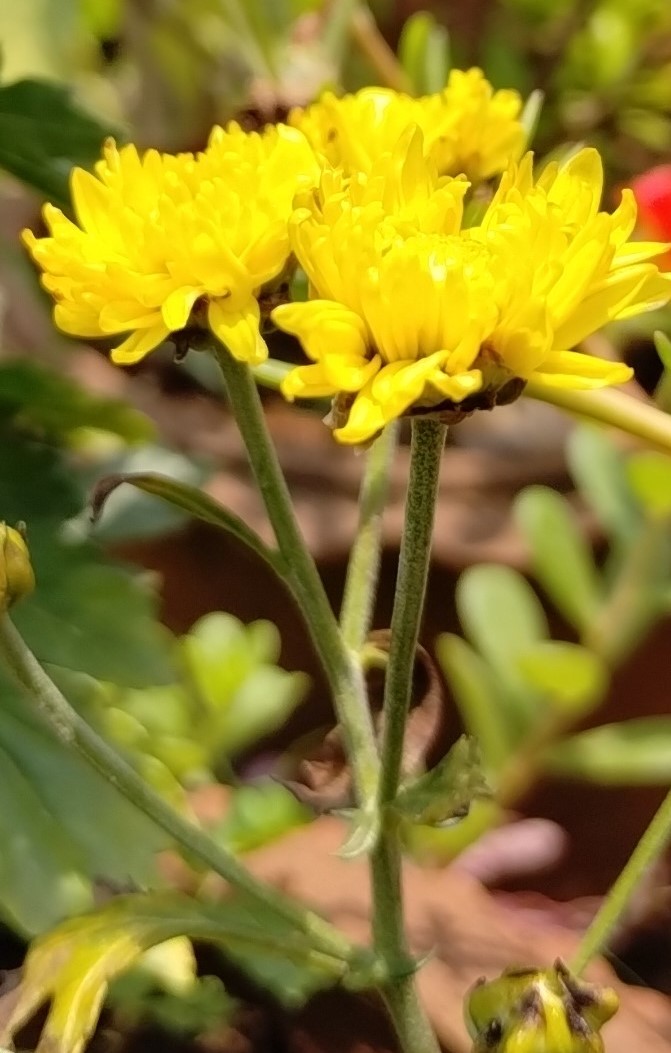
Chrysanthemum
Chrysanthemum morifolium
The Chrysanthemum, botanically classified as Chrysanthemum morifolium and affectionately known as the 'Mum,' is a magnificent, late-season flowering perennial belonging to the Asteraceae (sunflower) family. Native to East Asia, primarily China, where it has been cultivated and revered for over 3,...
Similar Colors
2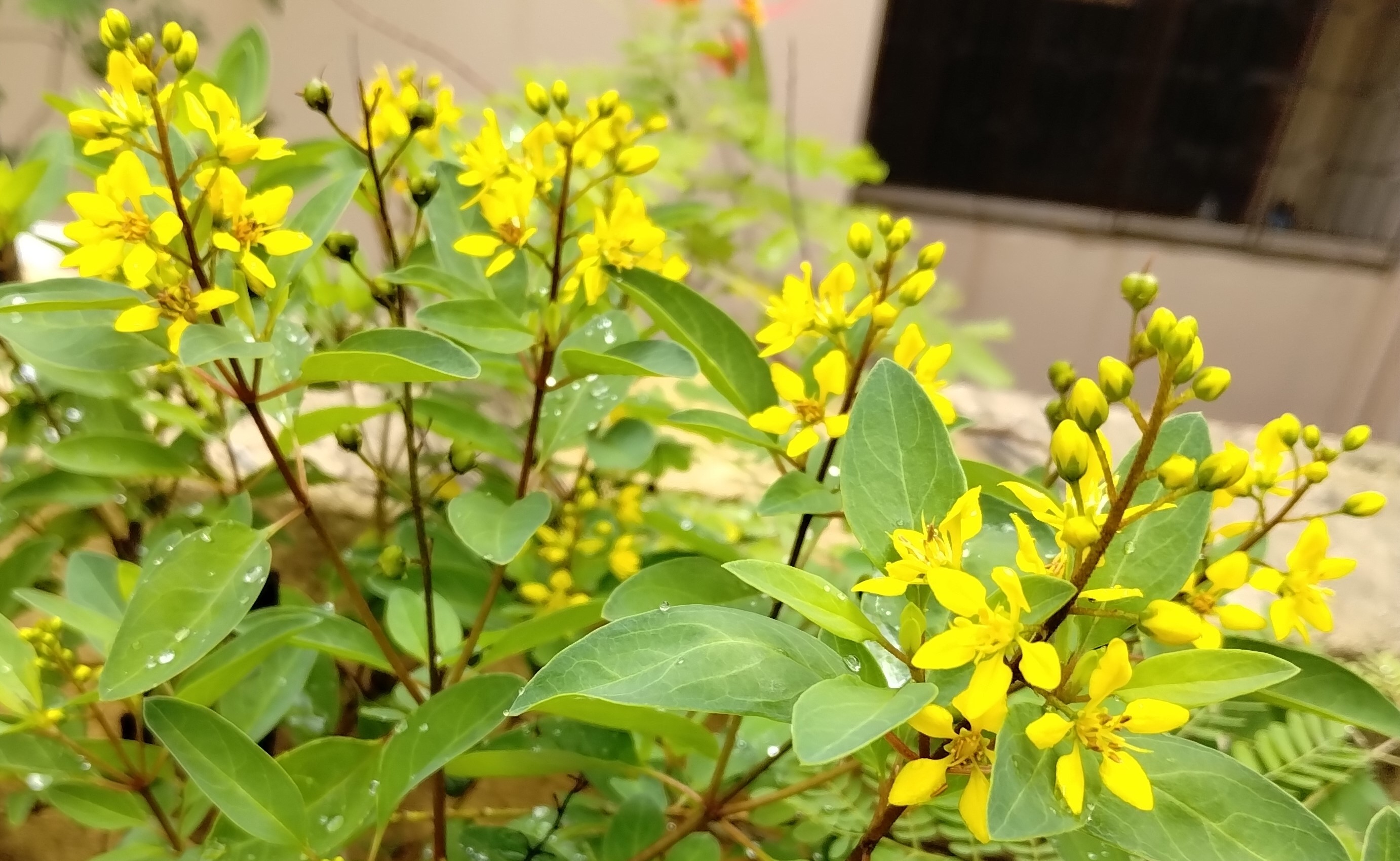
Golden Thryallis
Galphimia gracilis
The Golden Thryallis, botanically designated as *Galphimia gracilis* (previously confused with *Thryallis glauca*, commonly known as Gold Shower, Rain-of-Gold, or Slender Goldshower), is an exceptionally cheerful, fast-growing tropical evergreen shrub. Belonging to the family Malpighiaceae (the a...
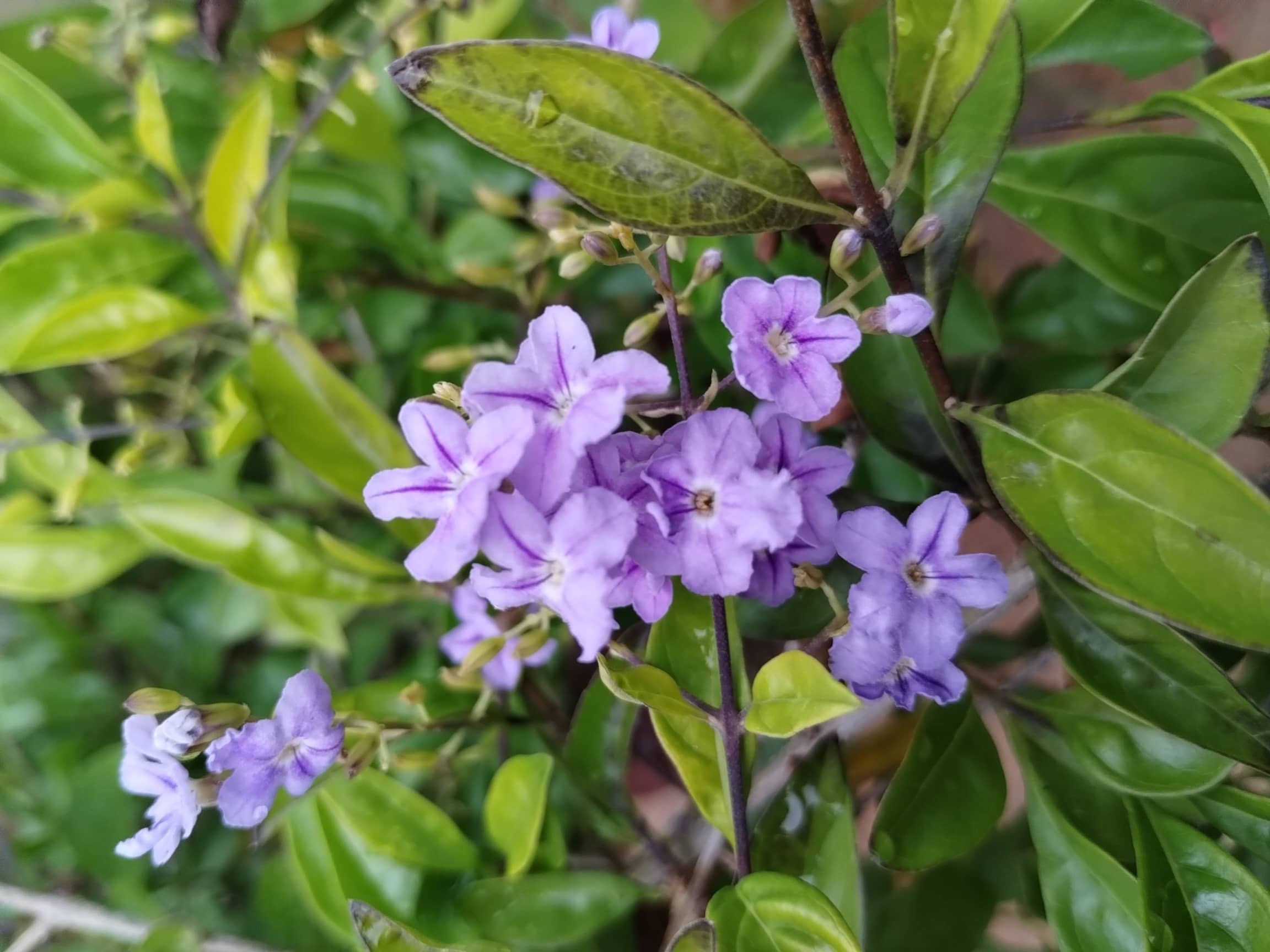
Golden Dewdrop (Duranta)
Duranta erecta
Duranta erecta, commonly known as Golden Dewdrop, Pigeon Berry, or Skyflower, is a sprawling, fast-growing evergreen shrub belonging to the Verbenaceae family. Native to the Americas from Mexico and the Caribbean down to South America, it has been widely introduced across tropical and subtropical...
Similar Characteristics
4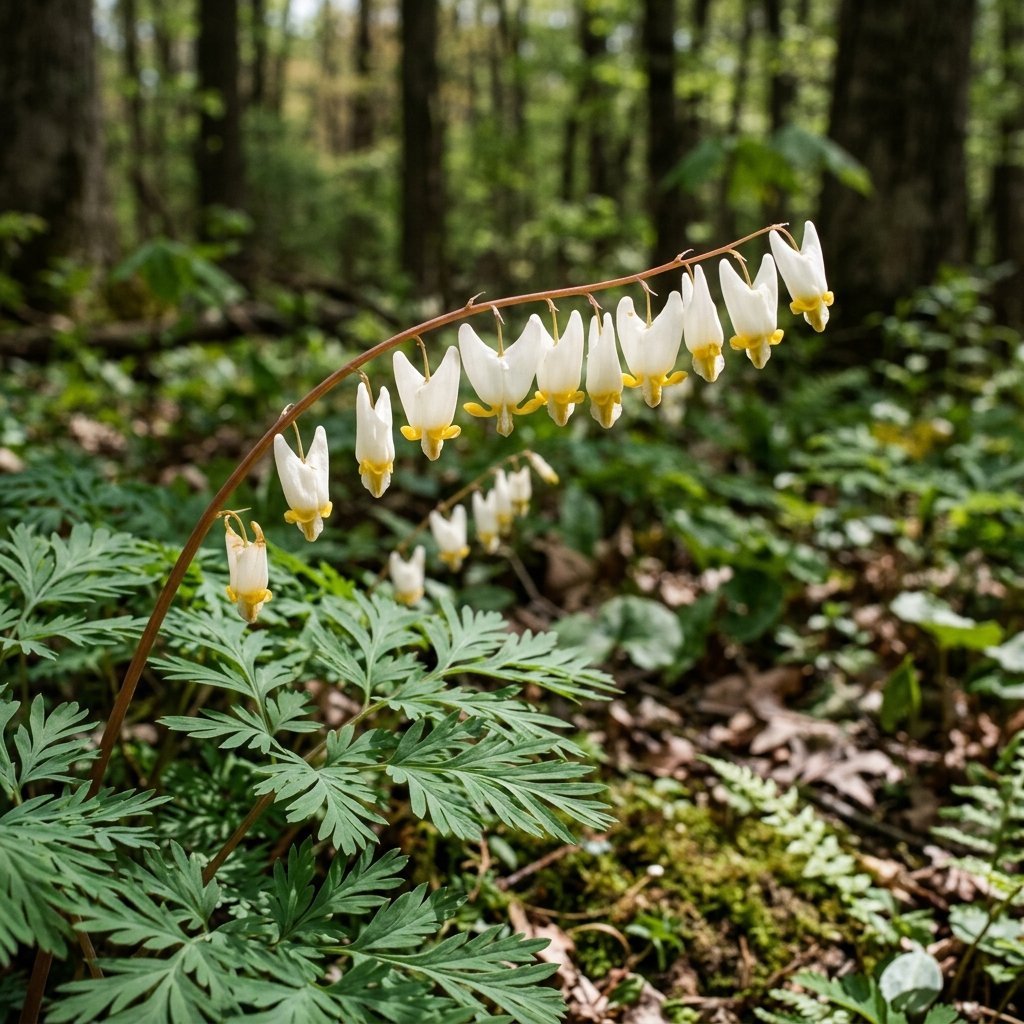
Dutchman's Breeches
Dicentra cucullaria
Dutchman's Breeches (*Dicentra cucullaria*) is one of the most whimsically charming and distinctively shaped wildflowers in the eastern North American spring flora, producing pendulous racemes of pure white flowers shaped precisely like pairs of miniature, upside-down pantaloons or 'breeches' — t...
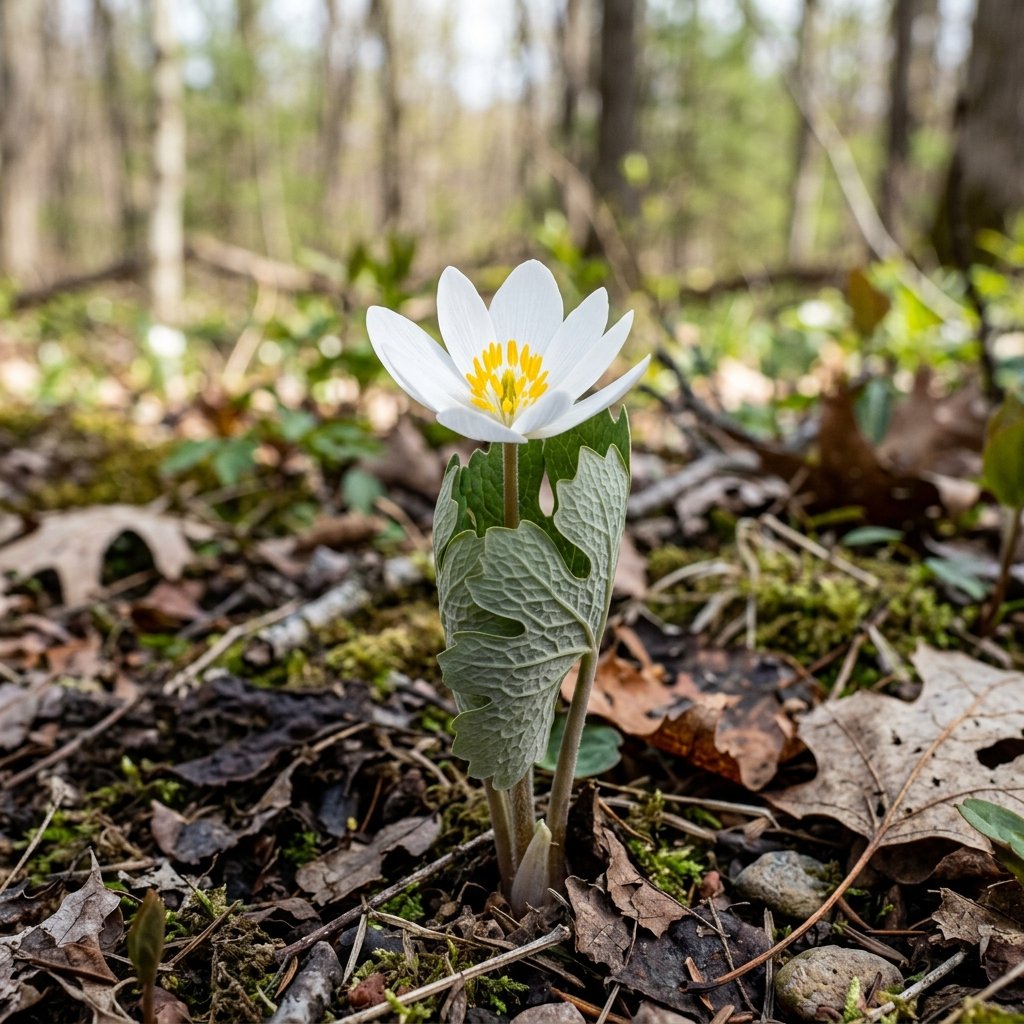
Bloodroot
Sanguinaria canadensis
Bloodroot (*Sanguinaria canadensis*) is one of the earliest and most enchanting spring wildflowers of eastern North American forests, producing pure white, star-like flowers with golden yellow centers that emerge in March and April, often pushing up through the last of the winter snow. It is the...
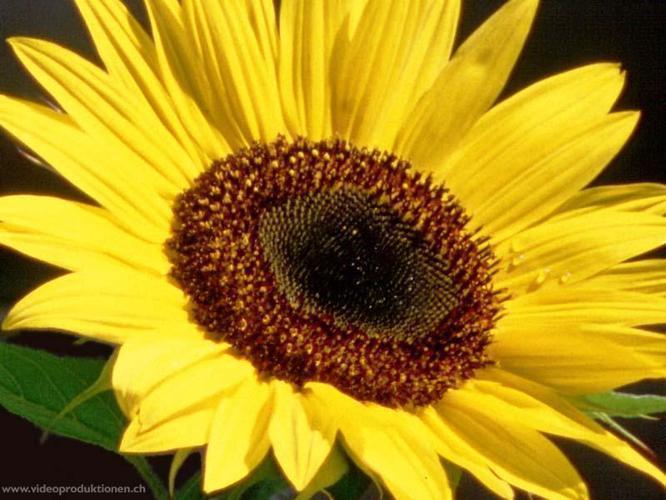
Sunflower
Helianthus annuus
The Sunflower, botanically classified as Helianthus annuus and commonly known as the Common Sunflower, is an exceptionally iconic, robust, and fast-growing annual plant. Belonging to the family Asteraceae (the daisy, aster, or composite family), this famous wildflower is native to the fertile pra...
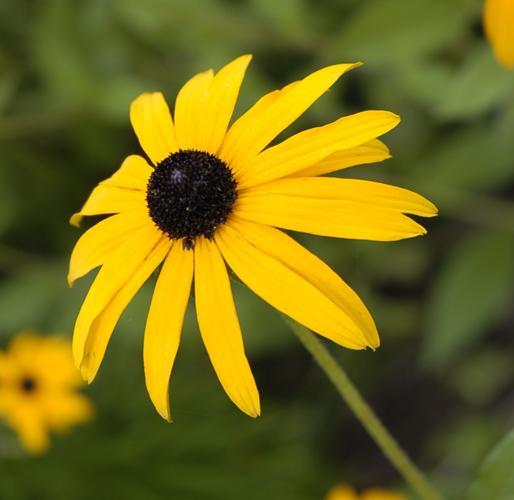
Black eyed Susan
Rudbeckia hirta
Rudbeckia hirta, famously known as the "Black-Eyed Susan" or "Yellow Ox-Eye Daisy," is a quintessentially American wildflower that brings a burst of radiant sunshine to North American landscapes. A member of the Asteraceae (Daisy) family, this resilient species is native to much of the central an...