
Cercospora Leaf Spot
Cercospora beticola
About Cercospora Leaf Spot
Cercospora Leaf Spot is a highly destructive and economically significant fungal plant disease caused by various host-specific species in the anamorphic genus *Cercospora* (most notably *Cercospora beticola* on sugar beets, and *Cercospora sojina* on soybeans). This ascomycete pathogen is a major limiting factor for agricultural productivity worldwide, infecting sugar beets, chard, soybeans, spinach, and coffee plants. The fungus colonizes host leaves, directly attacking chloroplast-rich plant cells to feed on cellular nutrients. By degrading the foliar tissue and producing phytotoxins (such as cercosporin), it induces rapid cell death, weakening the host plant's vigor and heavily reducing sugar concentrations.
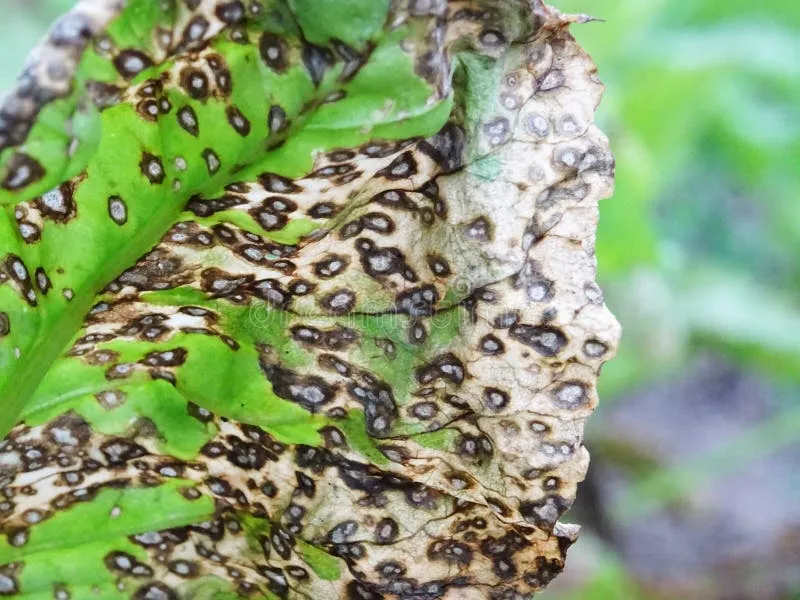
Identifying Cercospora Leaf Spot early is simple due to its highly distinctive 'frogeye' lesions. Symptoms begin as small, circular, reddish-brown spots (2 to 5 mm) on older, lower leaves. As these lesions expand, they develop characteristic light-grey-to-ashy-white centers bounded by a dark brown-to-deep-purple ring border. In warm, humid climates, tiny black fruiting bodies (conidiophores) can be seen with a hand lens clustered in the ash-grey centers, reflecting light to create the classic 'frogeye' look. Under heavy pressure, these lesions coalesce, causing leaves to yellow, curl, dry out, and fall off.
The lifecycle of *Cercospora* is heavily optimized for warm temperatures (25°C to 35°C) combined with prolonged periods of high relative humidity (above 90%) or heavy morning dews. The fungus overwinters as pseudothecia or mycelial tissue in infected crop debris on the soil or on seeds, emerging in spring to release wind-blown spores.
| Affected Host Crop | Severity Rating | Foliar & Pod Symptoms |
|---|---|---|
| Sugar Beets & Swiss Chard | Extreme (⭐⭐⭐) | Severe grey leaf lesions, premature defoliation, drastic sugar loss |
| Soybeans (Frogeye Leaf Spot) | Extreme (⭐⭐⭐) | Foliar spots, purple seed stains, reduced grain quality |
| Peppers & Eggplants | High (⭐⭐) | Circular grey leaf spots, premature leaf drop, sunscald |
Managing Cercospora Leaf Spot relies on crop rotation and reducing canopy moisture. Space plants widely and prune lower leaves to promote quick foliar drying, and avoid overhead watering. Plow under or bury all crop debris after harvest to destroy overwintering mycelia. For organic treatment, apply preventive copper-based or sulfur fungicides early in the season, or spray with *Bacillus subtilis* to colonize leaf surfaces. Chemical options include systemic strobilurin (QoI) or triazole fungicides applied during weather windows. For more crop defense guides, consult our Plant Disease Identifier Hub, or read related files on Black Spot, Early Blight, and Late Blight.
Taxonomy & Features
- Frogeye Circle Lesions: Characterized by small (2-5 mm) circular leaf spots with light grey centers and dark purple borders.
- Cercosporin Phytotoxin damage: Secretes the light-activated cercosporin toxin, which destroys host leaf cell membranes.
- Black Micro Fruiting Bodies: High humidity develops tiny black spore-producing stalks in the center of grey spots.
- Severe Premature Defoliation: Massive leaf spots merge, causing foliage to yellow, dry up, and fall off prematurely.
- Purple Seed Stain habit: On soybeans, the fungus can infect pods to cause purple discoloration on seed coats.
- Warm Climate Affinity: Pathogen reproduction and spore release peak during warm (25-35°C), rainy summer seasons.
Seasonal Outbreak Calendar
Outbreak risk and activity timeline for Cercospora Leaf Spot based on seasonal climate patterns:
Names in Different Languages
Affected Plant Species
Vegetables & Crops
- Sugar Beet
- Swiss Chard
- Spinach
- Pepper
- Eggplant
- Celery
Flowers & Ornamentals
- Statice
- Zinnia
- Pansy
- Gerbera Daisy
Fruits & Berries
- Coffee (Cercospora berry blotch)
- Pomegranate
Prevention & Cure
Natural & Organic Methods
- Canopy Airflow: Prune lower leaves and increase plant row spacing to accelerate leaf surface drying.
- Debris Plowing: Plow under or deep-till crop residues in late autumn to bury overwintering spores.
- Organic Copper: Apply organic protective copper hydroxide sprays before hot, wet rainy forecasts.
- Clean Seeds: Sow only certified pathogen-free seeds to prevent early crop seedling infection.
Chemical & Professional Control
- Strobilurins: Apply azoxystrobin to establish a long-lasting protective barrier against spore germination.
- Triazoles: Spray systemic difenoconazole to halt active fungal cell wall development inside leaves.
- Thiophanate-Methyl: Use on industrial crops to combat early seasonal vegetative leaf spot outbreaks.
Frequently Asked Questions
What does the term 'frogeye leaf spot' refer to?
This is a descriptive common name for the disease. As the Cercospora leaf spot lesion expands, the center dries out and turns light grey or white, while the outer margin remains dark purple or reddish-brown. This light center surrounded by a dark ring resembles a frog's eye.
Can Cercospora Leaf Spot survive in the soil?
Yes. The Cercospora fungus overwinters as tough, dormant mycelial structures inside infected crop residues left on the soil surface. To control it, you must practice a 2-3 year crop rotation and till or plow crop debris deep into the soil after harvest.
Is Swiss Chard safe to eat if it has Cercospora spots?
Yes, it is non-toxic and safe to eat, but the quality, texture, and flavor of the leaves are severely compromised. For commercial growers, any Swiss Chard or spinach leaf with Cercospora spots is completely unmarketable and must be discarded.
Recommended diagnostics based on crop family and symptoms:
Remedy Disclaimer & Safety Notice
This disease guide is for educational screening purposes only. Pathogen behavior, severity, and host susceptibility can vary dramatically based on seed variety, weather conditions, and regional microclimates. Chemical pesticides and organic treatments are subject to strict regional environmental regulations and registration mandates. Please verify all chemical registrations and review manufacturer safety labels carefully with local certified agronomists or agricultural extension service offices before applying.