
Monkshood
Aconitum napellus
How to Identify Monkshood
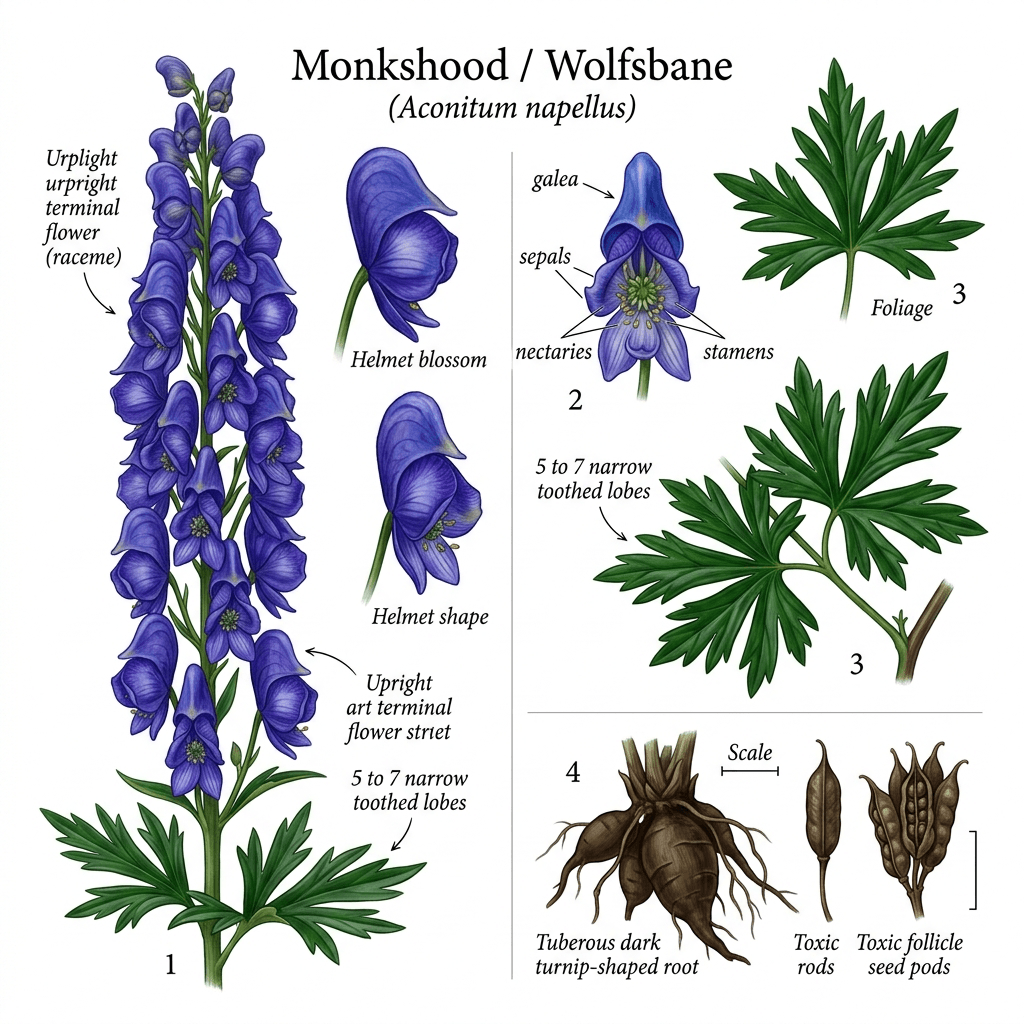
A detailed guide to identifying Monkshood / Wolfsbane (Aconitum napellus) by key botanical features:
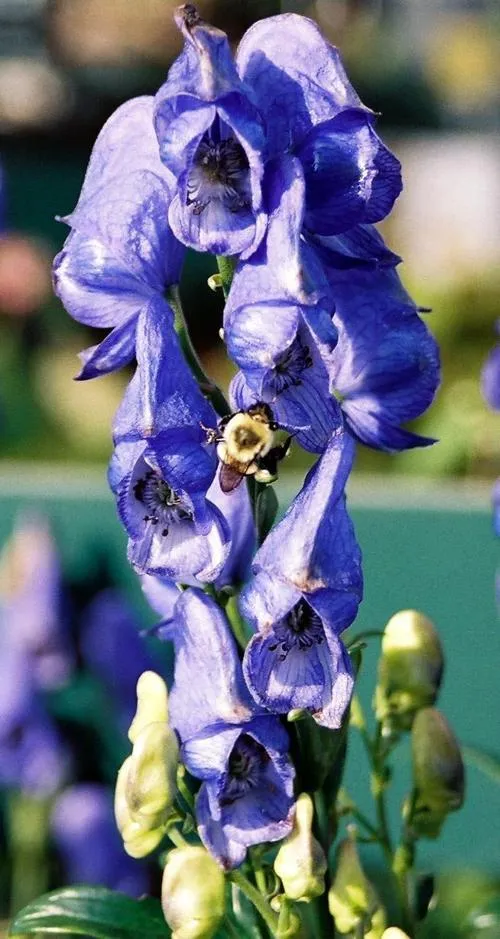
- Architectural Upright Flower Spire (Raceme): Stately, dense, terminal flowering spikes standing 3 to 5 feet tall, laden with saturated royal blue, deep violet-purple, or indigo hooded blossoms opening from bottom to top.
- Helmet-Shaped Upper Sepal (Galea): Distinctive zygomorphic flower structure where the uppermost sepal arches forward into a prominent medieval helmet or monk's cowl that completely conceals the reduced petals and nectaries inside.
- Palmately Divided Glossy Foliage: Glossy, dark emerald-green leaves deeply divided into 5 to 7 narrow, sharply cut, radiating lobes, closely resembling delphinium or wild buttercup foliage.
- Tuberous Turnip-Shaped Roots & Toxic Follicles: Thick, dark brown, tuberous spindle- or turnip-shaped root system and upright clusters of papery 3-to-5-valved follicle seed pods containing dark angled seeds.
Types & Sub-types of Monkshood
Aconitum belongs to the Ranunculaceae (Buttercup) family and is distinguished based on bloom period, flower color, and growth habit:
- By Species & Variety:
- Common Monkshood (Aconitum napellus): The classic European mountain species with compact spikes of intense violet-blue flowers blooming in mid-to-late summer (July–August).
- Autumn Monkshood (Aconitum carmichaelii): Late-blooming East Asian perennial (September–October) with stout 3–4 foot stems and huge, deep azure-blue flowers (e.g., 'Arendsii').
- Bicolor Monkshood (Aconitum × cammarum): Hybrid group featuring eye-catching variegated blue-and-white hooded blooms on branching stems.
- Climbing Monkshood (Aconitum hemsleyanum): A rare, twining woodland vine reaching 6 to 10 feet with deep violet-blue helmets nestled amongst foliage.
- Safety Warning: All parts of all Aconitum species contain extremely lethal aconitine neurotoxins and cardiotoxins. Never ingest, handle with gloves, and keep away from children and pets.
Care & Growing Guide
Seasonal Blooming & Hardiness
Seasonal Blooming Calendar:
- Peak Bloom: Late summer to autumn (August through October).
- Planting Time: Sow seeds directly outdoors in early spring after the last frost, or transplant nursery starts in late spring.
Bloom Timeline
About Monkshood
Aconitum napellus, commonly known as Monkshood or Wolfsbane, is a plant of profound beauty and extreme danger, standing as one of the most toxic species in the Northern Hemisphere's temperate regions. A member of the Ranunculaceae (Buttercup) family, it is native to the moist, mountainous meadows of western and central Europe. The plant is instantly recognizable by its stately spires of deep purple-blue flowers, which feature a large, helmet-shaped upper sepal that gives the plant its primary common name. Despite its majestic presence in the garden, every single part of the Monkshood—from its glossy, dark green leaves to its tuberous, turnip-like roots—contains aconitine, a potent neurotoxin that has earned the plant the chilling title of 'The Queen of Poisons.'
The floral architecture of the Monkshood is uniquely adapted for its primary pollinator: the bumblebee. The characteristic 'hood' or 'helmet' is not a petal, but a specialized sepal that protects the delicate reproductive organs and nectar-producing petals hidden within. To reach the nectar, a bumblebee must crawl deep inside the hood, effectively brushing against the stamens and transferring pollen as it moves from spike to spike. This intricate evolutionary relationship is one of the few safe interactions with the plant; for humans and most other animals, even the nectar and pollen are infused with deadly alkaloids. The flowers typically bloom from late summer into early autumn, providing a rare and brilliant flash of blue when many other garden perennials have begun to fade.
Cultivated for centuries, Monkshood has a dark and storied history in human culture and folklore. Its secondary name, Wolfsbane, stems from the ancient practice of using the plant's juices to poison meat used as bait for wolves. In Greek mythology, it was said to have sprung from the saliva of Cerberus, the three-headed hound of Hades, as he was dragged from the underworld. Throughout history, it has been the weapon of choice for assassins and was even used by the ancient Gauls and Chinese as a deadly arrow poison. In the Victorian 'Language of Flowers,' it ironically symbolized 'misanthropy' and 'danger is near,' serving as a botanical warning to anyone who drew too close. This legacy of lethality remains its most defining characteristic in both literature and modern horticulture.
In the garden, Monkshood is a long-lived and reliable perennial for those who handle it with appropriate reverence. It thrives in the cool, moist conditions of woodland edges and partially shaded borders, where its tall, unbranched stems can reach heights of up to five feet without the need for staking. Because the toxin can be absorbed through the skin, it is mandatory to wear gloves when pruning, dividing, or even touching the plant. It is absolutely unsuitable for gardens where small children or pets might interact with it, as ingestion of even a few grams of the root can lead to rapid cardiac arrest and respiratory failure. For the experienced gardener, however, it remains a prized specimen for its unrivaled depth of color and its historical gravitas.
Floral Formula & Features
Ebracteate, zygomorphic (bilateral symmetry), bisexual, 5 free sepals (upper one large and helmet-shaped, 2 lateral, 2 lower), 2-5 small petals modified as nectaries hidden under helmet, numerous free stamens, 3-5 free carpels (apocarpous) with superior ovaries forming follicles. Complex irregular flower structure
- Scientific Name & Classification: Aconitum napellus (Ranunculaceae). Part of the tribe Delphinieae, closely related to Delphiniums.
- Identification Markers: Tall spikes of deep purple or violet hooded flowers. Glossy, dark green leaves deeply divided into 5-7 lobes. Thick, tuberous roots.
- Floral Formula (% ⚥ K5 C2–5 A∞ G3–5): Zygomorphic (bilateral), bisexual, 5 sepals (upper one helmet-shaped), 2-5 petals (modified as nectaries), numerous stamens, and 3-5 carpels with superior ovaries.
- Growing Requirements: Prefers partial to full shade and rich, consistently moist, well-drained soil. Cold-hardy but sensitive to high heat and drought. USDA Zones 3-7.
- Cultural Significance: Known as 'Wolfsbane' and 'The Queen of Poisons.' A staple of medieval poison gardens and ancient warfare. Symbolizes danger, chivalry, and misanthropy.
- Safety & Toxicity: EXTREMELY LETHAL. Contains aconitine, a rapid-acting neurotoxin. Toxic if ingested or touched (skin absorption). IMMEDIATE EMERGENCY CARE REQUIRED if exposure occurs. See our Pet Guard Guide for Monkshood for life-saving information.
- Similar Characteristics and Family: A member of the Ranunculaceae (Buttercup) family, sharing the lobed foliage and complex floral structure of the Japanese Anemone and the Hellebore. It is distinguished from its relatives by its unique hooded upper sepal.
- Common Look-alikes: Often confused with Larkspur or Salvia. Larkspurs have a distinct tail-like spur on each flower, while Salvias have square stems and two-lipped tubular flowers.
- Internal Links: For more stately shade perennials, explore our Flower Identifier hub. You might also like the Foxglove, the Hellebore, and the Hollyhock for a classic, if cautious, woodland display.
- Internal Links: Compare key differences in our Foxglove vs Monkshood comparison, or try our instant Flower Identifier.
Names in Different Languages
Botanical Classification: Monkshood belongs to the Ranunculaceae family. Learn how to identify its floral symmetry, stamen arrangement, and structural formulas in our Botanical Family Classification Guide.
Toxicity & Safety
Always keep toxic plants out of reach of children and pets. Consult a veterinarian or medical professional immediately if ingestion is suspected.
Pet Safety Guide: For detailed toxicity symptoms, first-aid measures, and safe garden alternatives, see our full Pet Guard Profile for Monkshood.
Frequently Asked Questions
What is Floral Formula?
A floral formula is a symbolic representation of a flower's structure using letters, numbers, and special symbols. It provides a concise way to describe the arrangement and number of floral parts.
This formula describes the flower's symmetry, sepals, petals, stamens, and carpels in a standardized format.
Formula Sequence
- Bract: Br or Ebr
- Bracteole: Brl or Ebrl
- Symmetry: % (Radial) or ⊕ (Bilateral)
- Sex: ♀ (Female), ♂ (Male), or ⚥ (Bisexual)
- Calyx/Sepal: K<number> (Free or Fused)
- Corolla/Petal: C<number> (Free or Fused)
- Androecium: A<number> (Free or Fused)
- Gynaecium: G<number> (Superior or Inferior Ovary)
Symbol Meanings
- Numbers: Indicate quantity of parts
- Parentheses (): Parts are fused together
- Plus (+): Parts in different whorls
- Underline: Superior ovary position
- Overline: Inferior ovary position
- ∞: Numerous parts (too many to count)
Understanding floral formulas helps botanists quickly identify and classify flowers based on their structural characteristics.
Similar Flowers
Discover flowers that share botanical characteristics
Same Family
4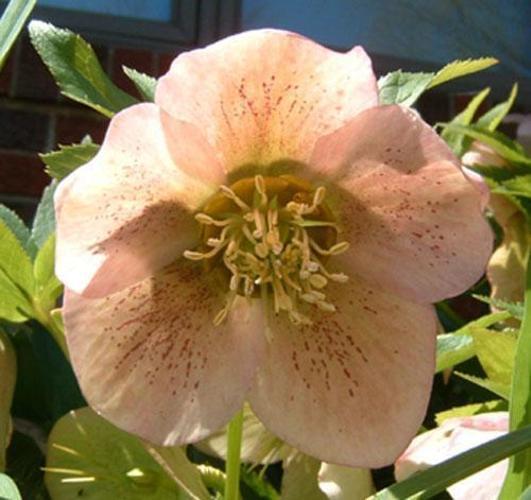
Hellebore (Lenten Rose)
Helleborus orientalis
Hellebores, widely known as the Lenten Rose, Christmas Rose, or Oracle Flower, are enchanting, evergreen perennials belonging to the Ranunculaceae (Buttercup) family. Native primarily to the mountainous and woodland regions of Europe and the Balkans, these remarkable plants are highly prized by g...
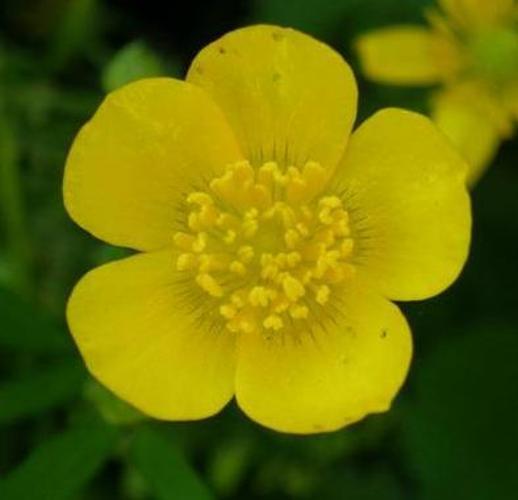
Meadow Buttercup
Ranunculus acris
The Meadow Buttercup (Ranunculus acris) is a ubiquitous, bright, and cheerful herbaceous perennial belonging to the Ranunculaceae family. Native to Europe and Eurasia, it has naturalized widely across North America and other temperate regions globally. While often viewed nostalgically as a classi...
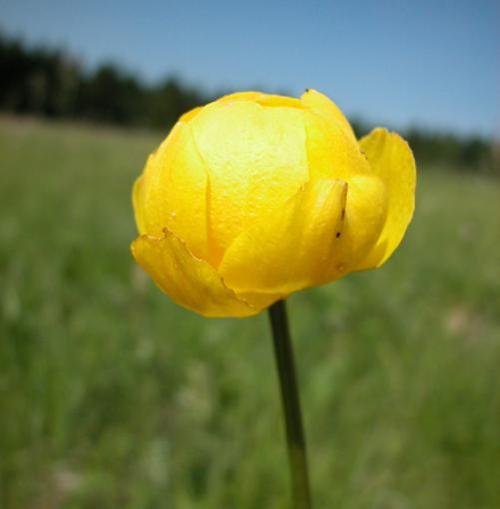
Globe flower
Trollius
The Globe Flower, botanically classified as Trollius and most famous as Trollius europaeus, is a whimsical, moisture-loving herbaceous perennial belonging to the Ranunculaceae (buttercup) family. Native to the cool temperate, alpine, and sub-boreal zones of Europe, northern Asia, and North Americ...
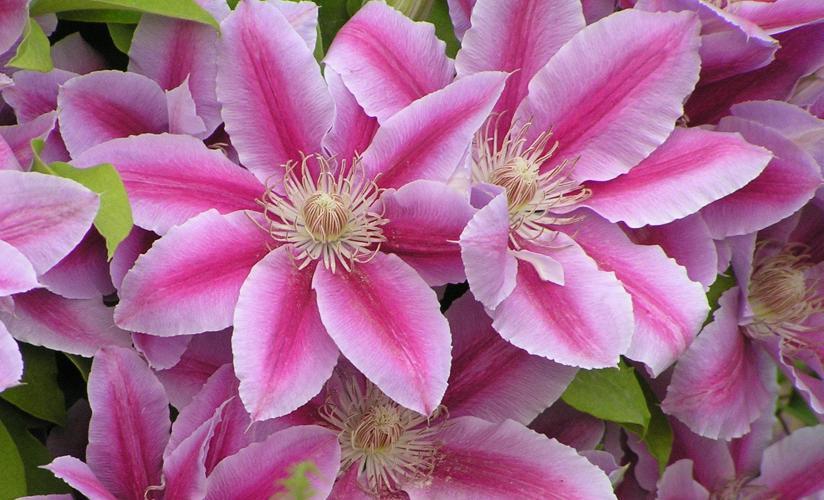
Clematis
Clematis
The Clematis, belonging to the genus Clematis within the family Ranunculaceae (the buttercup family), is a spectacular genus of perennial climbing vines widely hailed as the 'Queen of the Climbers.' Native to the temperate woodlands, rocky hillsides, and river hedgerows across the Northern Hemisp...
Similar Characteristics
4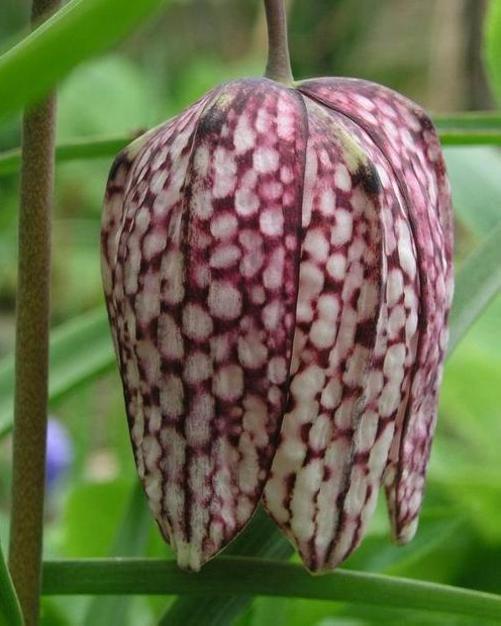
Fritillaria
Fritillaria
The Fritillaria, botanically designated as Fritillaria within the Liliaceae (lily) family, is an extraordinarily elegant and exotic genus of spring-flowering bulbous perennials. Native to the temperate latitudes of the Northern Hemisphere—spanning the grassy floodplains of Europe, the Mediterrane...
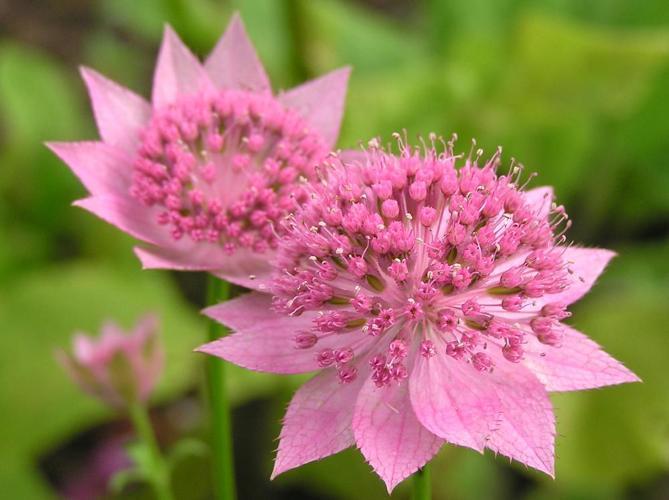
Masterwort
Astrantia
Distinctive perennial with star-shaped flower heads composed of tiny florets surrounded by prominent papery bracts that resemble a pincushion filled with decorative pins. The showy bracts come in shades of pink, white, cream, and red, creating a delicate star-like appearance. Popular cottage gard...
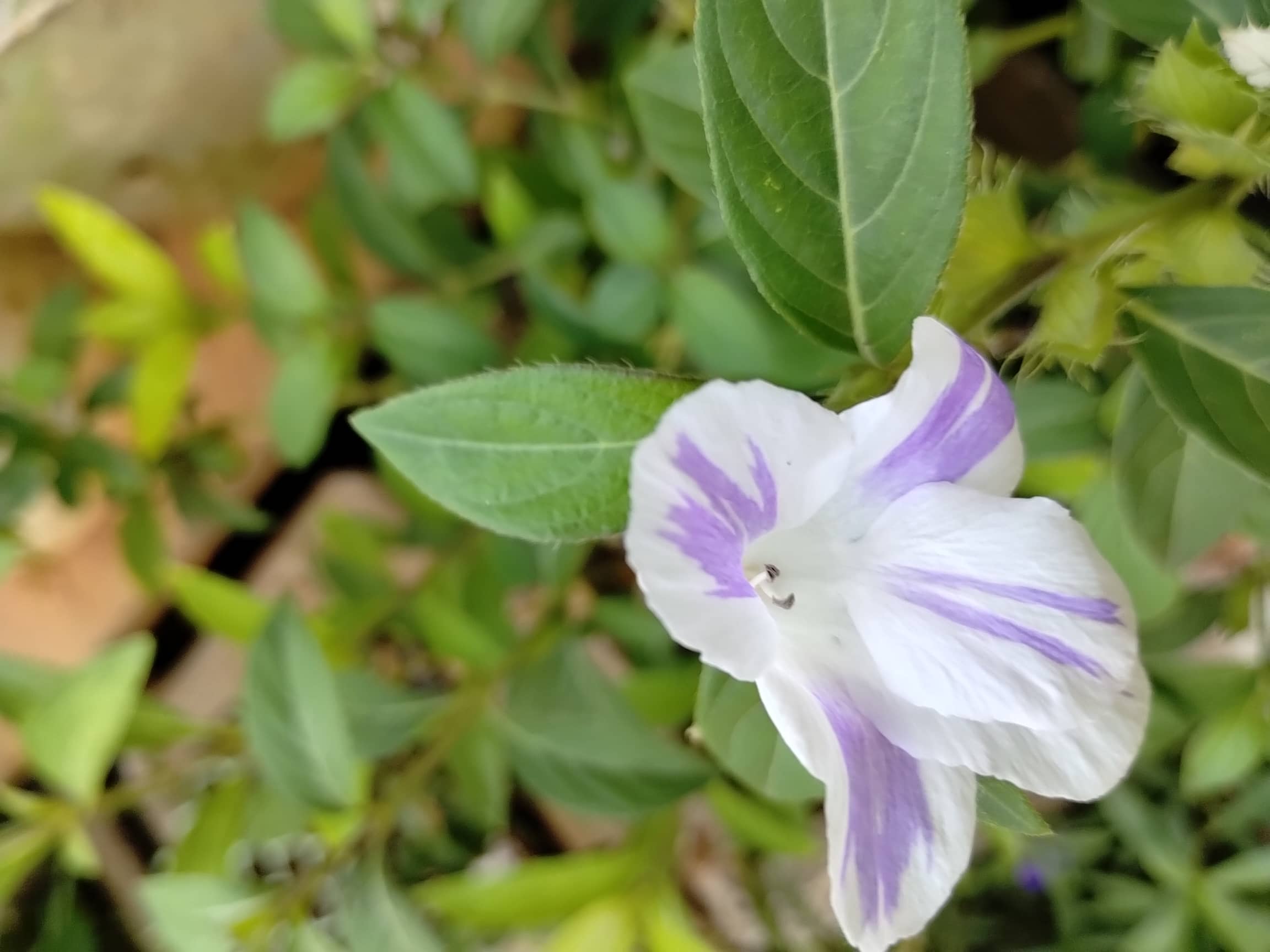
December
Barleria Cristata, Barleria prionitis
The December Flower, botanically classified under the genus Barleria within the family Acanthaceae (the acanthus family), is a highly attractive, fast-growing evergreen tropical shrub. Native to the sunny forest edges, dry riverbanks, and open scrublands of tropical Asia—spanning India, Myanmar,...
Pincushion
Scabiosa
The Pincushion Flower, botanically designated under the genus *Scabiosa* (particularly *Scabiosa atropurpurea*, known as the Sweet Scabious or Pincushion Flower), is an exceptionally charming, airy herbaceous perennial or annual. Belonging to the family Caprifoliaceae (the honeysuckle family, tri...