
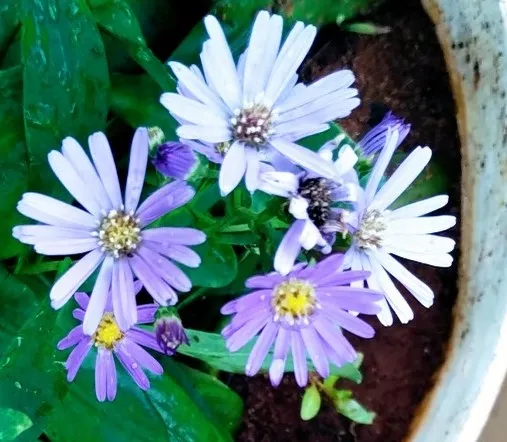
Aster (Michaelmas Daisy)
Symphyotrichum (formerly Aster)
How to Identify Aster (Michaelmas Daisy)
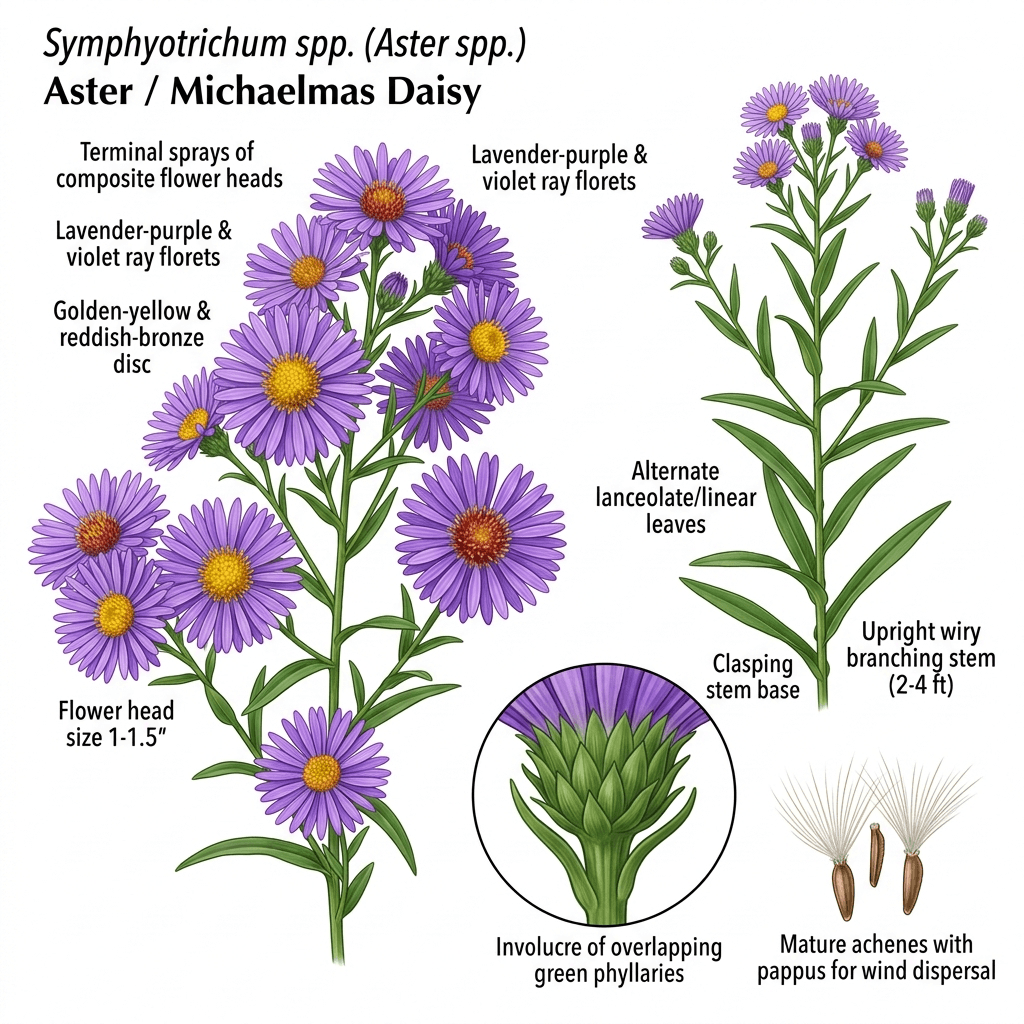
A detailed guide to identifying Asters / Michaelmas Daisies (Symphyotrichum spp. / Aster spp.) by key botanical features:
- Terminal Sprays of Star-Like Flower Heads: Plentiful composite flower heads measuring 1 to 1.5 inches across, featuring vivid lavender, purple, violet, or pink ray florets encircling a bright golden-yellow central disc floret core that matures to reddish-bronze.
- Alternate Lanceolate to Linear Stem Foliage: Narrow, pointed, smooth or lightly toothed green leaves arranged alternately along upright, branching wiry stems (2 to 5 feet tall), often clasping slightly at the leaf base.
- Involucre of Overlapping Green Phyllaries: Cup-like base beneath each composite flower head composed of small, green, overlapping, pointed bracts (phyllaries).
- Wind-Dispersed Feathery Achenes: Mature dry achene seeds equipped with a delicate, fluffy white pappus designed to drift on autumn winds.
Types & Sub-types of Asters
Asters belong to the Asteraceae family and are distinguished based on stem height, foliage texture, and native origin:
- By Horticultural Group & Native Species:
- New England Aster (Symphyotrichum novae-angliae): Robust, tall upright plants (3–6 feet) with rough, clasping, hairy lanceolate leaves and dense sprays of deep purple or pink blossoms.
- New York Aster (Symphyotrichum novi-belgii): Bushy, smooth-stemmed perennials (1–4 feet) featuring glossy, hairless leaves and prolific lavender-blue or white floral sprays.
- Alpine Aster (Aster alpinus): Dwarf, spring-to-early-summer blooming alpine rockery species (6–12 inches) with solitary violet-blue flower heads.
- By Bloom Timing & Habit:
- Late-Season Michaelmas Cultivars: Peak bloom occurs late August through November, serving as a primary autumn nectar source for migrating butterflies and bees.
- Woodland Asters (Eurybia divaricata / Symphyotrichum cordifolium): Shade-tolerant species featuring heart-shaped leaves and clouds of small white or pale blue flowers in dappled woodland light.
Care & Growing Guide
Seasonal Blooming & Hardiness
Seasonal Blooming Calendar:
- Peak Bloom: Spring to early summer (typically April through June).
- Planting Time: Sow seeds directly outdoors in early spring after the last frost, or transplant nursery starts in late spring.
Bloom Timeline
About Aster (Michaelmas Daisy)
The Aster, commonly known as the Michaelmas Daisy, is a quintessential late-summer and autumn bloomer belonging to the vast Asteraceae family. Native primarily to North America and Eurasia, these resilient perennials are absolute magnets for pollinators. Earning their name from the ancient Greek word for 'star,' they literally burst into massive, star-shaped floral displays just as most other garden flowers are fading, providing a vital, late-season nectar source for migrating monarch butterflies and bees.
Asters are easily recognized by their daisy-like composite flowers, which feature bright yellow central discs surrounded by a dense fringe of fine ray florets. Bloom colors typically span a cool-toned spectrum of purple, lavender, blue, pink, and crisp white. The foliage is generally dark green, lance-shaped, and has a slightly rough texture. Depending on the specific species and cultivar, plants can range from compact 1-foot mounds to towering 6-foot stalks that sway in the autumn breeze.
The floral formula is ⊕ ⚥ (Disc) / % ♀ (Ray) K(pappus) C(5) A(5) G(2). The capitulum (flower head) functions visually as a single bloom but is actually composed of dozens of tiny flowers. It features actinomorphic, bisexual disc florets densely packed in the center, and zygomorphic, female ray florets radiating outward on the edge.
Asters are hardy and adaptable. They thrive in full sun (requiring at least 6 hours daily for best blooming) but will tolerate light shade. They require well-draining, loamy soil and moderate watering. Good air circulation is crucial when planting, as their dense foliage can be highly susceptible to powdery mildew if kept damp. They are exceptionally cold-hardy, thriving in USDA zones 3-8, and often survive light autumn frosts.
Culturally, the name 'Michaelmas Daisy' refers to their reliable tendency to bloom around the feast of St. Michael (Michaelmas) in late September in the Northern Hemisphere. They are heavily steeped in folklore, symbolizing deep love, wisdom, and faith, and serve as the official birth flower for the month of September.
Crucially for gardeners with pets, Asters are completely NON-TOXIC. They are safe to plant around dogs, cats, and horses, making them an excellent, worry-free choice for vibrant, pet-friendly landscapes.
They are frequently confused with true Daisies (Bellis perennis or Leucanthemum) or Fleabane (Erigeron). However, Asters generally bloom much later in the season (fall rather than spring/summer) and feature much more finely cut, densely packed ray florets in shades of blue and purple, unlike the stark white of standard daisies. Pair with Pelargonium or Fire Lily, and explore more in our Flower Identifier.
Floral Formula & Features
Capitulum inflorescence: central disc florets are actinomorphic and bisexual; outer ray florets are zygomorphic and female.
- Scientific Name & Classification: Symphyotrichum spp. / Aster spp. (Asteraceae). Commonly known as Michaelmas Daisy.
- Identification Markers: Star-shaped composite flowers with yellow centers and purple/blue/pink outer rays. Blooms in late summer to autumn.
- Floral Formula (⊕ ⚥ / % ♀ K(pappus) C(5) A(5) G(2)): Composite flower head featuring bisexual central disc florets and female outer ray florets.
- Growing Requirements: Full sun, well-draining soil, good air circulation. Highly cold-hardy (USDA zones 3-8).
- Cultural Significance: Official birth flower for September. Blooms coincide with the feast of Michaelmas. Symbolizes wisdom and love.
- Safety & Toxicity: NON-TOXIC. Completely safe for dogs, cats, and horses.
- Common Look-alikes: Often confused with standard Daisies or Fleabane, but Asters bloom in autumn and feature much finer, colorful petals.
- Internal Links: Discover more pollinator favorites in the Flower Identifier or pair with Dahlia.
- Internal Links: Compare key differences in our Daisy vs Aster comparison, or try our instant Flower Identifier.
Names in Different Languages
Botanical Classification: Aster (Michaelmas Daisy) belongs to the Asteraceae family. Learn how to identify its floral symmetry, stamen arrangement, and structural formulas in our Botanical Family Classification Guide.
Toxicity & Safety
Pet Safety Guide: For detailed toxicity symptoms, first-aid measures, and safe garden alternatives, see our full Pet Guard Profile for Aster (Michaelmas Daisy).
Frequently Asked Questions
What is Floral Formula?
A floral formula is a symbolic representation of a flower's structure using letters, numbers, and special symbols. It provides a concise way to describe the arrangement and number of floral parts.
This formula describes the flower's symmetry, sepals, petals, stamens, and carpels in a standardized format.
Formula Sequence
- Bract: Br or Ebr
- Bracteole: Brl or Ebrl
- Symmetry: % (Radial) or ⊕ (Bilateral)
- Sex: ♀ (Female), ♂ (Male), or ⚥ (Bisexual)
- Calyx/Sepal: K<number> (Free or Fused)
- Corolla/Petal: C<number> (Free or Fused)
- Androecium: A<number> (Free or Fused)
- Gynaecium: G<number> (Superior or Inferior Ovary)
Symbol Meanings
- Numbers: Indicate quantity of parts
- Parentheses (): Parts are fused together
- Plus (+): Parts in different whorls
- Underline: Superior ovary position
- Overline: Inferior ovary position
- ∞: Numerous parts (too many to count)
Understanding floral formulas helps botanists quickly identify and classify flowers based on their structural characteristics.
Similar Flowers
Discover flowers that share botanical characteristics
Same Family
4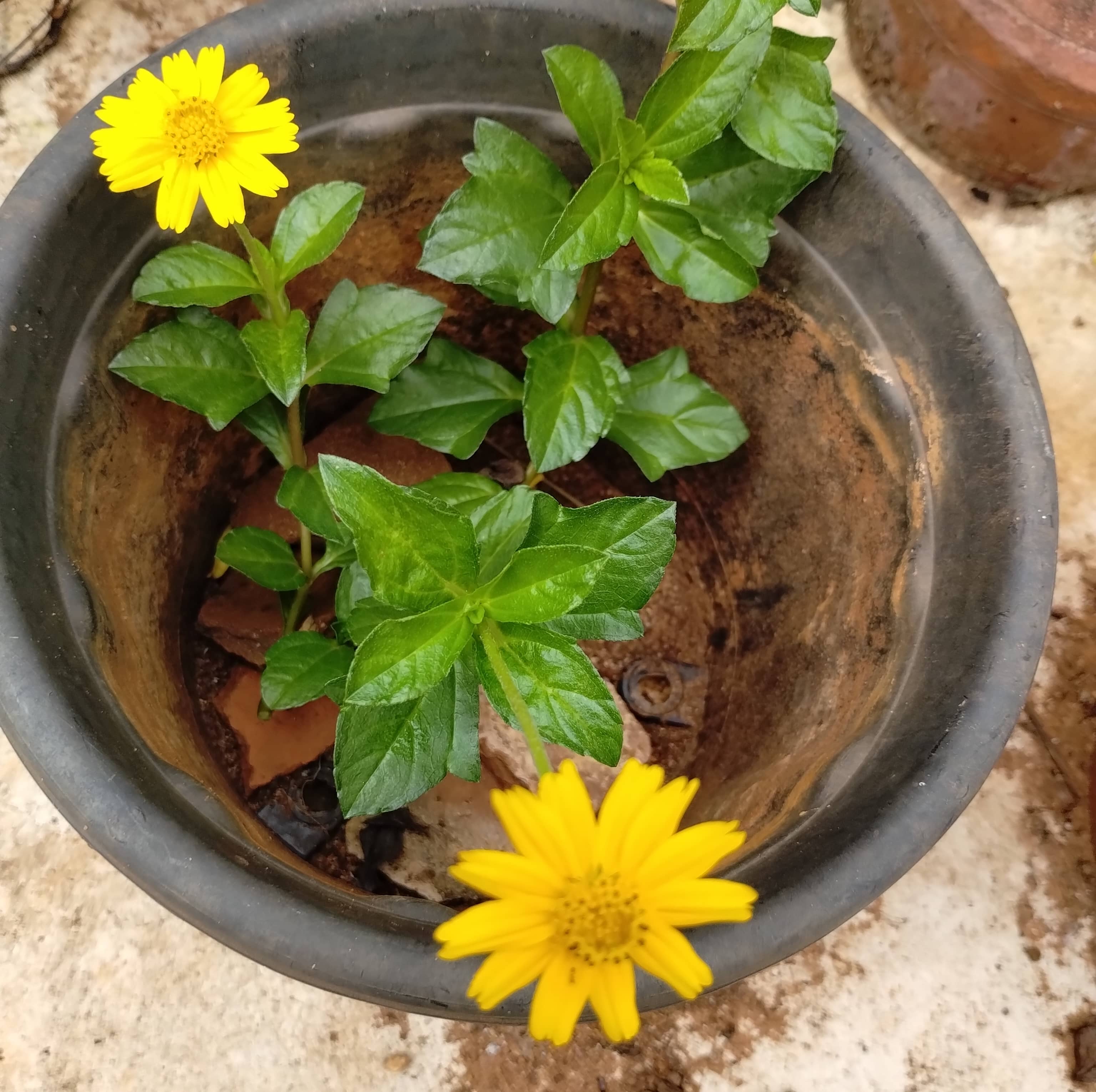
Wedelia Trilobata
Sphagneticola trilobata
Wedelia Trilobata, botanically classified as Sphagneticola trilobata and commonly known as the Creeping Daisy, Singapore Daisy, Trailing Daisy, or Creeping Oxeye, is an exceptionally fast-growing, mat-forming perennial herbaceous groundcover. Belonging to the family Asteraceae (the daisy or sunfl...
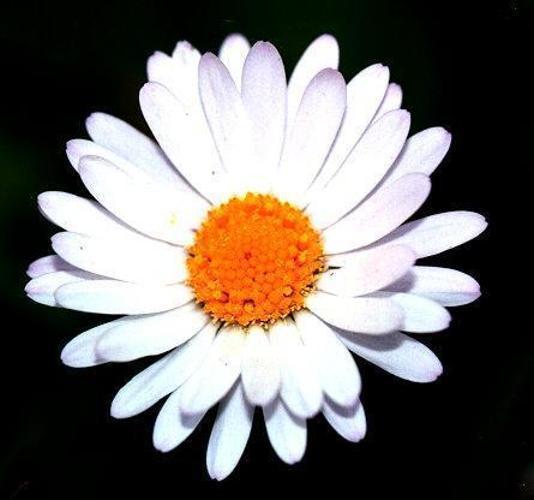
Oxeye Daisy
Leucanthemum vulgare
The Oxeye Daisy, botanically classified as Leucanthemum vulgare and historically celebrated as the Moon Daisy or Dog Daisy, is an exceptionally cheerful, rhizomatous herbaceous perennial belonging to the Asteraceae (daisy or composite) family. Native to the sweeping fields, dry pastures, and sunn...
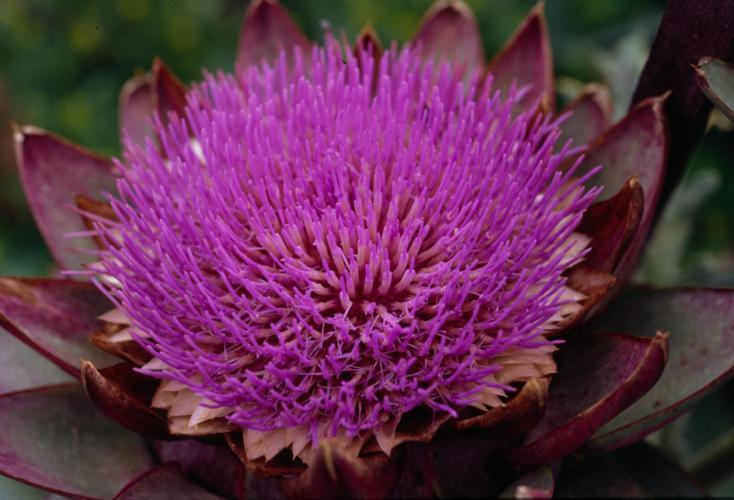
Artichoke
Cynara scolymus
The Artichoke, botanically designated as *Cynara cardunculus* (Scolymus Group) and commonly known as the Globe Artichoke, French Artichoke, or Green Artichoke, is a highly dramatic perennial thistle. Belonging to the family Asteraceae (the daisy or sunflower family, tribe Cynareae), this architec...
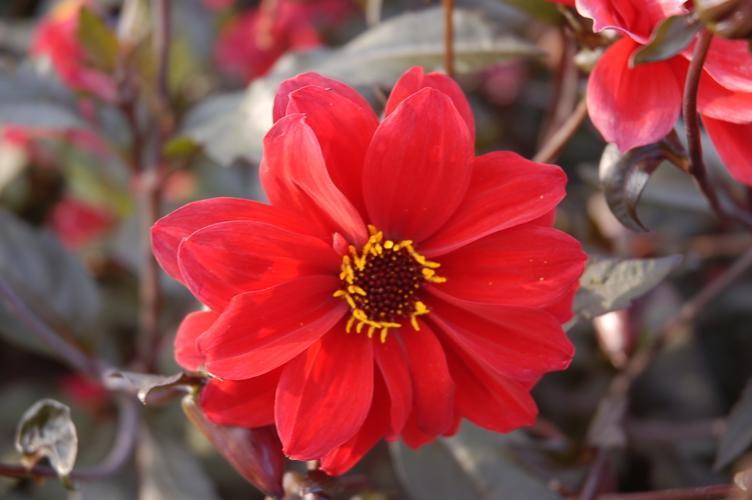
Dahlia 'Bishop of Llandaff'
Dahlia 'Bishop of Llandaff'
The Dahlia 'Bishop of Llandaff', a stunning member of the Asteraceae family, is a highly prized tuberous perennial native to the mountainous regions of Mexico. First introduced in the 1920s, it remains one of the most famous and beloved Dahlia cultivars in the world. It is renowned not just for i...
Similar Characteristics
4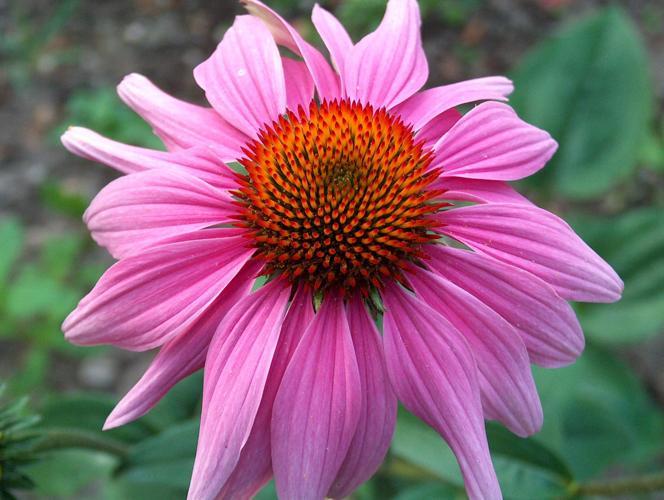
Purple Coneflower (Echinacea)
Echinacea purpurea
The Purple Coneflower (Echinacea purpurea) is a robust, iconic native North American perennial belonging to the Asteraceae family. Found thriving naturally in the prairies, open woods, and dry plains of the central and eastern United States, it has become a global favorite in both ornamental land...
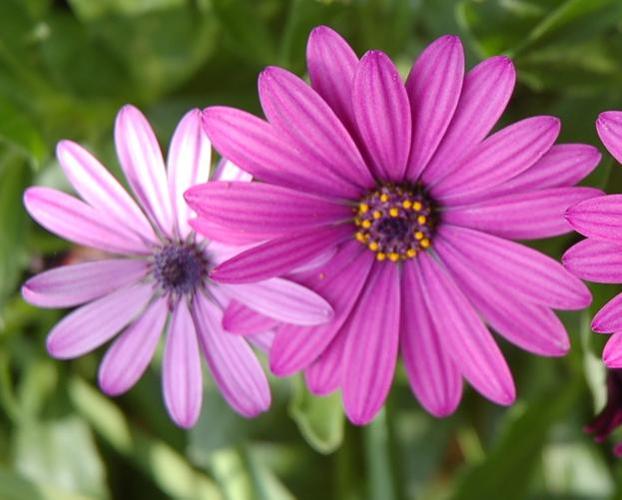
African Daisy (Osteospermum)
Dimorphotheca ecklonis
Osteospermum, commonly known as the African Daisy or Cape Daisy, is a genus of flowering plants that represents the sheer brilliance of the South African floral kingdom. Belonging to the Calenduleae tribe within the massive Asteraceae family, these daisies are celebrated for their sophisticated,...
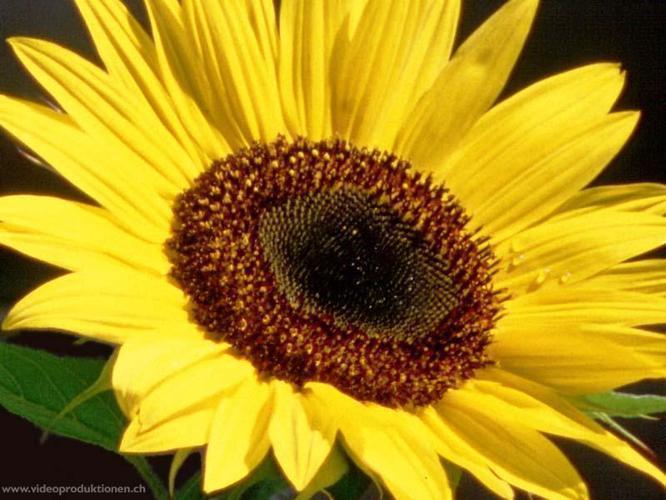
Sunflower
Helianthus annuus
The Sunflower, botanically classified as Helianthus annuus and commonly known as the Common Sunflower, is an exceptionally iconic, robust, and fast-growing annual plant. Belonging to the family Asteraceae (the daisy, aster, or composite family), this famous wildflower is native to the fertile pra...
Oxeye Daisy
Leucanthemum vulgare
The Oxeye Daisy, botanically classified as Leucanthemum vulgare and historically celebrated as the Moon Daisy or Dog Daisy, is an exceptionally cheerful, rhizomatous herbaceous perennial belonging to the Asteraceae (daisy or composite) family. Native to the sweeping fields, dry pastures, and sunn...