
Wisteria
Wisteria
How to Identify Wisteria
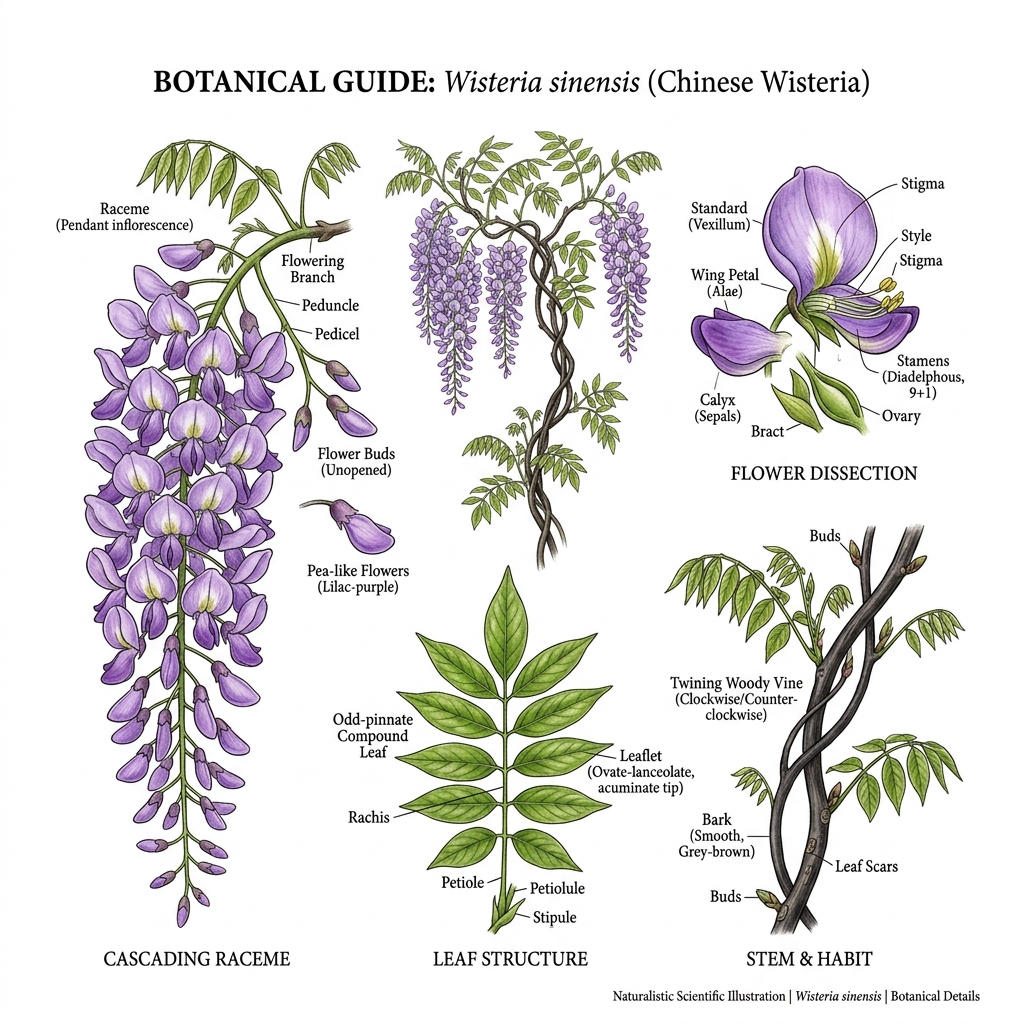
How to identify Wisteria:
- Cascading Racemes: Massive, hanging clusters (racemes) of pea-like flowers measuring 6 to 18 inches in length, blooming in lavender, violet, pink, or white.
- Twining Woody Vines: Extremely robust, heavy woody vines that wrap tightly around supports, twisting either clockwise or counter-clockwise.
- Pinnate Compound Leaves: Alternate leaves composed of 9 to 19 leaflets arranged along a central stalk.
- Velvety Seed Pods: Long, flattened, seed pods (2 to 4 inches long) covered in a soft, velvety texture, developing in late summer and releasing toxic seeds.
Types of Wisteria
There are two primary Asian species and one native American species cultivated in gardens:
- Chinese Wisteria (Wisteria sinensis): Stems twine counter-clockwise. Flowers open all at once before leaves unfold, creating a high-density color display. Has 9-13 leaflets per leaf.
- Japanese Wisteria (Wisteria floribunda): Stems twine clockwise. Features much longer cascading racemes (up to 18-24 inches) that open sequentially from base to tip. Has 13-19 leaflets per leaf.
- American Wisteria (Wisteria frutescens): Shorter, compact, cylindrical flower clusters (2 to 5 inches long) that bloom after leaves are fully grown. Much less aggressive growth and non-invasive.
Care & Growing Guide
Wisteria Care & Growing Guide:
- Light: Full sun (at least 6 hours of direct daily sun) is essential for flower bud development.
- Soil: Average, fertile, moist, well-draining garden soil. Prefers slightly acidic to neutral pH.
- Watering: Keep soil moderately moist; water deeply weekly during dry summer months.
- Pruning: Pruning twice a year is critical: once in mid-summer (cut green shoots back to 5-6 buds) and again in late winter (cut shoots back to 2-3 buds) to stimulate flowering spurs.
Seasonal Blooming & Hardiness
Seasonal Blooming Calendar (US Hardiness Zones 5-9):
- Native Region: Native to the woodlands and mountain valleys of China and Japan, where they bloom in spring (April-May).
- US Cultivation: Grown outdoors in Zones 5-9. Blooms in mid-spring (typically April to May) before or during initial leaf emerge, with occasional light repeat blooms in summer.
Bloom Timeline
About Wisteria
Wisteria, botanically classified within the genus Wisteria and most famously represented by Wisteria sinensis (Chinese Wisteria) and Wisteria floribunda (Japanese Wisteria), is a spectacular genus of woody, climbing deciduous vines in the Fabaceae (pea or legume) family. Native to the damp woodlands and stream margins of East Asia (specifically China, Japan, and Korea) as well as the eastern United States, these high-impact climbers are globally celebrated for their sheer vigor and breathtaking, cascading spring floral displays.
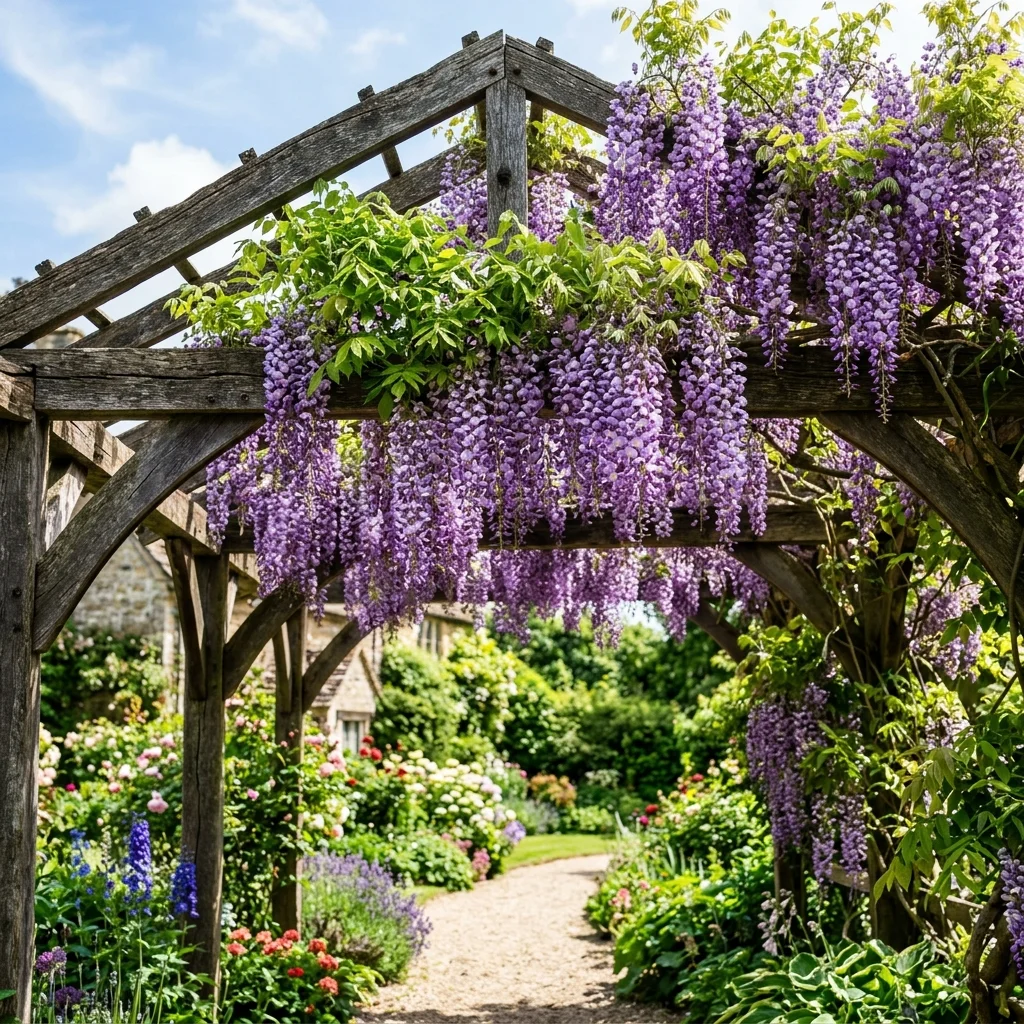
Growing aggressively by twining its woody stems clockwise or counter-clockwise around any available physical support, Wisteria vines can reach heights of 30 to 65 feet and spread up to 30 feet wide. In early-to-mid spring, before the foliage emerges, the woody vines produce dense, hanging clusters (racemes) of pea-like, highly fragrant flowers measuring 6 to 18 inches in length. The blossoms open in cascading shades of lavender, violet-blue, pink, or white, creating a spectacular hanging canopy.
The botanical floral structure of Wisteria is represented by the formula % ⚥ K(5) C5 A10 G1. This formula indicates that the flower is bilaterally symmetrical (zygomorphic) and bisexual. The calyx is composed of 5 fused sepals, the corolla consists of 5 distinct petals arranged in a classic butterfly (papilionaceous) structure (a large upper 'standard' petal, 2 side 'wing' petals, and 2 fused bottom 'keel' petals). The androecium contains 10 stamens (typically diadelphous, with 9 fused into a tube and 1 free), surrounding a single superior carpel that develops into a long, velvety seed pod.
Horticulturally, Wisteria is an exceptionally vigorous vine that requires full direct sun (at least 6 hours daily) to produce flower buds and prevent leggy, non-blooming growth. It thrives in average, moist, well-draining soils and is highly adaptable, but requires aggressive pruning twice a year (in summer after flowering and in late winter before bud break) to control its rampaging growth and stimulate blooming spurs. Because the mature woody vines are extremely heavy and powerful, they must be planted against sturdy, heavy-duty supports like wooden pergolas, stone walls, or metal trellises.
The genus was named by botanical collector Thomas Nuttall to honor Dr. Caspar Wistar, a prominent American physician and anatomist, though spelling variations led to the permanent taxonomic name Wisteria. Famed across Asia as Fuji (藤) in Japanese and Zītén (紫藤) in Chinese, it represents longevity, wisdom, and endurance, frequently depicted in classical East Asian art and poetry.
For pet owners and veterinarians, Wisteria represents a highly hazardous and toxic plant. All members of the genus Wisteria are chemically TOXIC to cats, dogs, and horses. The entire vine, with the highest concentration residing in the seeds and velvety pods, contains the toxic glycoside wisterin and toxic resins. Ingestion of even a few seeds causes severe gastrointestinal distress, persistent vomiting (frequently bloody), diarrhea, dehydration, and central nervous system depression. For complete garden safety and emergency care guidelines, visit our specific Pet Guard for Wisteria profile.
Wisteria is occasionally confused with other cascading purple flowering plants like Laburnum (Golden Chain Tree) or Buddleja (Butterfly Bush). It is easily distinguished because Wisteria is a twining woody vine with pinnate compound leaves and pea-like flowers, whereas Butterfly Bush is a multi-stemmed upright shrub with lance-shaped leaves and dense, spiky panicles. It looks magnificent climbing over a rustic pergola alongside other spring bloomers like Clematis or Bearded Iris. To explore climbing cultivars, explore our Flower Identifier.
Floral Formula & Features
Bilateral (zygomorphic) symmetry, bisexual, 5 fused sepals, 5 petals (papilionaceous: 1 standard, 2 wings, 2 fused keel petals), 10 stamens in a 9+1 diadelphous arrangement, 1 pistil with superior ovary. Produces dry, velvety seed pods typical of Fabaceae.
- Scientific Name & Classification: Wisteria (Fabaceae). Common species include Wisteria sinensis (Chinese) and Wisteria floribunda (Japanese).
- Identification Markers: Twining woody vines, alternate pinnate leaves with 9-19 leaflets, and massive 6-18 inch cascading racemes of fragrant purple, blue, or white pea-like flowers.
- Floral Formula (% ⚥ K(5) C5 A10 G1): Zygomorphic, bisexual flowers with 5 fused sepals, 5 papilionaceous petals (standard, wings, keel), 10 diadelphous stamens, and superior ovary.
- Growing Requirements: Full direct sun (6+ hours); average, moist, well-draining garden soil. Requires extremely sturdy support structures and twice-yearly pruning (Zones 5-9).
- Cultural Significance: Named after Dr. Caspar Wistar. Famed in Japan as 'Fuji' and China as 'Ziteng,' symbolizing longevity, endurance, and wisdom in classical art.
- Safety & Toxicity: TOXIC. Every part, especially the seeds and pods, contains wisterin glycoside and toxic resins. Ingestion causes severe bloody vomiting and dehydration.
- Common Look-alikes: Confused with Butterfly Bush, but easily distinguished by its climbing woody vine habit, compound pinnate leaves, and pea-like flowers in pendulous racemes.
- Internal Links: Creates a spectacular canopy when grown over pergolas alongside spring partners like Clematis or Bearded Iris. For comparison with wild vines, see Bindweed. find more in our Flower Identifier.
- Internal Links: Compare key differences in our Wisteria vs Clematis comparison, or try our instant Flower Identifier.
Names in Different Languages
Botanical Classification: Wisteria belongs to the Fabaceae family. Learn how to identify its floral symmetry, stamen arrangement, and structural formulas in our Botanical Family Classification Guide.
Toxicity & Safety
Always keep toxic plants out of reach of children and pets. Consult a veterinarian or medical professional immediately if ingestion is suspected.
Pet Safety Guide: For detailed toxicity symptoms, first-aid measures, and safe garden alternatives, see our full Pet Guard Profile for Wisteria.
Frequently Asked Questions
What is Floral Formula?
A floral formula is a symbolic representation of a flower's structure using letters, numbers, and special symbols. It provides a concise way to describe the arrangement and number of floral parts.
This formula describes the flower's symmetry, sepals, petals, stamens, and carpels in a standardized format.
Formula Sequence
- Bract: Br or Ebr
- Bracteole: Brl or Ebrl
- Symmetry: % (Radial) or ⊕ (Bilateral)
- Sex: ♀ (Female), ♂ (Male), or ⚥ (Bisexual)
- Calyx/Sepal: K<number> (Free or Fused)
- Corolla/Petal: C<number> (Free or Fused)
- Androecium: A<number> (Free or Fused)
- Gynaecium: G<number> (Superior or Inferior Ovary)
Symbol Meanings
- Numbers: Indicate quantity of parts
- Parentheses (): Parts are fused together
- Plus (+): Parts in different whorls
- Underline: Superior ovary position
- Overline: Inferior ovary position
- ∞: Numerous parts (too many to count)
Understanding floral formulas helps botanists quickly identify and classify flowers based on their structural characteristics.
Companion Plants & Garden Pairings
3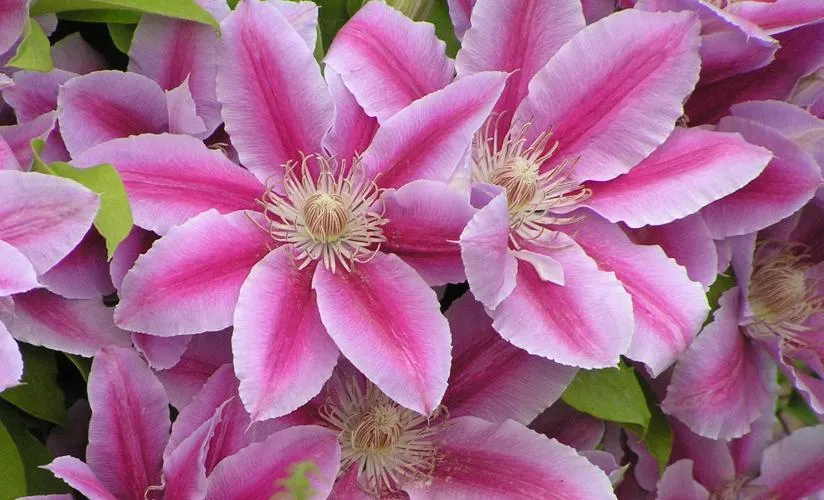
Clematis
Clematis
Intertwines beautifully with Wisteria on pergolas, providing summer color once the spring Wisteria blossoms fade.
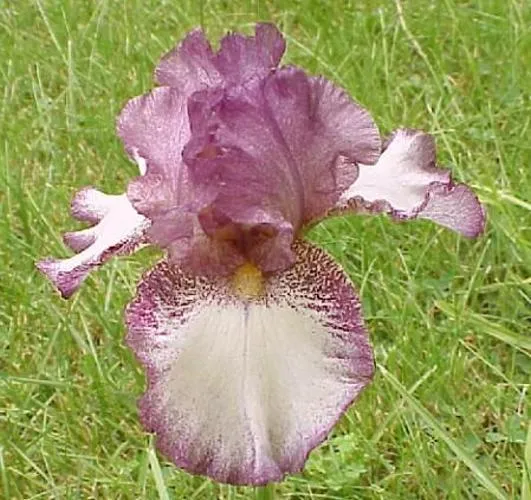
Bearded Iris
Iris germanica
Blooms at the same time in mid-spring, echoing the rich purple-blue color palette at the base of the vine.
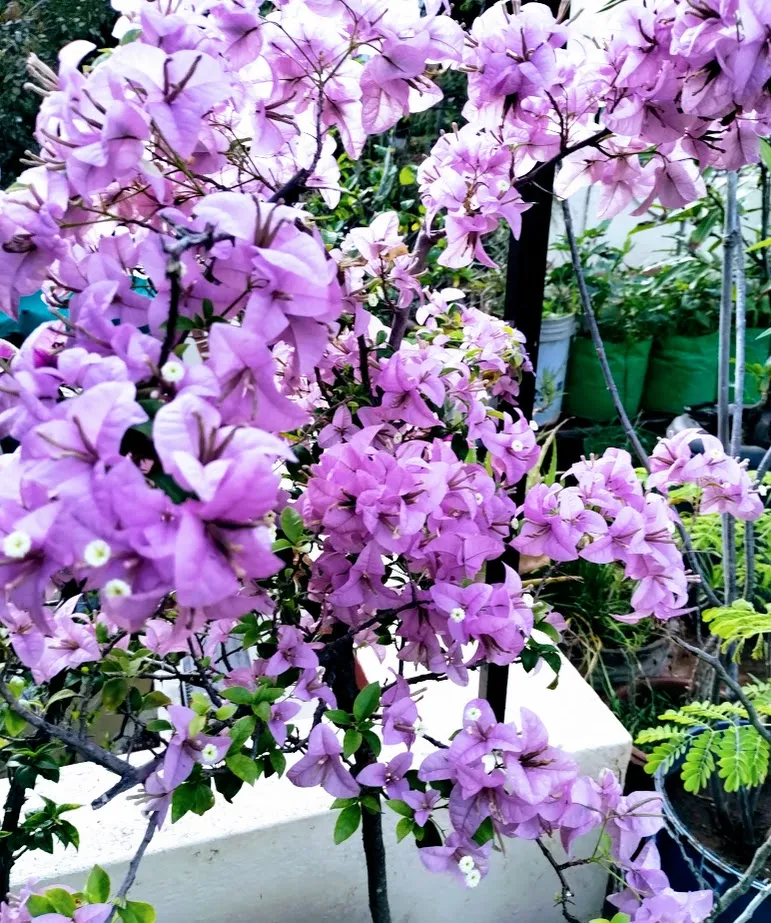
Bougainvillea
Bougainvillea
Thrives in full sun, matching the aggressive vertical scaling and adding vibrant warm-toned contrast.
Similar Flowers
Discover flowers that share botanical characteristics
Same Family
4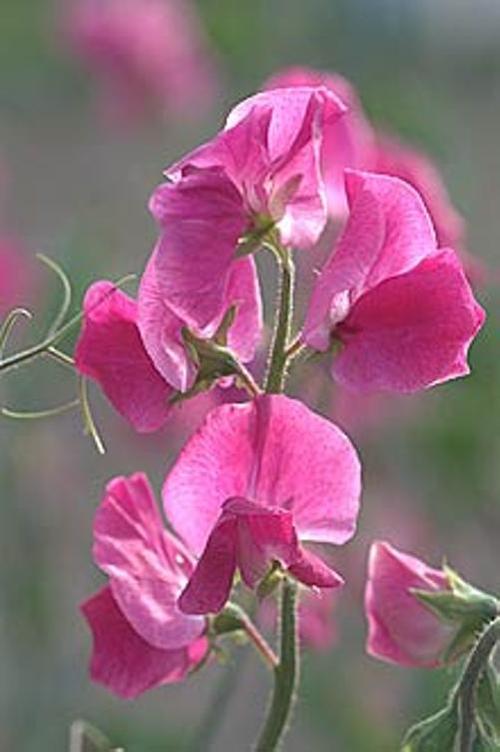
Sweet Pea
Lathyrus odoratus
The Sweet Pea (Lathyrus odoratus) is a highly romanticized, climbing annual vine belonging to the Fabaceae (legume) family. Native to the Mediterranean regions of Sicily, southern Italy, and the Aegean Islands, it became an absolute sensation in Victorian England, where intensive botanical breedi...
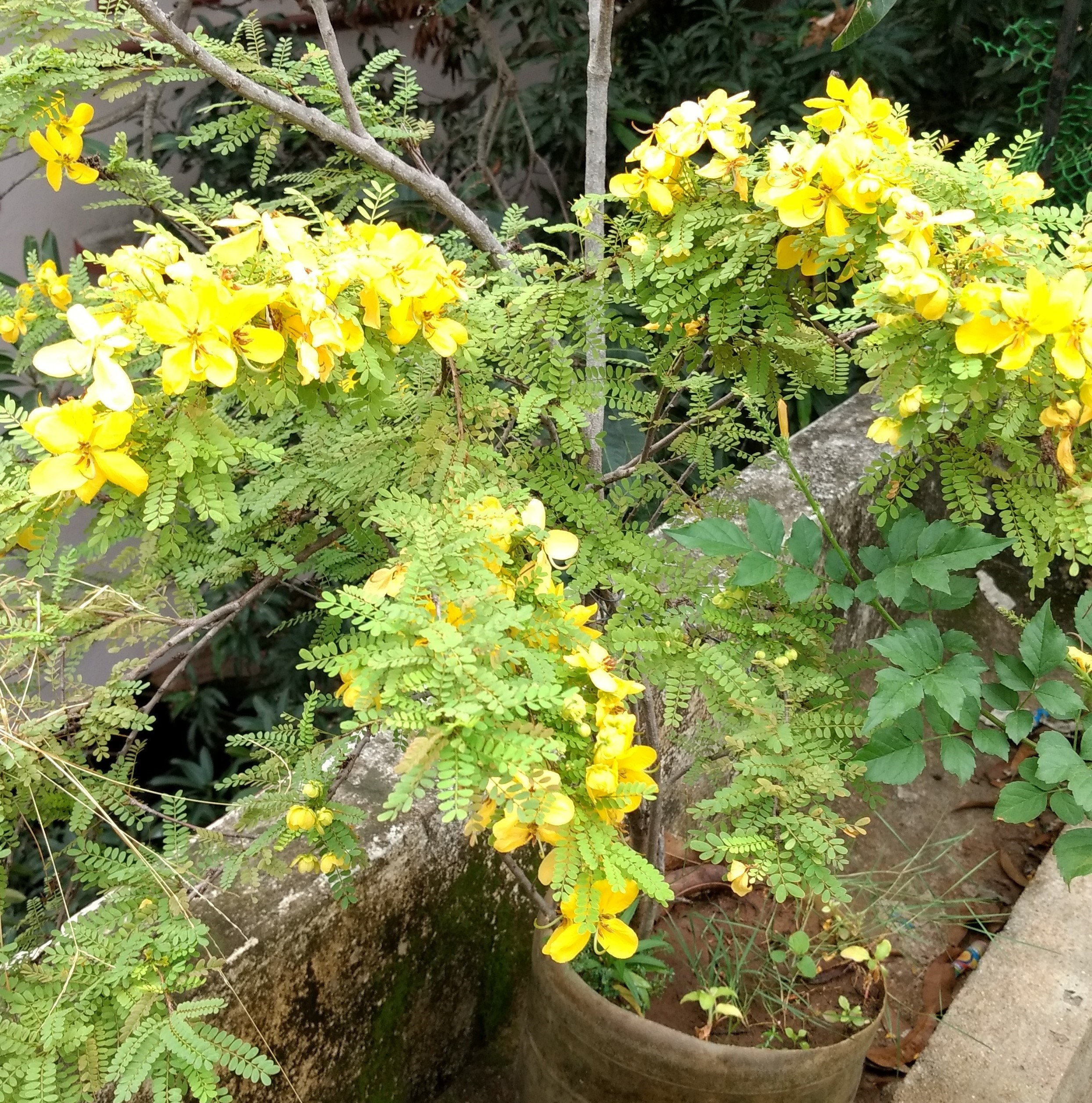
Tanner's Cassia
Senna Auriculata
Tanner's Cassia, botanically designated as Senna auriculata (formerly Cassia auriculata) and celebrated across southern India as Avarampoo, is an exceptionally hardy, drought-tolerant, and multi-purpose evergreen Indian shrub. Belonging to the family Fabaceae (the pea or legume family, subfamily...
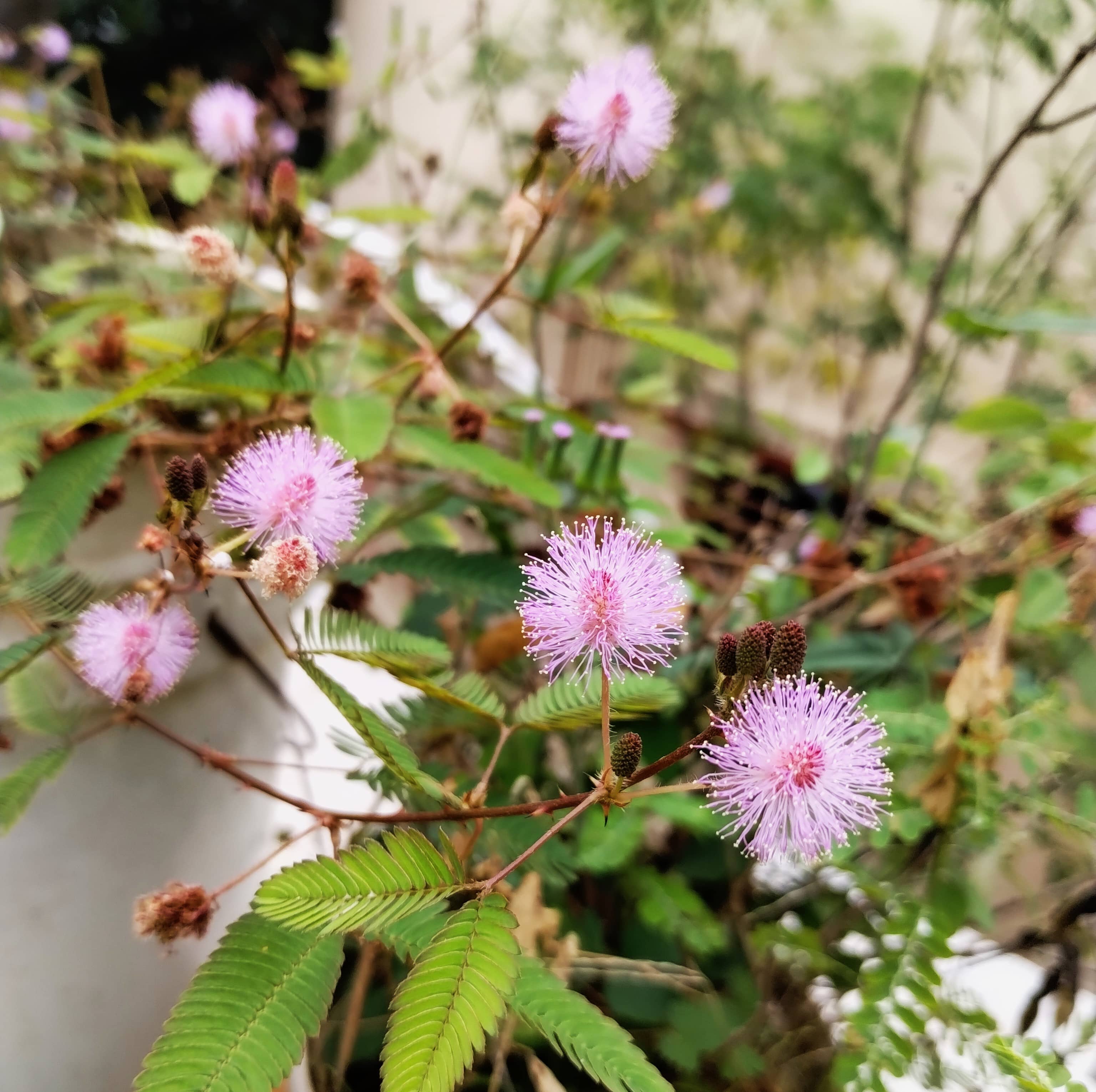
Touch Me Not
Mimosa pudica
Mimosa pudica, widely known as the "Touch-Me-Not" or "Sensitive Plant," is one of the most intriguing species in the botanical kingdom due to its rapid, touch-sensitive leaf movements. A member of the Fabaceae (Legume) family, this creeping perennial or subshrub is native to the tropical regions...
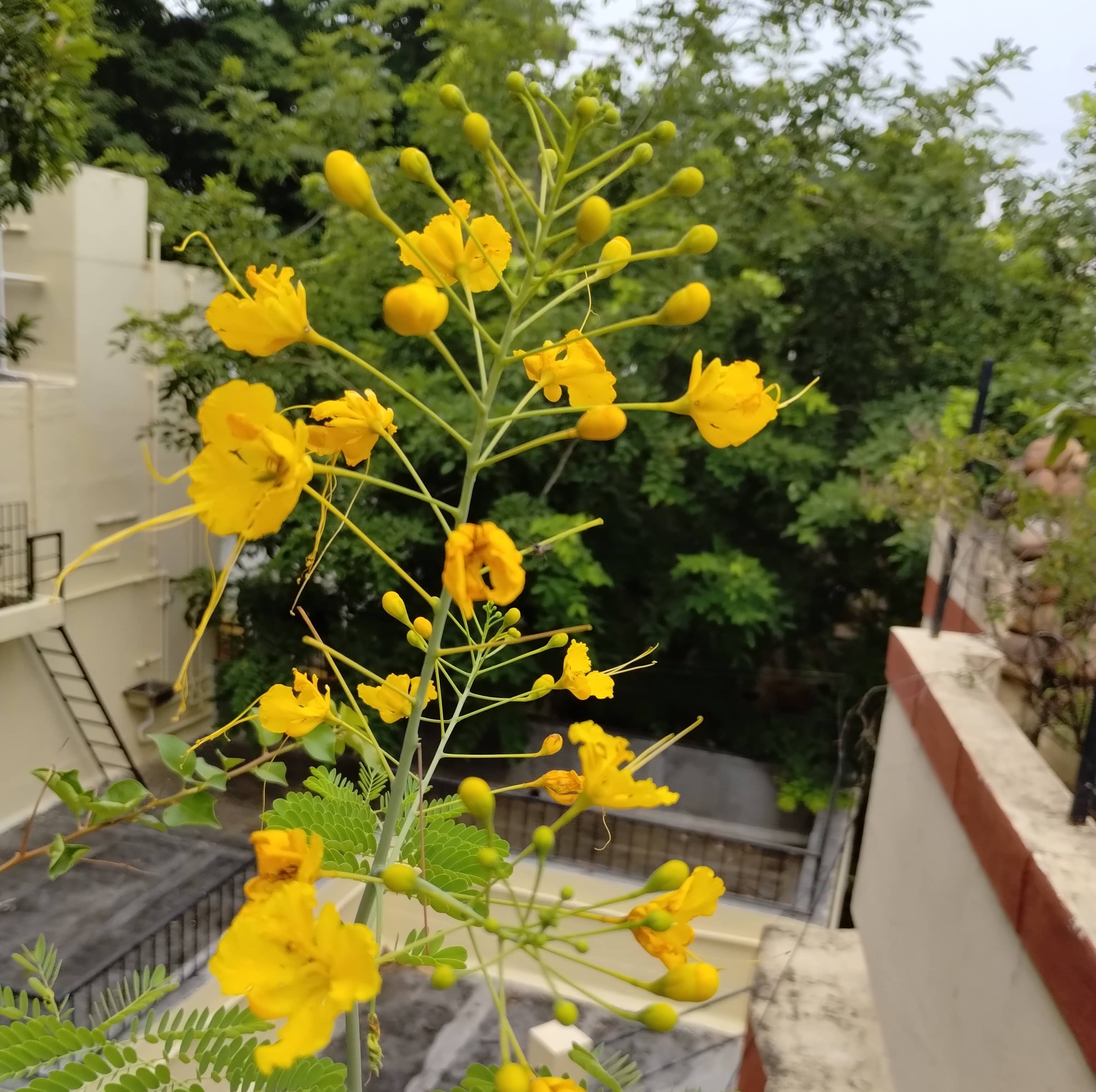
Peacock Flower (Caesalpinia)
Caesalpinia pulcherrima
Caesalpinia pulcherrima, famously known as the "Peacock Flower," "Pride of Barbados," or "Red Bird of Paradise," is a breathtakingly vibrant tropical shrub that embodies the fiery spirit of the Caribbean. A member of the Fabaceae (Legume) family, this species is celebrated for its flamboyant, ter...
Similar Characteristics
4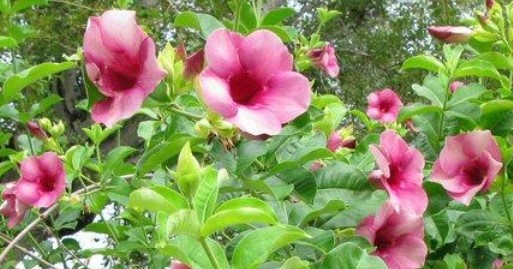
Mandevilla
Mandevilla
Mandevilla, often referred to as the Rock Trumpet, is the undisputed queen of the tropical vertical garden. Belonging to the Apocynaceae family—the same family that hosts the famous Frangipani and Oleander—this genus comprises over 100 species of vigorous, woody climbing vines and mounding shrubs...
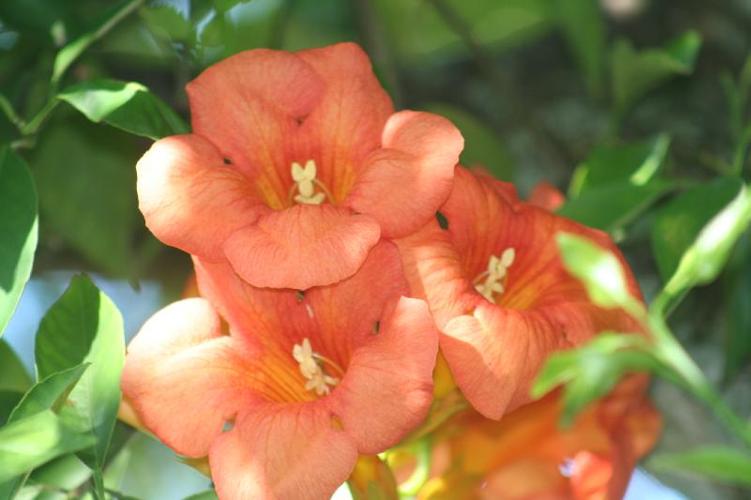
Trumpet Vine
Campsis radicans
The Trumpet Vine, botanically classified as Campsis radicans and commonly known as the Trumpet Creeper or Hummingbird Vine, is a spectacular, fast-growing deciduous woody vine belonging to the Bignoniaceae family. Native to the woodlands, riverbanks, and swamp edges of eastern and central North A...
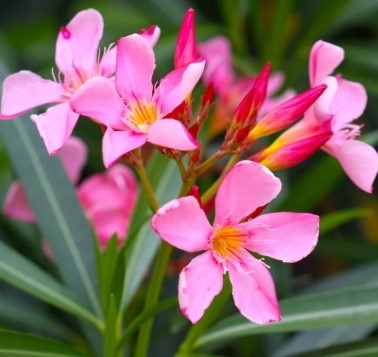
Oleander (Rosebay)
Nerium oleander
The Oleander, botanically designated as Nerium oleander and belonging to the family Apocynaceae (the dogbane family), is a fast-growing, highly resilient, and multi-stemmed evergreen shrub or small tree. Native to the rocky streambeds, coastal valleys, and warm river banks of the Mediterranean ba...
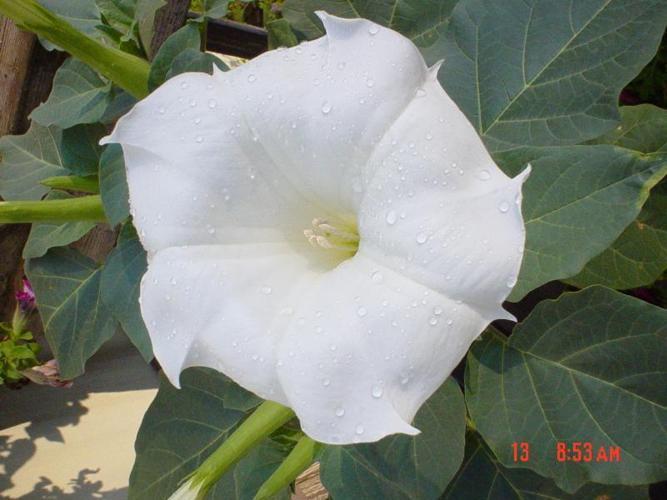
Thorn Apple
Datura stramonium
The Thorn Apple, botanically classified as Datura stramonium and widely known by folk names like Jimsonweed, Devil's Trumpet, or Hell's Bells, is an aggressive, fast-growing annual herb belonging to the Solanaceae (nightshade) family. Native to Mexico and Central America, this highly resilient sp...