
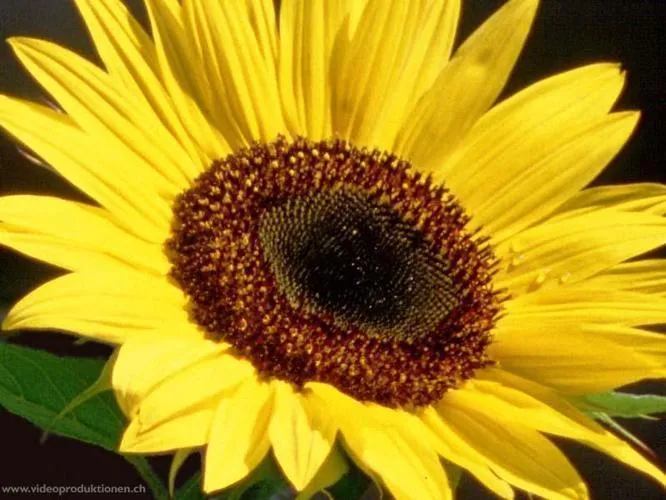
Sunflower
Helianthus annuus
How to Identify Sunflower
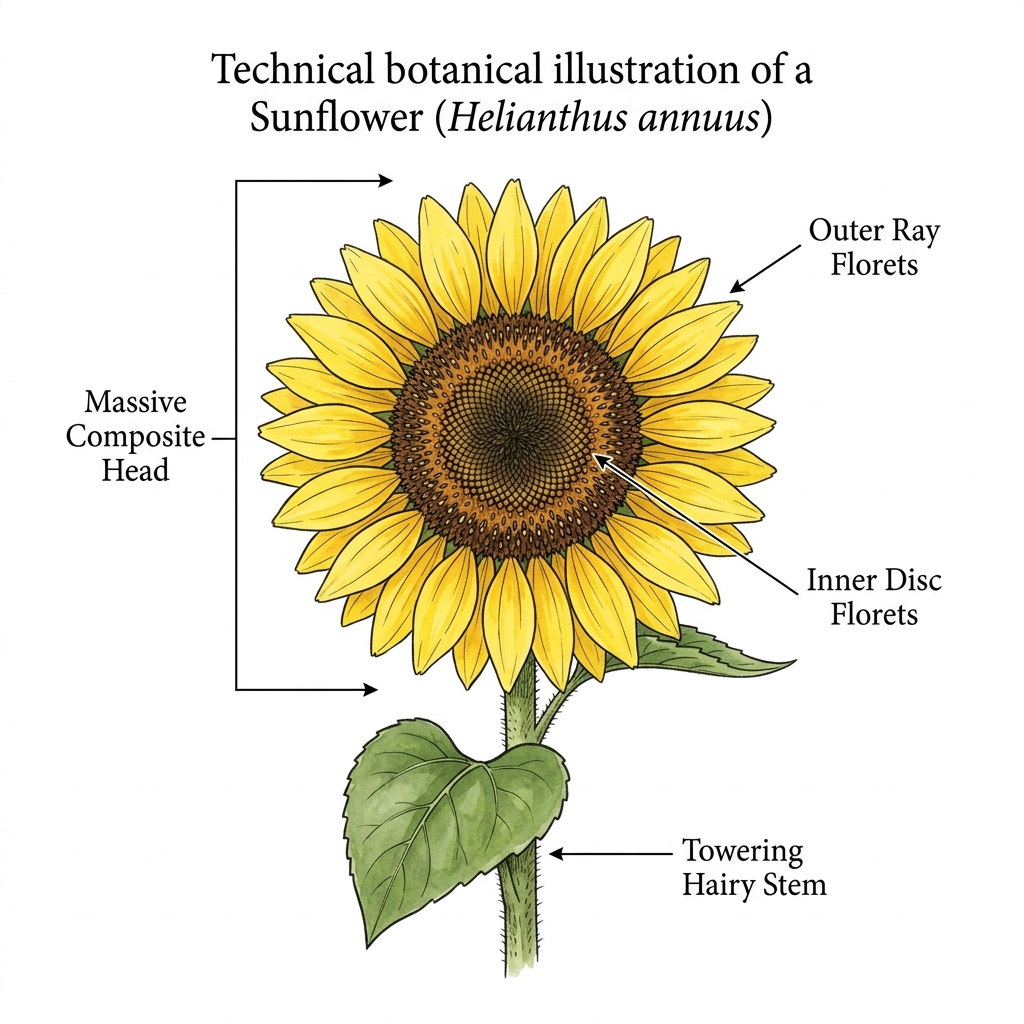
A detailed guide to identifying Sunflowers (Helianthus annuus) by its key features:
- Massive Composite Head: A large, flat circular flower head measuring 4 to 12 inches across.
- Outer Ray Florets: A bright outer collar of sterile, golden-yellow ray petals.
- Inner Disc Florets: A dense, dark brown or purple center composed of hundreds of fertile disc florets that produce edible seeds.
- Towering Hairy Stem: A single, thick, unbranched green stem covered in coarse hairs, carrying large heart-shaped leaves.
Types & Sub-types of Sunflowers
Sunflowers are classified and distinguished into three primary groups based on growth habit, lifecycle, and seed type:
- By Growth Habit & Size:
- Giant Sunflowers: Towering single-stemmed plants reaching 10-15+ feet tall with a single massive head (e.g., 'Mammoth Russian'). Distinguish by their thick stalk and sheer scale.
- Dwarf Sunflowers: Compact bushy plants (1-3 feet tall) ideal for containers (e.g., 'Teddy Bear'). Distinguish by their low height and branching flower stems.
- Branching Sunflowers: Medium-sized plants (4-8 feet tall) that produce multiple branches and flower heads per plant (e.g., 'Autumn Beauty'), rather than a single central bloom.
- By Lifecycle:
- Annual Sunflowers (Helianthus annuus): Rapid growers that complete their lifecycle in a single season, producing large singular flower heads.
- Perennial Sunflowers (e.g., Helianthus maximiliani): Return year after year from rhizomes, producing clusters of smaller daisy-like yellow flowers in late autumn.
- By Seed Type & Commercial Use:
- Oilseed Sunflowers: Produce small, solid-black seeds high in oil content (used for cooking oil and birdseed). Distinguish by the solid black seed hulls.
- Non-Oilseed (Confectionery) Sunflowers: Produce larger, striped seeds (black and white) used for human consumption and baking. Distinguish by the white stripes on the hull.
Care & Growing Guide
Sunflower Care & Growing Guide:
- Light: Full direct unshaded sun (at least 6-8 hours daily). Essential for strong stems and large flowers.
- Soil: Average, moderately fertile, deeply well-draining soil. Deep taproots require loose soil to anchor.
- Watering: Water deeply and regularly at the base. Once established, they are drought-tolerant but need water for large seed heads.
- Support: Stake very tall varieties or plant along fences to prevent high winds from blowing them over.
Seasonal Blooming & Hardiness
Seasonal Blooming Calendar (US Hardiness Zones 2-11):
- Blooming Season: Mid-summer to late autumn (typically July through October).
- Planting Time: Sow seeds directly outdoors in late spring after the last frost once soil temperatures exceed 50°F (10°C).
- Heliotropism: Young flower buds track the sun daily from east to west; mature flowers lock facing east.
Bloom Timeline
About Sunflower
The Sunflower, botanically classified as Helianthus annuus and commonly known as the Common Sunflower, is an exceptionally iconic, robust, and fast-growing annual plant. Belonging to the family Asteraceae (the daisy, aster, or composite family), this famous wildflower is native to the fertile prairies, open plains, and river valleys of North America. It was domesticated by Native Americans around 3,000 BCE, long before the cultivation of corn, and has since become one of the world's most vital agricultural crops.
This towering annual is celebrated for its sheer scale and rapid growth, easily reaching heights of 3 to 15 feet (with giant agricultural varieties exceeding 18 feet and dwarf garden selections standing 2 to 3 feet) within a single summer season. It features a thick, unbranched, and extremely sturdy green stem covered in coarse, stiff bristly hairs, carrying alternate, heart-shaped (cordate), and deeply veined leaves measuring 6 to 16 inches in length.
The plant is globally famous for its massive, flat, circular flower heads (capitula) measuring 4 to 12 inches (and up to 24 inches) across, which exhibit heliotropism—the fascinating botanical trait where young, growing flower heads track the path of the sun from east to west across the sky daily, eventually locking in a permanent eastward-facing direction once they fully mature and bloom in mid-to-late summer.
What appears to be a single flower head is actually a highly complex, dense composite structure containing 1,000 to 2,000 individual florets. The reproductive structure of Helianthus annuus is represented by the formula EBr ⊕ ⚥ K(pappus) C(5) A(5) G(2). The sterile outer ray florets have 5 fused yellow petals (forming the bright outer collar) that are highly zygomorphic, and the fertile central disk florets are radially symmetrical and bisexual. The calyx is modified into scales or a pappus, the corolla consists of 5 fused petals, the 5 stamens are fused by their anthers, and the 2 fused carpels form an inferior ovary.
The genus name Helianthus is derived from the Greek words 'helios,' meaning sun, and 'anthos,' meaning flower, reflecting its striking solar appearance. Famed in Sanskrit as Suryakanti (सूर्यकन्ति, literally translating to 'the beauty of the sun') and in Hindi as Soorajmukhi (सूरजमुखी), it is a powerful global symbol of adoration, loyalty, warmth, and longevity, cultivated for its nutritious, oil-rich edible seeds.
For pet owners and veterinarians, the Sunflower represents an exceptionally safe, low-risk, and pet-friendly annual choice. Helianthus annuus is classified as completely NON-TOXIC to cats, dogs, and horses by major global animal safety databases, including the ASPCA. If a pet nibbles on its tough leaves, coarse stems, or edible seeds, there is absolutely no danger of chemical poisoning. To explore more safe, high-impact annuals for active family yards, visit our general Pet Guard page.
Sunflower is occasionally confused with other tall yellow composite flowers like sunchokes (Jerusalem artichokes) or cup plants. It is easily distinguished because true annual Sunflowers produce massive, singular, seed-bearing flower heads on thick unbranched stems, whereas sunchokes are branching perennials that produce edible tubers. It is a spectacular choice for boundaries; we recommend pairing it alongside other giants like Hollyhock-alcea_rosea or Canna Lily. To explore more sun-tracking plants, browse our Flower Identifier. Explore related species in our botanical profile for Coltsfoot.
Floral Formula & Features
Ebracteate, radially symmetrical (actinomorphic), bisexual, calyx modified to pappus or absent, 5 fused petals (ray florets yellow and sterile, disk florets brown/purple and fertile), 5 stamens fused into tube, 2 fused carpels with inferior ovary. Composite flower head typical of Asteraceae
- Scientific Name & Classification: Helianthus annuus (Asteraceae). Globally famed as Common Sunflower and Helianthus.
- Identification Markers: Tall thick hairy stems, large heart-shaped rough leaves, and massive 4-12 inch composite flower heads with sterile yellow outer ray petals and fertile dark central disk florets.
- Floral Formula (EBr ⊕ ⚥ K(pappus) C(5) A(5) G(2)): Composite flower head with outer sterile yellow ray florets and inner fertile radially symmetrical disk florets with 5 fused petals, 5 fused stamens, and inferior ovary.
- Growing Requirements: Full direct unshaded sun (6-8 hours daily); average, fertile, deeply well-draining soils. Deep anchoring taproot provides outstanding drought tolerance (Zones 2-11).
- Cultural Significance: Name comes from Greek 'helios' (sun). Domesticated 3,000 BCE by Native Americans. Famed in Sanskrit as 'Suryakanti,' representing loyalty and solar energy.
- Safety & Toxicity: NON-TOXIC. 100% safe for cats, dogs, and horses. Provides a magnificent, edible, and highly popular pet-safe giant annual that attracts wild birds.
- Common Look-alikes: Confused with wild Sunchokes (Jerusalem Artichoke), but easily distinguished by its massive, singular seed-producing head and complete lack of underground edible tubers.
- Internal Links: Creates a towering, high-impact summer backdrop when planted alongside other robust favorites like Hollyhock-alcea_rosea or Canna Lily; find more in our Flower Identifier.
- Internal Links: Compare key differences in our Daisy vs Sunflower comparison, or try our instant Flower Identifier.
- Internal Links: Compare key differences in our Sunflower vs Marigold comparison, or try our instant Flower Identifier.
Names in Different Languages
Tip: Need to buy or identify flowers in regional markets? Check our complete South Indian Flower Names Guide mapping 30+ flowers across Tamil, Telugu, Hindi, Kannada, and Malayalam.
Botanical Classification: Sunflower belongs to the Asteraceae family. Learn how to identify its floral symmetry, stamen arrangement, and structural formulas in our Botanical Family Classification Guide.
Toxicity & Safety
Frequently Asked Questions
What is Floral Formula?
A floral formula is a symbolic representation of a flower's structure using letters, numbers, and special symbols. It provides a concise way to describe the arrangement and number of floral parts.
This formula describes the flower's symmetry, sepals, petals, stamens, and carpels in a standardized format.
Formula Sequence
- Bract: Br or Ebr
- Bracteole: Brl or Ebrl
- Symmetry: % (Radial) or ⊕ (Bilateral)
- Sex: ♀ (Female), ♂ (Male), or ⚥ (Bisexual)
- Calyx/Sepal: K<number> (Free or Fused)
- Corolla/Petal: C<number> (Free or Fused)
- Androecium: A<number> (Free or Fused)
- Gynaecium: G<number> (Superior or Inferior Ovary)
Symbol Meanings
- Numbers: Indicate quantity of parts
- Parentheses (): Parts are fused together
- Plus (+): Parts in different whorls
- Underline: Superior ovary position
- Overline: Inferior ovary position
- ∞: Numerous parts (too many to count)
Understanding floral formulas helps botanists quickly identify and classify flowers based on their structural characteristics.
Companion Plants & Garden Pairings
3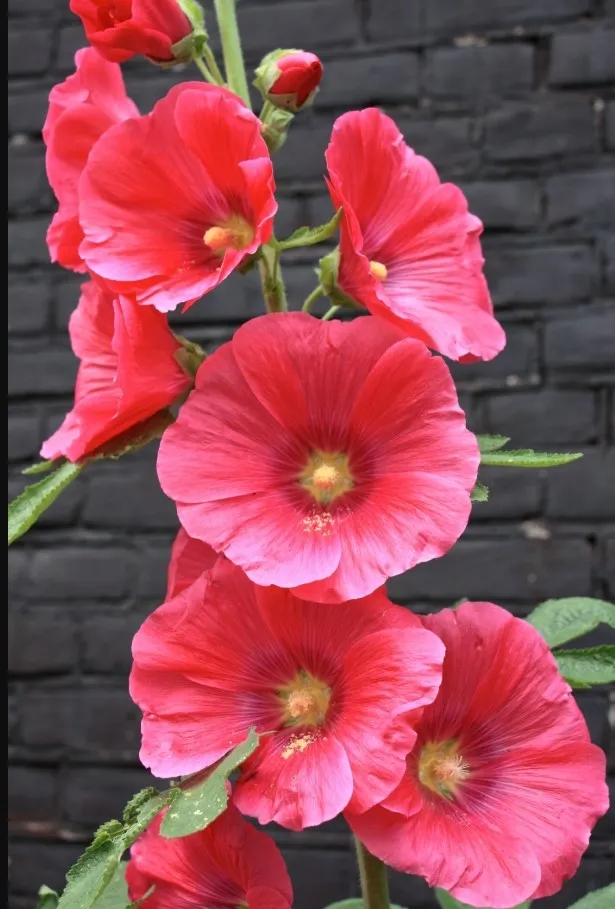
Hollyhock
Alcea rosea
Matches the giant vertical scale of the Sunflower, creating a towering, colorful mid-summer screen along fences.
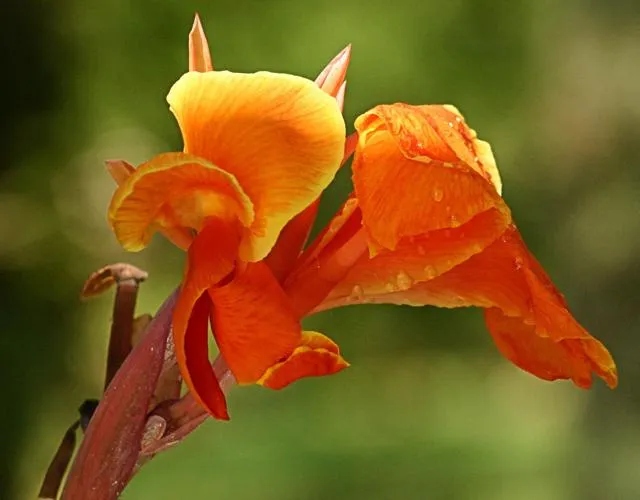
Canna Lily
Canna
Adds lush, banana-like foliage and tropical orange-red blooms around the base of the tall, coarse Sunflower stems.
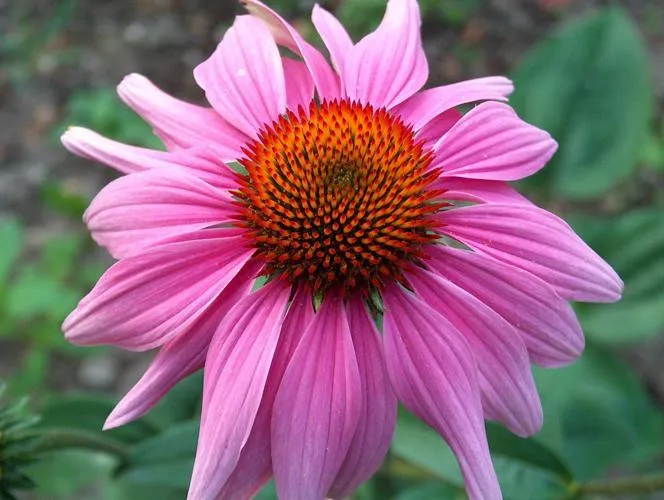
Purple Coneflower
Echinacea purpurea
Shares the same sun-loving, drought-tolerant prairie heritage, providing color contrast and attracting birds.
Similar Flowers
Discover flowers that share botanical characteristics
Same Family
4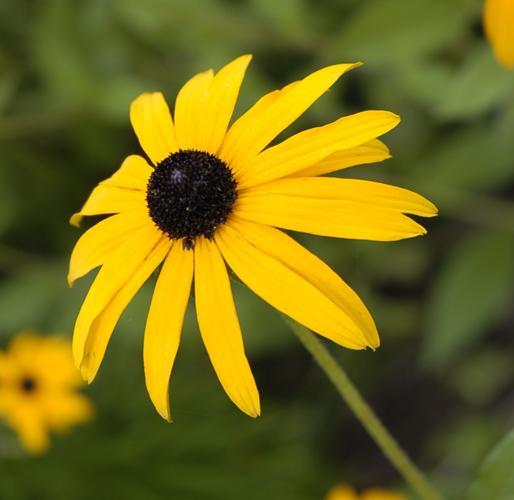
Black eyed Susan
Rudbeckia hirta
Rudbeckia hirta, famously known as the "Black-Eyed Susan" or "Yellow Ox-Eye Daisy," is a quintessentially American wildflower that brings a burst of radiant sunshine to North American landscapes. A member of the Asteraceae (Daisy) family, this resilient species is native to much of the central an...
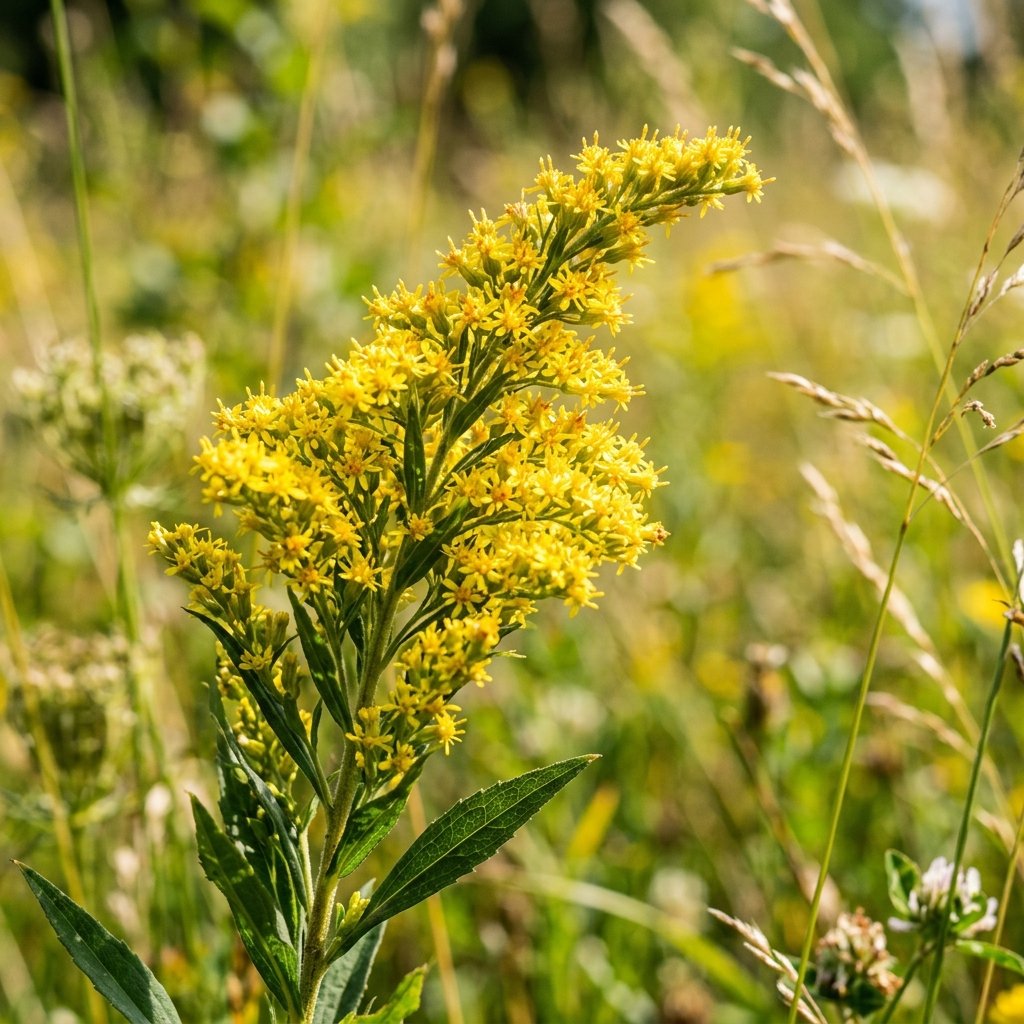
Goldenrod
Solidago canadensis
Goldenrod (*Solidago* spp.) is one of the most ecologically important and visually spectacular native wildflowers of North America, producing brilliant cascading plumes of tiny golden-yellow flowers from late summer through autumn. With over 100 species native to the Americas (most concentrated i...
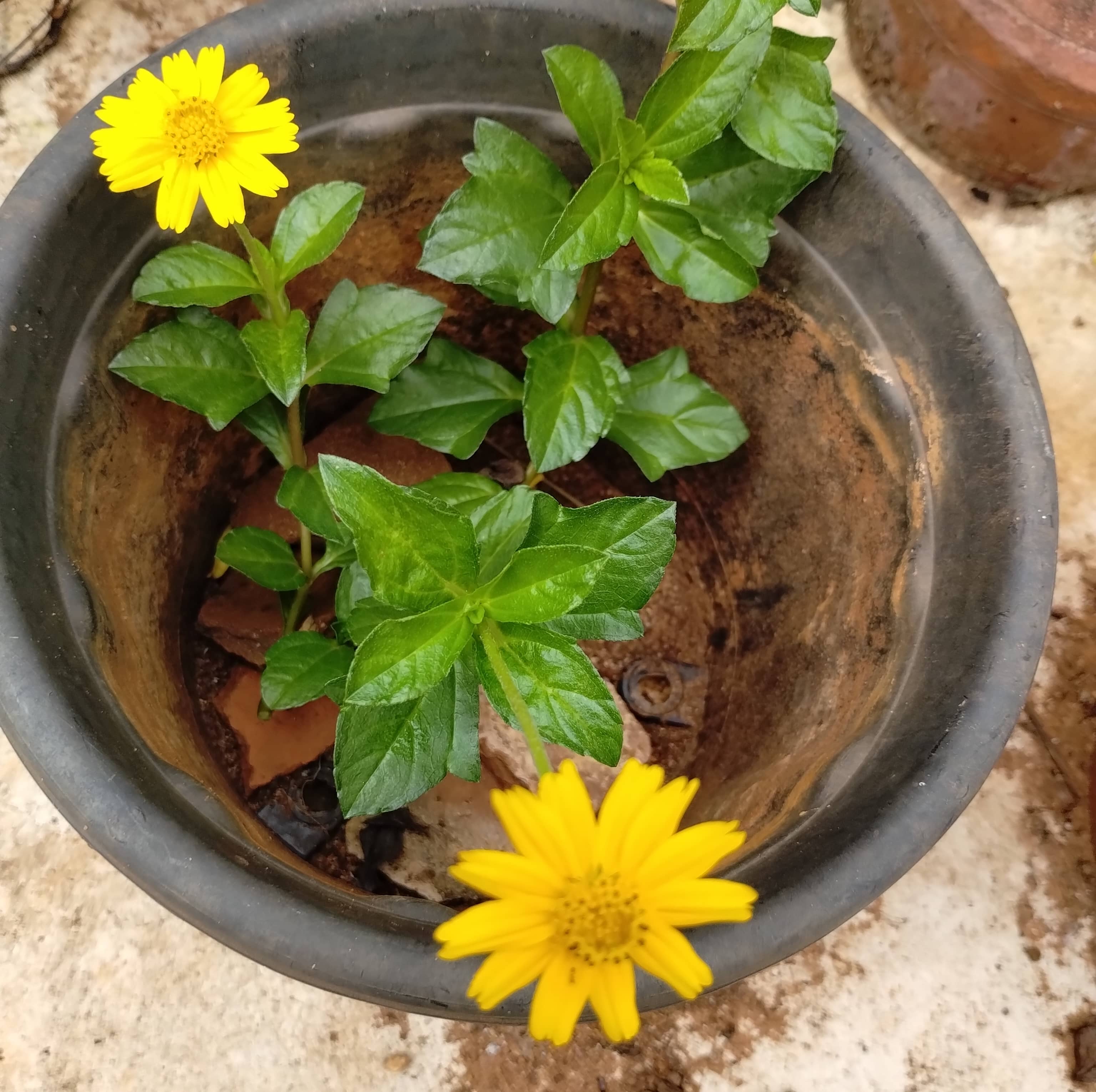
Wedelia Trilobata
Sphagneticola trilobata
Wedelia Trilobata, botanically classified as Sphagneticola trilobata and commonly known as the Creeping Daisy, Singapore Daisy, Trailing Daisy, or Creeping Oxeye, is an exceptionally fast-growing, mat-forming perennial herbaceous groundcover. Belonging to the family Asteraceae (the daisy or sunfl...
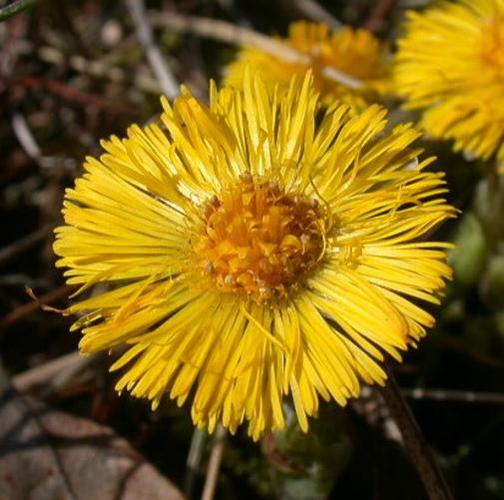
Coltsfoot
Tussilago farfara
Coltsfoot, botanically classified as Tussilago farfara, is an intriguing and highly specialized perennial wildflower belonging to the Asteraceae (sunflower) family. Native to the damp clay-rich soils, disturbed riverbanks, and limestone cliffs of Europe, western and central Asia, and parts of Nor...
Similar Characteristics
4
Globe Amaranth (Gomphrena)
Gomphrena globosa
The Globe Amaranth, botanically designated as Gomphrena globosa and belonging to the family Amaranthaceae (the amaranth family), is an exceptionally tough, durable, and drought-tolerant tropical annual. Native to the sunny, warm, and highly humid forest edges, fields, and coastal plains of Centra...
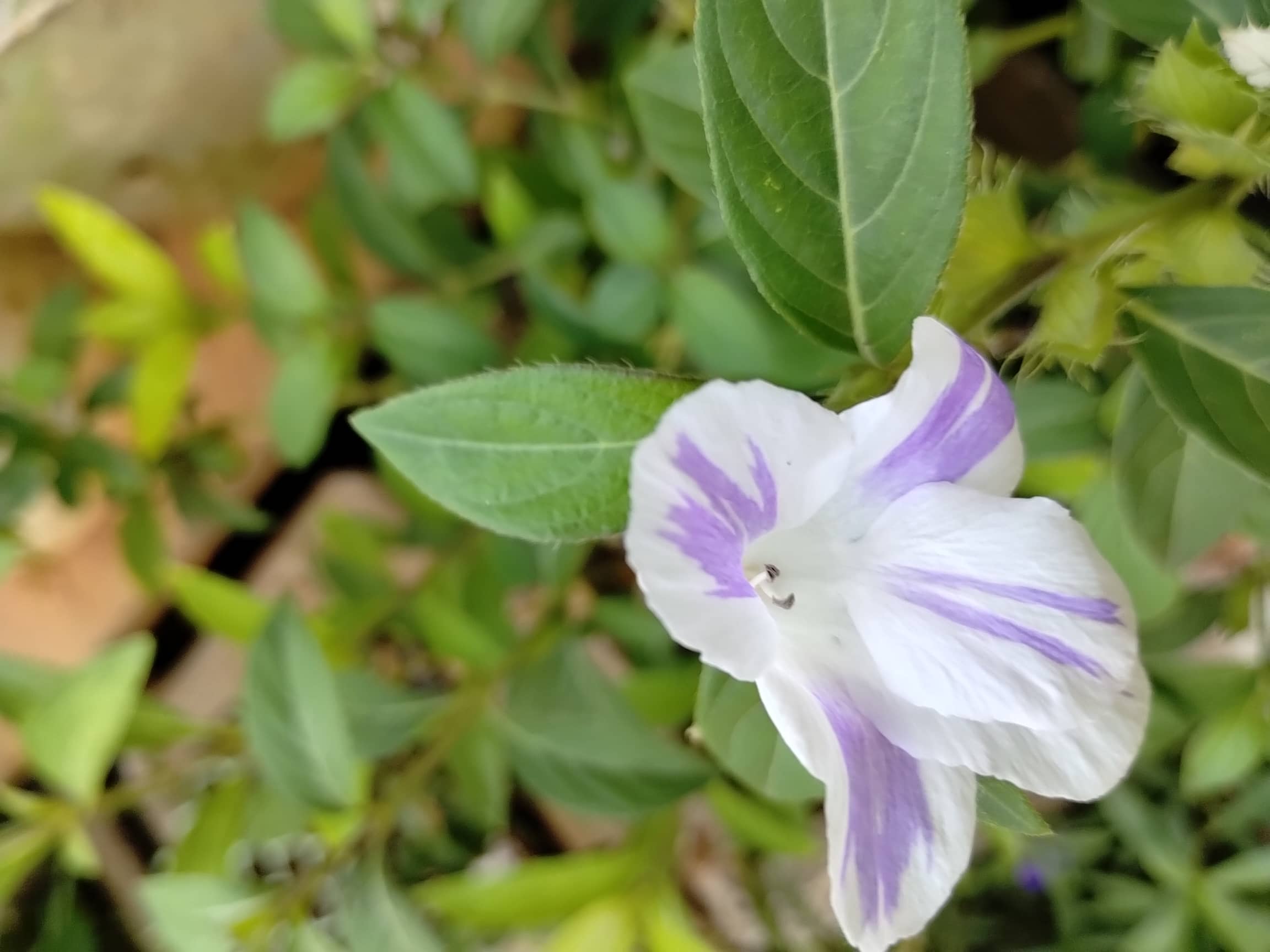
December
Barleria Cristata, Barleria prionitis
The December Flower, botanically classified under the genus Barleria within the family Acanthaceae (the acanthus family), is a highly attractive, fast-growing evergreen tropical shrub. Native to the sunny forest edges, dry riverbanks, and open scrublands of tropical Asia—spanning India, Myanmar,...
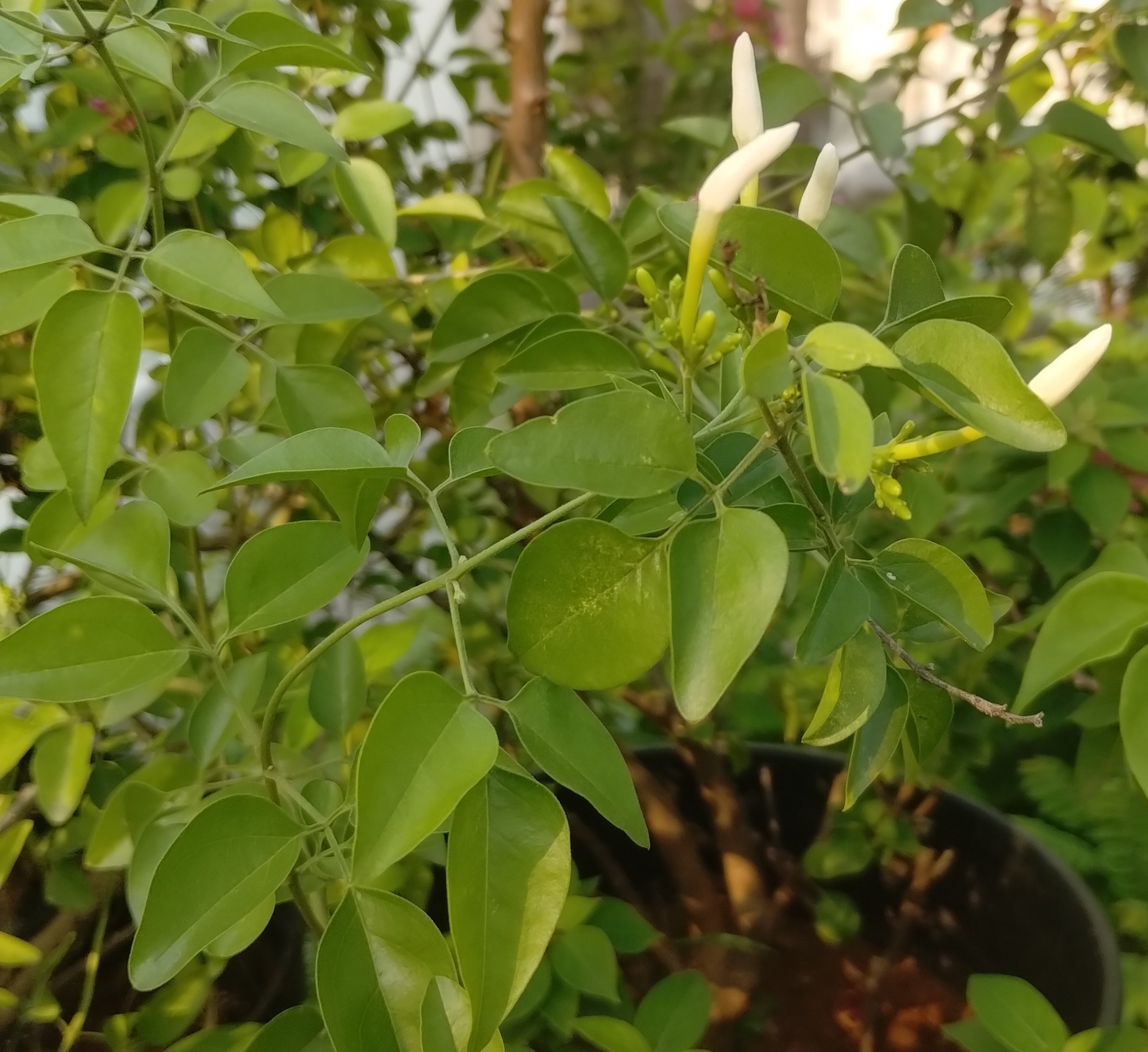
River Jasmine (Fluminense)
Jasminum fluminense
Jasminum fluminense, commonly known as the River Jasmine or Brazilian Jasmine—and widely known across South Asia as Nitya Malli or Nithya Malligai (meaning 'ever-blooming jasmine')—is a vigorous and aromatic evergreen climber that embodies the lush, tropical essence of South America. Native to th...
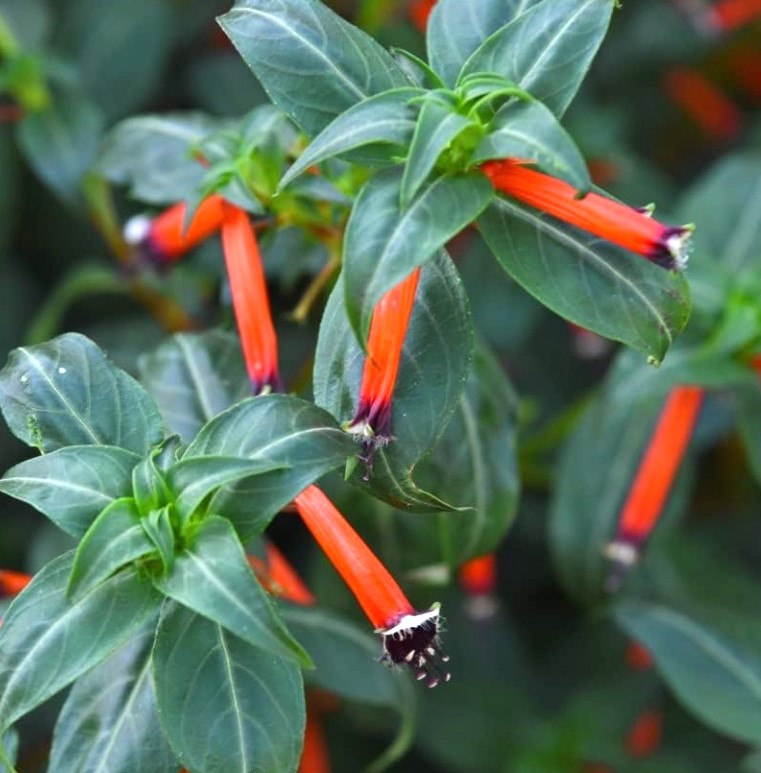
Cuphea Cigar
Cuphea ignea
The Cigar Flower, botanically known as Cuphea ignea and often referred to as the Firecracker Plant or Mexican Cigar Plant, is a charming, continuous-blooming tender evergreen subshrub belonging to the Lythraceae family. Native to the warm, rocky, sun-drenched hillsides and open valleys of Mexico...