
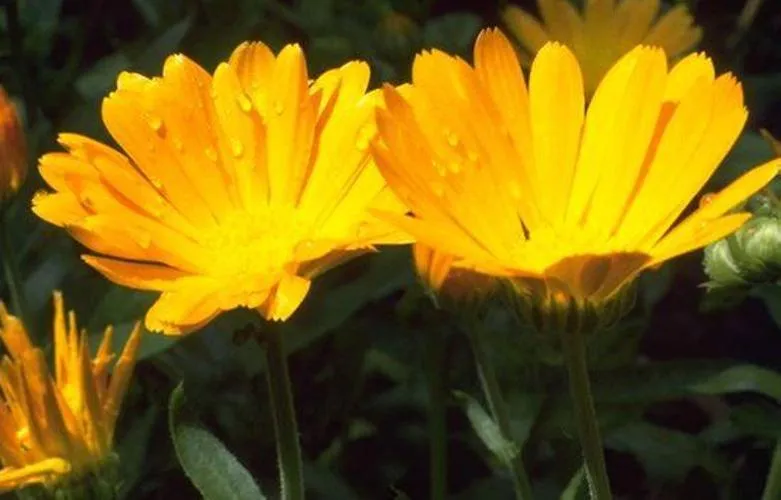
English Marigold (Calendula)
Calendula officinalis
How to Identify English Marigold (Calendula)

A detailed guide to identifying English Marigold (Calendula officinalis) by its key botanical features:
- Bright Daisy-like Flowers: Flower heads measure 1 to 2.5 inches across, with smooth, flat ray petals surrounding a central disk in shades of yellow, gold, or brilliant orange.
- Lance-shaped Leaves: Entire (smooth-margined), oblong, light green leaves grow alternately along the stem, featuring a slightly sticky texture and an earthy scent.
- Clasping Leaf Base: Leaves have no petiole and slightly clasp the hairy, branching green stem at the base.
- Curved Achene Seeds: Seed heads contain unique, rough, crescent-shaped or curved achenes that resemble tiny caterpillars.
Types & Sub-types of English Marigolds
English Marigolds are grouped into primary varieties based on bloom shape and growth form:
- By Bloom Form:
- Single English Marigolds: Contain a single outer row of ray petals with a prominent flat central disk, resembling wild daisies.
- Double English Marigolds: Features multiple rows of ray petals that almost entirely obscure the central disk, creating a ruffled pom-pom shape.
- By Cultivation & Height:
- Dwarf English Marigolds: Compact cultivars standing 8-12 inches tall, ideal for container potting and border edges (e.g., 'Fiesta Gitana').
- Tall English Marigolds: Standard cultivars growing up to 18-24 inches, commonly grown in cottage gardens or harvested for cut flowers.
Care & Growing Guide
Seasonal Blooming & Hardiness
Seasonal Blooming Calendar:
- Peak Bloom: Spring to early summer (typically April through June).
- Planting Time: Sow seeds directly outdoors in early spring after the last frost, or transplant nursery starts in late spring.
Bloom Timeline
About English Marigold (Calendula)
The English Marigold (Calendula officinalis), widely known as the Pot Marigold, is a cheerful and incredibly versatile annual (or short-lived perennial in mild climates) belonging to the Asteraceae family. Native to southern Europe and the Mediterranean region, it has been a staple of traditional cottage gardens and apothecary gardens for centuries. It is celebrated not only for its brilliant, continuous blooms but also for its extensive culinary and medicinal properties.
Identification is easy: the plant produces vibrant, daisy-like composite flowers that range from pale yellow to deep, fiery orange. The foliage consists of light green, slightly sticky, oblong leaves covered in fine hairs. When rubbed, the leaves emit a distinct, somewhat resinous and earthy aroma. The plant typically maintains a bushy, compact habit, growing roughly 1 to 2 feet in height.
The floral formula for Calendula is ⊕ ⚥ (Disc) / % ♀ (Ray) K(pappus) C(5) A(5) G(2). As a classic member of the Asteraceae family, its capitulum (flower head) contains hundreds of tiny flowers. The inner disc florets are actinomorphic and bisexual, while the outer, brightly colored ray florets are zygomorphic and female. This structure provides an excellent landing pad for bees and butterflies.
Calendula is a remarkably easy-to-grow plant that thrives in full sun, though it appreciates light afternoon shade in exceptionally hot climates. Unlike many tropical flowers, it actively prefers cooler weather and often blooms prolifically in spring and fall, sometimes halting its flowering during the peak heat of mid-summer. It tolerates poor soil as long as it is well-draining, and easily self-seeds year after year.
Culturally, the English Marigold is deeply significant. Historically referred to as 'poor man's saffron', the intensely colored petals were used to dye cheeses and butter, and to add color and flavor to soups and stews. Medicinally, Calendula extracts are world-renowned in dermatology; the soothing oils are highly effective in skin salves, ointments, and lotions for treating minor burns, cuts, and rashes.
This plant is completely NON-TOXIC and fully edible. It is entirely safe to plant around dogs, cats, and livestock, making it a perfect addition to family vegetable gardens where it also acts as a fantastic companion plant, drawing aphids away from valuable crops.
It is frequently confused with French Marigolds or African Marigolds (Tagetes genus). While both share a common name, Tagetes have deeply divided, fern-like, heavily pungent foliage and are not used medicinally in the same way. Contrast the cool-weather loving Calendula with the heat-loving Pelargonium or explore more in our Flower Identifier.
Floral Formula & Features
Capitulum inflorescence. Central disc florets are actinomorphic and bisexual. Outer ray florets are zygomorphic and female. Inferior ovary.
- Scientific Name & Classification: Calendula officinalis (Asteraceae). Commonly known as Pot Marigold or English Marigold.
- Identification Markers: Bright yellow to deep orange composite flowers. Light green, slightly sticky, lance-shaped leaves with an earthy scent.
- Floral Formula (⊕ ⚥ / % ♀ K(pappus) C(5) A(5) G(2)): Composite flower head. Bisexual central disc florets and female outer ray florets.
- Growing Requirements: Full sun to partial shade. Prefers cooler weather (spring/fall) and well-draining soil. Easily self-seeds.
- Cultural Significance: Used historically as 'poor man's saffron'. Renowned globally for its skin-soothing medicinal properties in salves.
- Safety & Toxicity: NON-TOXIC and Edible. Completely safe for pets and heavily used in culinary dishes and teas.
- Common Look-alikes: Often confused with Tagetes (French Marigolds). Tagetes have fern-like leaves and a much sharper, pungent smell.
- Internal Links: Discover more safe, edible plants in our Flower Identifier or pair with the robust Aster.
- Internal Links: Compare key differences in our Marigold vs Calendula comparison, or try our instant Flower Identifier.
Names in Different Languages
Botanical Classification: English Marigold (Calendula) belongs to the Asteraceae family. Learn how to identify its floral symmetry, stamen arrangement, and structural formulas in our Botanical Family Classification Guide.
Toxicity & Safety
Always keep toxic plants out of reach of children and pets. Consult a veterinarian or medical professional immediately if ingestion is suspected.
Frequently Asked Questions
What is Floral Formula?
A floral formula is a symbolic representation of a flower's structure using letters, numbers, and special symbols. It provides a concise way to describe the arrangement and number of floral parts.
This formula describes the flower's symmetry, sepals, petals, stamens, and carpels in a standardized format.
Formula Sequence
- Bract: Br or Ebr
- Bracteole: Brl or Ebrl
- Symmetry: % (Radial) or ⊕ (Bilateral)
- Sex: ♀ (Female), ♂ (Male), or ⚥ (Bisexual)
- Calyx/Sepal: K<number> (Free or Fused)
- Corolla/Petal: C<number> (Free or Fused)
- Androecium: A<number> (Free or Fused)
- Gynaecium: G<number> (Superior or Inferior Ovary)
Symbol Meanings
- Numbers: Indicate quantity of parts
- Parentheses (): Parts are fused together
- Plus (+): Parts in different whorls
- Underline: Superior ovary position
- Overline: Inferior ovary position
- ∞: Numerous parts (too many to count)
Understanding floral formulas helps botanists quickly identify and classify flowers based on their structural characteristics.
Similar Flowers
Discover flowers that share botanical characteristics
Same Family
4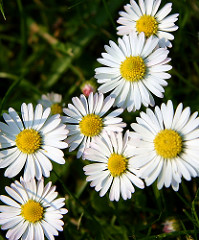
Daisy
Bellis perennis
The Common Daisy, botanically designated as *Bellis perennis* (and including related garden favorites like the English Daisy or Lawn Daisy), is an exceptionally cheerful, highly resilient herbaceous perennial. Belonging to the family Asteraceae (the daisy or sunflower family, tribe Astereae), thi...
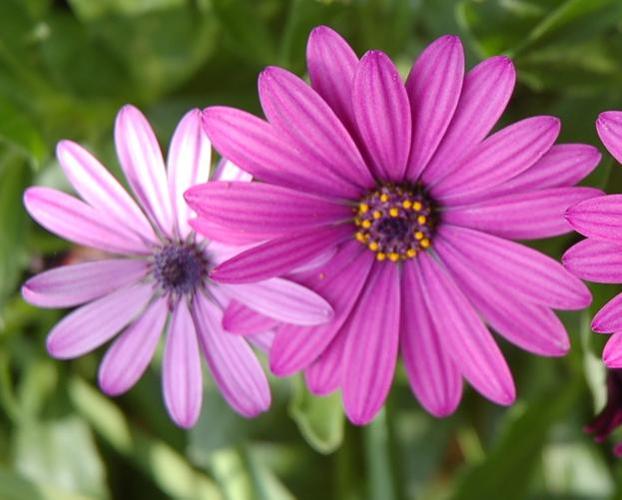
African Daisy (Osteospermum)
Dimorphotheca ecklonis
Osteospermum, commonly known as the African Daisy or Cape Daisy, is a genus of flowering plants that represents the sheer brilliance of the South African floral kingdom. Belonging to the Calenduleae tribe within the massive Asteraceae family, these daisies are celebrated for their sophisticated,...
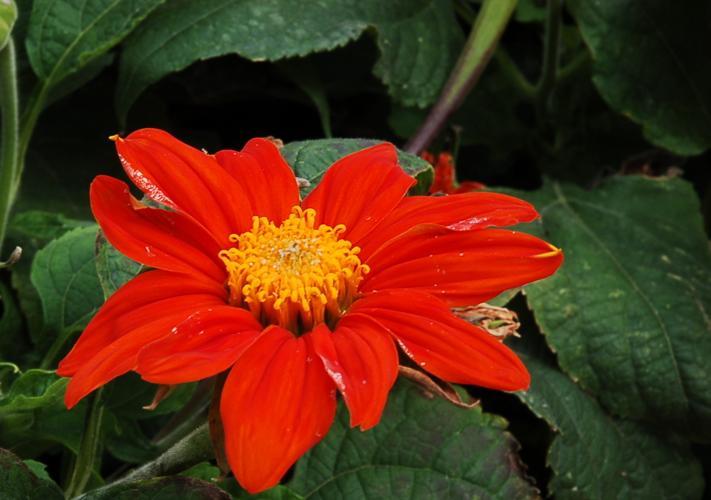
Orange Dahlia
Dahlia × hortensis
The Orange Dahlia, botanically designated under the genus *Dahlia* (particularly hybrids of *Dahlia pinnata*), is an exceptionally spectacular, highly vibrant tuberous perennial. Belonging to the family Asteraceae (the daisy or sunflower family, tribe Coreopsideae), this high-color classic is nat...
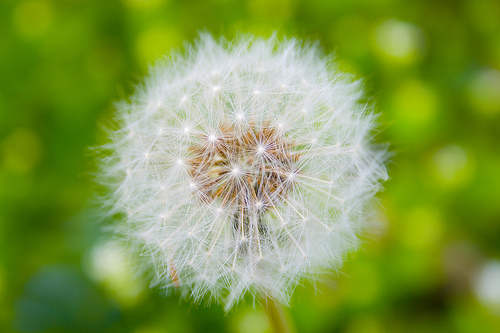
Dandelion
Taraxacum officinale
The common Dandelion, scientifically classified as Taraxacum officinale, is an incredibly resilient and highly nutritious herbaceous perennial belonging to the Asteraceae (sunflower) family. Native to the vast temperate regions of Europe and Asia, this ubiquitous species has naturalized on nearly...
Similar Characteristics
3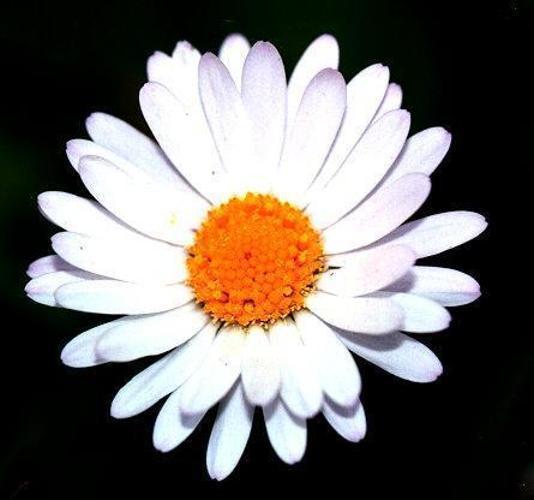
Oxeye Daisy
Leucanthemum vulgare
The Oxeye Daisy, botanically classified as Leucanthemum vulgare and historically celebrated as the Moon Daisy or Dog Daisy, is an exceptionally cheerful, rhizomatous herbaceous perennial belonging to the Asteraceae (daisy or composite) family. Native to the sweeping fields, dry pastures, and sunn...
Daisy
Bellis perennis
The Common Daisy, botanically designated as *Bellis perennis* (and including related garden favorites like the English Daisy or Lawn Daisy), is an exceptionally cheerful, highly resilient herbaceous perennial. Belonging to the family Asteraceae (the daisy or sunflower family, tribe Astereae), thi...
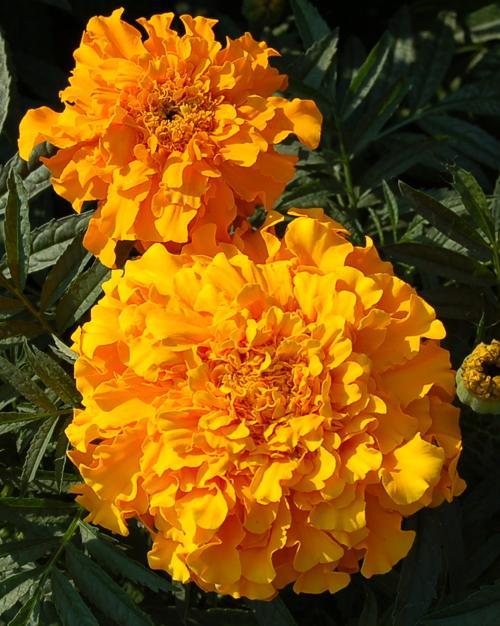
Marigold
Tagetes erecta
The Marigold, botanically classified under the genus Tagetes within the highly diverse Asteraceae (daisy or composite) family, is a cheerful, robust, and exceptionally popular herbaceous annual flower. Native to the warm, sun-drenched grasslands, mountain valleys, and open meadows of Mexico and C...