
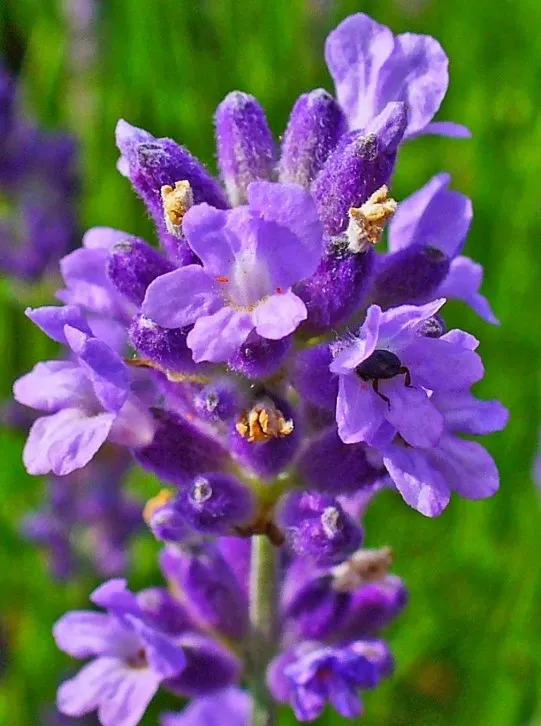
Lavender
Lavandula angustifolia
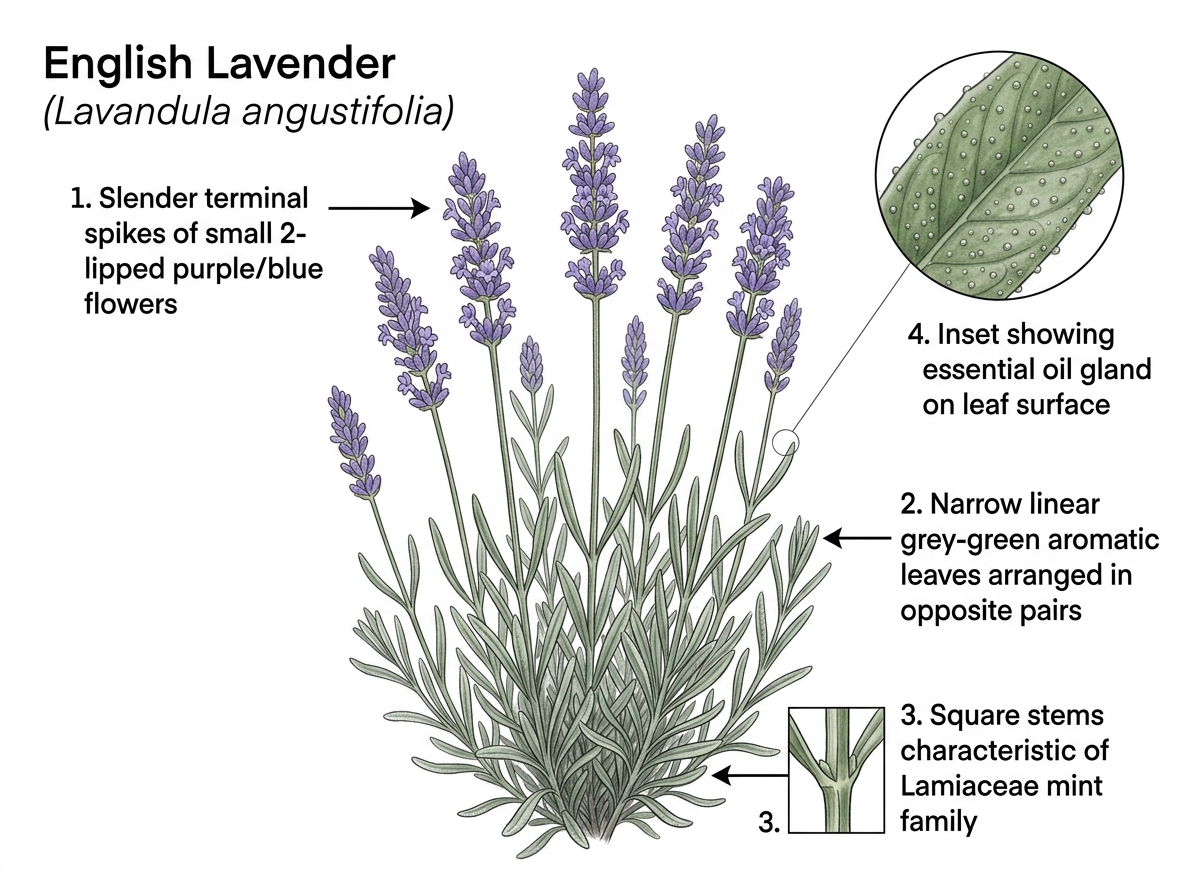
How to Identify Lavender
Care & Growing Guide
Seasonal Blooming & Hardiness
Seasonal Blooming Calendar:
- Peak Bloom: Summer (typically June through September).
- Planting Time: Sow seeds directly outdoors in early spring after the last frost, or transplant nursery starts in late spring.
Bloom Timeline
About Lavender
Lavender, botanically designated under the genus Lavandula and most widely represented by Lavandula angustifolia (English Lavender), is an exceptionally famous, highly aromatic evergreen perennial shrub belonging to the Lamiaceae (mint) family. Native to the sun-baked, rocky limestone hillsides and dry shrublands of the Mediterranean basin (particularly Southern France, Spain, and Italy), this globally revered herb is cherished for its intense, calming scent and spectacular spikes of purple-violet blossoms.
Forming tight, rounded mounded shrubs that grow 1 to 3 feet in height with a spread of up to 4 feet, Lavender features distinctive square-angled green stems and narrow, linear, needle-like silver-gray leaves. In mid to late summer, the woody shrub is crowned with numerous slender, upright flower spikes measuring 2 to 8 inches in length. Each spike carries dense whorls (verticillasters) of small, tubular, highly fragrant blossoms in a spectrum of deep cobalt-blue, lavender-purple, and soft pink.
The reproductive architecture of Lavender is represented by the botanical floral formula % ⚥ K(5) C(5) A4 G(2). This formula indicates that the flower is bilaterally symmetrical (zygomorphic) and bisexual. The calyx is composed of 5 sepals fused into a ribbed, hairy tube, while the corolla features 5 petals fused into a two-lipped tube with a 2-lobed upper lip and 3-lobed lower lip. The androecium features 4 stamens of unequal lengths (didynamous), surrounding a 2-carpellate superior ovary.
Horticulturally, Lavender is a tough, drought-loving Mediterranean native that demands full, hot sun and poor, highly rocky or sandy neutral-to-alkaline soils (pH 6.5 to 7.5). It is highly sensitive to wet soil, heavy clay, and extreme relative humidity, which quickly trigger fatal root rot. It requires sharp drainage, minimal fertilizer, and periodic pruning in late summer to maintain a compact, woody shape. It is highly cold-hardy, surviving in USDA zones 5 through 9.
The genus name Lavandula is derived from the ancient Latin word 'lavare' (meaning to wash), highlighting its historical use in Roman public baths for its skin-soothing, antiseptic, and highly aromatic qualities. Famed on the Indian subcontinent as Ustukhudus (उस्तुखुदोनों) in Hindi and Pundarika (पुण्डरीक) in Sanskrit, it serves as a global symbol of deep devotion, serenity, and mental clarity, with its essential oils forming the foundation of the world's perfume industry.
For detailed pet safety advice regarding dogs and cats, consult our dedicated Pet Guard Profile for Lavender.
Lavender is easily distinguished from other Lamiaceae members by its square stems, needle-like silvery leaves, and whorled flower spikes. It makes an excellent companion plant for other aromatic herbs such as Bee Balm, Cat's Whisker, and Thumbai. For more botanical profiles, explore our Flower Identifier.
Floral Formula & Features
Zygomorphic, bisexual, 5 fused sepals, 5 fused petals forming two-lipped corolla, 4 didynamous stamens, 2 fused carpels with superior ovary typical of Lamiaceae
- Scientific Name & Classification: Lavandula angustifolia (Lamiaceae). Famed as English Lavender, True Lavender, and Ustukhudus.
- Identification Markers: Mounds of narrow, needle-like silver-gray foliage on square stems. Slender flower spikes with dense whorls of fragrant purple blossoms.
- Floral Formula (% ⚥ K(5) C(5) A4 G(2)): Zygomorphic, bisexual flowers with a fused tubular calyx, a two-lipped corolla, 4 didynamous stamens, and a superior ovary.
- Growing Requirements: Full sun (6-8 hours); thrives in poor, rocky, sharply draining neutral-to-alkaline soils. Extremely drought-tolerant (Zones 5-9).
- Cultural Significance: Name derived from Latin 'lavare' (to wash). Revered globally as the ultimate aromatic symbol of serenity, purity, and relaxation.
- Safety & Toxicity: TOXIC TO PETS. Contains linalool and linalyl acetate which cats and dogs cannot digest, causing gastrointestinal upset if eaten.
- Common Look-alikes: Confused with Russian Sage or Salvia, but easily distinguished by its needle-like silvery leaves and highly distinct lavender aroma.
- Internal Links: Thrives in low-water Mediterranean rock garden borders when paired with Bee Balm, Cat's Whiskers, or Thumbai; explore more in our Flower Identifier.
- Internal Links: Compare key differences in our Lavender vs Salvia comparison, or try our instant Flower Identifier.
Names in Different Languages
Botanical Classification: Lavender belongs to the Lamiaceae family. Learn how to identify its floral symmetry, stamen arrangement, and structural formulas in our Botanical Family Classification Guide.
Toxicity & Safety
Always keep toxic plants out of reach of children and pets. Consult a veterinarian or medical professional immediately if ingestion is suspected.
Pet Safety Guide: For detailed toxicity symptoms, first-aid measures, and safe garden alternatives, see our full Pet Guard Profile for Lavender.
Frequently Asked Questions
What is Floral Formula?
A floral formula is a symbolic representation of a flower's structure using letters, numbers, and special symbols. It provides a concise way to describe the arrangement and number of floral parts.
This formula describes the flower's symmetry, sepals, petals, stamens, and carpels in a standardized format.
Formula Sequence
- Bract: Br or Ebr
- Bracteole: Brl or Ebrl
- Symmetry: % (Radial) or ⊕ (Bilateral)
- Sex: ♀ (Female), ♂ (Male), or ⚥ (Bisexual)
- Calyx/Sepal: K<number> (Free or Fused)
- Corolla/Petal: C<number> (Free or Fused)
- Androecium: A<number> (Free or Fused)
- Gynaecium: G<number> (Superior or Inferior Ovary)
Symbol Meanings
- Numbers: Indicate quantity of parts
- Parentheses (): Parts are fused together
- Plus (+): Parts in different whorls
- Underline: Superior ovary position
- Overline: Inferior ovary position
- ∞: Numerous parts (too many to count)
Understanding floral formulas helps botanists quickly identify and classify flowers based on their structural characteristics.
Similar Flowers
Discover flowers that share botanical characteristics
Same Family
4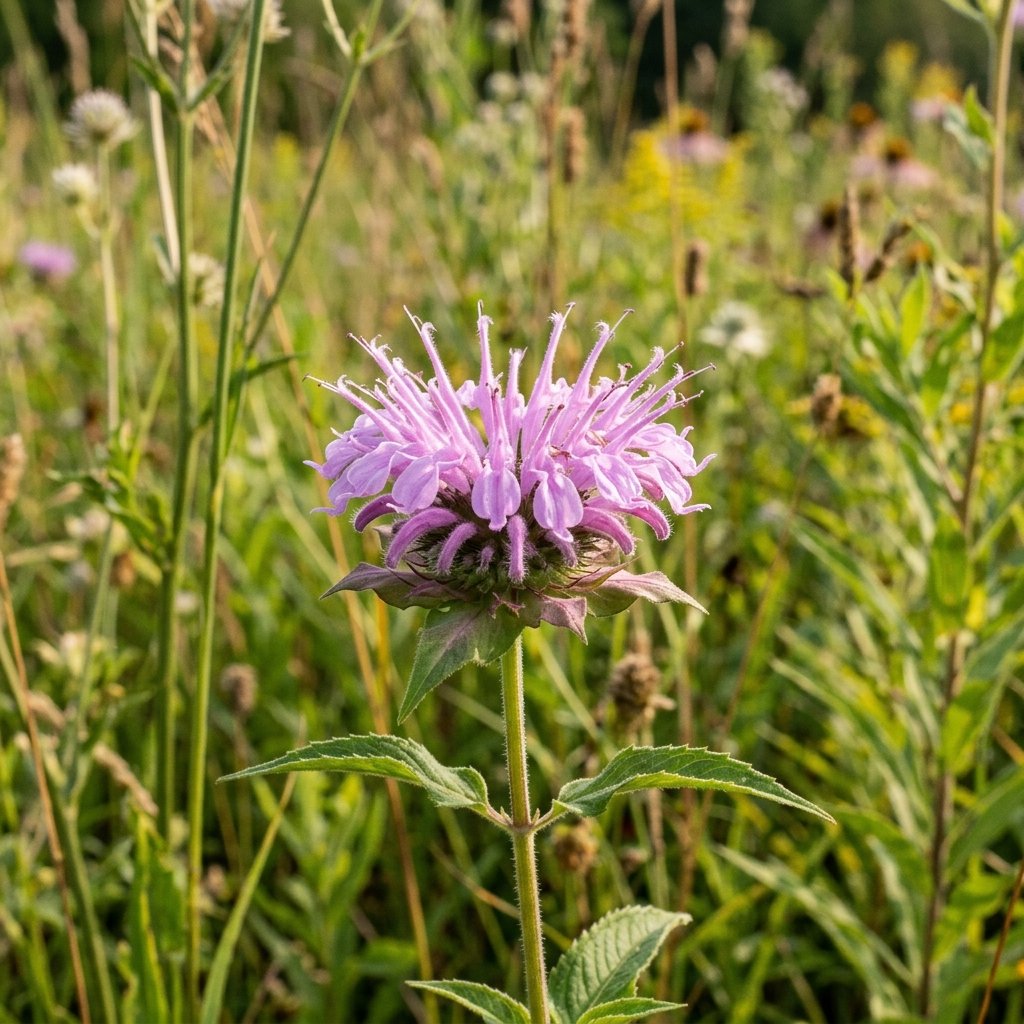
Wild Bergamot
Monarda fistulosa
Wild Bergamot (*Monarda fistulosa*) is one of the most important and widely distributed native wildflowers and medicinal herbs of North America, producing shaggy, globe-shaped heads of tubular lavender to pale pink flowers on sturdy, square stems throughout summer. A member of the mint family (La...
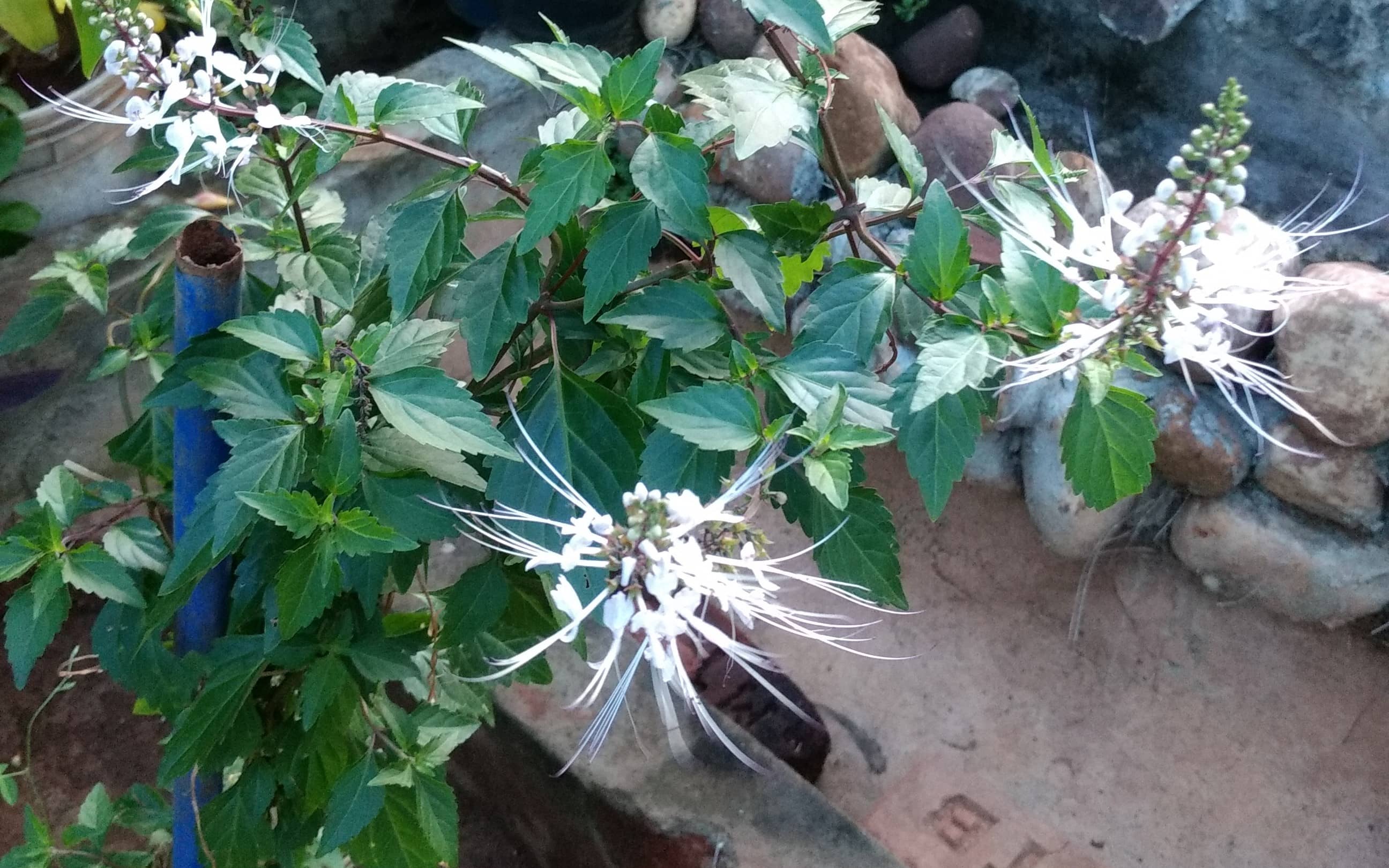
Cat's whiskers
Orthosiphon aristatus
The Cat's Whisker, botanically classified as Orthosiphon aristatus (and often called Orthosiphon stamineus), is an extraordinarily distinctive, fast-growing herbaceous perennial shrub in the Lamiaceae (mint) family. Native to the damp, shaded margins, grassy valleys, and riverbanks of tropical So...
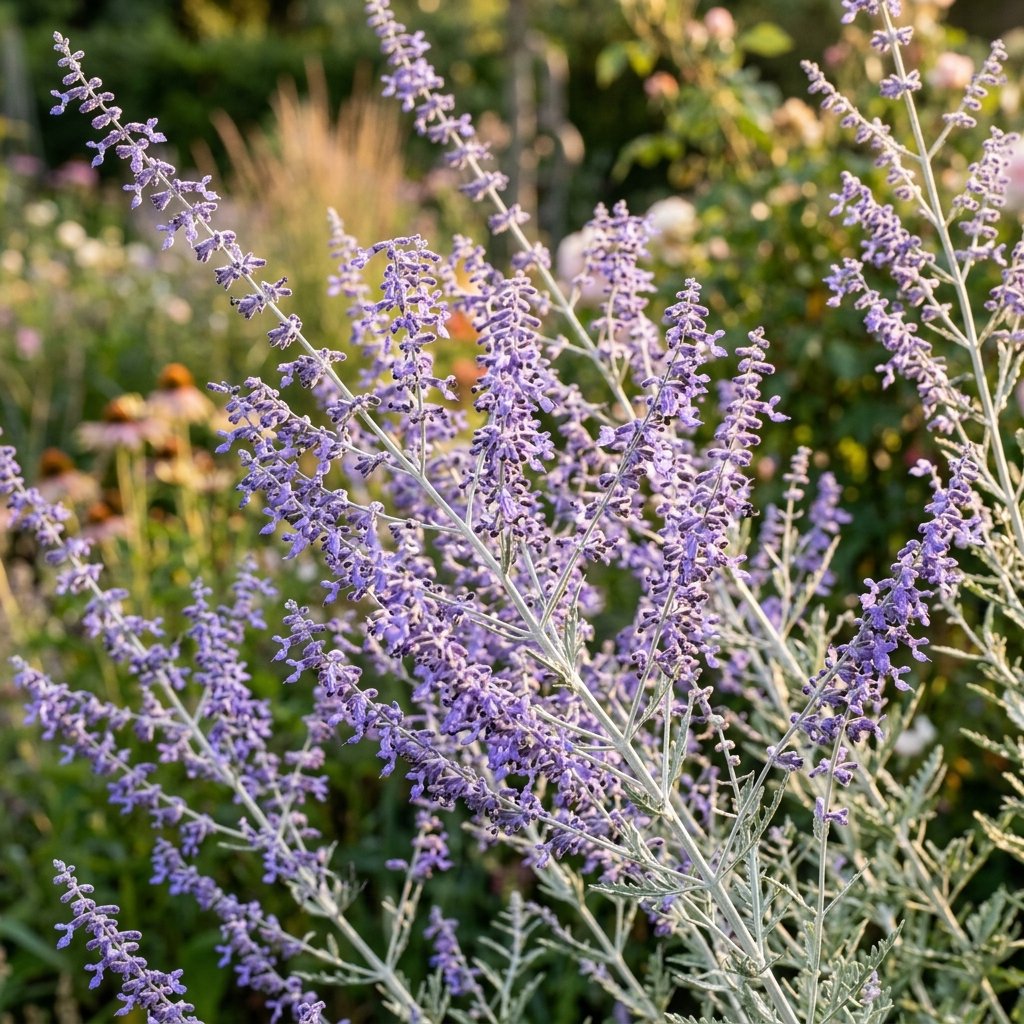
Russian Sage
Salvia yangii
Russian Sage, botanically reclassified as *Salvia yangii* (long celebrated under its classic horticultural synonym *Perovskia atriplicifolia*), is an exceptionally drought-tolerant, graceful, and cloud-like deciduous perennial subshrub. Belonging to the mint family Lamiaceae (tribe Mentheae), thi...
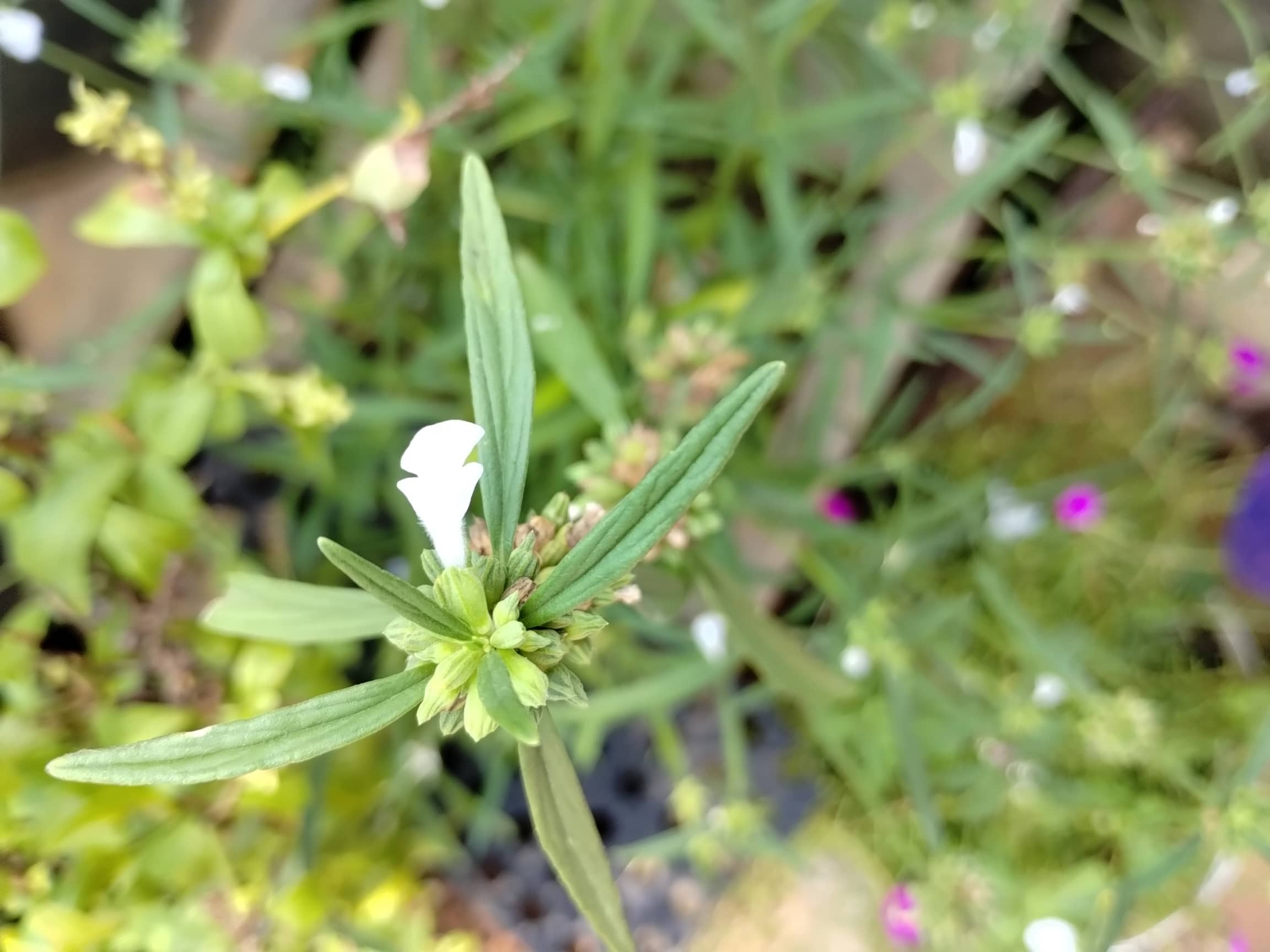
Leucas Aspera
Leucas aspera
Leucas Aspera, botanically classified as Leucas aspera and celebrated in Tamil heritage as Thumbai or in Sanskrit as Dronapushpi, is an exceptionally valuable, resilient, and highly aromatic annual or short-lived perennial herb. Belonging to the family Lamiaceae (the mint family, tribe Leucadeae)...
Similar Characteristics
4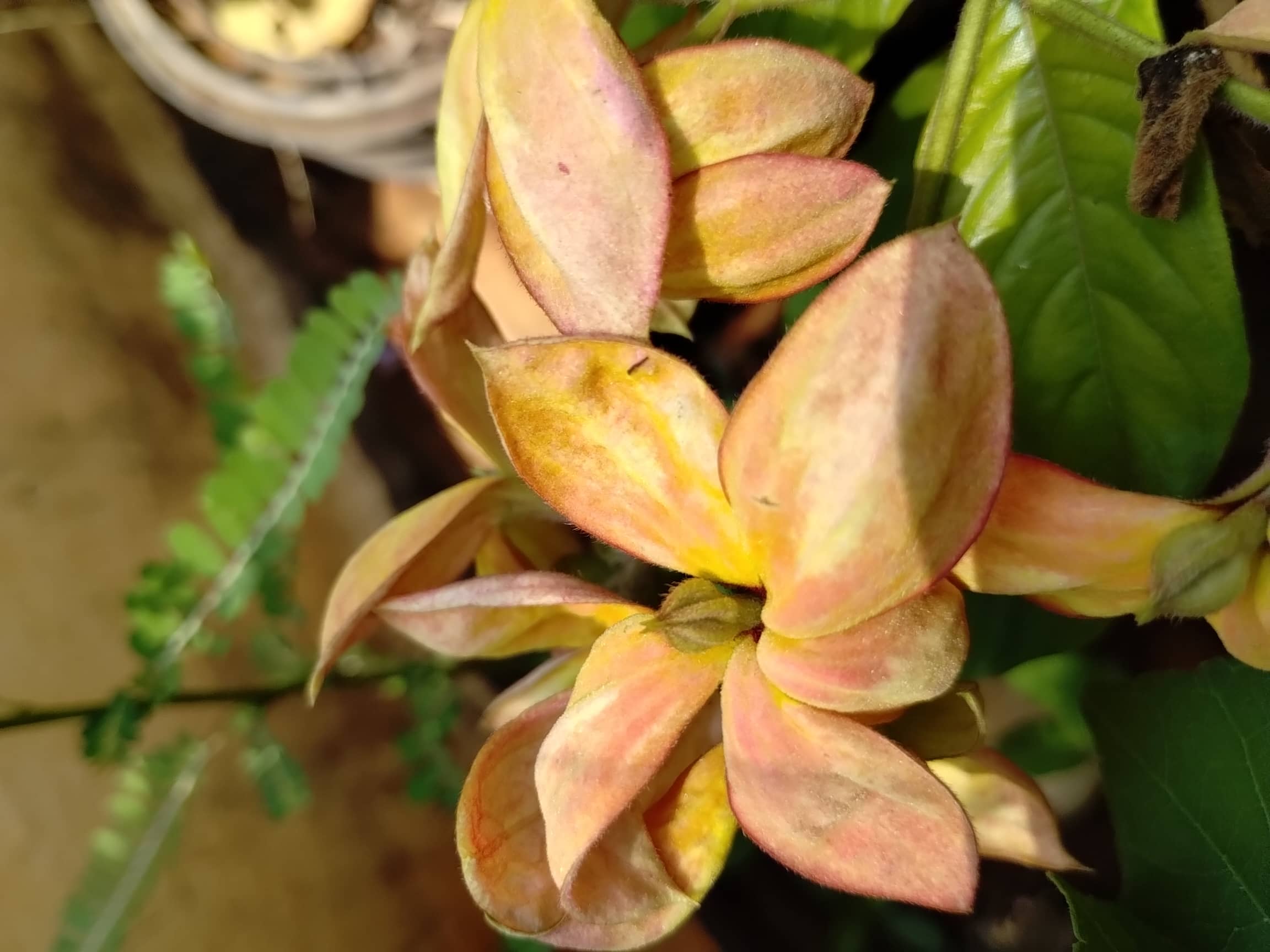
Mussaenda
Mussaenda erythrophylla
Mussaenda, botanically designated as Mussaenda erythrophylla and commonly known as the Ashanti Blood, Red Flag Bush, or Bangkok Rose, is an exceptionally striking, high-impact tropical evergreen shrub or sprawling semi-climber. Belonging to the family Rubiaceae (the coffee or madder family, tribe...
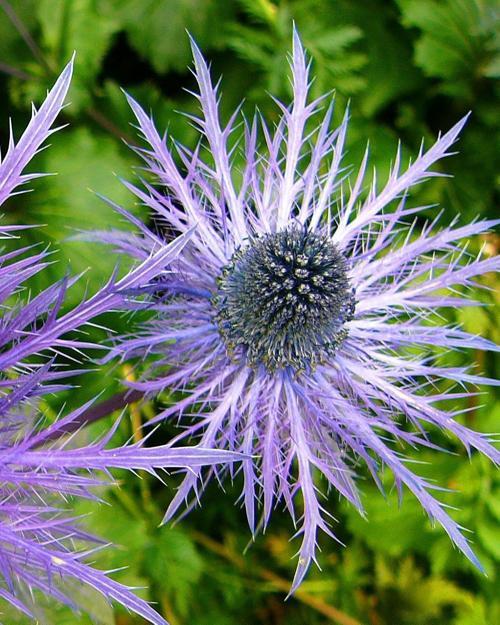
Alpine Sea Holly
Eryngium alpinum
The Alpine Sea Holly, botanically known as *Eryngium alpinum* and widely celebrated as the 'Queen of the Alps,' is an extraordinarily striking, architectural herbaceous perennial. Belonging to the family Apiaceae (the carrot or parsley family, tribe Saniculeae), this alpine masterpiece is native...
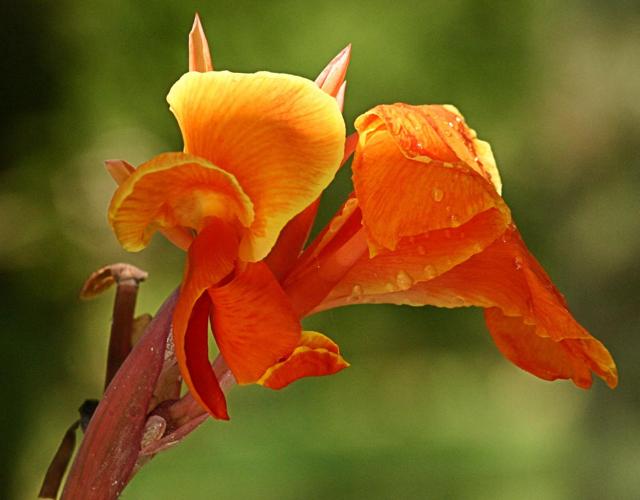
Canna lily
Canna indica
Canna indica, commonly known as the Canna Lily, is a bold and flamboyant tropical perennial that brings a dramatic, exotic flair to temperate and tropical gardens alike. Despite its common name, it is not a true lily but rather the sole genus in the Cannaceae family, closely related to gingers an...
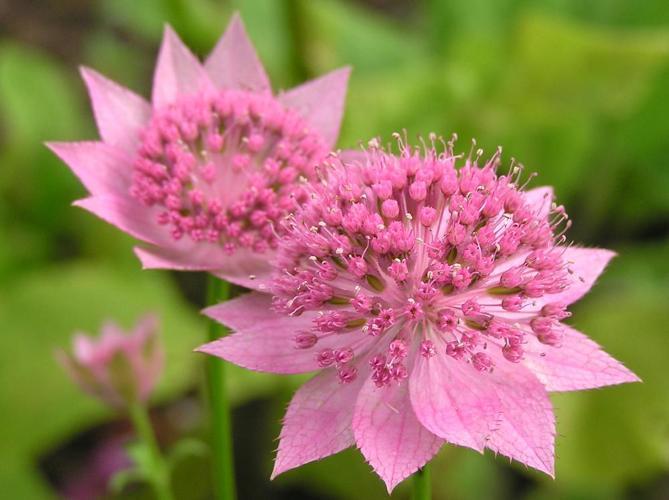
Masterwort
Astrantia
Distinctive perennial with star-shaped flower heads composed of tiny florets surrounded by prominent papery bracts that resemble a pincushion filled with decorative pins. The showy bracts come in shades of pink, white, cream, and red, creating a delicate star-like appearance. Popular cottage gard...