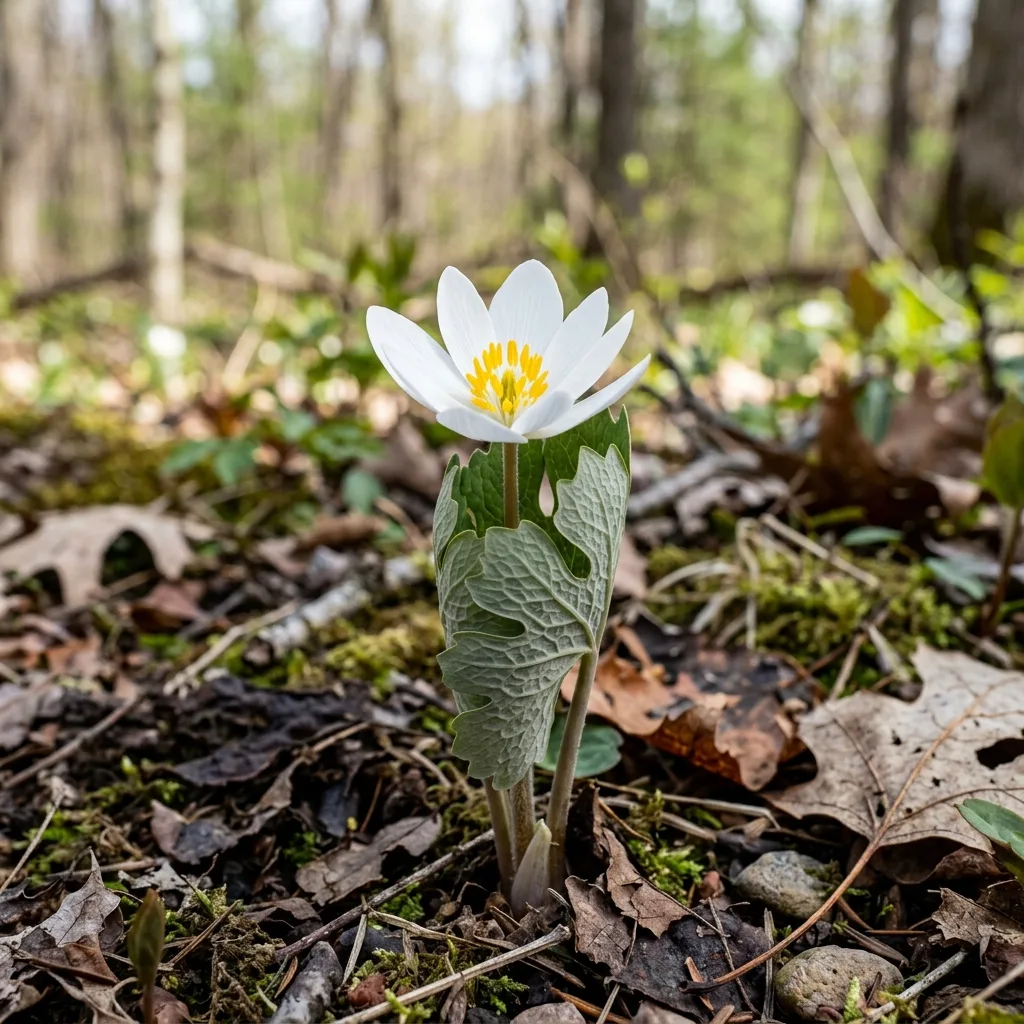
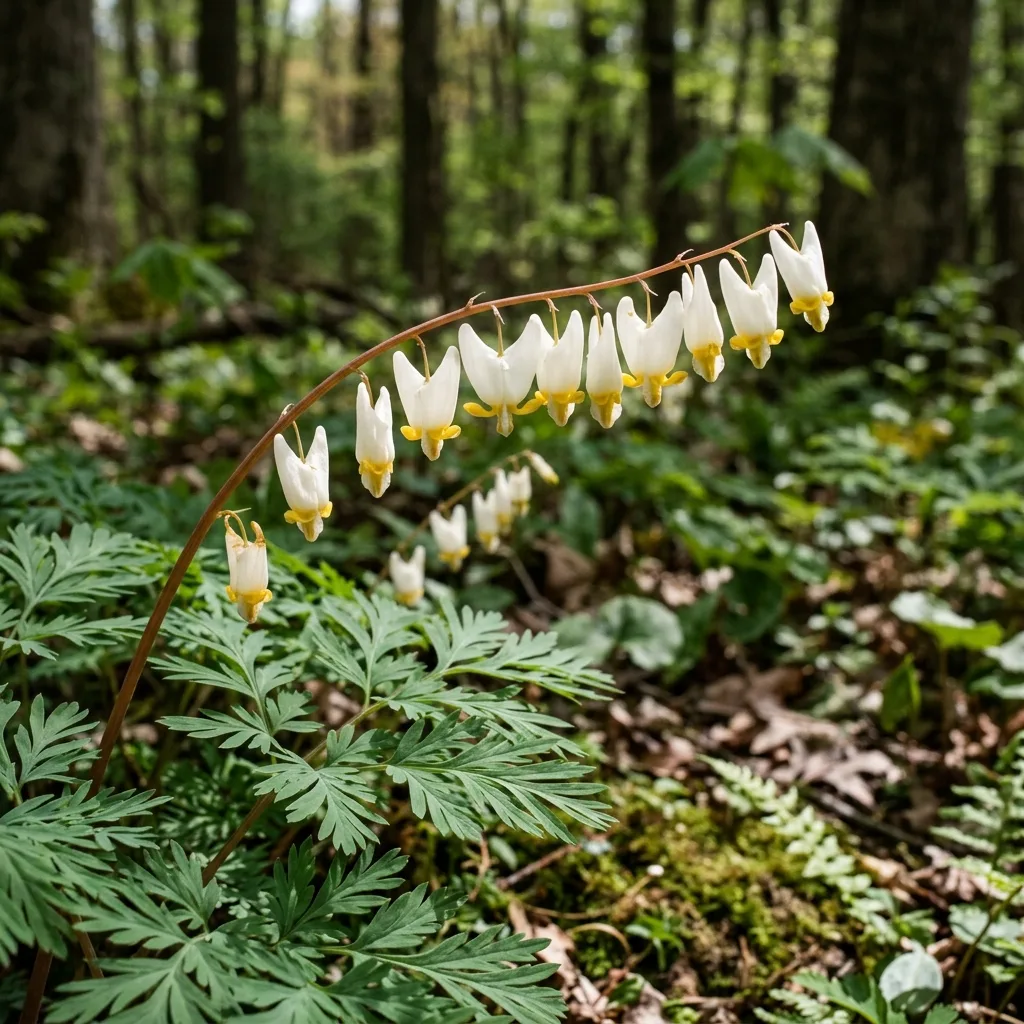
Dutchman's Breeches (Dicentra cucullaria) plant and flower identification photo Actual Plant Specimen
High Toxicity Multiple Species — Check Variety ↓

Is Dutchman's Breeches Toxic to Cats & Dogs? Bicuculline Convulsant Alkaloid Guide

Dicentra cucullaria • Also called: Soldier's Cap, Little Blue Stagger, White Hearts

Dutchman's Breeches is toxic to both cats (High Risk) and dogs (High Risk). Active compound: Isoquinoline Alkaloids — Bicuculline (Potent GABA-A Receptor Antagonist Convulsant), Protopine & Cryptopine.

Quick Visual ID — Confirm You Have Dutchman's Breeches:
  • Arching leafless stem dangling 4 to 10 quirky white-and-yellow flowers shaped like upside-down pantaloons ('breeches' or pant legs).
  • Finely dissected, fern-like, feathery bluish-gray-green basal leaves.
  • Cluster of tiny pink-to-white teardrop-shaped underground bulblets/tubers sitting just below the woodland leaf litter.
Pet Toxicity VerdictClick pet to switch view
Cat Safety Active
High Risk
Signs: Vomiting, Drooling, Staggering
Showing feline triage below
Dog Safety
High Risk
Signs: Vomiting, Diarrhea, Staggering
Click for canine symptoms & care
AI Plant Verifier Not 100% sure your plant is Dutchman's Breeches? Snap or upload a photo to verify species & toxicity with AI.
Anatomical Toxicity Breakdown

Dutchman's Breeches Plant-Part Identification & Toxicity Map

Every part of Dutchman's Breeches (Dicentra cucullaria) marked out as Toxic, Mild Irritant, or Non-Toxic for cats and dogs.
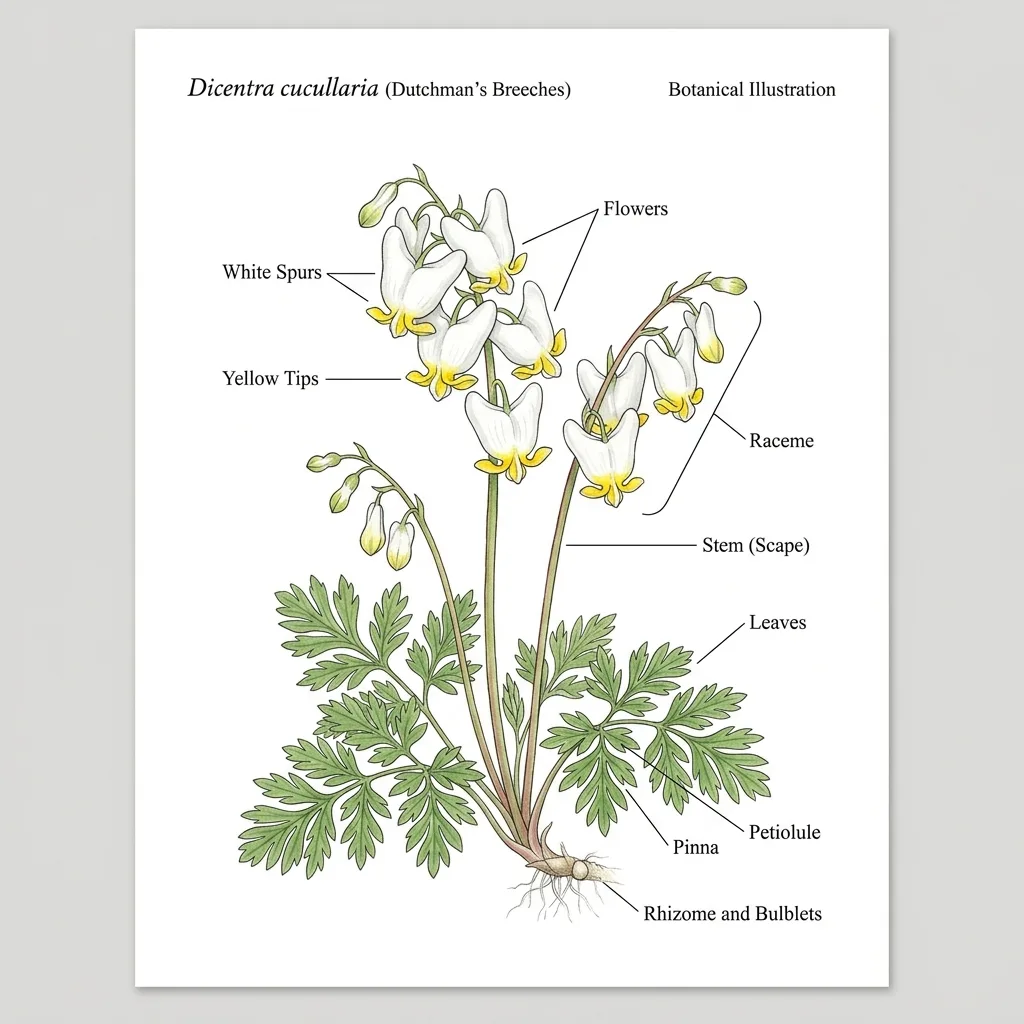
Dutchman's Breeches botanical identification diagram marking flower, leaf, stem, sap, and root toxicity
1

Shallow Pink/White Underground Bulblets (Tubers)

HIGHEST BICUCULLINE (CONVULSANT TOXIN)

CRITICAL SPRING HAZARD: The shallow, grain-like underground bulblets are easily uprooted when a dog tugs on the leaves—ingesting bulblets delivers concentrated bicuculline causing tremors and seizures.

2

Feathery Bluish-Green Fern-Like Leaves

HIGH NEUROTOXIC ALKALOID RISK

Foliage emerges in early spring when few other greens are available—chewing leaves causes drooling, vomiting, and 'staggers' (incoordination).

3

White-and-Yellow Pantaloon-Shaped Flowers

TOXIC ISOQUINOLINE ALKALOIDS

Nodding breeches-shaped blossoms contain bicuculline and protopine.

4

Succulent Pinkish Flower Stems & Seed Pods

TOXIC SAP & SEEDS

Contains isoquinoline alkaloids and skin-irritating sap.

Visual Species & Look-Alike Identification

Which Dutchman's Breeches Species Do You Have? (Separate Visual Guide)

Different plants called or confused with Dutchman's Breeches have vastly different toxicity levels. Compare the separate species images and anatomical markers below:

Toxic Species
🐱 Cat: High 🐶 Dog: High
Dutchman's Breeches & Squirrel Corn (Dicentra cucullaria / Dicentra canadensis (Family Papaveraceae)) — Toxic Species Enlarge

Dutchman's Breeches & Squirrel Corn

Dicentra cucullaria / Dicentra canadensis (Family Papaveraceae)

Bulblets/Leaves: High Bicuculline Seizure Risk Flowers/Sap: Neurotoxic & Dermatitis
How to Spot This Species:
  • Upside-down white 'pantaloons' with 2 V-shaped diverging spurs and a yellow waist
  • Finely divided blue-gray ferny leaves
  • Contains bicuculline (GABA-A blocker) causing trembling and seizures
🔴 HIGH TOXICITY TO CATS & DOGS: Bulblets, leaves, and flowers cause drooling, vomiting, trembling ('staggers'), seizures, and labored breathing.
Toxic Look-Alike
🐱 Cat: Moderate 🐶 Dog: Moderate
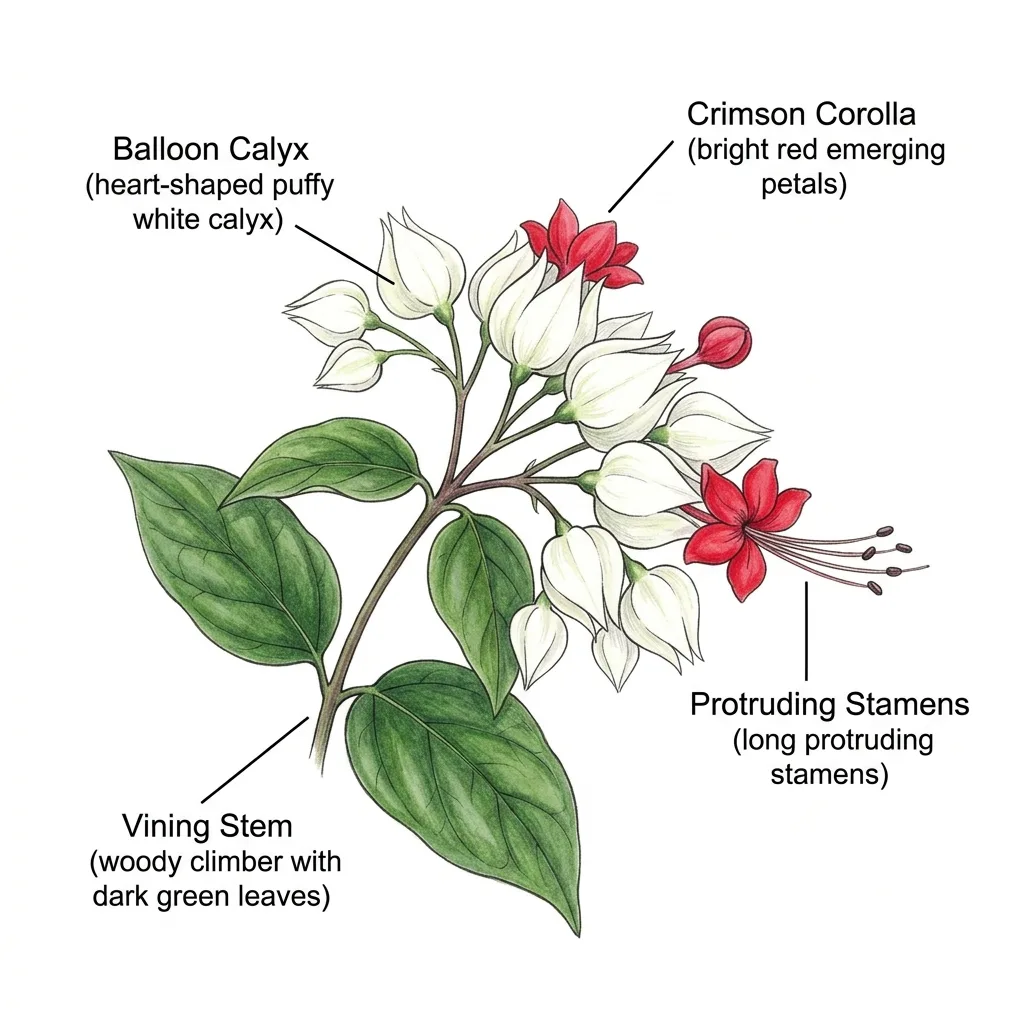
Bleeding Heart (Close Garden Sister Species) (Lamprocapnos spectabilis (syn. Dicentra spectabilis)) — Toxic Look-Alike Enlarge

Bleeding Heart (Close Garden Sister Species)

Lamprocapnos spectabilis (syn. Dicentra spectabilis)

Roots/Foliage: Isoquinoline Alkaloids
How to Spot This Species:
  • Arching stems of pink heart-shaped lockets with a protruding white droplet
  • Contains the exact same isoquinoline alkaloids (protopine & bicuculline)
🔴 TOXIC RELATIVE: Causes vomiting, diarrhea, contact dermatitis, and tremors if roots/foliage are eaten.
Safe Look-Alike
🐱 Cat: Safe 🐶 Dog: Safe
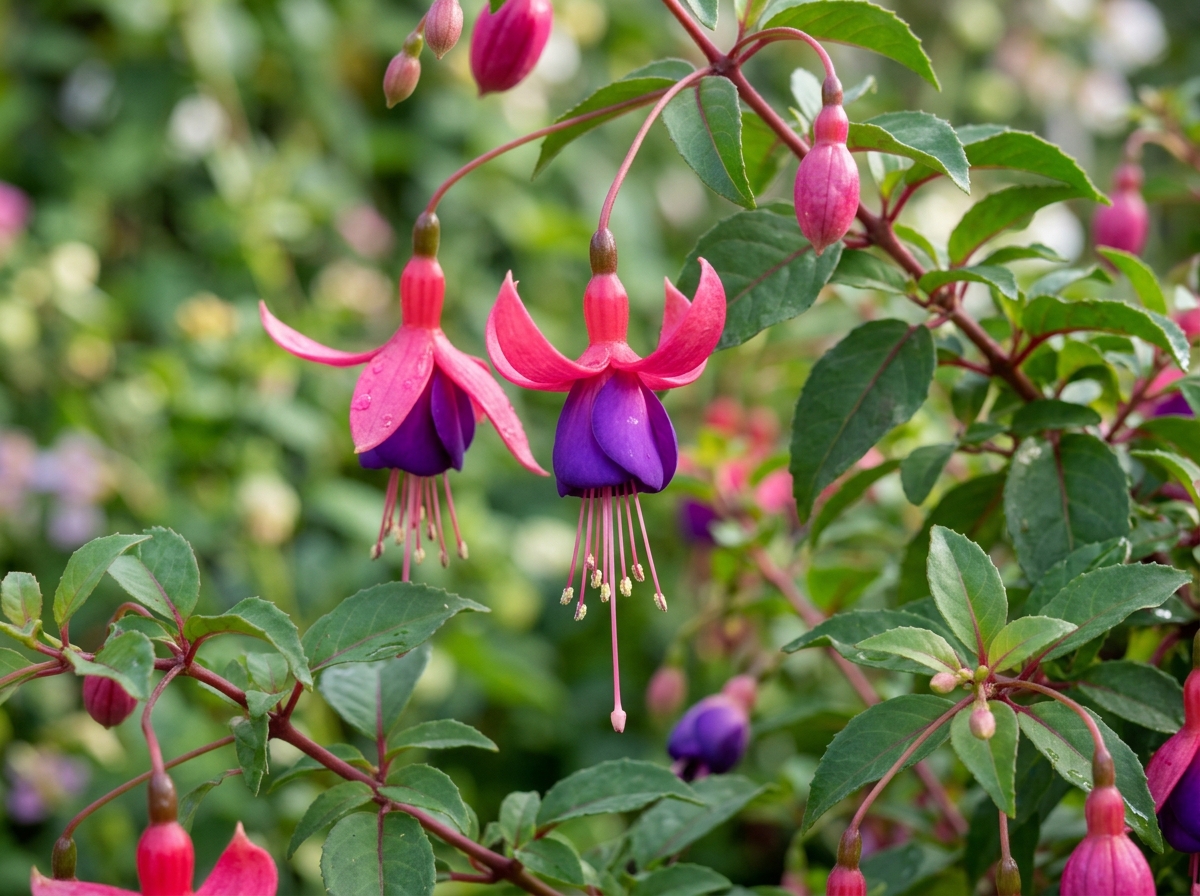
True Fuchsia & Boston Fern (100% Pet-Safe Dangling/Ferny Swaps!) (Fuchsia magellanica / Nephrolepis exaltata) — Safe Look-Alike Enlarge

True Fuchsia & Boston Fern (100% Pet-Safe Dangling/Ferny Swaps!)

Fuchsia magellanica / Nephrolepis exaltata

All Parts: 100% Safe
How to Spot This Species:
  • Graceful dangling two-toned pendant flowers (Fuchsia) or lush feathery fronds (Boston Fern) that are 100% non-toxic
🟢 100% NON-TOXIC: Safe shade-garden replacements for Dicentra species.
View Full True Fuchsia & Boston Fern Safety Profile →
Interactive Veterinary Triage

"My Pet Just Chewed or Ate Dutchman's Breeches!" — Instant Action Checker

Select your pet size and the specific part of Dutchman's Breeches they touched or swallowed for tailored guidance:

Step 1 Select Pet & Size
Step 2 Which Part Did They Touch or Eat?
🔴 URGENT VETERINARY CARE REQUIRED

High-Risk Exposure: Cat + Shallow Pink/White Underground Bulblets (Tubers)

CRITICAL SPRING HAZARD: The shallow, grain-like underground bulblets are easily uprooted when a dog tugs on the leaves—ingesting bulblets delivers concentrated bicuculline causing tremors and seizures. Critical emergency. Safely remove any plant debris from the mouth and seek immediate veterinary treatment.

1Do NOT wait for late-stage clinical symptoms to develop—early decontamination within 1–2 hours dramatically improves prognosis.
2Do NOT induce vomiting at home (especially in cats or with corrosive sap/oxalates) unless explicitly instructed by a veterinarian.
3Call ASPCA Animal Poison Control Center / Pet Poison Helpline ((888) 426-4435) or head to your nearest 24/7 Vet ER immediately.
4Bring a photo or sample of the Dutchman's Breeches plant and copy the Vet Triage Summary below.

Clinical Symptoms to Watch For in Cats

Vomiting
Drooling
Staggering
Tremors

Post-Ingestion Timeline

0 – 30 Mins
15–30 mins: Sudden onset of profuse foaming salivation, head shaking, and vomiting (bicuculline absorbs rapidly).
1 – 6 Hours
30 mins – 2 hours: Muscle trembling, staggering gait ('staggers'), abdominal pain, diarrhea, and dilated pupils.
12 – 72 Hours
2–6 hours: Convulsions/seizures and respiratory distress in large ingestions; prompt veterinary anticonvulsant therapy (diazepam/phenobarbital — GABA agonists directly counter bicuculline!) yields rapid recovery.

Veterinary Contraindication Warning — What NOT To Do

🚫 NEVER give hydrogen peroxide, salt, or home emetics to induce vomiting in a cat—3% hydrogen peroxide causes severe, potentially fatal stomach and esophageal ulceration in felines. Only a veterinarian can safely administer feline emetics.

🚨 CRITICAL SOS

Emergency Protocol If Your Pet Ate Dutchman's Breeches:

1
Do NOT induce vomiting without consulting a veterinarian first.
2
Contact Animal Poison Hotline:
ASPCA Animal Poison Control Center / Pet Poison Helpline
(888) 426-4435
Hours: 24/7, 365 days a year | Fees: Consultation fee may apply
US ASPCA: (888) 426-4435 or Pet Poison Helpline: (855) 764-7661.
3
Note vital details: Estimate which plant part (All parts, Tubers, Leaves), how much they ate, and when ingestion occurred.
4
Monitor closely for these symptoms:Vomiting, Drooling, Staggering, Tremors.
5
Go to the nearest emergency veterinary clinic immediately if severe symptoms or rapid changes in behavior occur.
Professional First Aid Summary:

Critical emergency. Safely remove any plant debris from the mouth and seek immediate veterinary treatment.

Detailed Monograph

In-Depth Botanical & Veterinary Safety Analysis

Scientific evaluation and toxicological breakdown of Dutchman's Breeches (Dicentra cucullaria)

Dutchman's Breeches (Dicentra cucullaria) is a delicate spring ephemeral that is highly toxic to dogs, cats, and livestock. It contains several isoquinoline alkaloids, including protopine, cryptopine, and cucullarine. Ingestion of any part of this plant causes salivation, severe vomiting, diarrhea, skin irritation, staggering, trembling, breathing difficulties, and in high doses, seizures or death.

Recommended 100% Pet-Safe Plant Alternatives

Global Names & Multilingual Search

Spanish: Pantalones de holandés
View Botanical Care Profile
SpanishPantalones de holandés

Specific Pet Safety FAQs for Dutchman's Breeches

Q

Is Dutchman's Breeches poisonous?

A

Yes, it contains toxic alkaloids that act on the brain and gastrointestinal tract, causing staggering and seizures.

Q

Which parts of Dutchman's Breeches are toxic?

A

All parts are toxic, but the underground tubers contain the highest concentration of toxic alkaloids.

From the Blog

20 Dangerous Garden Plants: Cat Toxicity & Safety Guide

Felines are highly sensitive to houseplants and flowers. Learn which 20 common species cause severe or fatal reactions in cats, including lilies, and discover safe, cat-friendly garden alternatives.