
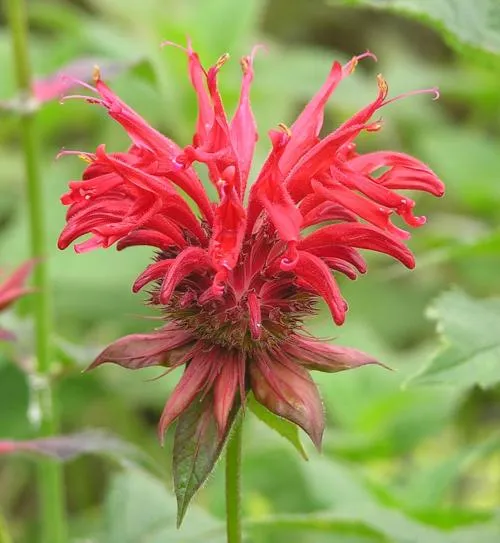
Beebalm
Monarda didyma, Monarda fistulosa
How to Identify Beebalm
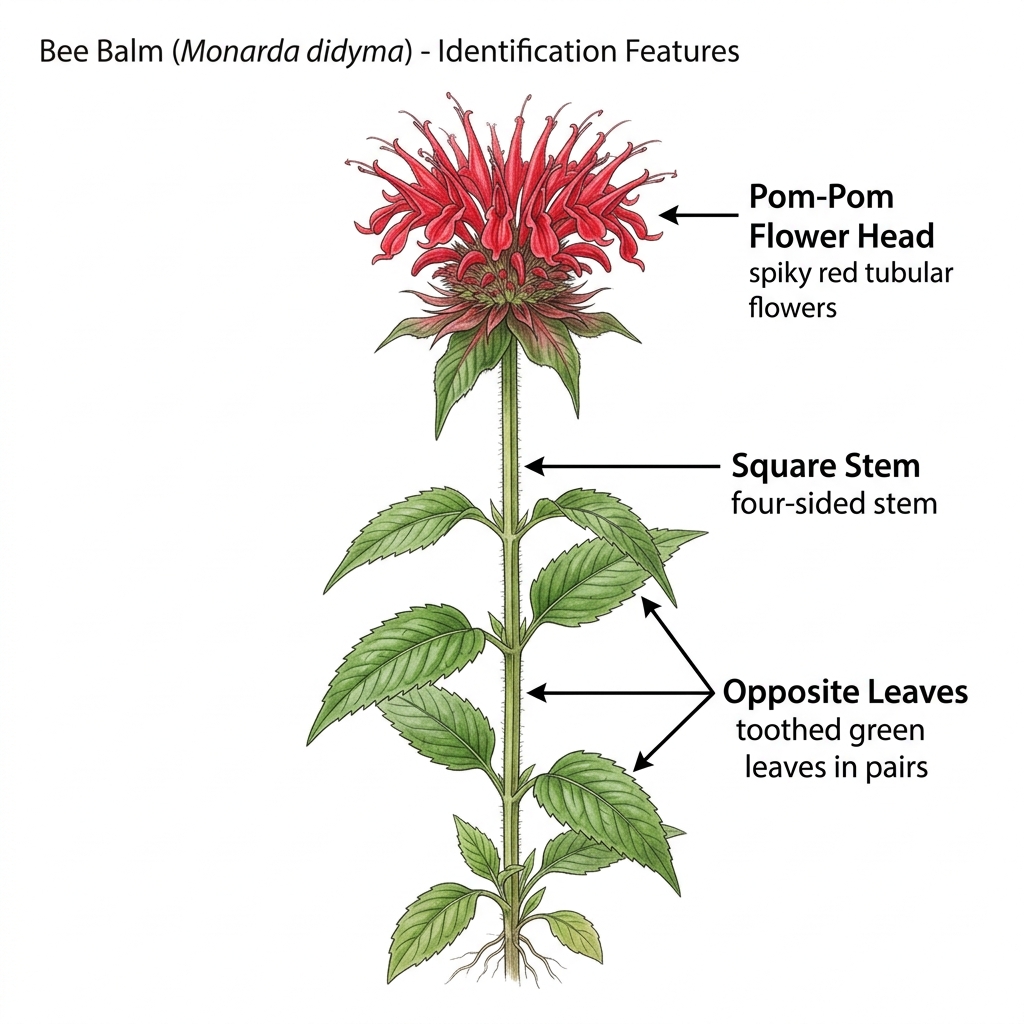
A detailed guide to identifying Bee Balm (Monarda didyma) by its key botanical features:
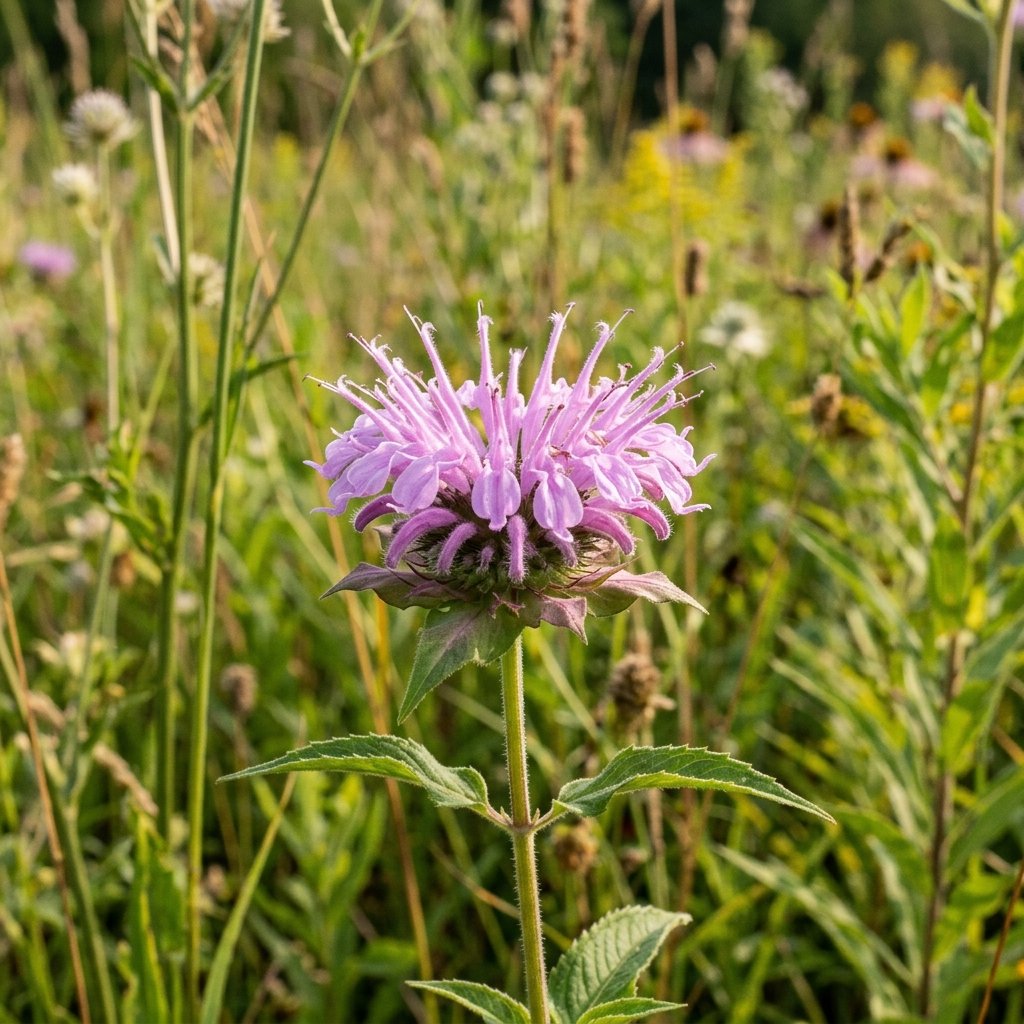
- Pom-Pom Flower Heads: Large, ragged, crown-like or spiky globes composed of tubular, two-lipped blossoms (in red, pink, or purple).
- Square Stems: Like other members of the mint family, the stems are distinctly square-shaped, stiff, and hairy.
- Opposite Leaves: Toothed, lance-shaped leaves grow directly opposite each other along the stem and release a citrusy, minty fragrance when crushed.
- Leaf-like Bracts: Colorful, leaf-like bracts sit directly beneath the flower clusters, often tinged with the color of the flowers.
Care & Growing Guide
Bee Balm Care & Growing Guide:
- Light: Full sun to light partial shade. Requires at least 6 hours of daily sun for the best blooms.
- Soil: Moist, organic-rich, fertile, well-draining soil. Does not tolerate drying out completely.
- Watering: Keep soil consistently moist, especially during hot summer months. Water at the base to avoid wetting leaves.
- Air Circulation: Space plants 18-24 inches apart to ensure good air flow and prevent powdery mildew, which is common in humid weather.
Seasonal Blooming & Hardiness
Seasonal Blooming Calendar (US Hardiness Zones 3-9):
- Blooming Season: Mid to late summer (typically June through September).
- Planting Time: Plant container-grown plants or root divisions in early spring after the last frost, or sow seeds indoors in late winter.
- Division: Divide clumps every 3 to 4 years in early spring to control spread and maintain plant vigor.
Bloom Timeline
About Beebalm
Bee Balm, botanically classified under the genus Monarda within the family Lamiaceae (the mint family), is a spectacular and highly aromatic clump-forming herbaceous perennial. Native to the rich floodplains, moist meadows, woodland margins, and stream banks of eastern North America—ranging from eastern Canada south to Georgia—this resilient wildflower has been cherished for centuries. It is globally celebrated for its dense, ragged, crown-like flower clusters and its highly fragrant foliage, which releases a refreshing, sweet citrus-mint scent when brushed.
This hardy perennial typically grows in upright, bushy clumps reaching a height of 2 to 4 feet with a spread of 2 to 3 feet. It displays the characteristic features of the mint family, including sturdy square stems and opposite, sharply-toothed, lance-shaped leaves. From mid to late summer (June through September), the stem tips are crowned with spectacular, spherical flower heads measuring 2 to 4 inches across. These heads comprise dense clusters of spiky, tubular, two-lipped blossoms in brilliant shades of scarlet-red, rose-pink, lavender-purple, or pure white, accented by colorful leaf-like bracts.
The reproductive structure of the Monarda genus is represented by the mint-family floral formula ⨁ ⚥ K(5) C(5) A2+2 G(2). This formula states that the flowers are radially symmetrical (actinomorphic) in their calyx structure and bisexual. The calyx features 5 fused sepals forming a ribbed protective tube, and the corolla consists of 5 fused petals that open into a highly distinct, gaping, two-lipped tube. The androecium consists of 4 stamens arranged in two pairs of unequal lengths (didynamous) fused to the corolla, while the gynoecium contains 2 fused carpels with a superior ovary.
Horticulturally, Bee Balm is an exceptionally reliable and straightforward perennial to cultivate. It thrives in full sun to partial shade, requiring at least 6 hours of direct sunlight to bloom profusely and maintain sturdy stems. It prefers rich, organic, moist, and well-drained soils; while it can tolerate short dry spells, consistent soil moisture is crucial to prevent the lower leaves from drying and dropping. To prevent powdery mildew, which is common in hot, humid summers, ensure the plants are spaced widely to allow excellent air circulation. It is cold hardy in USDA zones 3 through 9.
The genus name Monarda honors the 16th-century Spanish physician and botanist Nicolas Monardes, who authored the first book on the medicinal plants of the New World. The popular common name 'Oswego Tea' stems from the Oswego Native American tribe of New York, who taught early European colonists to brew the fragrant leaves as a warming herbal drink—a practice that became highly popular after the historic Boston Tea Party when imported black tea was boycotted. Known in Sanskrit as Madhukarin (मधुकारिन्) and in Hindi as Lemon Balm (लेमन बाम).
For pet owners and gardeners, Bee Balm is an exceptionally safe and highly beneficial plant. Monarda didyma is classified as completely NON-TOXIC to dogs, cats, and horses by major global animal safety databases, including the ASPCA. If a curious pet plays with, chews on, or swallows the aromatic leaves or showy blossoms, there is absolutely no danger of chemical poisoning. To explore more safe, fragrant additions and family-friendly perennials, visit our general Pet Guard directory. In addition, the leaves are rich in thymol, a natural antiseptic, and are widely brewed into soothing teas for digestive comfort and cold relief.
Bee Balm is sometimes confused with wild bergamot mint or lemon balm. It is easily distinguished by its highly unique, spiky pom-pom flower heads and its much taller, upright growth habit. It makes a stunning addition to rain gardens, butterfly borders, and cottage beds; we recommend pairing it alongside other sun-loving, non-toxic summer favorites like the golden Marigold, trailing Wild Pansy, or Cat's Whiskers. To discover more pollinator-friendly perennials and organic companion planting guides, check our Flower Identifier.
Floral Formula & Features
Radially symmetrical (actinomorphic), bisexual, 5 fused sepals, 5 fused petals forming two-lipped corolla, 4 stamens arranged in two whorls of 2 (didynamous), 2 fused carpels with superior ovary
- Scientific Name & Classification: Monarda didyma / Monarda fistulosa (Lamiaceae). Famed as Bee Balm, Horsemint, and Oswego Tea.
- Identification Markers: Sturdy square stems, aromatic lance-shaped opposite leaves, and dense spiky crown-like flower heads in red, pink, or purple.
- Floral Formula (⨁ ⚥ K(5) C(5) A2+2 G(2)): Radially symmetrical calyx, bisexual, featuring 5 fused sepals, 5 fused petals forming a two-lipped tube, and 4 didynamous stamens.
- Growing Requirements: Full sun to partial shade; prefers rich, moist, organic, well-draining soil. Requires good air circulation to prevent summer powdery mildew (Zones 3-9).
- Cultural Significance: Historically brewed as a tea substitute by Oswego people during the Boston Tea Party. Genus named after Spanish botanist Nicolas Monardes.
- Safety & Toxicity: NON-TOXIC & BENEFICIAL. 100% safe for cats, dogs, and horses, and acts as a powerful natural nectar source to attract bees and hummingbirds.
- Common Look-alikes: Confused with lemon balm or wild mints, but easily distinguished by its towering height and distinctive spiky pom-pom floral clusters.
- Internal Links: Pairs magnificently in sunny cottage borders beside other pet-safe summer favorites like golden Marigold, Wild Pansy, or Cat's Whiskers; find more in our Flower Identifier.
- Internal Links: Compare key differences in our Bee Balm vs Wild Bergamot comparison, or try our instant Flower Identifier.
Names in Different Languages
Botanical Classification: Beebalm belongs to the Lamiaceae family. Learn how to identify its floral symmetry, stamen arrangement, and structural formulas in our Botanical Family Classification Guide.
Toxicity & Safety
Frequently Asked Questions
What is Floral Formula?
A floral formula is a symbolic representation of a flower's structure using letters, numbers, and special symbols. It provides a concise way to describe the arrangement and number of floral parts.
This formula describes the flower's symmetry, sepals, petals, stamens, and carpels in a standardized format.
Formula Sequence
- Bract: Br or Ebr
- Bracteole: Brl or Ebrl
- Symmetry: % (Radial) or ⊕ (Bilateral)
- Sex: ♀ (Female), ♂ (Male), or ⚥ (Bisexual)
- Calyx/Sepal: K<number> (Free or Fused)
- Corolla/Petal: C<number> (Free or Fused)
- Androecium: A<number> (Free or Fused)
- Gynaecium: G<number> (Superior or Inferior Ovary)
Symbol Meanings
- Numbers: Indicate quantity of parts
- Parentheses (): Parts are fused together
- Plus (+): Parts in different whorls
- Underline: Superior ovary position
- Overline: Inferior ovary position
- ∞: Numerous parts (too many to count)
Understanding floral formulas helps botanists quickly identify and classify flowers based on their structural characteristics.
Companion Plants & Garden Pairings
3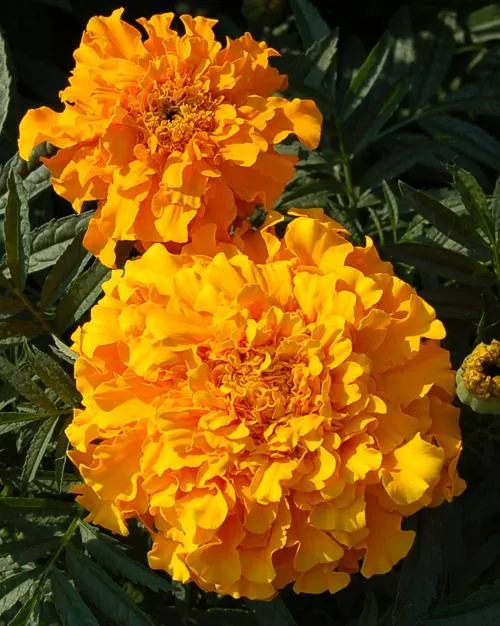
Marigold
Tagetes
These bright golden annuals repel pests while creating a rich, warm color scheme beside the spiky pink or red blooms of Bee Balm.
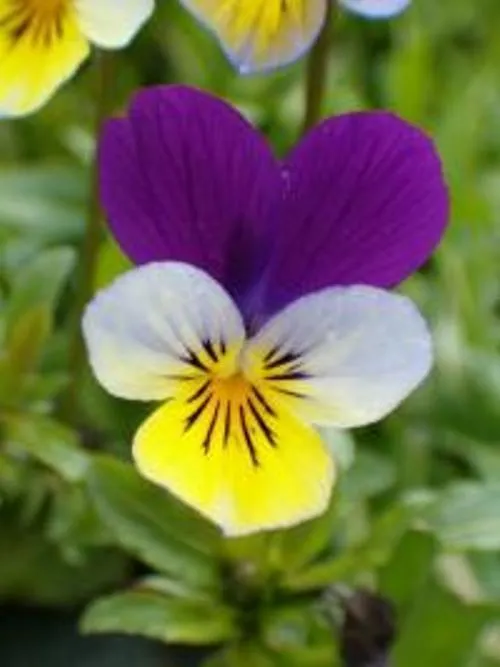
Wild Pansy
Viola tricolor
A low-growing, pet-safe ground cover that carpets the base of the taller Monarda stems with cheerful purple and yellow faces.
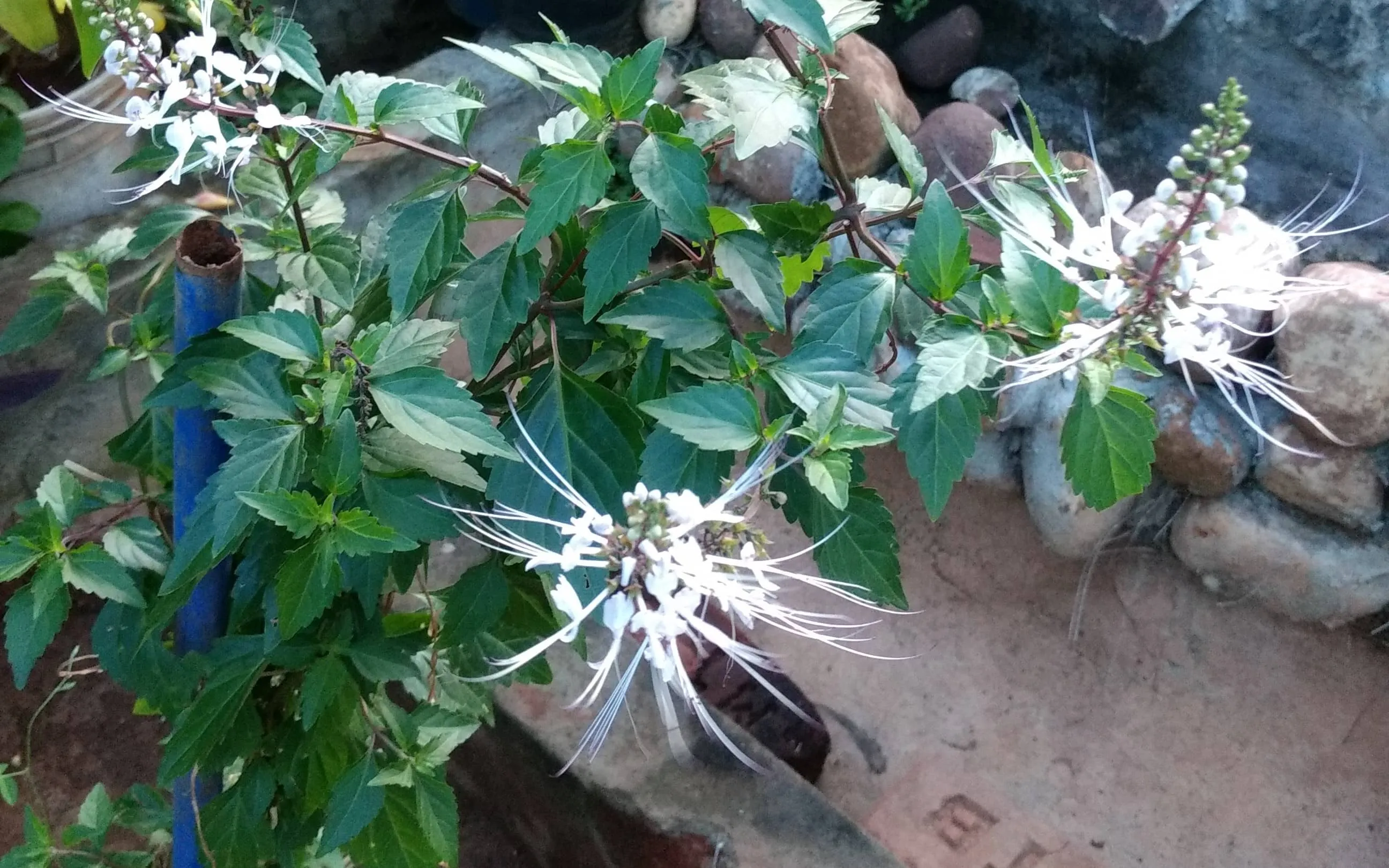
Cat's Whiskers
Orthosiphon aristatus
Creates a gorgeous texture-rich backdrop with its unique long white whiskers and complementary medicinal growing profile.
Similar Flowers
Discover flowers that share botanical characteristics
Same Family
4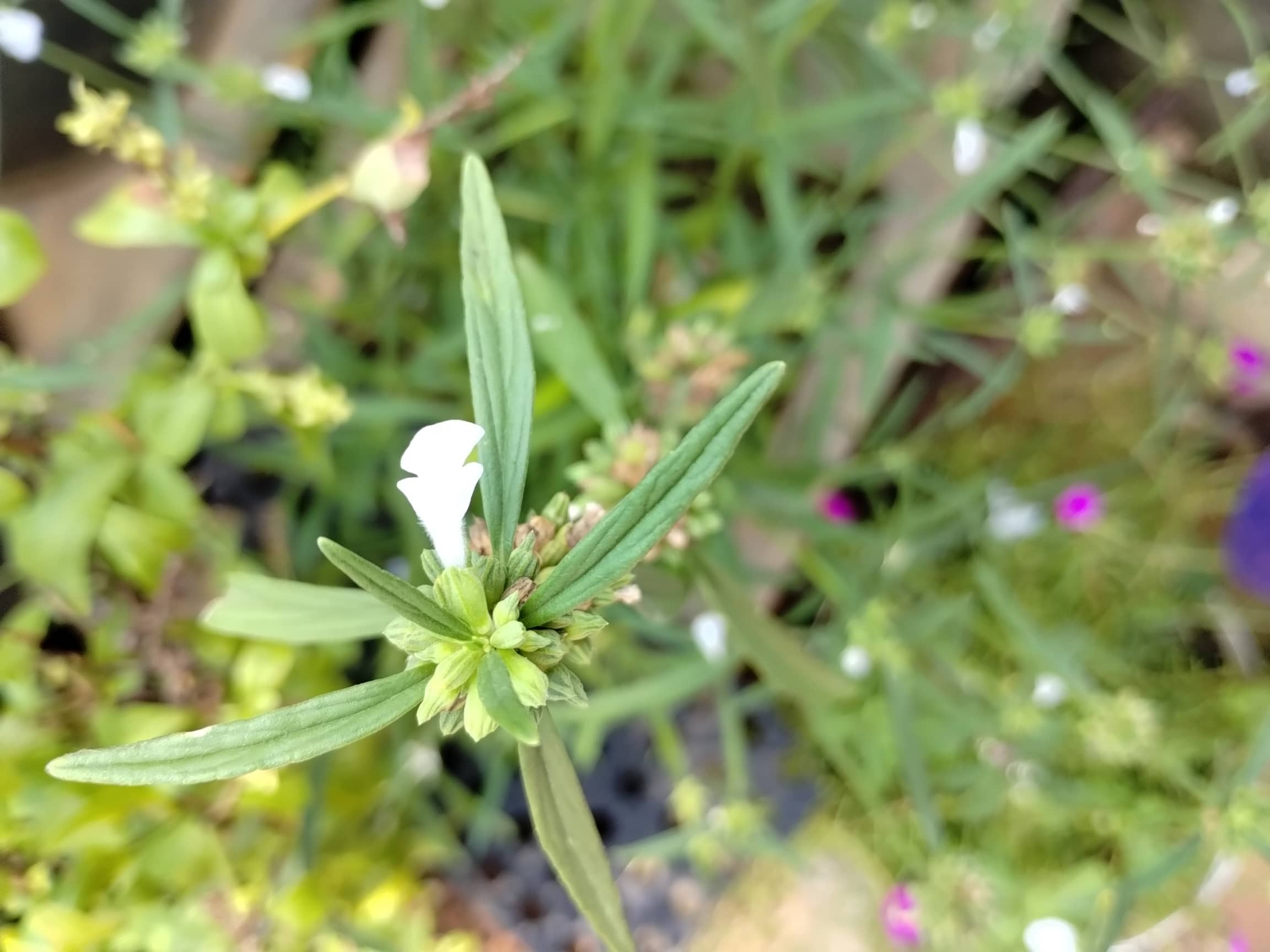
Leucas Aspera
Leucas aspera
Leucas Aspera, botanically classified as Leucas aspera and celebrated in Tamil heritage as Thumbai or in Sanskrit as Dronapushpi, is an exceptionally valuable, resilient, and highly aromatic annual or short-lived perennial herb. Belonging to the family Lamiaceae (the mint family, tribe Leucadeae)...
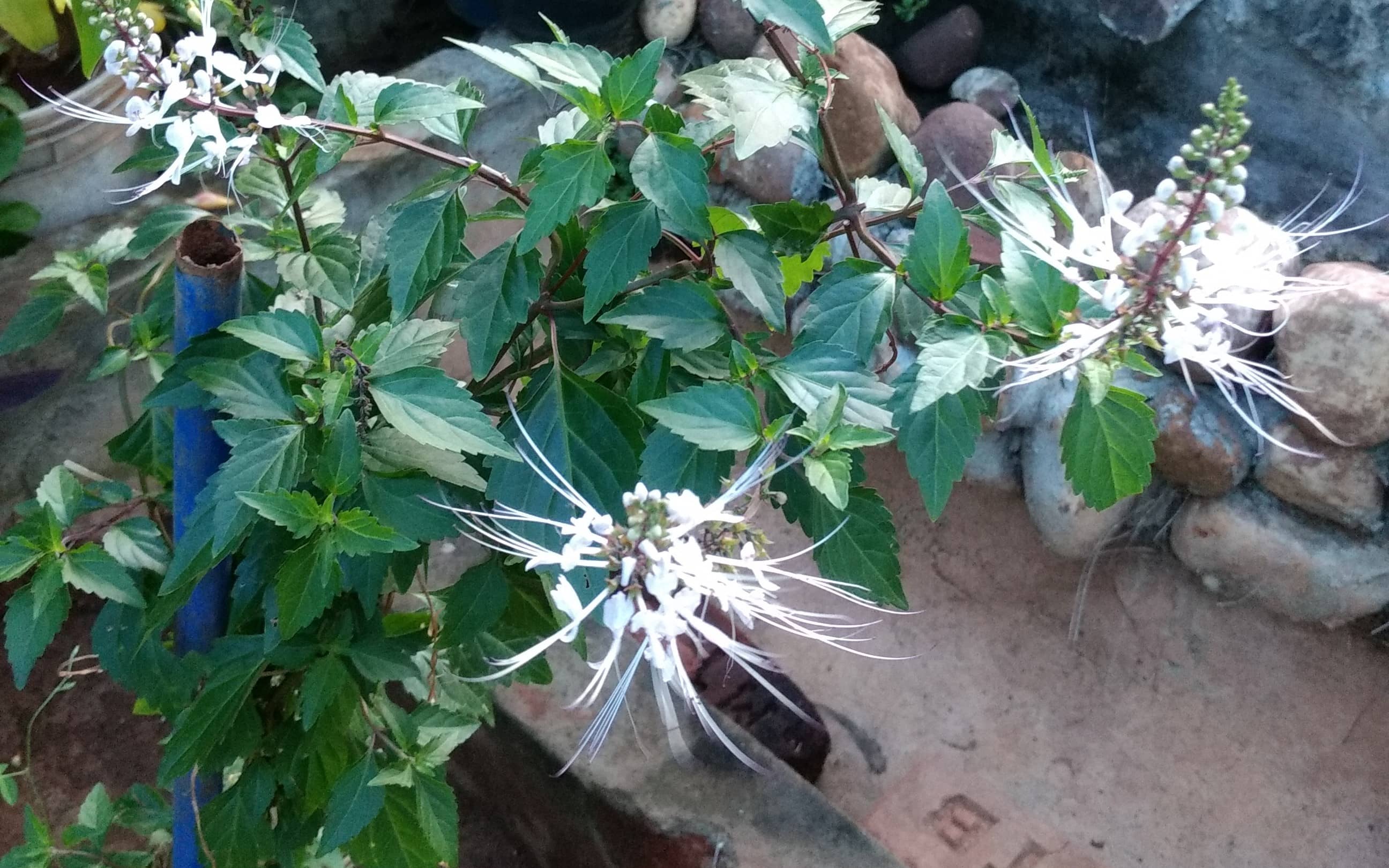
Cat's whiskers
Orthosiphon aristatus
The Cat's Whisker, botanically classified as Orthosiphon aristatus (and often called Orthosiphon stamineus), is an extraordinarily distinctive, fast-growing herbaceous perennial shrub in the Lamiaceae (mint) family. Native to the damp, shaded margins, grassy valleys, and riverbanks of tropical So...
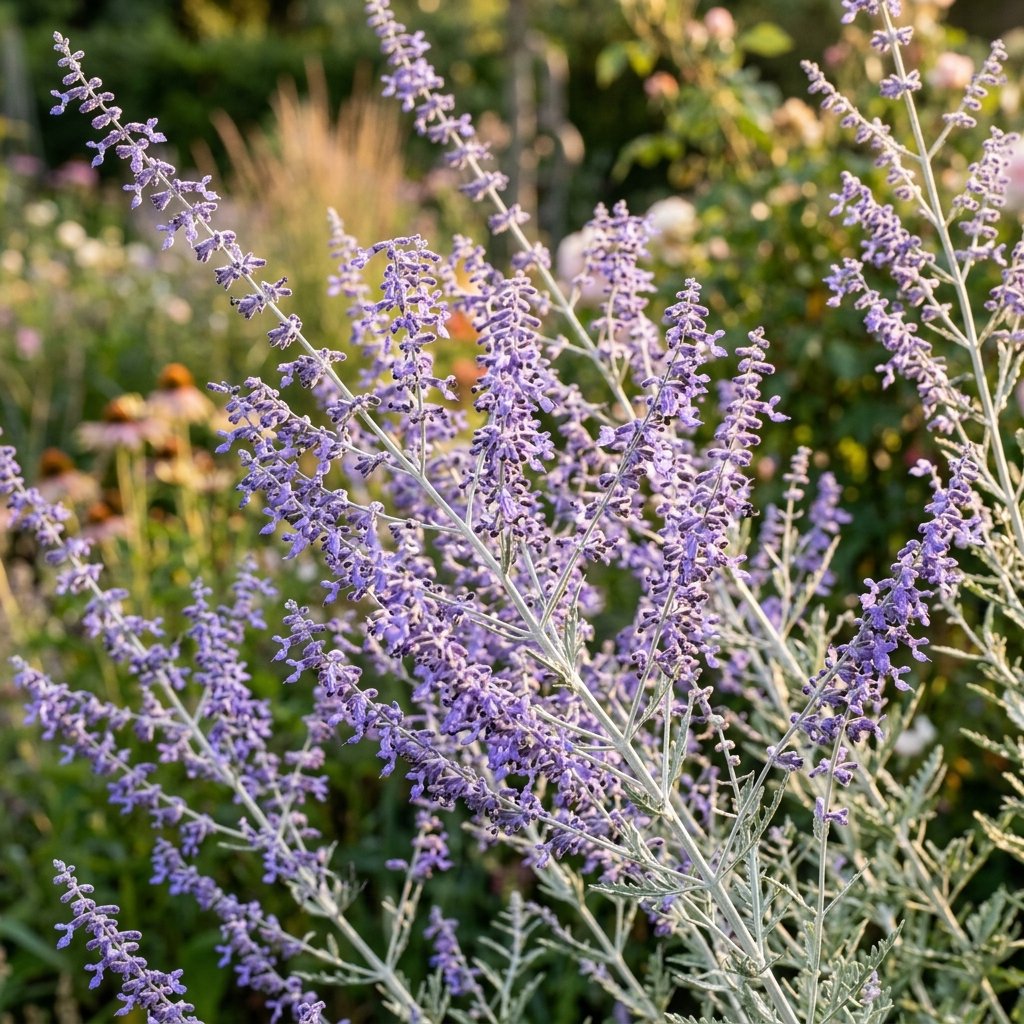
Russian Sage
Salvia yangii
Russian Sage, botanically reclassified as *Salvia yangii* (long celebrated under its classic horticultural synonym *Perovskia atriplicifolia*), is an exceptionally drought-tolerant, graceful, and cloud-like deciduous perennial subshrub. Belonging to the mint family Lamiaceae (tribe Mentheae), thi...
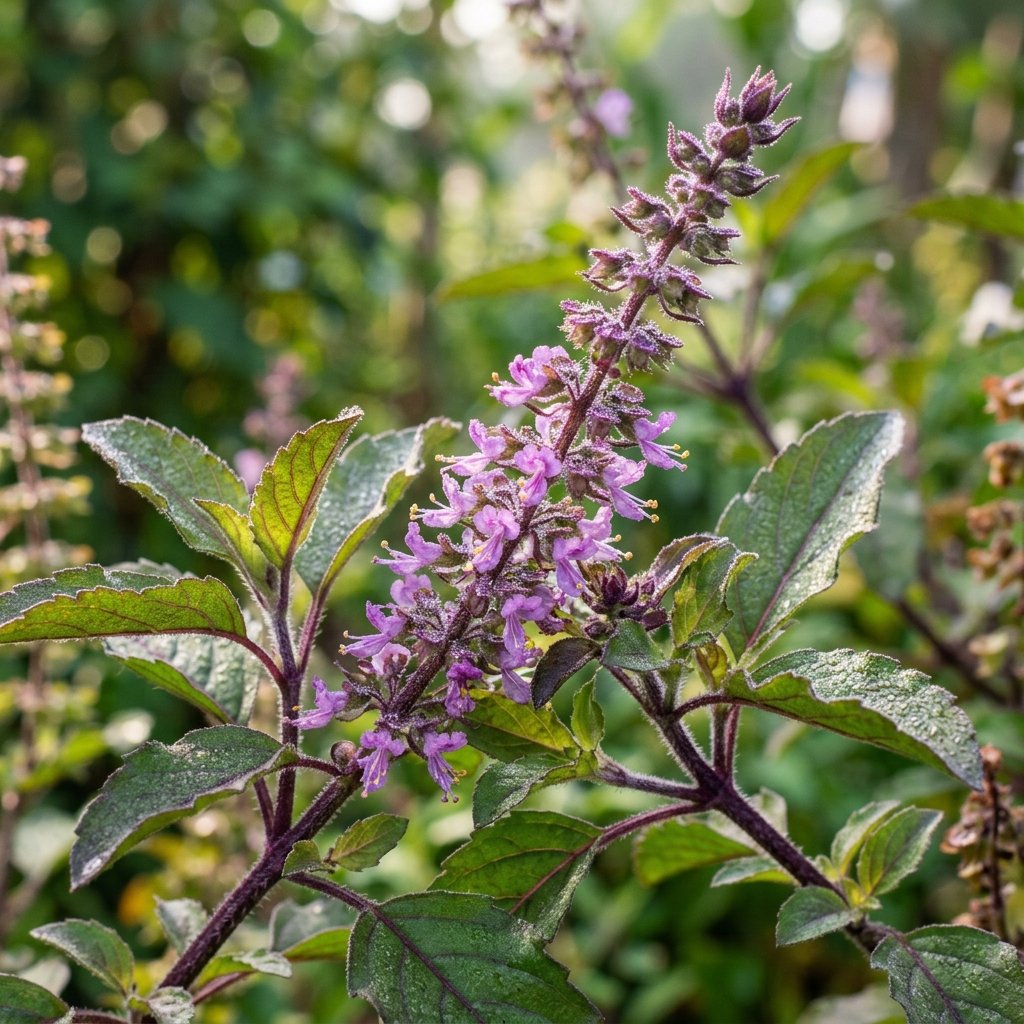
Holy Basil (Tulsi)
Ocimum tenuiflorum
Holy Basil, botanically classified as *Ocimum tenuiflorum* (synonymous with *Ocimum sanctum*) and universally revered throughout India and the Eastern world as Tulsi (the 'Incomparable One'), is a profoundly sacred, highly aromatic, and therapeutically celebrated perennial subshrub. Belonging to...
Similar Characteristics
4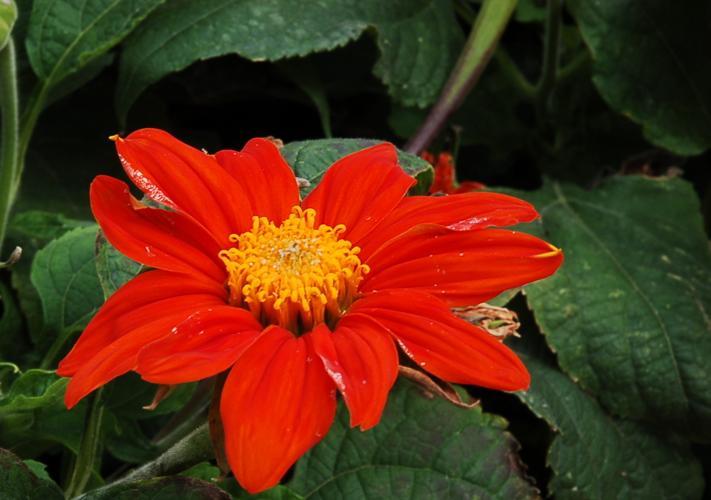
Orange Dahlia
Dahlia × hortensis
The Orange Dahlia, botanically designated under the genus *Dahlia* (particularly hybrids of *Dahlia pinnata*), is an exceptionally spectacular, highly vibrant tuberous perennial. Belonging to the family Asteraceae (the daisy or sunflower family, tribe Coreopsideae), this high-color classic is nat...
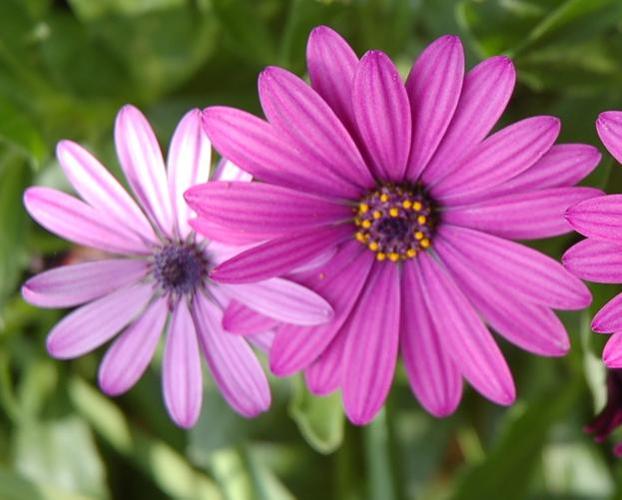
African Daisy (Osteospermum)
Dimorphotheca ecklonis
Osteospermum, commonly known as the African Daisy or Cape Daisy, is a genus of flowering plants that represents the sheer brilliance of the South African floral kingdom. Belonging to the Calenduleae tribe within the massive Asteraceae family, these daisies are celebrated for their sophisticated,...
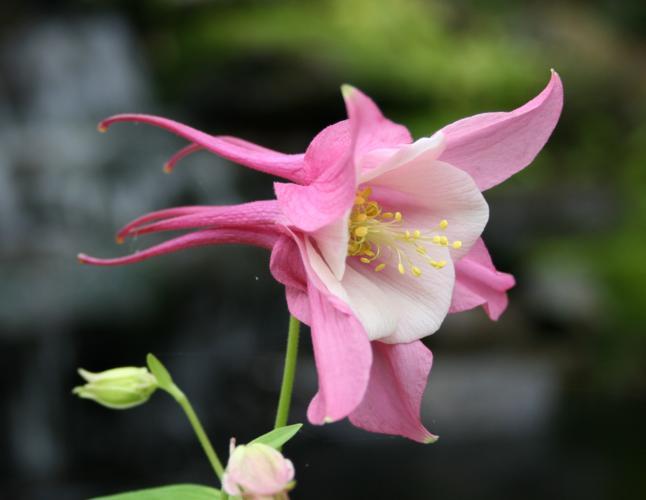
Columbine
Aquilegia
Columbine (Aquilegia), a member of the Ranunculaceae (Buttercup) family, is a gracefully elegant perennial known for its multi-colored, spurred blossoms and delicate, fern-like foliage. Native to the woodlands, meadows, and high-altitude slopes of the Northern Hemisphere—spanning across North Ame...
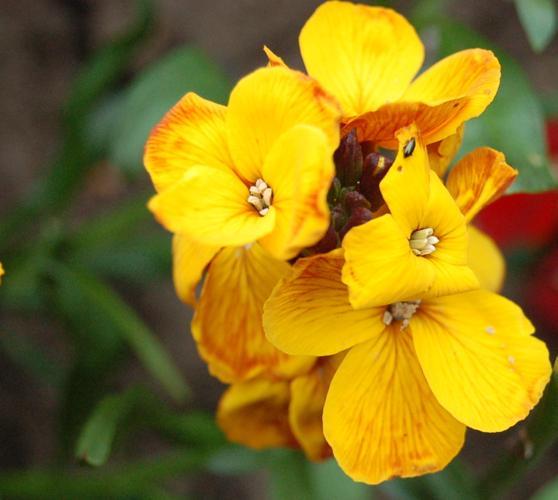
Wallflower
Erysimum cheiri
The Wallflower, botanically known as Erysimum cheiri (formerly classified as Cheiranthus cheiri), is a charming and historic woody-based biennial or short-lived perennial flower belonging to the Brassicaceae (mustard or cabbage) family. Native to the rocky cliffs, coastal regions, and warm sunny...