
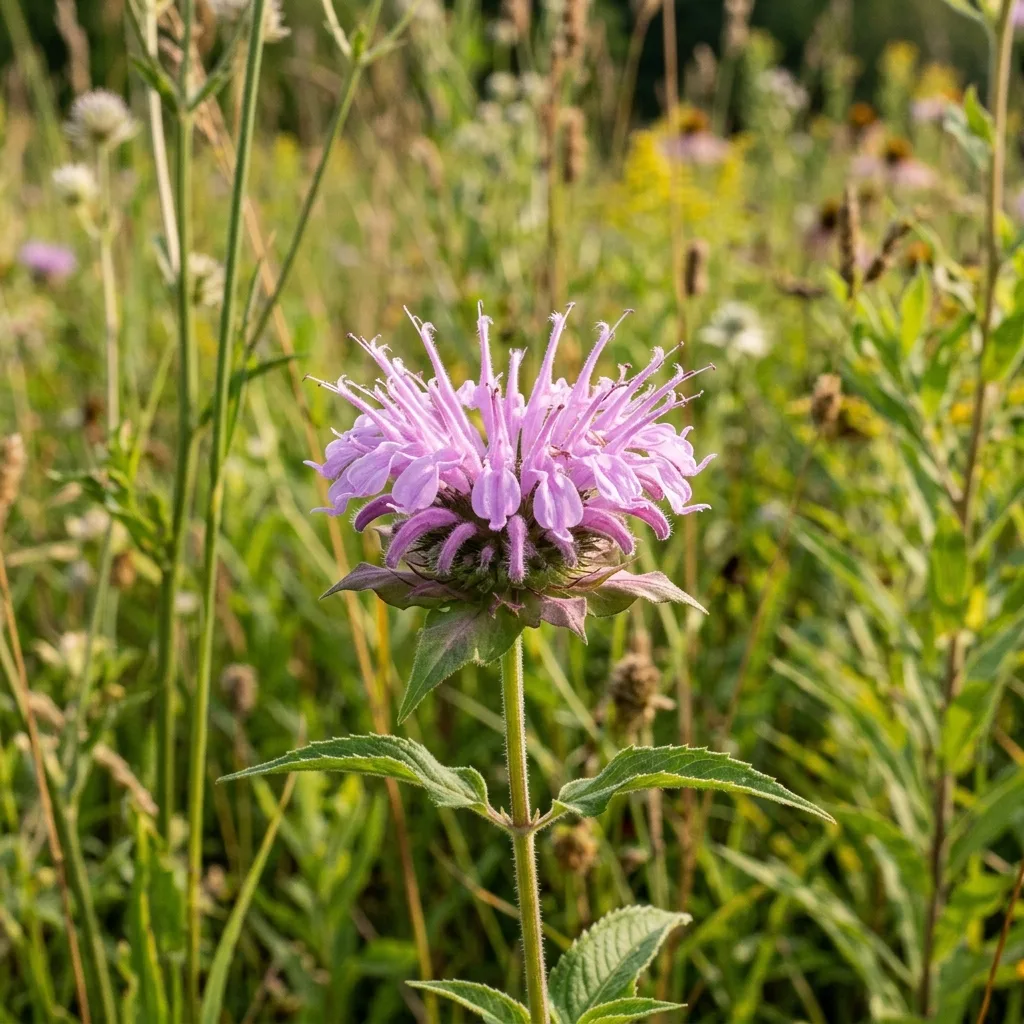
Wild Bergamot
Monarda fistulosa
How to Identify Wild Bergamot
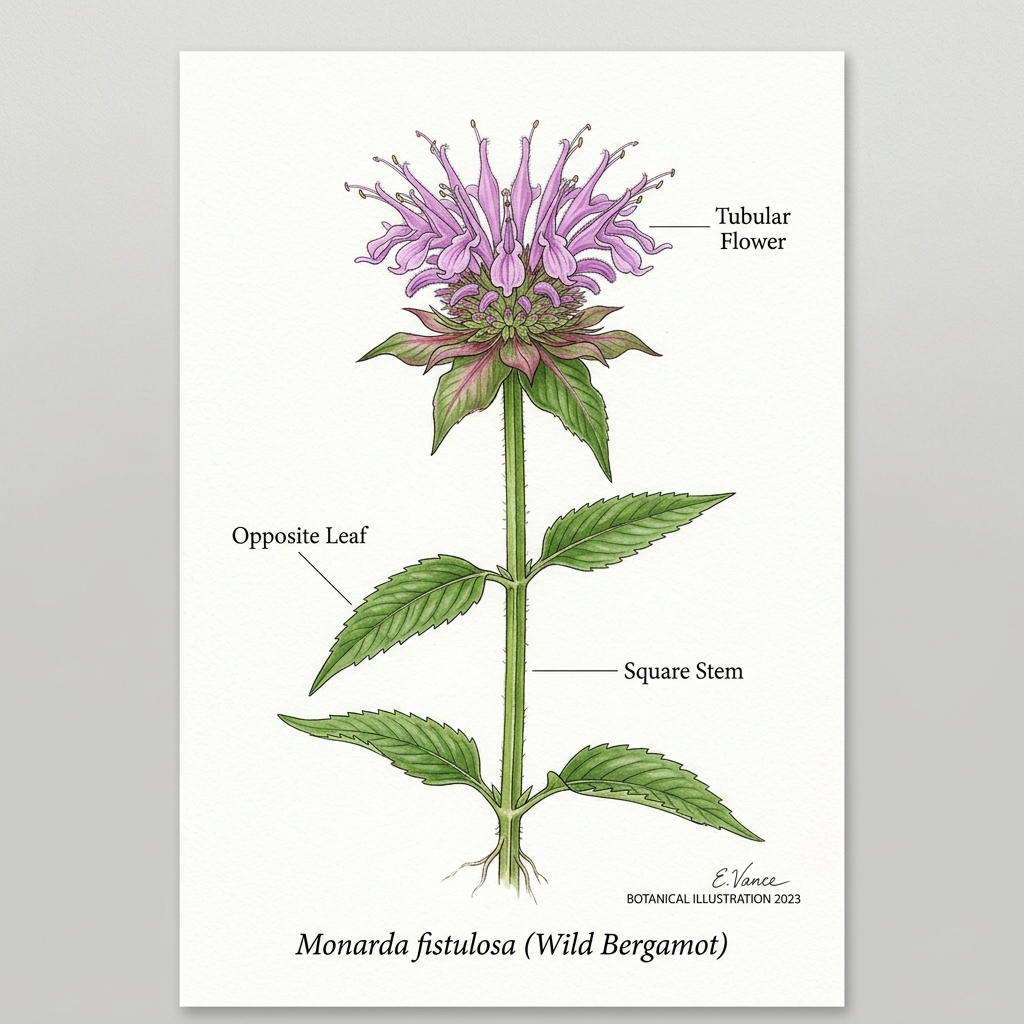
A detailed guide to identifying Wild Bergamots (Monarda fistulosa) by its key features:
- Ragged Lavender Heads: Rounded, pompom-like clusters of two-lipped lavender-pink flowers.
- Four-Angled Square Stems: Stiff, erect, square stems characteristic of the mint family.
- Aromatic Opposite Leaves: Tooth-edged, lance-shaped leaves with a strong oregano-like scent when crushed.
- Creeping Rhizomatous Mats: Spreading underground runners that form aromatic patches.
Care & Growing Guide
Wild Bergamot Care Guide:
- Light: Full sun to light shade
- Soil: Average to poor, well-draining soil; tolerates dry and sandy conditions
- Water: Drought-tolerant once established
- Maintenance: Divide every 2–3 years to maintain vigor; deadhead for extended blooming
Seasonal Blooming & Hardiness
Seasonal Blooming Calendar:
- Peak Bloom: June–September
- US Range: USDA Zones 3–9; native throughout eastern US, Midwest, and Great Plains prairies
Bloom Timeline
About Wild Bergamot
Wild Bergamot (Monarda fistulosa) is one of the most important and widely distributed native wildflowers and medicinal herbs of North America, producing shaggy, globe-shaped heads of tubular lavender to pale pink flowers on sturdy, square stems throughout summer. A member of the mint family (Lamiaceae), it is the native cousin of the commonly cultivated 'Bee Balm' (Monarda didyma, the red-flowered species), and while it lacks the vivid scarlet of its relative, its soft lavender hue and wild, open habit give it a natural beauty perfectly suited to meadow and prairie gardens.
The spherical flower heads of Wild Bergamot are constructed from numerous tubular, two-lipped florets radiating outward from a central disc, creating a loose, shaggy globe of lavender color atop each stem. Below each head is a whorl of leafy bracts that are often tinged with lavender or pink, adding further ornamental interest. The entire plant is pleasantly aromatic — the leaves, when bruised, release a complex, spicy-herbal fragrance reminiscent of oregano and thyme, an aroma that inspired the common name 'Bergamot' (though it is unrelated to the citrus Bergamot used to flavor Earl Grey tea). Indigenous tribes across the continent used the leaves to brew a medicinal tea and to season food.
Ecologically, Wild Bergamot is a pollinator powerhouse. Its long, tubular flowers are specifically designed to serve long-tongued native bees, including bumble bees, sweat bees, and the specialist Monarda bee (Osmia). Ruby-throated hummingbirds are also drawn to the flowers. In late summer, the dried seed heads provide food for goldfinches, and the sturdy stalks offer overwintering habitat for beneficial insects. Perhaps most importantly, Wild Bergamot is a key caterpillar host plant, supporting the larvae of the Hermit Sphinx Moth and several other native moth species.
In the garden, Wild Bergamot is one of the easiest and most reliable native perennials available. It tolerates a wide range of soil conditions, from dry and sandy to moderately moist and loamy, and is significantly more drought-tolerant and powdery mildew-resistant than the cultivated red Bee Balm (M. didyma). It spreads vigorously by rhizomes but is easily managed with annual division. For a classic American prairie meadow look, combine it with Blazing Star (Liatris), Goldenrod, and Black-Eyed Susan.
Floral Formula & Features
Zygomorphic, bisexual, 5 fused sepals, 5 fused petals (bilabiate/two-lipped), 2 stamens, 4 nutlets with superior ovary (Lamiaceae pattern)
- Scientific Name & Classification: Monarda fistulosa (Lamiaceae, tribe Mentheae). The wild species of Bee Balm, native across most of eastern and central North America.
- Identification Markers: Shaggy, globe-shaped lavender to pale pink flower heads on square stems 2–4 ft tall. Opposite, toothed, lance-shaped leaves that are strongly aromatic (oregano/thyme scent) when crushed.
- Floral Formula (↑ ☿ K(5) [C(5) A2] G(4)): Zygomorphic, bisexual, 5 fused sepals, 5 fused petals (two-lipped tube), 2 stamens, 4 free nutlets with superior ovary (typical Lamiaceae).
- Growing Requirements: Full sun to part shade; average to poor, well-draining soil. More drought and mildew-resistant than cultivated Bee Balm. USDA Zones 3–9. Spreads by rhizomes.
- Cultural Significance: Used medicinally by over 30 Native American tribes (Cherokee, Iroquois, Ojibwe) for respiratory infections, digestive ailments, and as a food seasoning. Called 'Oswego Tea' by early European settlers.
- Safety & Toxicity: NON-TOXIC. Completely safe for cats and dogs. Leaves can be used to brew herbal tea (similar use to its relative Bee Balm / Oswego Tea).
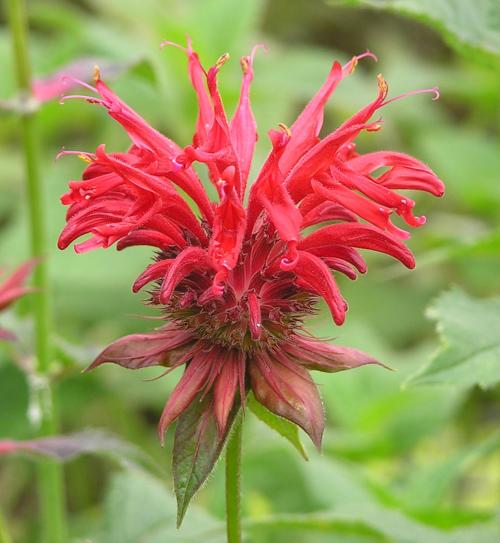
- Common Look-alikes: Closely related to and often confused with cultivated red Bee Balm (Monarda didyma). Distinguished by its lavender (not red) color and greater drought tolerance. Also confused with Horsemint (M. punctata).
- Internal Links: Pairs classically with Blazing Star and Goldenrod in a native prairie trio. Explore our Flower Identifier.
- Internal Links: Compare key differences in our Bee Balm vs Wild Bergamot comparison, or try our instant Flower Identifier.
Names in Different Languages
Botanical Classification: Wild Bergamot belongs to the Lamiaceae family. Learn how to identify its floral symmetry, stamen arrangement, and structural formulas in our Botanical Family Classification Guide.
Toxicity & Safety
Frequently Asked Questions
What is Floral Formula?
A floral formula is a symbolic representation of a flower's structure using letters, numbers, and special symbols. It provides a concise way to describe the arrangement and number of floral parts.
This formula describes the flower's symmetry, sepals, petals, stamens, and carpels in a standardized format.
Formula Sequence
- Bract: Br or Ebr
- Bracteole: Brl or Ebrl
- Symmetry: % (Radial) or ⊕ (Bilateral)
- Sex: ♀ (Female), ♂ (Male), or ⚥ (Bisexual)
- Calyx/Sepal: K<number> (Free or Fused)
- Corolla/Petal: C<number> (Free or Fused)
- Androecium: A<number> (Free or Fused)
- Gynaecium: G<number> (Superior or Inferior Ovary)
Symbol Meanings
- Numbers: Indicate quantity of parts
- Parentheses (): Parts are fused together
- Plus (+): Parts in different whorls
- Underline: Superior ovary position
- Overline: Inferior ovary position
- ∞: Numerous parts (too many to count)
Understanding floral formulas helps botanists quickly identify and classify flowers based on their structural characteristics.
Similar Flowers
Discover flowers that share botanical characteristics
Same Family
4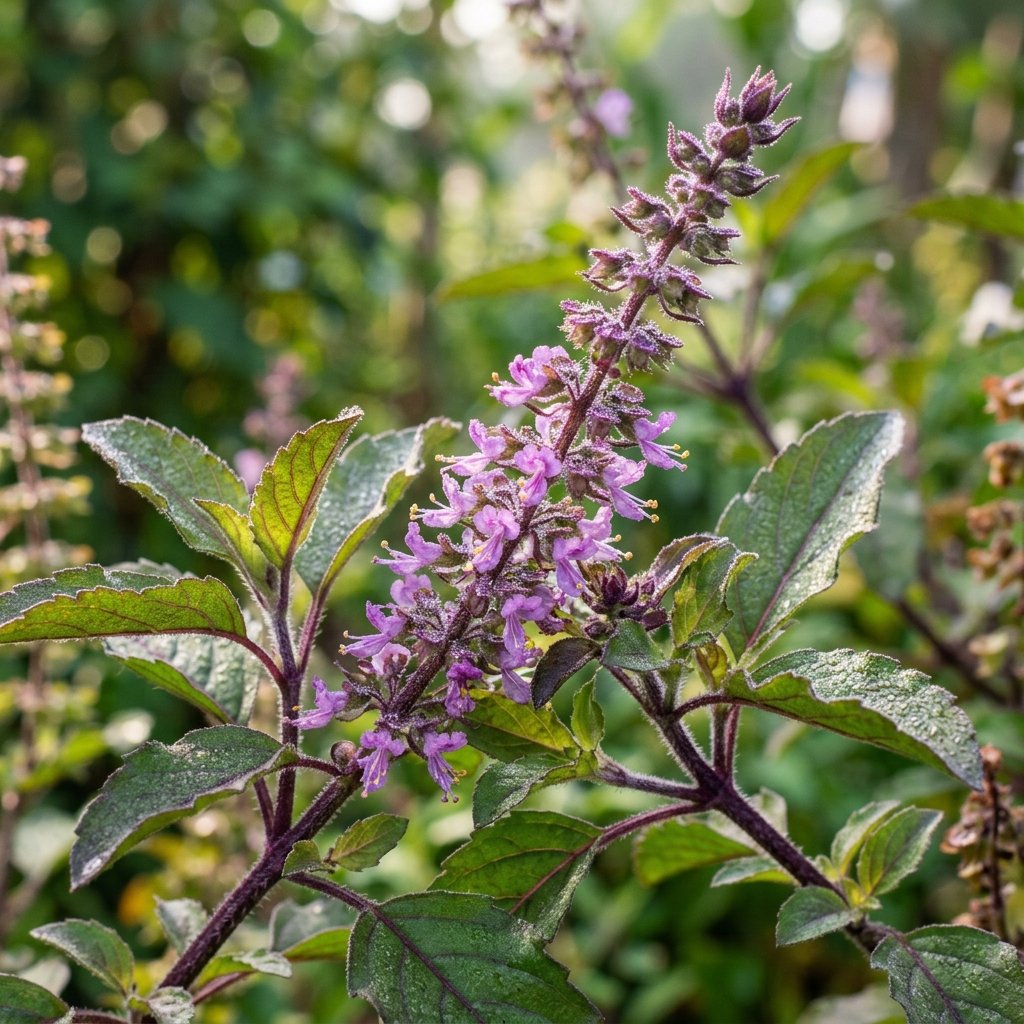
Holy Basil (Tulsi)
Ocimum tenuiflorum
Holy Basil, botanically classified as *Ocimum tenuiflorum* (synonymous with *Ocimum sanctum*) and universally revered throughout India and the Eastern world as Tulsi (the 'Incomparable One'), is a profoundly sacred, highly aromatic, and therapeutically celebrated perennial subshrub. Belonging to...
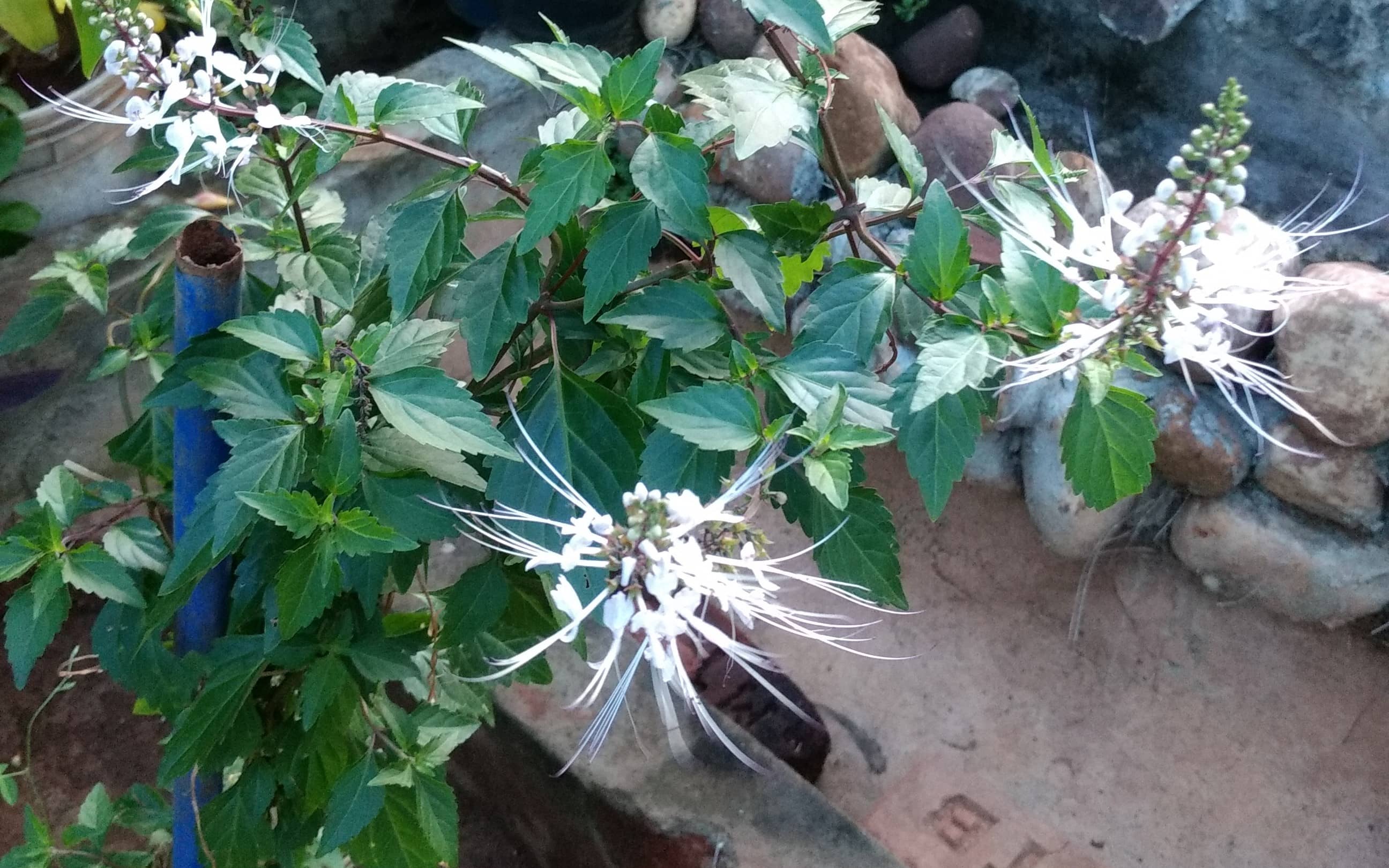
Cat's whiskers
Orthosiphon aristatus
The Cat's Whisker, botanically classified as Orthosiphon aristatus (and often called Orthosiphon stamineus), is an extraordinarily distinctive, fast-growing herbaceous perennial shrub in the Lamiaceae (mint) family. Native to the damp, shaded margins, grassy valleys, and riverbanks of tropical So...
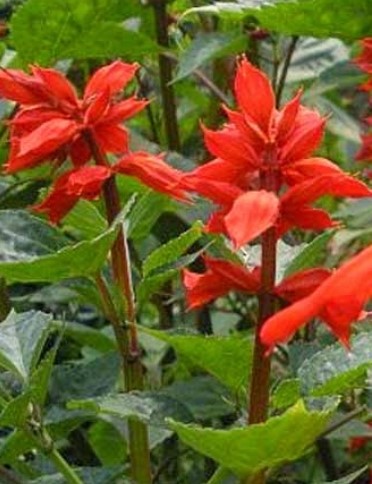
Salvia
Salvia
Salvia, botanically classified under the genus Salvia and commonly known as Sage, is an exceptionally diverse, versatile, and highly valuable plant genus. Belonging to the family Lamiaceae (the mint family, tribe Mentheae), this massive genus comprises nearly 1,000 distinct species distributed ac...
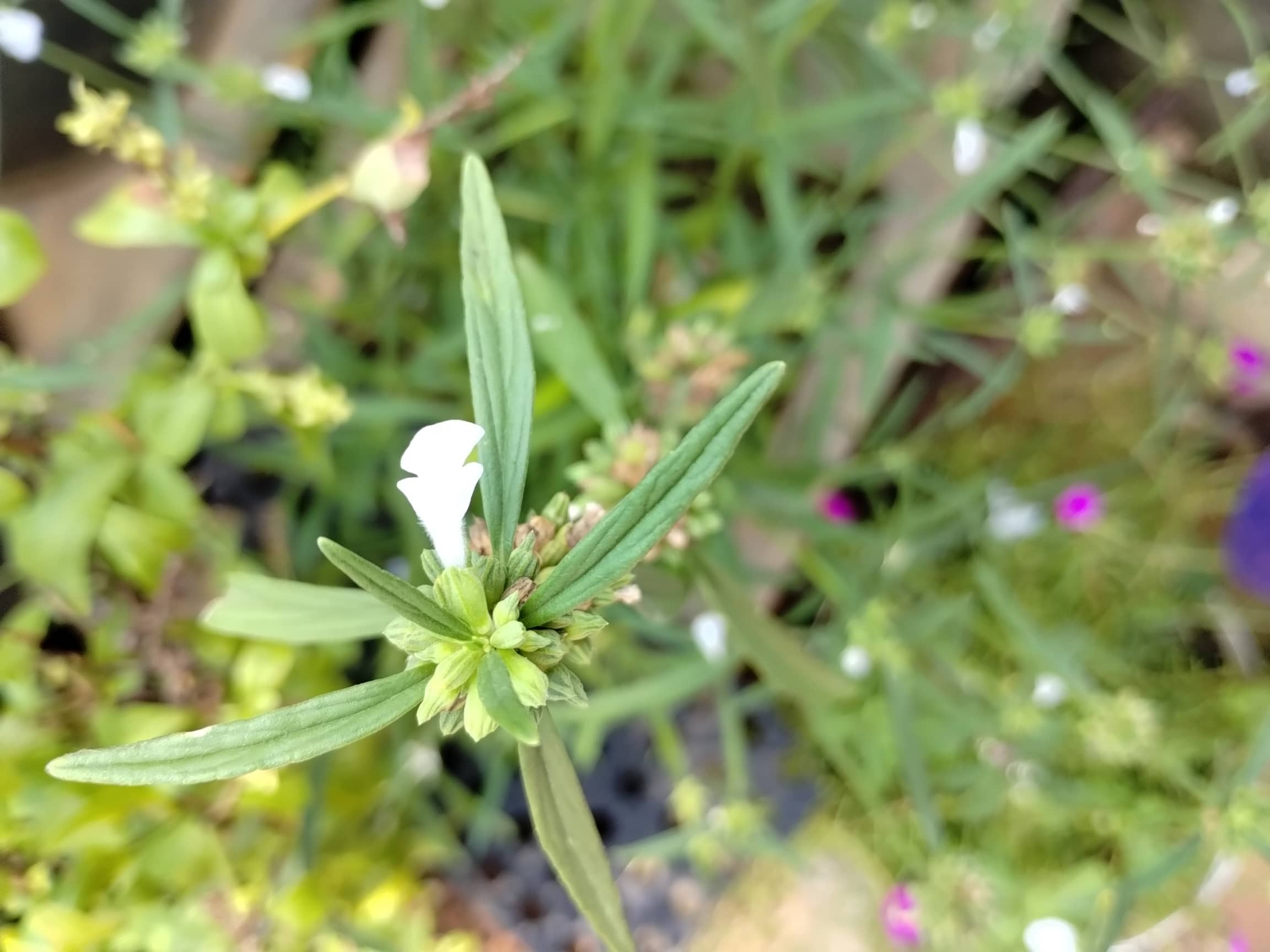
Leucas Aspera
Leucas aspera
Leucas Aspera, botanically classified as Leucas aspera and celebrated in Tamil heritage as Thumbai or in Sanskrit as Dronapushpi, is an exceptionally valuable, resilient, and highly aromatic annual or short-lived perennial herb. Belonging to the family Lamiaceae (the mint family, tribe Leucadeae)...
Similar Characteristics
4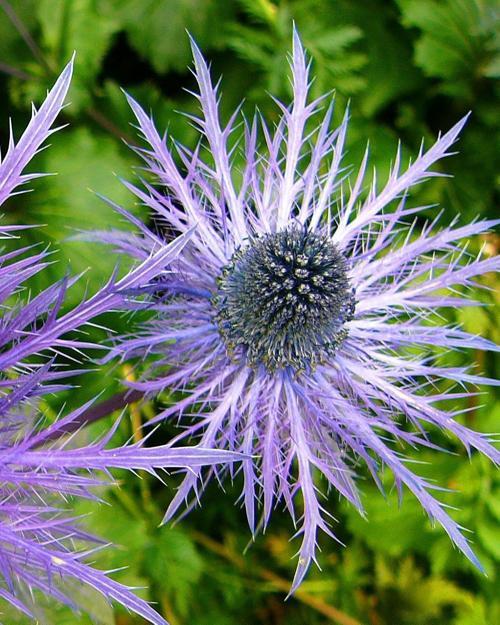
Alpine Sea Holly
Eryngium alpinum
The Alpine Sea Holly, botanically known as *Eryngium alpinum* and widely celebrated as the 'Queen of the Alps,' is an extraordinarily striking, architectural herbaceous perennial. Belonging to the family Apiaceae (the carrot or parsley family, tribe Saniculeae), this alpine masterpiece is native...
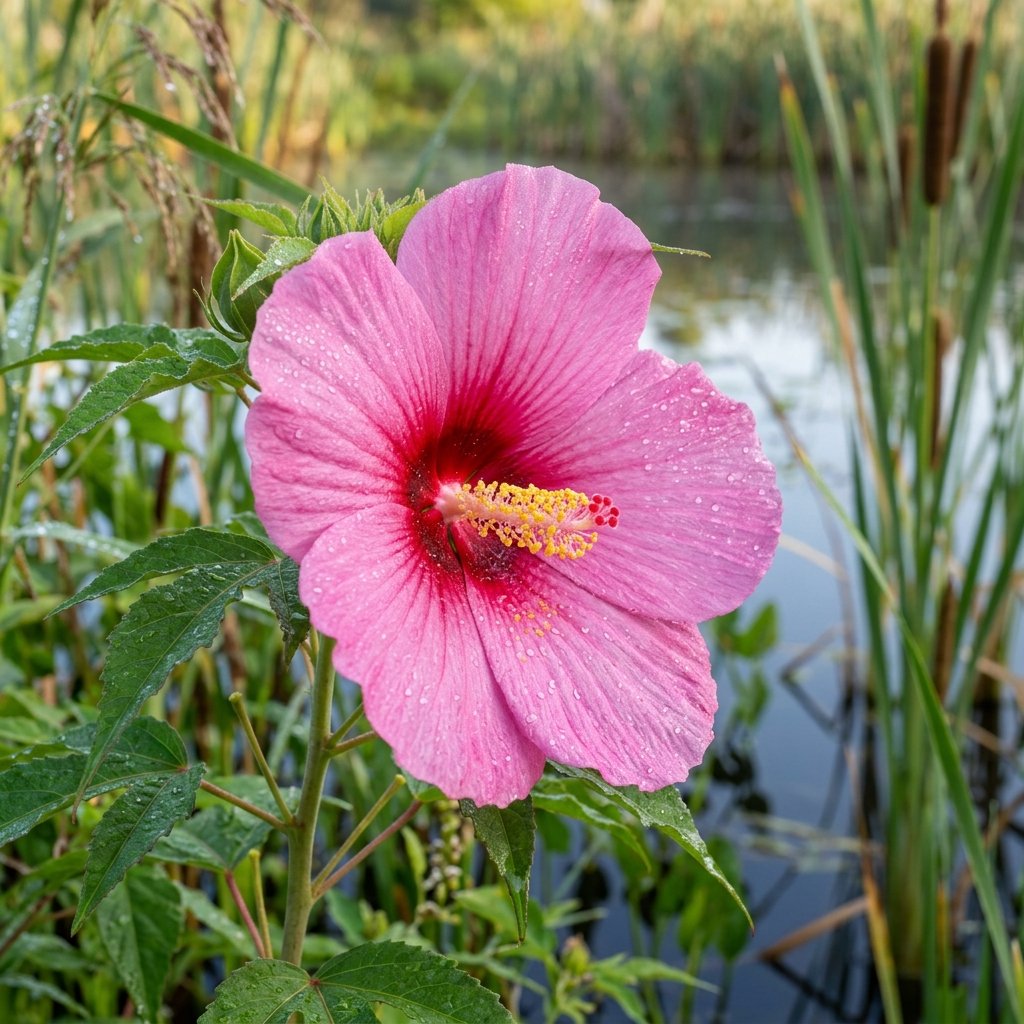
Swamp Rose Mallow
Hibiscus moscheutos
Swamp Rose Mallow (*Hibiscus moscheutos*) produces some of the largest flowers of any hardy perennial wildflower in North America — dinner-plate-sized blooms reaching 6 to 12 inches in diameter — in shades of white, pink, and rose, typically adorned with a dramatic deep crimson or rose-pink centr...
Salvia
Salvia
Salvia, botanically classified under the genus Salvia and commonly known as Sage, is an exceptionally diverse, versatile, and highly valuable plant genus. Belonging to the family Lamiaceae (the mint family, tribe Mentheae), this massive genus comprises nearly 1,000 distinct species distributed ac...
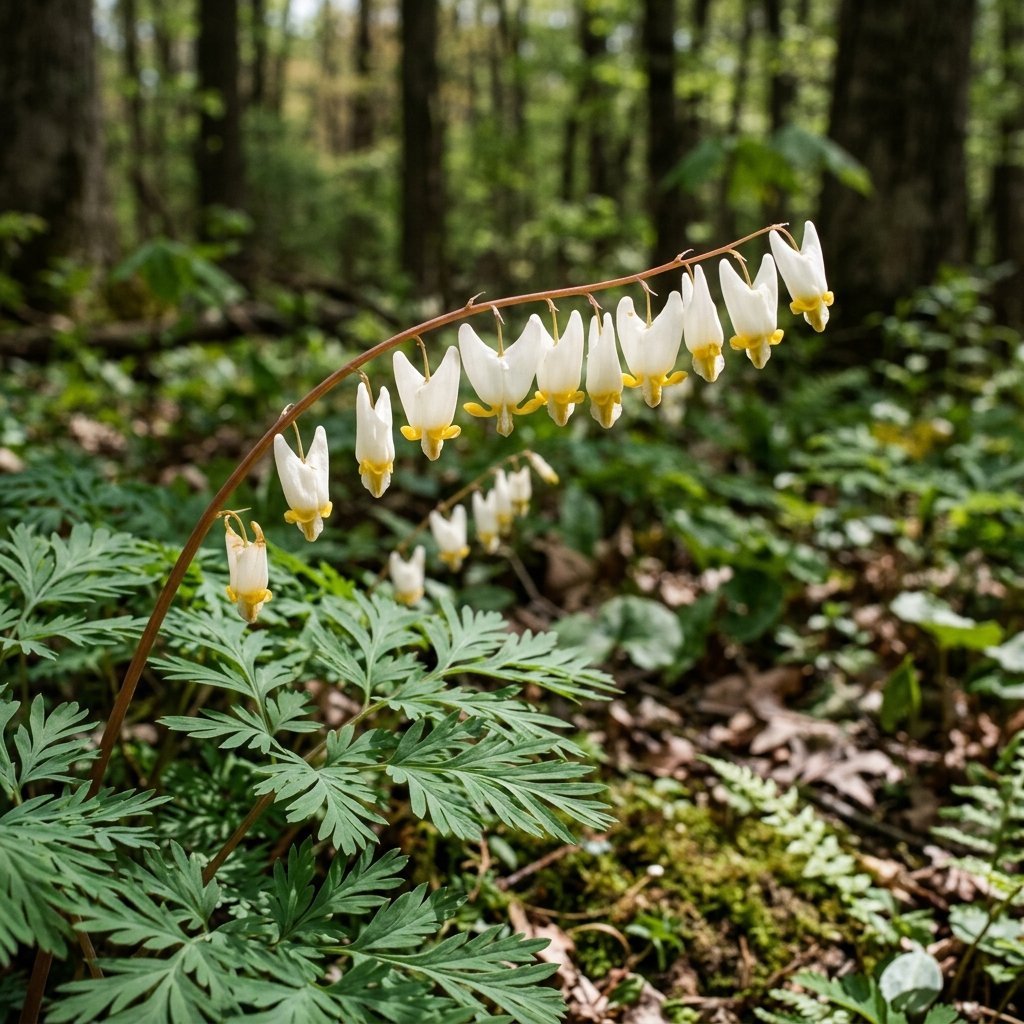
Dutchman's Breeches
Dicentra cucullaria
Dutchman's Breeches (*Dicentra cucullaria*) is one of the most whimsically charming and distinctively shaped wildflowers in the eastern North American spring flora, producing pendulous racemes of pure white flowers shaped precisely like pairs of miniature, upside-down pantaloons or 'breeches' — t...