
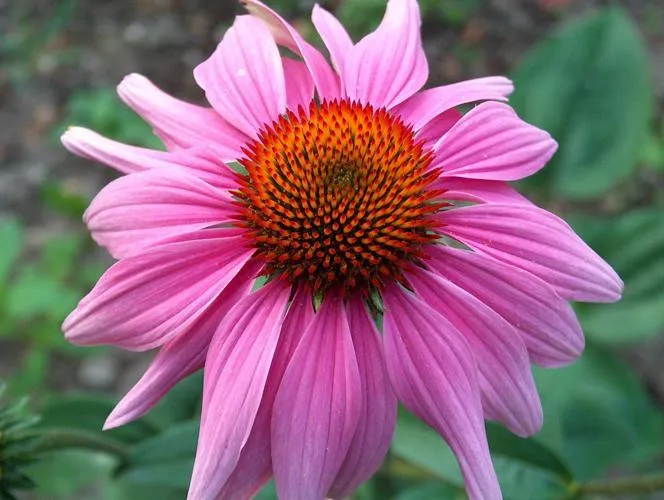
Purple Coneflower (Echinacea)
Echinacea purpurea
How to Identify Purple Coneflower (Echinacea)
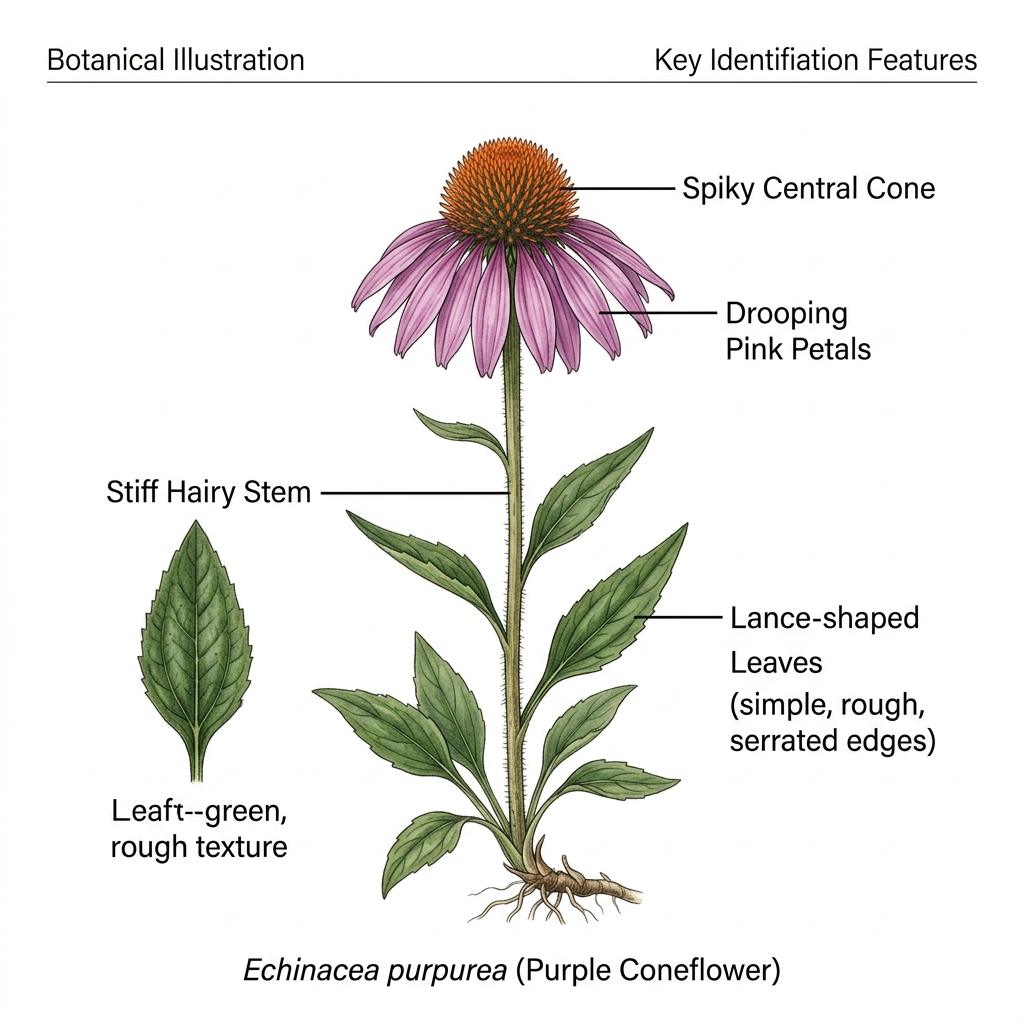
A detailed guide to identifying Purple Coneflowers (Echinacea purpurea) by its key features:
- Spiky Central Cone: A prominent, copper-orange central cone composed of spiky disc florets that resemble a hedgehog.
- Drooping Pink Petals: Purplish-pink ray petals that droop (reflex) downwards away from the central cone.
- Stiff Hairy Stems: Sturdy, upright green stems covered in stiff, rough hairs that keep the flowers erect.
- Dark Green Lance-shaped Leaves: Alternate, rough-textured green leaves that are coarsely toothed at the base.
Care & Growing Guide
Purple Coneflower Care & Growing Guide:
- Light: Full sun (at least 6-8 hours daily). Stems will flop if grown in too much shade.
- Soil: Prefers dry to medium-moisture, well-drained, sandy or rocky soils. Does poorly in wet, heavy clay.
- Watering: Water moderately. It has a deep taproot that makes it highly drought-tolerant once established.
- Maintenance: Leave seed heads intact in autumn to feed wild goldfinches and provide structural winter interest.
Seasonal Blooming & Hardiness
Seasonal Blooming Calendar (US Hardiness Zones 3-9):
- Blooming Season: Early summer to early autumn (typically June through September).
- Planting Time: Sow seeds directly outdoors in late autumn (requires winter cold stratification) or plant nursery starts in spring.
- Dormancy: Dies back completely to the roots in winter and re-emerges in mid-spring.
Bloom Timeline
About Purple Coneflower (Echinacea)
The Purple Coneflower (Echinacea purpurea) is a robust, iconic native North American perennial belonging to the Asteraceae family. Found thriving naturally in the prairies, open woods, and dry plains of the central and eastern United States, it has become a global favorite in both ornamental landscaping and the medicinal herb industry. It is a vital component of any pollinator garden, heavily relied upon by migrating butterflies, bees, and seed-eating songbirds like the American Goldfinch.
Identification is striking and simple. The plant boasts a prominent, spiky, dome-shaped central cone (the disc florets) that starts out orange-brown and darkens to a deep bronze as it matures. Surrounding this central cone are slightly drooping, purplish-pink ray florets. The tall, sturdy stems (growing 2 to 5 feet high) and the dark green, lance-shaped leaves are covered in rough, bristly hairs. The name 'Echinacea' actually derives from the Greek word 'echinos,' meaning hedgehog, referring to the spiky central cone.
The floral formula is ⊕ ⚥ (Disc) / % ♀ (Ray) K(pappus) C(5) A(5) G(2). Like other members of the Asteraceae family, the flower head is a capitulum. The spiky central cone is made of hundreds of tiny, fertile, bisexual disc florets, while the drooping outer pink petals are sterile (or female) zygomorphic ray florets.
Coneflowers are incredibly tough and resilient. They demand full sun (at least 6-8 hours) to prevent their tall stems from flopping over. Thanks to a deep taproot, they are exceptionally drought-tolerant once established and thrive in poor, rocky, or well-draining soils. They are reliably cold-hardy across USDA zones 3-9, dying back entirely in winter and re-emerging vigorously in spring.
Culturally, Echinacea holds profound significance. It was utilized extensively by Native American tribes (such as the Plains Indians) to treat a variety of ailments, including insect bites, snake bites, and toothaches. Today, Echinacea extracts are one of the most popular herbal supplements globally, widely marketed to boost the immune system and combat the common cold.
The Purple Coneflower is completely NON-TOXIC. It is safe for yards with dogs, cats, and horses, making it an ideal choice for a rugged, pet-friendly prairie garden.
It might be confused occasionally with the Black-Eyed Susan (Rudbeckia), which shares a similar cone-shaped center but features golden-yellow petals instead of purple-pink. Pair the bold Coneflower with the delicate Aster or the low-growing English Marigold for a stunning, pollinator-friendly landscape. Explore more in our Flower Identifier.
For more botanical profiles and flower identification features, see our guides on Thorn Apple and Red Ginger (Ostrich Plume).
Floral Formula & Features
Capitulum inflorescence. The spiky center (disc florets) is actinomorphic and bisexual. The drooping outer petals (ray florets) are zygomorphic.
- Scientific Name & Classification: Echinacea purpurea (Asteraceae). Native North American prairie perennial.
- Identification Markers: Prominent, spiky, orange-brown central cone surrounded by drooping, purplish-pink petals. Rough, bristly stems and leaves.
- Floral Formula (⊕ ⚥ / % ♀ K(pappus) C(5) A(5) G(2)): Composite flower. The 'hedgehog' cone consists of bisexual disc florets; the drooping petals are ray florets.
- Growing Requirements: Full sun, well-draining soil. Deep taproot makes it highly drought tolerant. USDA zones 3-9.
- Cultural Significance: Heavily utilized in global herbal medicine for immune system support and treating colds.
- Safety & Toxicity: NON-TOXIC. Safe for dogs, cats, and livestock. Edible and highly medicinal.
- Common Look-alikes: Often grown alongside Black-Eyed Susans (Rudbeckia), which have a similar shape but feature bright yellow petals.
- Internal Links: Create a rugged pollinator garden by pairing with the Aster or explore the Flower Identifier.
- Internal Links: Compare key differences in our Black Eyed Susan vs Coneflower comparison, or try our instant Flower Identifier.
Names in Different Languages
Botanical Classification: Purple Coneflower (Echinacea) belongs to the Asteraceae family. Learn how to identify its floral symmetry, stamen arrangement, and structural formulas in our Botanical Family Classification Guide.
Toxicity & Safety
Frequently Asked Questions
What is Floral Formula?
A floral formula is a symbolic representation of a flower's structure using letters, numbers, and special symbols. It provides a concise way to describe the arrangement and number of floral parts.
This formula describes the flower's symmetry, sepals, petals, stamens, and carpels in a standardized format.
Formula Sequence
- Bract: Br or Ebr
- Bracteole: Brl or Ebrl
- Symmetry: % (Radial) or ⊕ (Bilateral)
- Sex: ♀ (Female), ♂ (Male), or ⚥ (Bisexual)
- Calyx/Sepal: K<number> (Free or Fused)
- Corolla/Petal: C<number> (Free or Fused)
- Androecium: A<number> (Free or Fused)
- Gynaecium: G<number> (Superior or Inferior Ovary)
Symbol Meanings
- Numbers: Indicate quantity of parts
- Parentheses (): Parts are fused together
- Plus (+): Parts in different whorls
- Underline: Superior ovary position
- Overline: Inferior ovary position
- ∞: Numerous parts (too many to count)
Understanding floral formulas helps botanists quickly identify and classify flowers based on their structural characteristics.
Companion Plants & Garden Pairings
3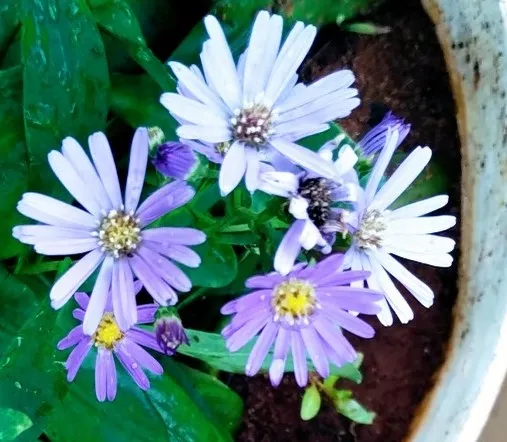
Aster
Symphyotrichum
Shares the same rugged prairie needs, continuing the purple and pink pollinator display well into the late autumn.
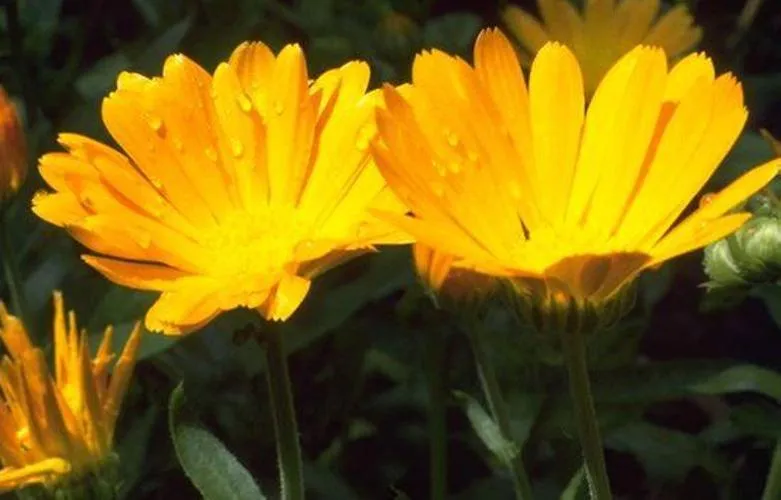
English Marigold
Calendula officinalis
A lower-growing, pet-safe herbal annual that carpets the ground below the tall Echinacea stems with warm orange blossoms.
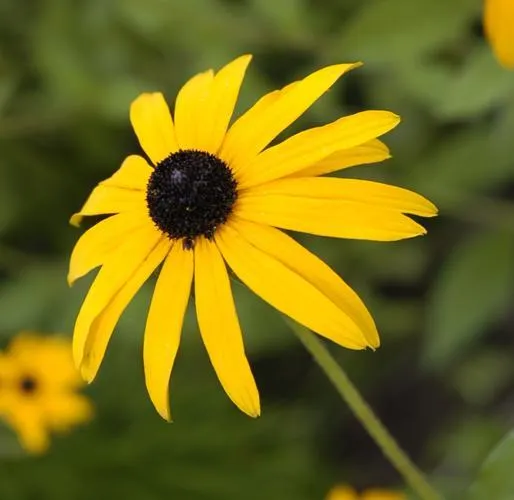
Black eyed Susan
Rudbeckia hirta
The quintessential prairie pairing, matching Echinacea's spiky cone structure with contrasting bright golden-yellow petals.
Similar Flowers
Discover flowers that share botanical characteristics
Same Family
4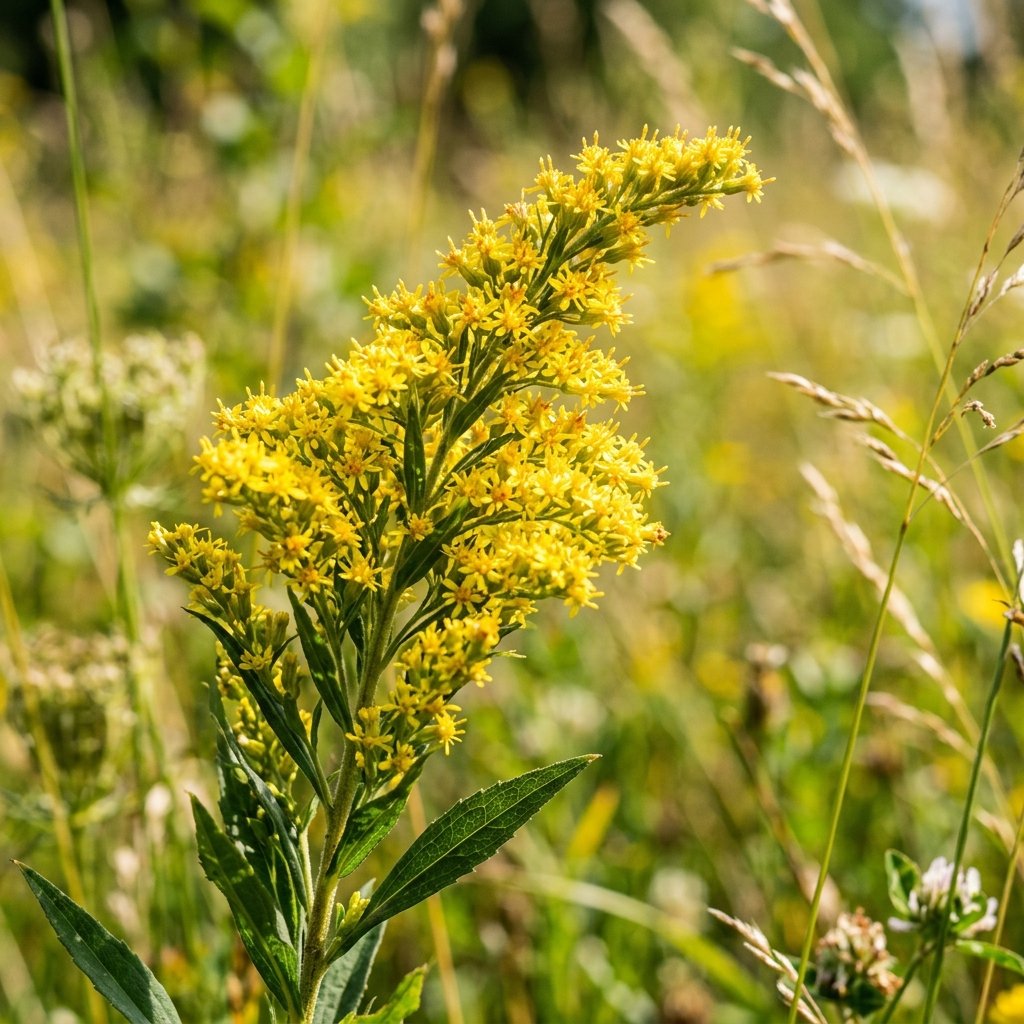
Goldenrod
Solidago canadensis
Goldenrod (*Solidago* spp.) is one of the most ecologically important and visually spectacular native wildflowers of North America, producing brilliant cascading plumes of tiny golden-yellow flowers from late summer through autumn. With over 100 species native to the Americas (most concentrated i...
Daisy
Bellis perennis
The Common Daisy, botanically designated as *Bellis perennis* (and including related garden favorites like the English Daisy or Lawn Daisy), is an exceptionally cheerful, highly resilient herbaceous perennial. Belonging to the family Asteraceae (the daisy or sunflower family, tribe Astereae), thi...
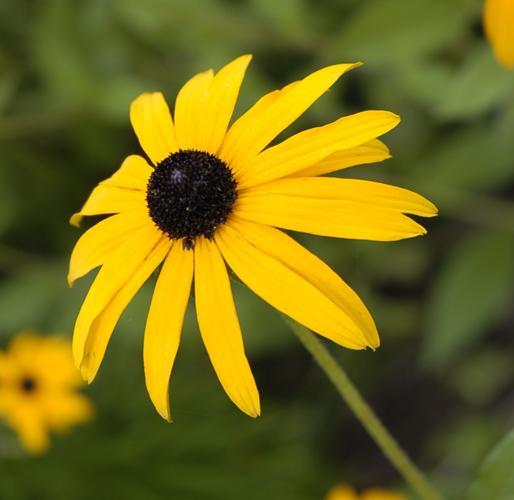
Black eyed Susan
Rudbeckia hirta
Rudbeckia hirta, famously known as the "Black-Eyed Susan" or "Yellow Ox-Eye Daisy," is a quintessentially American wildflower that brings a burst of radiant sunshine to North American landscapes. A member of the Asteraceae (Daisy) family, this resilient species is native to much of the central an...
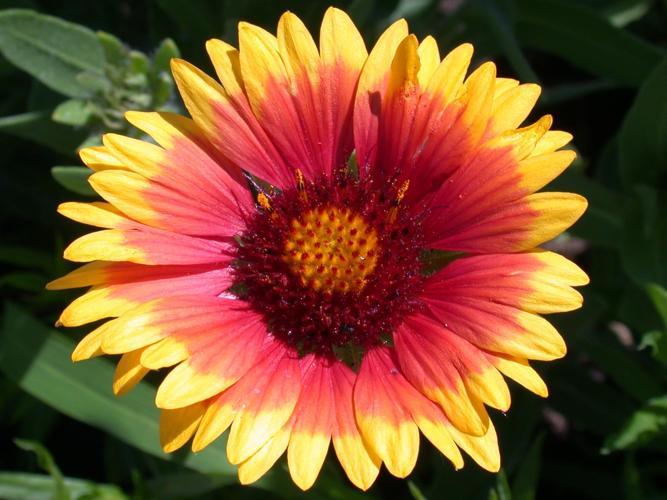
Gaillardia
Gaillardia
Gaillardia, botanically classified within the genus Gaillardia in the Asteraceae (sunflower) family and popularly known as the Blanket Flower or Indian Blanket, is a group of exceptionally cheerful, sun-loving annuals and short-lived perennials. Native to the dry prairies, sandy plains, and pine...
Similar Characteristics
4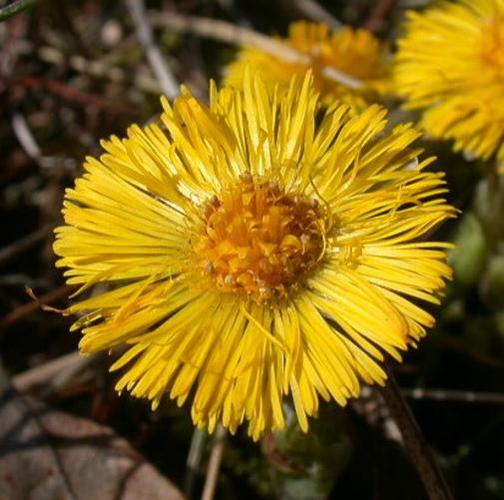
Coltsfoot
Tussilago farfara
Coltsfoot, botanically classified as Tussilago farfara, is an intriguing and highly specialized perennial wildflower belonging to the Asteraceae (sunflower) family. Native to the damp clay-rich soils, disturbed riverbanks, and limestone cliffs of Europe, western and central Asia, and parts of Nor...
Daisy
Bellis perennis
The Common Daisy, botanically designated as *Bellis perennis* (and including related garden favorites like the English Daisy or Lawn Daisy), is an exceptionally cheerful, highly resilient herbaceous perennial. Belonging to the family Asteraceae (the daisy or sunflower family, tribe Astereae), thi...
Gaillardia
Gaillardia
Gaillardia, botanically classified within the genus Gaillardia in the Asteraceae (sunflower) family and popularly known as the Blanket Flower or Indian Blanket, is a group of exceptionally cheerful, sun-loving annuals and short-lived perennials. Native to the dry prairies, sandy plains, and pine...
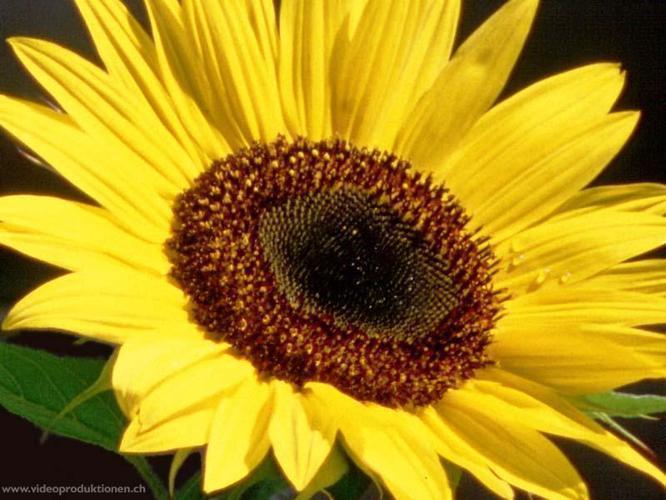
Sunflower
Helianthus annuus
The Sunflower, botanically classified as Helianthus annuus and commonly known as the Common Sunflower, is an exceptionally iconic, robust, and fast-growing annual plant. Belonging to the family Asteraceae (the daisy, aster, or composite family), this famous wildflower is native to the fertile pra...