Maple Syrup Purity Tests: Detect Fake Corn Syrup & Adulteration
⚡ Quick 60-Second Pure Maple Syrup vs Fake Corn Syrup Verdict
High-Fructose Corn Syrup & Artificial Flavoring: Supermarket 'pancake syrup' is 98% high-fructose corn syrup, caramel coloring, and synthetic maple flavoring (sotolon) masquerading as pure tree sap.
Read the label: Pure maple syrup has exactly ONE ingredient: 'Pure Maple Syrup'. It has a light, fluid viscosity, whereas corn syrup is thick and sluggish.
Place the bottle in your home freezer (-18°C) for 3 hours. Pure maple syrup (66% sugar density) does not freeze solid; cheap water-diluted syrup freezes into hard ice.
Pour 1 tsp into a glass of cold water without stirring. Pure maple syrup disperses smoothly. Artificial corn syrup drops like a heavy, sticky, gummy glob.
To learn more about liquid sweetener safety, read our guides on Honey and Jaggery (Gur).
Drop Maple Syrup photo here to test purity
or click to browse • Supports JPG, PNG, WEBP • Paste with Ctrl+V
Inspection Guide
Click to enlarge
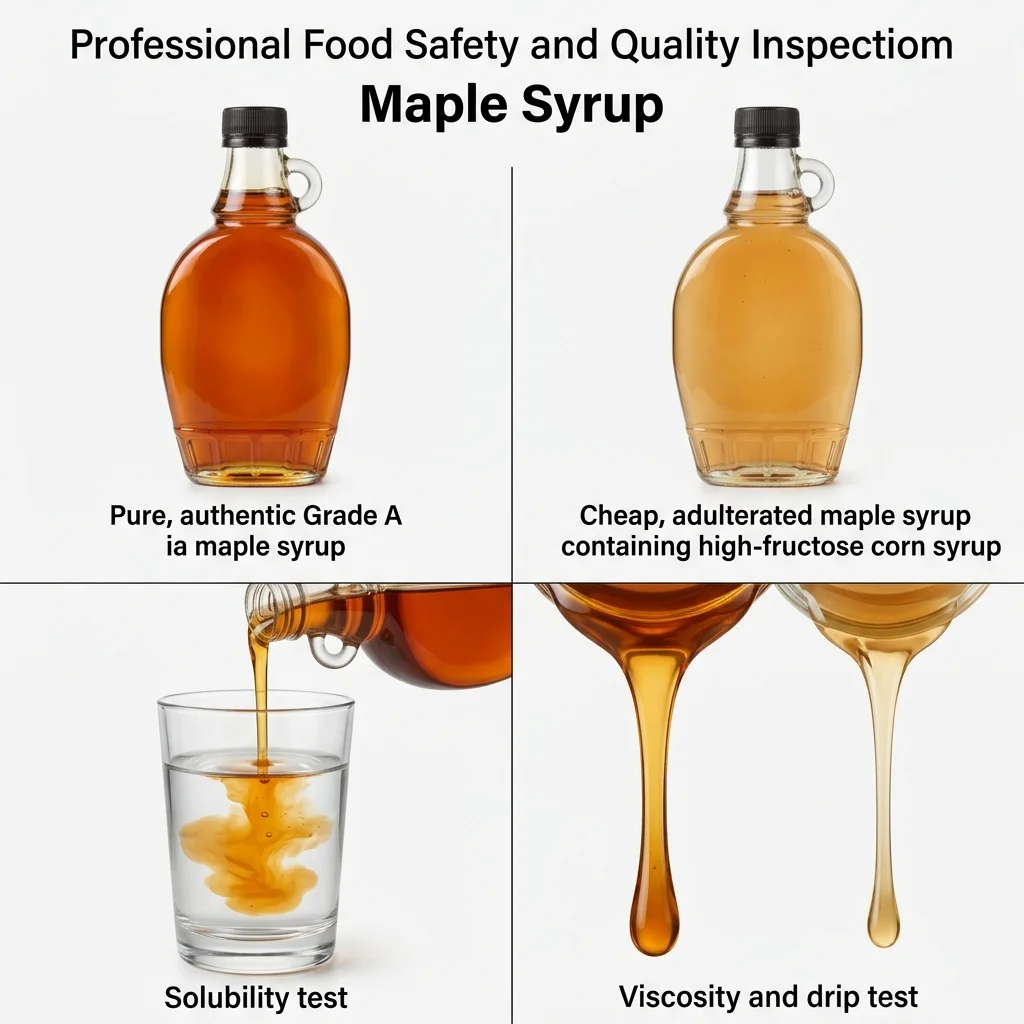
Maple Syrup Purity & Density Audit
Pure maple syrup, boiled down from the sap of sugar maple trees, is a premium, nutrient-rich sweetener. However, due to its high price, it is frequently adulterated with cheap corn syrup, high-fructose corn syrup (HFCS), or cane sugar syrup. Most 'maple-flavored' syrups on supermarket shelves contain 0% actual maple.
1. The Solubility Test (Purity):
Fill a glass with clear cold water and drop a tablespoon of maple syrup into it. Pure maple syrup is highly dense and cohesive; it will sink directly to the bottom of the glass in a solid stream and only dissolve when stirred. Adulterated or watered-down syrup (blended with corn syrup) will begin to disperse and cloud the water immediately as it falls.
2. The Label and Viscosity Audit:
Check the ingredients. If the label contains 'corn syrup,' 'high fructose corn syrup,' 'maple flavor,' or 'caramel color,' it is fake. Additionally, pure maple syrup has a relatively thin, silky viscosity at room temperature, whereas corn-syrup-based fakes are thick, sticky, and leave a heavy coating on a spoon.
3. The Taste and Smell Test:
Pure maple syrup has a complex, warm, woody, and slightly caramel-like aroma and flavor. Fake syrups smell intensely of artificial vanilla or pure white sugar and have a flat, cloyingly sweet taste that lacks the earthy depth of real maple.
4. The Cold Thickness Test:
Place the bottle of syrup in the refrigerator for 2 hours. Pure maple syrup will thicken slightly but remain easy to pour. Fakes made with cane sugar syrup can crystallize at the bottom, while corn-syrup fakes become extremely thick, sluggish, and difficult to squeeze or pour.
Click to enlarge
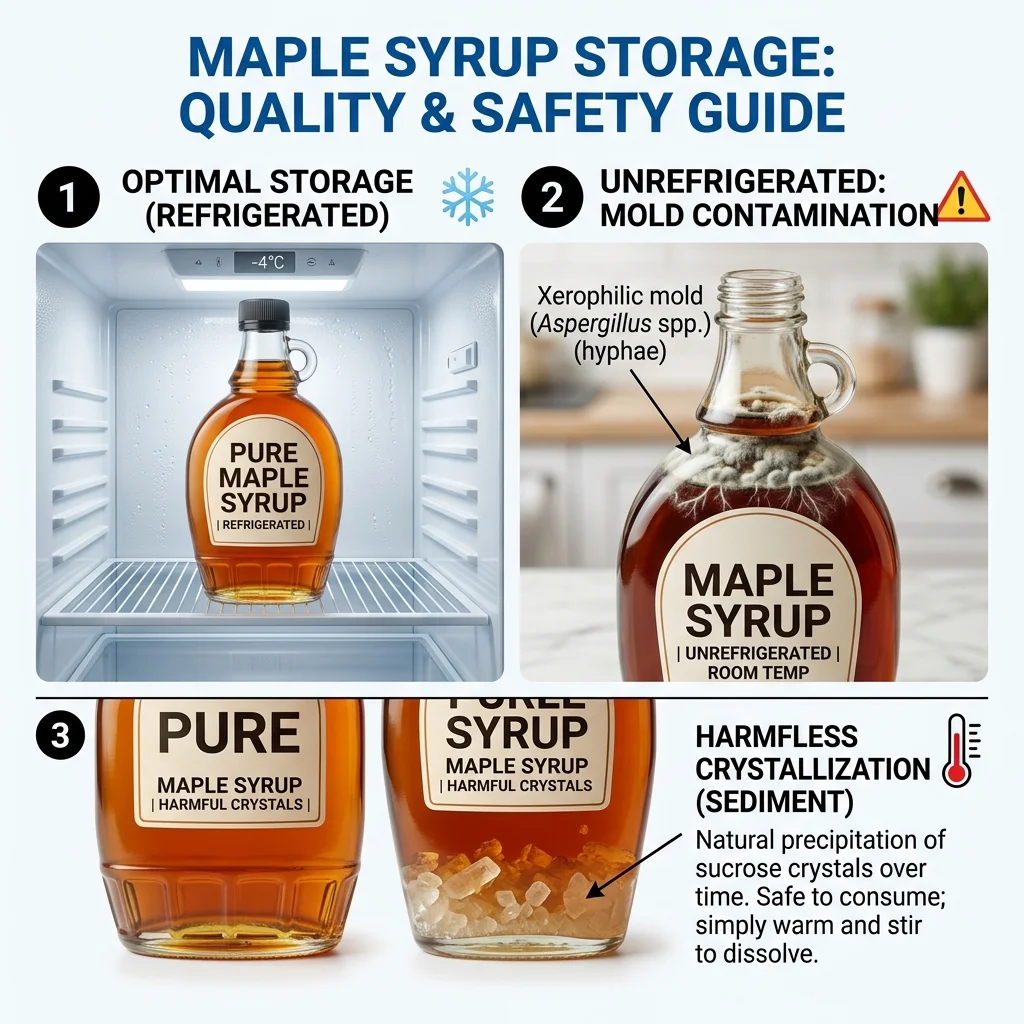
Maple Syrup Storage & Mold Check
While maple syrup has a long shelf life, improper storage can lead to spoilage and mold.
1. Surface Mold Inspection:
Inspect the surface of the syrup. While pure syrup does not rot, a harmless-looking but undesirable mold (Xerophilic mold) can grow on the surface if the bottle is left unrefrigerated after opening. If mold is present, discard the syrup.
2. Crystallization Check:
Look at the bottom of the bottle. Large sugar crystals indicate that the syrup was boiled slightly too long or has begun to dehydrate, though it remains safe to eat.
3. Fermentation Odor:
Sniff the syrup. If it has a sour, yeasty, or alcohol-like smell, wild yeast has fermented the sugars, and the syrup has spoiled.
4. Viscosity Consistency:
The syrup must flow smoothly and cleanly. Any stringy, slimy, or ropey texture indicates bacterial contamination.
Quick Safety Tips
- Perform the water solubility test to check for corn syrup fillers
- Avoid syrups listing high-fructose corn syrup or artificial flavors on the label
- Select syrups with a complex, woody, caramel-like aroma rather than a plain sugary scent
- Look for official USDA or Canadian Maple grading seals on the bottle
Primary Chemical Concerns
Health Risks & Impacts
Multilingual Local Names
Regulatory Corner: CFIA (Canadian Food Inspection Agency) / US FDA (21 CFR 168.180) / Codex
Regulation: Safe Food for Canadians Regulations (SFCR) & FDA 21 CFR 168.180: Maple Sirup Standards of Identity
Legal Limit:Pure Maple Solids: Min 66.0° Brix (soluble solids); Added Cane Sugar, High Fructose Corn Syrup (HFCS), Invert Sugar: 0.0% (Strict zero tolerance; C13/C12 stable isotope ratio test); Artificial caramel color / maple flavor (Sotolon): 0.0% unless labeled imitation
Report Adulteration to CFIA (Canadian Food Inspection Agency) / US FDA (21 CFR 168.180) / Codex