How to Test Banana Purity: Detect Calcium Carbide, Ethephon & Chemical Ripening
⚡ Quick 60-Second Banana Ripening & Chemical Verdict
Artificial Calcium Carbide & Ethephon Gassing: Naturally ripened bananas develop golden skins with brownish stems and delicious aroma. Commercial vendors artificially ripen green fruit with illegal Calcium Carbide (masala) or excessive Ethephon dips, leaving glowing yellow skins on rock-hard, sour pulp with vivid green stalks.
Artificially ripened bananas show a flawless lemon-yellow skin with a stark, dark green stalk. Naturally ripened fruit has yellow skin with a brownish, dry stalk.
Place a banana in a bucket of water. Naturally ripened bananas are dense and sink. Artificially forced fruit with underdeveloped pulp floats to the surface.
Pure ripe bananas feature harmless tiny brown freckles (sugar spots) and sweet, soft pulp. Carbide bananas look yellow outside but are hard, tasteless, or sour inside.
To learn more about fruit safety, read our guides on Mango and Peanuts.
Drop Banana (Kela) photo here to test purity
or click to browse • Supports JPG, PNG, WEBP • Paste with Ctrl+V
Inspection Guide
Click to enlarge
Banana Ripening & Chemical Adulteration Audit
Bananas (Musa acuminata) are climacteric fruits that naturally produce ethylene gas to convert stored starch into sweet sugars. However, widespread commercial use of banned calcium carbide (masala) poses severe health hazards due to toxic trace contamination of arsenic and phosphorus hydrides. Here is how to evaluate bananas at home:
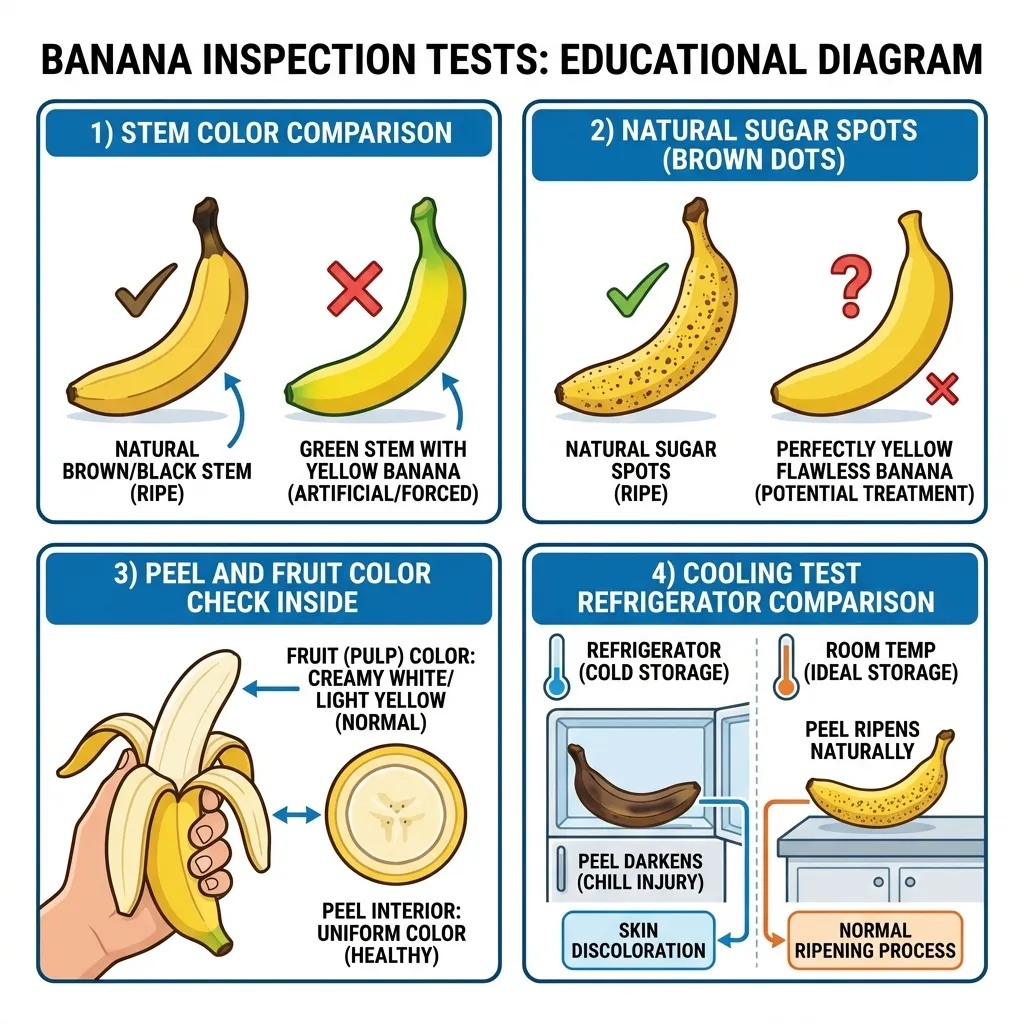
1. The Stem-to-Peel Color Contrast (Primary Indicator):
✅ Naturally ripened bananas: The fruit ripens uniformly from stalk to tip. The stem turns golden-yellow or dry brownish-black as the peel turns rich yellow. ❌ Chemically ripened bananas: The peel turns a glaring, uniform lemon-yellow while the stem remains vivid dark green and rigid. This sharp color mismatch occurs because external acetylene gas triggers superficial chlorophyll breakdown without ripening the stalk.
2. The Water Bucket Immersion Test (Density Check):
Submerge an intact unpeeled banana in a deep bowl or bucket of water. ✅ Naturally ripened fruit: Rich in fully converted soluble sugars and moisture, making the pulp dense. It sinks to the bottom. ❌ Artificially ripened fruit: Harvested prematurely when the pulp is dry and starchy. The lack of full moisture and trapped internal air pockets causes it to float on the surface.
3. The Sugar Spotting (Tiger Freckling) Audit:
Inspect the peel for small brown spots (sugar specks). ✅ Naturally ripened bananas: Develop scattered brown speckles as fruit enzymes break down starches into fructose and glucose. These indicate peak antioxidant concentration and maximum sweetness. ❌ Carbide-ripened bananas: Exhibit an immaculate, glowing yellow skin completely devoid of sugar spots, often accompanied by dark greyish-black patches where chemical packets touched the peel.
4. Palate & Pulp Hardness Check:
Peel and taste a bite. ✅ Natural banana: Velvety smooth, melt-in-mouth creamy texture with rich, fragrant banana aroma. ❌ Artificially ripened: The center remains stiff, fibrous, chalky, and sour or astringent, leaving a chemical tingling sensation on the tongue.
5. Black Tip & Residue Powder:
Check the tip and bunch crevices for powdery white or greyish dust. This is residual calcium hydroxide (slaked lime) left from dissolving carbide packets in fruit crates.
Click to enlarge
Banana Freshness, Crown Rot & Chilling Injury Audit
Bananas are tropical fruits that are exceptionally sensitive to cold temperatures, physical bruising, and fungal spores. Follow these inspection steps to ensure optimal shelf-life and freshness:
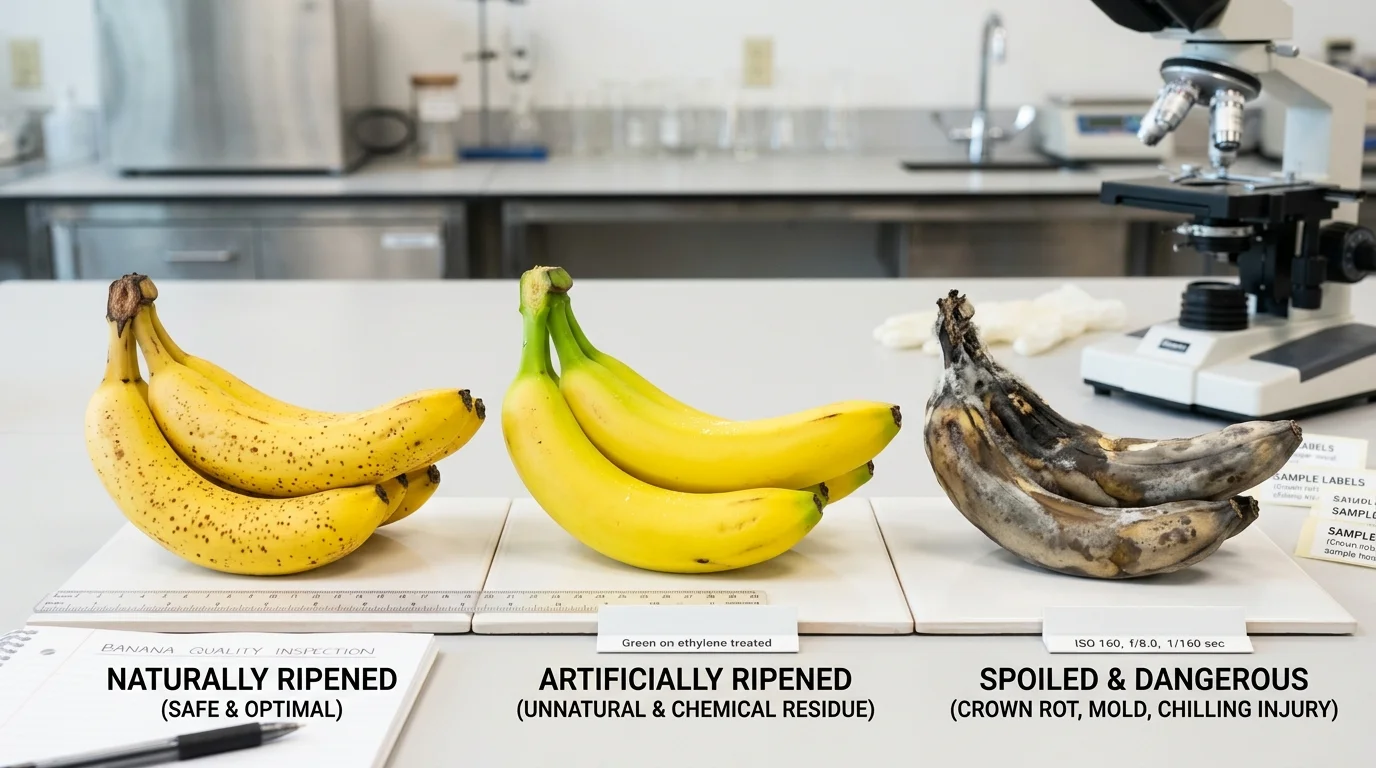
1. Crown Rot & Stalk Fungal Mold:
Examine the crown (where bananas join together) and individual stems. ❌ Look for dark black, mushy decay or fuzzy white/greyish mold (Colletotrichum musae and Fusarium species). If crown rot extends into the fruit neck, the fungal mycelium penetrates the edible pulp, creating a foul fermented flavor. Discard bananas with mushy, moldy stems.
2. Chilling Injury in Cold Storage:
Bananas should never be stored in home refrigerators below 12°C (54°F). ❌ When exposed to cold, cell membranes rupture and polyphenol oxidase enzymes oxidize tannins, turning the peel a dull, muddy greyish-brown without ripening the fruit. The pulp remains hard, starchy, and loses its natural sweetness.
3. Sugar Freckles vs Fungal Spoilage:
Distinguish between harmless sugar spots and rot. ✅ Sugar spots: Tiny, pinpoint brown freckles distributed across firm yellow skin. ❌ Fungal rot: Large, sunken, watery black lesions that weep liquid, peel easily, and reveal slimy, discolored pulp underneath.
4. Ethylene Management & Storage Tips:
Separate bananas from other fruits unless you wish to ripen them. To extend freshness by 3-5 days, wrap the crown tightly in plastic cling film or aluminum foil to trap ethylene emission from the stem.
Quick Safety Tips
- CRITICAL: Avoid bananas with glowing canary-yellow skins and dark green, rigid stalks
- Discard bananas that taste sour, chalky, or leave a burning chemical sensation in the throat
- Small brown freckles on yellow skin indicate healthy, natural sugar development—do not avoid them
- Perform the water bucket test: Naturally ripe bananas sink; unripe carbide bananas float
Primary Chemical Concerns
Health Risks & Impacts
Multilingual Local Names
Regulatory Corner: FSSAI (Food Safety and Standards Authority of India) / US FDA / Codex Alimentarius
Regulation: Food Safety and Standards (Prohibition and Restrictions on Sales) Regulations 2011, Clause 2.3.5: Prohibition of Calcium Carbide
Legal Limit:Calcium carbide (acetylene gas): 0.0 ppm (Strict zero tolerance); Ethylene gas ripening: Max 100 ppm in airtight chambers; Ethephon residue: Max 2.0 mg/kg; Fungicide MRL (Thiabendazole): Max 5.0 ppm
Report Adulteration to FSSAI (Food Safety and Standards Authority of India) / US FDA / Codex Alimentarius