
How to Test Potato for Adulteration (Solanine, Chlorine Bleach, Maleic Hydrazide)
⚡ Quick 60-Second Potato Solanine & Cold-Storage Verdict
Toxic Solanine & Heavy Cold Storage: Green skin on potatoes contains high concentrations of solanine glycoalkaloids (heat-stable neurotoxins). Cold-storage potatoes turn carcinogenic acrylamide when fried.
Scratch the skin. If any green chlorophyll or green flesh is visible beneath the skin, solanine is concentrated—do not consume.
Check for sprouting eyes. Sprouted potatoes have converted starches into toxic glycoalkaloids and should be discarded or deeply excised.
If a boiled potato tastes oddly sweet, cold storage has converted starch to reducing sugars, producing carcinogenic acrylamide during cooking.
To learn more about food safety tests and home adulteration detection, read our guides on Sweet Potato (Shakarkand), Jicama, Cauliflower, and Tomato Ketchup.
Drop Potato photo here to test purity
or click to browse • Supports JPG, PNG, WEBP • Paste with Ctrl+V
Inspection Guide
Click to enlarge
Potato Purity & Safety Audit
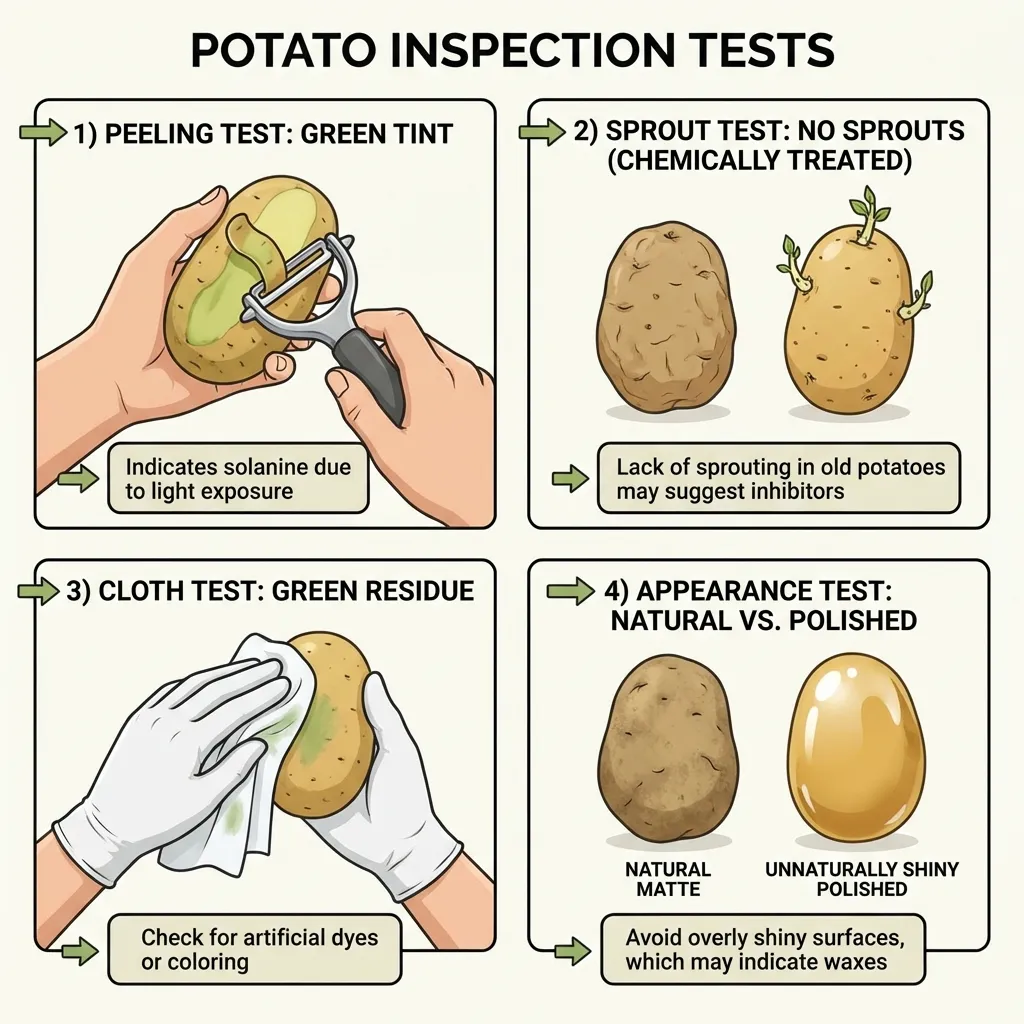
Potatoes are generally safe but can develop natural solanine toxins or be treated with chemical inhibitors to prevent sprouting during long storage.
1. The Green Skin Check (Solanine):
Examine the potato for any green patches on the skin. This green color indicates the presence of solanine, a toxic alkaloid that develops when potatoes are exposed to light. Solanine is neurotoxic and cannot be completely destroyed by cooking.
2. The Sprouting Test:
Naturally fresh potatoes will begin to sprout "eyes" within 1-2 weeks at room temperature. If your potatoes never sprout even after months, they have been heavily treated with Maleic Hydrazide (a chemical growth inhibitor).
3. The Surface Shine (Bleach Check):
Examine the potato for an unnaturally "clean," bright, and shiny skin. While some varieties are clean, an unnaturally white or "painted" look on red or white potatoes often indicates a chemical wash or bleaching to remove soil and natural marks.
4. The Squeeze Test:
A fresh potato should be rock-hard. If it feels "spongy," has wrinkled skin, or soft patches, it is old and the nutrients have started to break down into toxic compounds.
Quick Safety Tips
- CRITICAL: Discard any potatoes with green patches or sprouts
- Avoid potatoes that look "too clean" and bright - natural soil residue is safer
- If a potato fails to sprout after months, it likely contains growth inhibitors
- Store in a cool, dark, well-ventilated place - NEVER in the refrigerator
Primary Chemical Concerns
Health Risks & Impacts
Multilingual Local Names
Common Storage Pests
Potato Tuber Moth
medium riskCaterpillars that tunnel into the tuber, causing internal rot.
Detection
- Small entry holes and brown tracks on the surface
- Internal tunnels
Prevention
- Store in a dry, dark place
- Ensure good ventilation
Corrective Action: What to do?
Cut away affected parts; discard if tunnels are deep and the rot has spread.
Regulatory Corner: FSSAI (Food Safety and Standards Authority of India) / US FDA / Codex Alimentarius
Regulation: Food Safety and Standards (Contaminants, Toxins and Residues) Regulations 2011 & FDA Compliance Policy Guide Sec. 575.100
Legal Limit:Solanine (glycoalkaloids in green potatoes): Max 200 mg/kg (20 mg/100g); Chlorpropham (sprout inhibitor CIPC): Max 10.0 ppm; Synthetic green dye / copper salts: 0.0%; Rotten / hollow heart: Max 2.0%
Report Adulteration to FSSAI (Food Safety and Standards Authority of India) / US FDA / Codex Alimentarius