Every April, a familiar drama plays out across fruit markets from Mumbai, Pune, and Bengaluru to Dubai, London, and New York. Shoppers pay ₹1,500 to ₹2,800 per dozen for wooden crates stamped "Original Ratnagiri Hapus"—only to slice open a pale-yellow fruit that tastes mildly sweet, lacks that room-filling peach-and-saffron perfume, or hides a chalky white patch next to the seed.
Known across Maharashtra and Gujarat as Hapus (हापूस), the Alphonso mango is not merely a fruit; it is a geological and botanical miracle. Named after Afonso de Albuquerque, the 16th-century Portuguese general and viceroy whose horticulturists introduced superior scion-grafting (kalam) techniques to Goa and the Konkan coast, authentic Alphonso owes its crown to a very specific strip of volcanic laterite rock hugging the Arabian Sea.
This complete connoisseur's dossier goes beyond generic praise. You will learn how to distinguish Devgad Hapus from Ratnagiri Hapus and inland Karnataka Badami lookalikes, master the 4-point sensory test to know the exact hour your mango is ready for cutting, and run 60-second kitchen purity tests to detect Calcium Carbide ripening and internal Spongy Tissue.
1. The King's Profile: 12-Month Harvest Curve & The 3 Harvest Flushes
Unlike commercial mangoes bred for thick skins and year-round cold storage, Alphonso has a fleeting, high-intensity season. Compare its 12-month harvest timeline against its #1 market lookalike below, and use the Three Harvest Flushes (Bahar) guide to time your crate purchase:
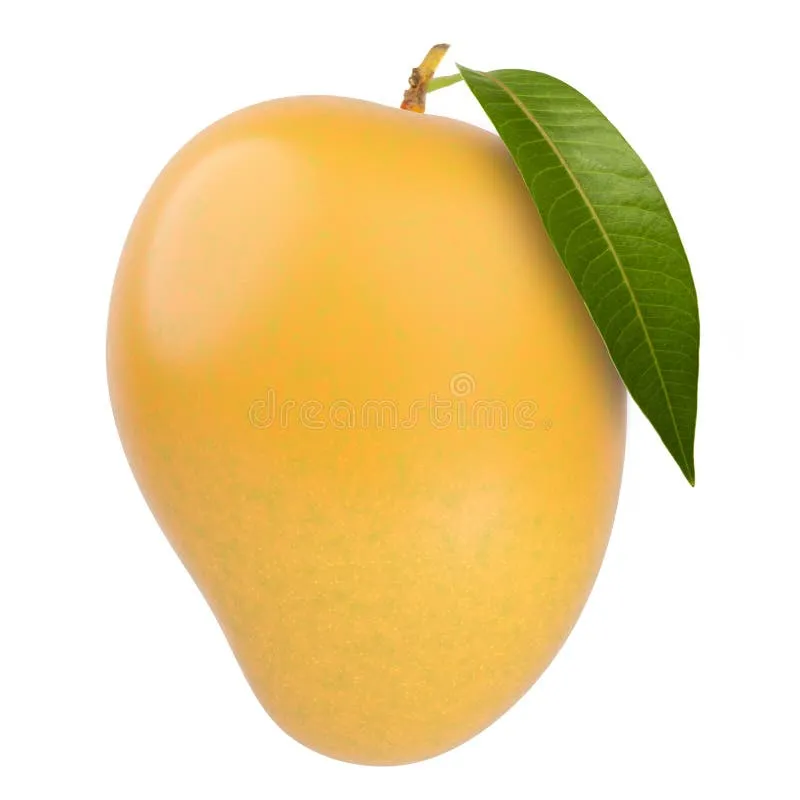
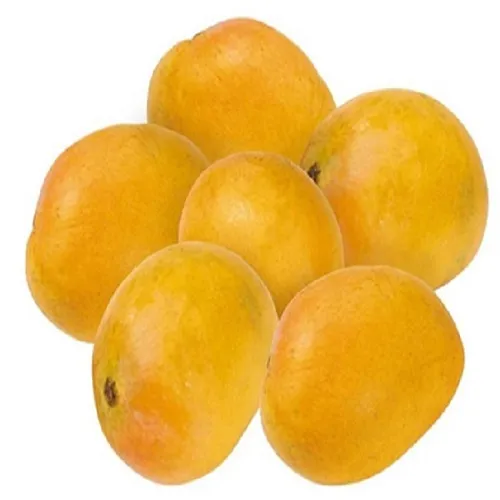
Globally celebrated as the King of Mangoes. Features wafer-thin Kagdi skin, a symmetrical rounded shoulder, a blunt non-beaked base, deep saffron-orange 100% fiberless pulp, and an intoxicating furaneol-lactone peach-saffron perfume.
Grown on inland Deccan red loamy soils. Shares ancestry with Alphonso but develops a thicker golden-yellow peel, a subtle pointed ventral beak tip at the bottom, paler yellow flesh, and a milder scent at 40–60% lower cost.
The 3 Harvest Flushes of Konkan Hapus (February to June)
Early Coastal Arrival
Harvested from November coastal cliff blooms. Prized for early gifting with a bright sweet-tangy balance, but carries the highest Calcium Carbide risk in retail markets as traders rush green crates.
The Connoisseur's Golden Window
Best time to buy wooden Peti crates! Peak sugar-to-acid harmony, deepest saffron-orange pulp, intense room-filling furaneol aroma, and ideal dry-matter density for year-round pulp freezing.
Pre-Monsoon Curtain Call
Ripens rapidly after pre-monsoon showers (Valavacha Paus). Ultra-soft melting flesh best used immediately for Aamras and Amba Poli (mango leather); inspect stem for Anthracnose.
📦 Wooden Crate (Peti) vs. Dozen Box: Insider Grading Decoder
When buying directly from Konkan orchard cooperatives, Alphonso is graded by single-fruit weight before being packed in paddy straw (pendha):
• Grade A1 Special (275g – 325g+): Showpiece gifting mangoes (4 to 5 dozen per wooden peti).
• Grade A (225g – 274g): The balanced family standard with lower Spongy Tissue risk than oversized fruits.
• Kani / Goli Hapus (150g – 195g): Small, round fruits from the outer canopy. Connoisseur Secret: Because smaller fruits receive maximum sunlight and rarely develop internal Spongy Tissue, Kani Hapus costs 35–40% less while delivering the sweetest, most concentrated pulp for Aamras!
2. The Great Konkan Terroir Showdown: Devgad vs. Ratnagiri vs. Valsad & Badami
Why does an Alphonso tree grafted in inland Maharashtra or Karnataka produce a fruit that looks similar on the outside but tastes noticeably different from a coastal Konkan mango?
The answer lies in Geographical Indication (GI Tag #139) terroir. Across the coastal districts of Ratnagiri, Sindhudurg (Devgad), Raigad, Thane, and Palghar, mango roots penetrate porous, rust-red lateritic rock (Jambha Dagad) rich in iron and aluminum oxides. Between February and May, warm salty breezes off the Arabian Sea meet cool night dew, stressing the tree just enough to synthesize an extraordinary concentration of volatile aroma compounds.
🔬 Food Science: Why Nothing Else on Earth Smells Like Alphonso
Gas chromatography–mass spectrometry (GC-MS) studies by Indian food scientists reveal that while most mangoes rely on a single terpene for their scent, Konkan Alphonso synthesizes a rare, synergistic trio:
1. Furaneol (4-hydroxy-2,5-dimethyl-3(2H)-furanone): Generates warm caramelized sugar, roasted strawberry, and honey notes.
2. Gamma-Octalactone & Delta-Octalactone: Creates the unmistakable creamy peach, apricot, and coconut-milk richness.
3. (E)-Beta-Ocimene & Myrcene: Delivers the bright, green-floral top note that fills a room from three feet away even before the skin is cut.
Visual Terroir Comparison: How to Tell the 4 Regional Origins Apart
Devgad Hapus
📍 Sindhudurg Coastal Cliffs (GI #139)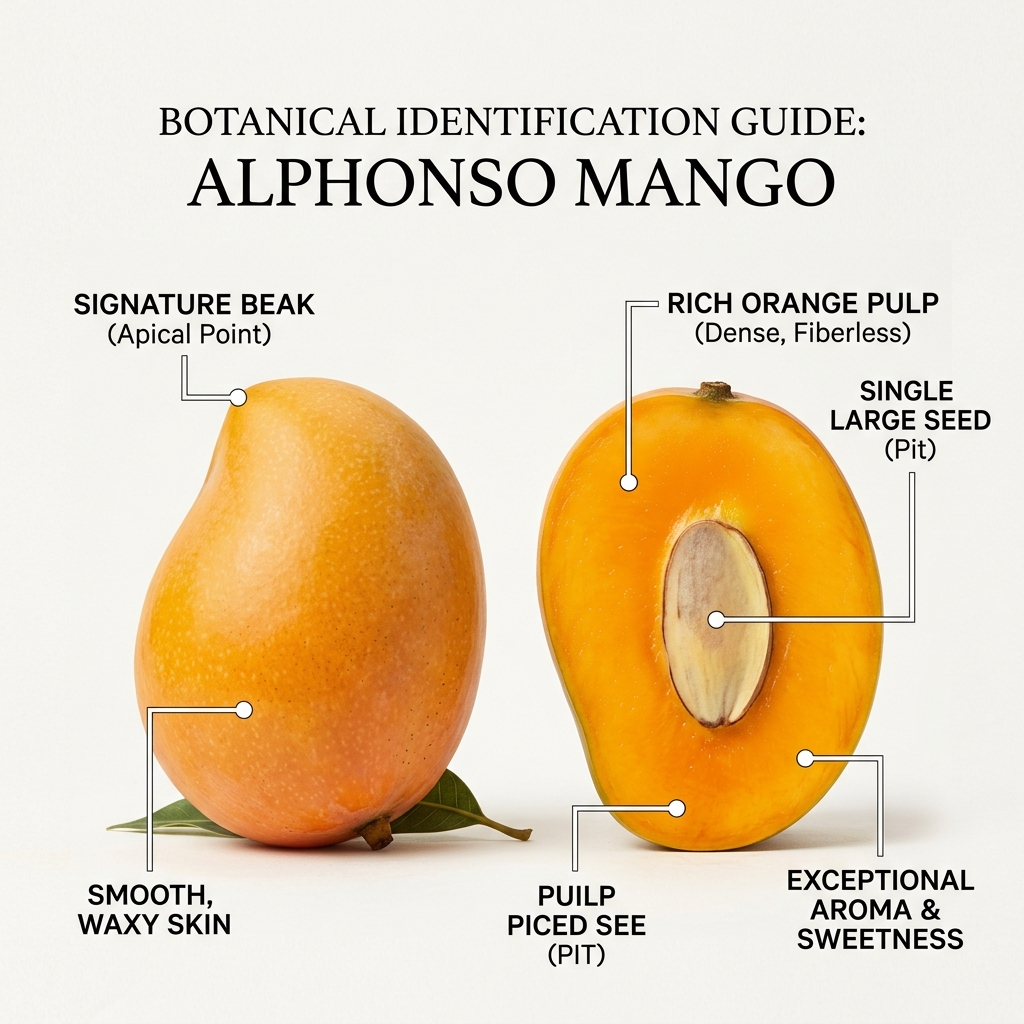
Ratnagiri Hapus
📍 Ratnagiri Hills & Valleys (GI #139)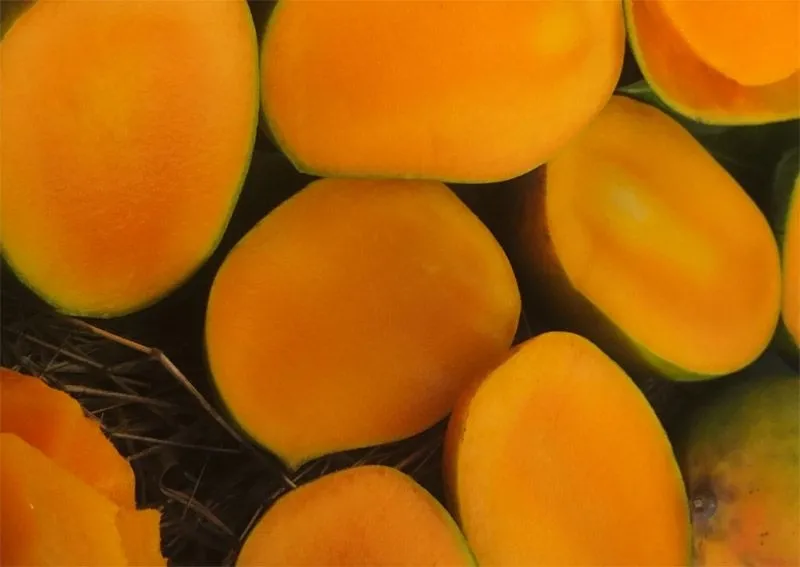
Valsad Hapus
📍 South Gujarat Coastal BeltKarnataka Badami & Salem
📍 Inland Deccan Plateau (Dharwad / Salem)3. Anti-Counterfeit Field Guide: Real GI Konkan Hapus vs. Disguised Badami
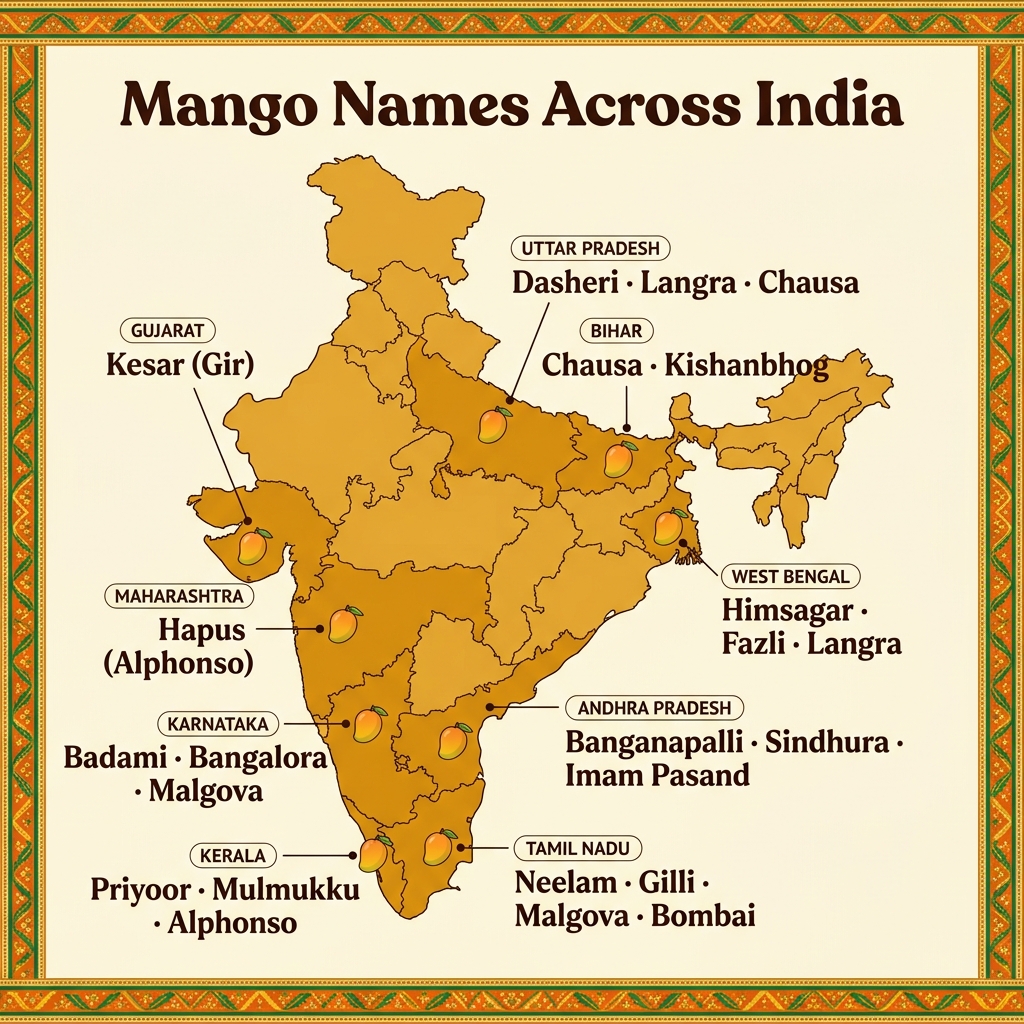
Because authentic Konkan Alphonso yields only 35–45% of total market demand in April, unscrupulous vendors frequently repack Karnataka Badami (or semi-ripe southern cultivars) into wooden crates with straw and sell them at Ratnagiri prices. Use this 5-point physical inspection card before paying premium rates (and explore our Mango Names Across India Guide to decode regional labels):
True Konkan GI Alphonso (Ratnagiri / Devgad)
Disguised Badami or Counterfeit Red Flags
4. The Ripeness Guide: How to Test When Your Alphonso is Ready for Cutting
Even when you buy an authentic wooden peti of Devgad or Ratnagiri Hapus, cutting the mango 48 hours too early is a heartbreak: the outer cheek may look yellow, yet the flesh near the stone is still starchy and sharp. Conversely, waiting too long in peak May heat can over-soften the pulp.
Follow this 4-Point Non-Destructive Sensory Test and visual freshness matrix to slice every Alphonso at its 20°–22° Brix peak:
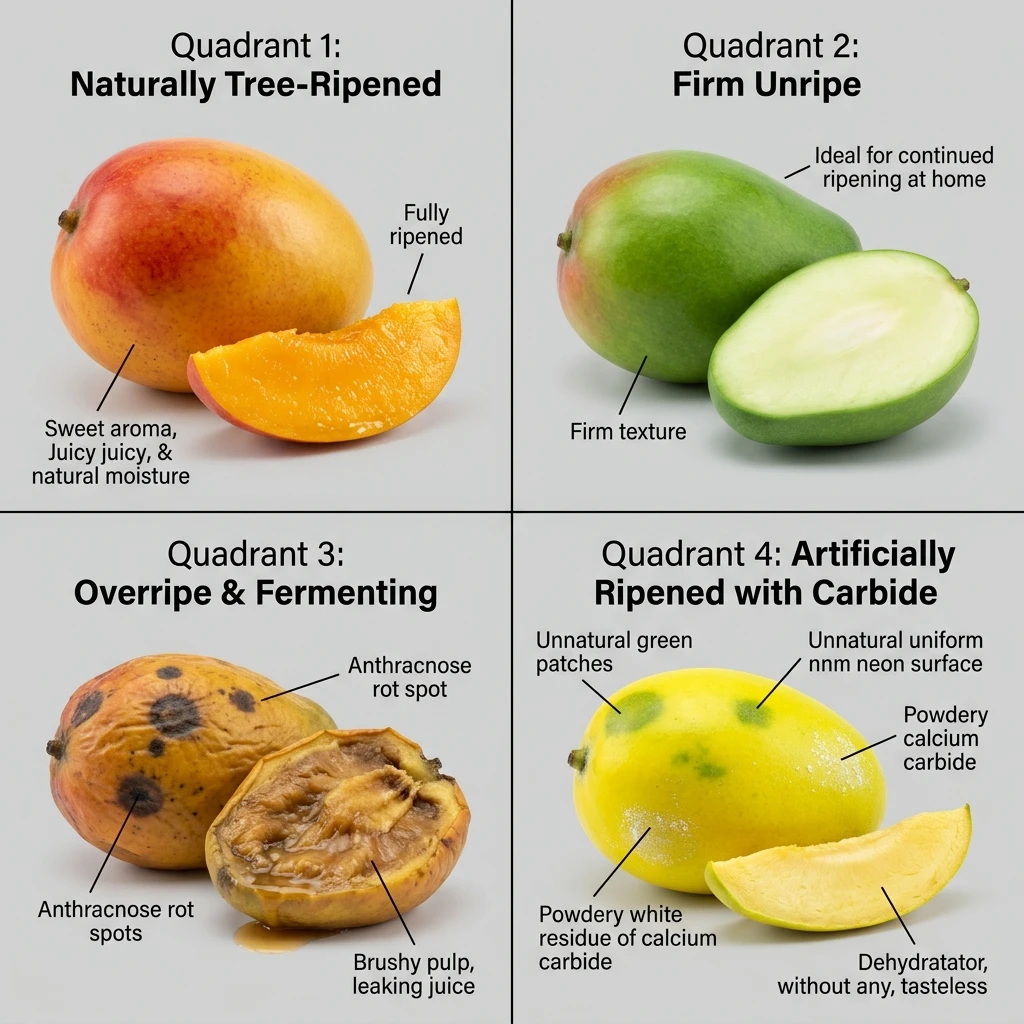
The 4-Point "Ready-to-Cut" Sensory Protocol
- The Stem-Cavity (Dekh) Perfume Check (More Reliable Than Color):
- Why color deceives: A tree-shaded Ratnagiri Hapus can retain a faint olive-green hint on its shoulder yet be 100% melting sweet inside, whereas a sun-exposed mango can turn yellow early while its core is still acidic.
- How to test: Hold the sunken stem depression (dekh) 3 inches from your nose. As starch-to-sucrose conversion finishes from stone to skin, volatile furaneol and lactones escape through the stem scar. If it smells richly of sweet peaches, saffron, and honey, it is ready for the knife. If the stem smells grassy or neutral, return it to the hay for 24–48 hours.
- The Upper-Shoulder Thumb Yield Test (Never Squeeze the Belly!):
- Because Alphonso has 0% coarse fiber, poking or squeezing the wide middle cheek ruptures delicate cell walls, leaving dark internal bruise pockets within hours.
- How to test: Rest the mango in your palm and gently press the upper rounded shoulder (1 inch below the stem) using the flat pad of your thumb. Compare the feel to the Palm Firmness Scale:
- Feels like the tip of your nose: Firm & under-ripe internally (keep in hay at room temperature).
- Feels like the fleshy base of your thumb palm (thenar eminence): Peak Table Ripeness—slice immediately!
- Feels like a soft earlobe: Dead ripe / over-soft—ideal for whisking into Aamras, Amrakhand, or mango gelato.
- The Satin Neck Micro-Wrinkle Cue (Kagdi Skin Signature):
- As an authentic thin-skinned Devgad or Ratnagiri Hapus reaches peak sugar density, slight moisture transpiration relaxes the waxy cuticle, forming fine, satin-like micro-wrinkles around the upper neck. In Konkan homes, this "silk-wrinkle stage" is prized as the sweetest possible moment to eat the fruit.
- How to Ripen & Store a Hay-Packed (Adi) Crate at Home:
- Unpack & Inspect Upon Arrival: Open the wooden crate immediately, remove any fruit that was crushed in transit, and keep the remaining semi-ripe mangoes nestled in their dry paddy straw (pendha) in a cool, ventilated corner (24°C–28°C).
- Never Use Direct Ceiling Fans: High-speed fan airflow dehydrates thin Kagdi skin before internal amylase enzymes finish converting starch.
- The Golden Refrigerator Rule: Never refrigerate unripe or half-ripe Alphonso mangoes! Cold temperatures below 12°C trigger chilling injury, permanently shutting down aroma synthesis and turning the pulp dull and acidic. Once a mango passes the 4-point Ready-to-Cut test, you may chill it for 30–45 minutes before serving to firm up the cubes.
5. Adulteration & Purity Lab: Testing for Calcium Carbide & Internal Spongy Tissue
Early-season high prices create a powerful incentive for illicit artificial ripening using Calcium Carbide (locally called "masala" packets) or concentrated industrial ethylene dips. At the same time, natural Alphonso is uniquely prone to an internal physiological quirk called Spongy Tissue.
Before serving mangoes to children or elders, run these 4 kitchen purity checks—and cross-verify suspicious batches using our interactive Mango Purity & Chemical Ripening Lab.
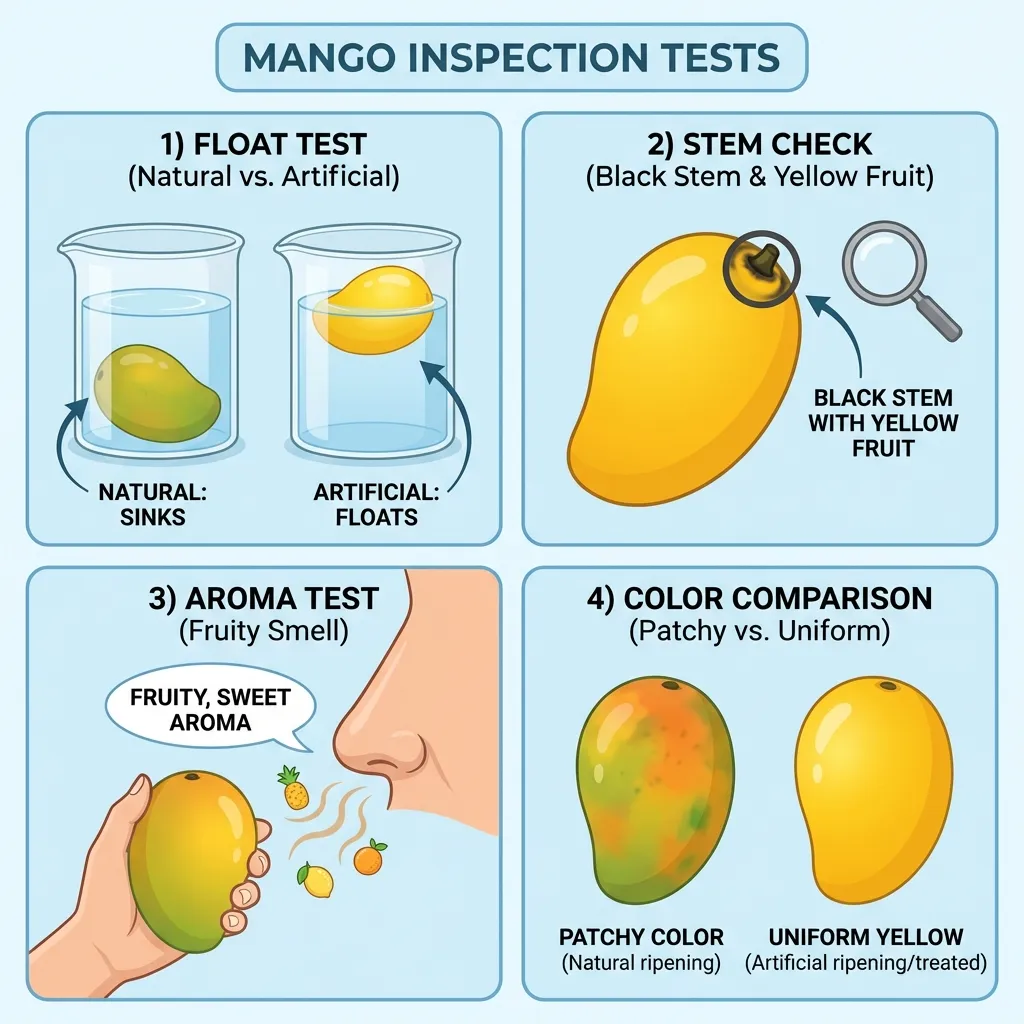
Test 1: The Specific Gravity Water Bowl Test (2-in-1 Check for Carbide & Spongy Tissue)
Fill a deep kitchen bowl or bucket with room-temperature water and gently lower the whole, uncut Alphonso mango inside:- ✅ Sinks Completely to the Bottom (Specific Gravity > 1.02): A naturally tree-matured Alphonso has tightly packed cells heavy with dissolved sucrose (19°–22° Brix) and zero internal gas voids. It sinks smoothly to the base of the bowl.
- ❌ Floats at the Surface or Bobs Upright (Specific Gravity < 1.00): A floating mango fails the density audit for one of two reasons:
- Immature Harvest + Calcium Carbide Force-Ripening: The fruit was plucked prematurely (before starch accumulation completed) and gassed with acetylene, leaving low-density tissue and internal gas pockets.
- Internal Spongy Tissue (Saka Pocket): Even in a naturally ripened Konkan mango, if convective orchard heat created a hollow, unripened white spongy air pocket next to the seed stone, that trapped gas pocket reduces overall fruit density and causes the mango to bob or tilt upward in water.
Test 2: Calcium Carbide ("Masala") vs. Natural Hay Ripening Audit
Industrial-grade Calcium Carbide reacts with moisture to generate acetylene gas, which forces chlorophyll breakdown in 24 hours—turning a rock-hard, sour green mango bright yellow on the outside while leaving toxic arsenic hydride (arsine) and phosphorus hydride (phosphine) residues on the peel (strictly banned under FSSAI Prohibition Regulation 2.3.5).
| Inspection Marker | ✅ Naturally Hay-Ripened (Adi) Alphonso | ❌ Calcium Carbide / Chemically Forced Mango |
|---|---|---|
| Skin Color Pattern | Organic, warm gradient from saffron-orange shoulder to golden-yellow base | Unnaturally uniform neon-canary yellow OR bright yellow mixed with rigid dark-green patches |
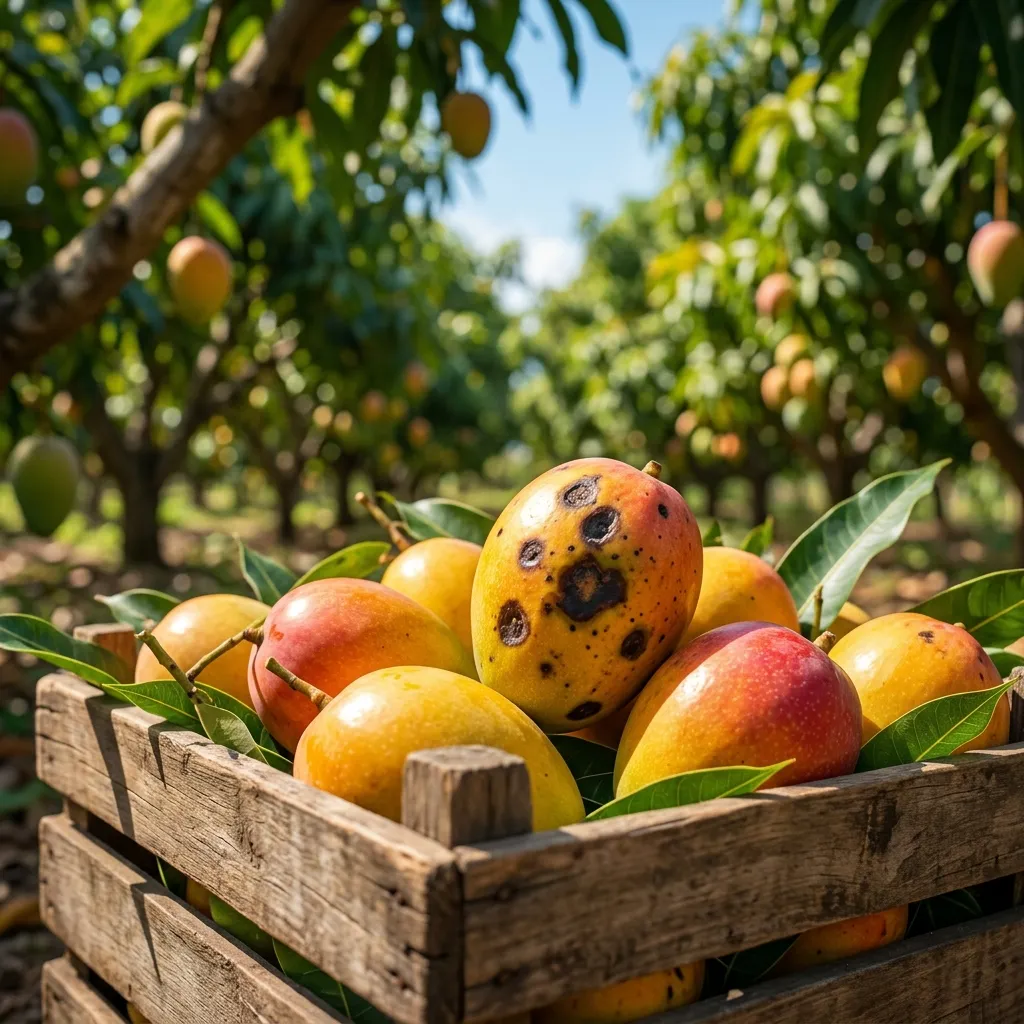
| Surface Blemishes | Tiny natural brown lenticel speckles ("sugar spots") at full maturity | Black chemical burn blotches or powdery grey-white dust traces inside the crate |
| Stem & Flesh Aroma | Intoxicating peach, saffron, and honey perfume radiating from the stem | Odorless exterior or a faint metallic, garlic, or sulfur-like chemical smell |
| Juice & Mouthfeel | Melting, buttery, juicy saffron pulp right down to the stone | Dry, pale, fibrous/hard near the seed; leaves a slight burning or tingling sensation on the tongue or throat |
Test 3: Decoding "Spongy Tissue" (Saka) — Why It Happens & Is It Safe?
Have you ever cut open a fragrant, 100% authentic Konkan Alphonso only to find a chalky white, porous, slightly sour spongy patch hugging the seed stone?- What Causes It: Spongy Tissue is not a pest, fungus, or chemical adulterant. Scientific research by Konkan Krishi Vidyapeeth proved that when intense April–May afternoon sunlight heats up dark coastal laterite rocks (> 42°C), convective ground heat radiates upward into fruits hanging on lower branches. This heat shock inactivates ripening amylase and invertase enzymes right next to the stone, preventing starch from turning into sugar in that localized zone.
- Is It Safe to Eat? As detailed in our Mango Fruit Diseases & Consumer Safety Guide, Spongy Tissue contains zero mycotoxins or pathogens. Simply slice away the white chalky portion near the seed—the surrounding deep saffron-orange cheek pulp is completely safe, nutritious, and delicious!
🧼 The 15-Minute Baking Soda Surface Detox Protocol
Before slicing any mango, submerge whole fruits in a solution of 1 teaspoon baking soda (sodium bicarbonate, ~5g/L) per liter of cool water for 15 minutes, then rinse thoroughly under running tap water. Alkaline sodium bicarbonate neutralizes acidic stem sap (chik containing allergenic urushiol resorcinols), hydrolyzes surface fungicide residues, and washes away artificial ripening dips so your knife blade never transfers surface contaminants into the saffron flesh.
Run the Interactive Mango Adulteration & Carbide Check
Use BioLens Food Guard to check your mangoes for Calcium Carbide chemical burn markers, artificial dyes, specific-gravity float test results, and surface residue hazards in 60 seconds.
6. The Royal Dynasty: Spongy-Tissue-Free Hybrids & Head-to-Head Rivalries
Part A: Alphonso's 4 Scientific Hybrid Offspring
To preserve Alphonso's legendary aroma while completely breeding out its susceptibility to Spongy Tissue and alternate-year bearing, Indian agricultural scientists created a royal dynasty of hybrids. Each card below includes its 12-month harvest timeline and direct profile link:
Bred by crossing late-season Neelum with Konkan Alphonso. Preserves Alphonso’s deep saffron-orange fiberless flesh and rich aroma while completely eliminating internal Spongy Tissue defects and alternate-year bearing.
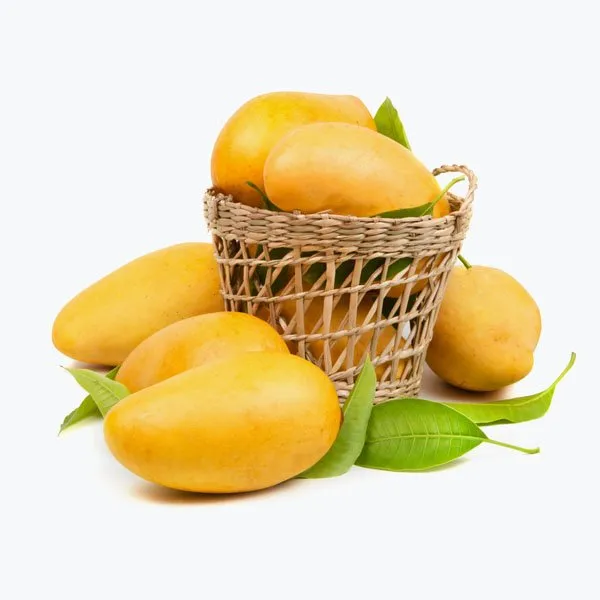
Created by back-crossing Ratna with Alphonso (75% Alphonso genetics). Famous worldwide for its paper-thin 6g rudimentary stone coat, yielding nearly 88%+ pure edible saffron pulp.

Combines Alphonso’s deep orange fiberless pulp and crimson-blushed shoulder with Banganapalli’s immunity to internal heat breakdown and longer shelf life.

Features a uniform golden-yellow skin, zero fiber, 100% resistance to Spongy Tissue, and an exceptional 12–14 day post-harvest keeping quality.
(Also explore Arka Aruna, a dwarf high-density hybrid of Banganapalli × Alphonso prized for home gardens!)
Part B: The King vs. Rivals — Core Alphonso Showdown Cards
How does Alphonso stack up against India's other regional titans? Compare their visual traits, Brix sweetness, and culinary strengths side by side:Alphonso19°–22° Bx • Apr–MayGir Kesar21°–24° Bx • May–JunAlphonso vs. Gir Kesar (King vs. Queen)
Alphonso offers complex peach-saffron aroma, wafer-thin skin, and buttery table luxury; Gujarat’s Gir Kesar has an oblong curved shoulder with green-gold skin and intense honey-saffron sweetness at half the price.
AlphonsoGI Konkan • Blunt BaseBadamiKarnataka • Subtle BeakAlphonso vs. Karnataka Badami
True Konkan GI Alphonso has parchment-thin Kagdi skin, a smooth non-beaked base, and deep saffron pulp; Badami has thicker peel, a subtle pointed ventral beak tip, and paler yellow flesh.
AlphonsoWest India • Ovate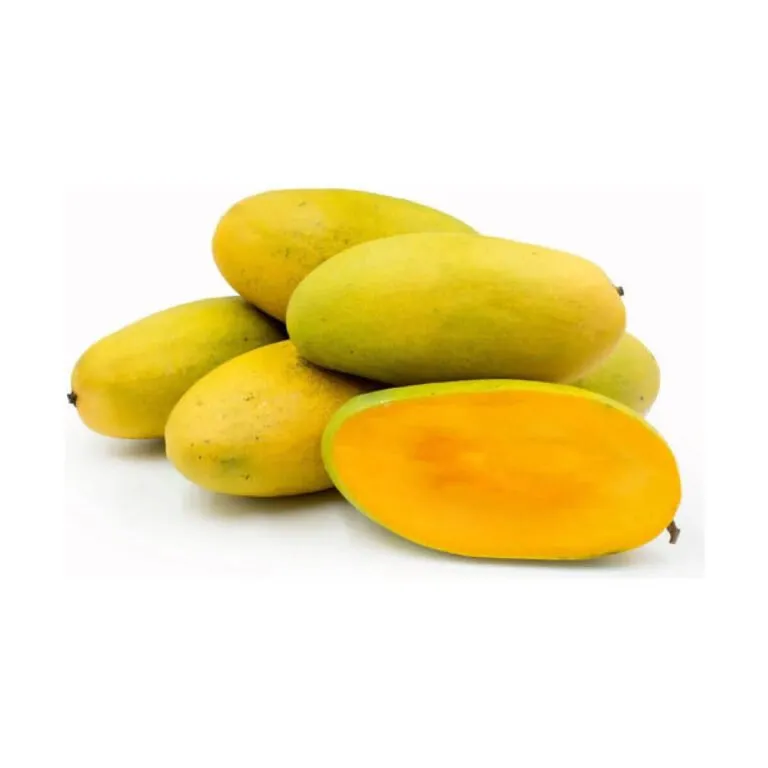 DasheriNorth India • Elongated
Alphonso vs. Malihabadi Dasheri
Alphonso is Western India’s April–May saffron-orange coastal classic; Dasheri is North India’s June–July elongated green-gold legend famous for its floral honey-nectar sweetness.
Alphonso250g • Saffron Cream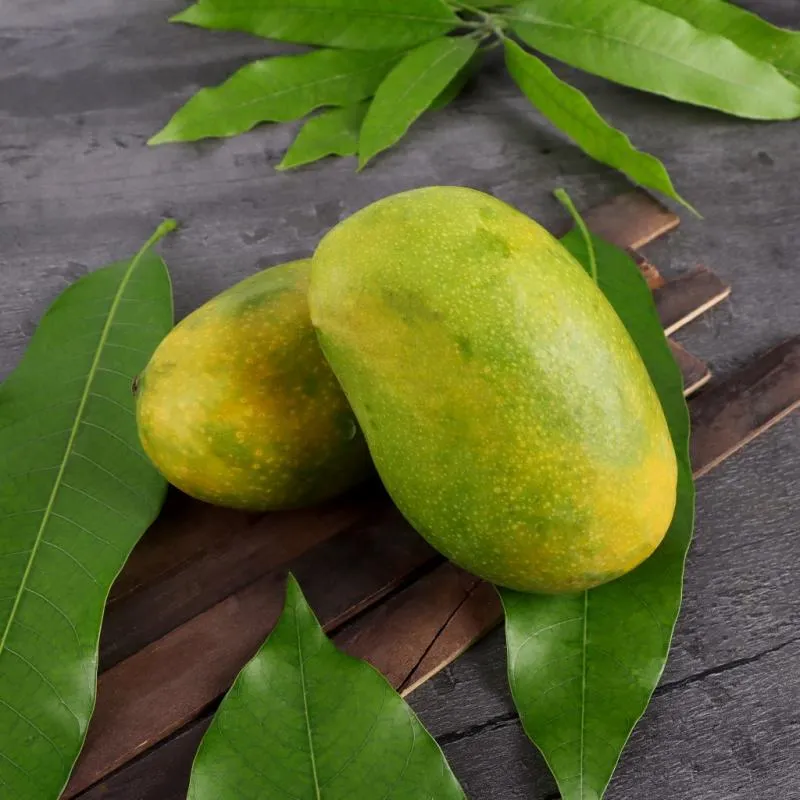 Imam Pasand450g+ • Citrus-Coconut
Imam Pasand vs. Alphonso
Imam Pasand (Himayat) is a massive 450g–600g royal rarity from Andhra & Tamil Nadu with a tangy citrus-lime outer layer over coconut-sweet flesh; Alphonso is medium-sized and uniformly buttery.
Alphonso80% Velvety Body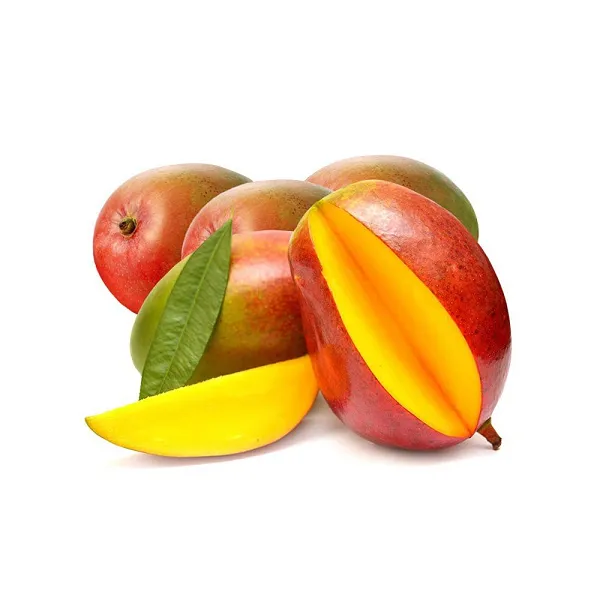 Pairi (Payri)20% Juicy Tang
Pairi vs. Alphonso (The 80:20 Aamras Duo)
Pairi is an early-season Konkan & Pune cultivar with a prominent pointed beak, reddish-green skin, and juicy, zesty-tart fibrous pulp that contrasts with Alphonso’s thick, fiberless sweetness.
AlphonsoIntense Aroma • 250g Banganapalli0% Spongy Tissue • 380g
Alphonso vs. Banganapalli (Benishan)
Alphonso delivers unmatched aromatic intensity and deep saffron pulp; Andhra’s GI-tagged Banganapalli is larger, obliquely oval, blemish-free, mildly sweet, and 100% immune to Spongy Tissue.
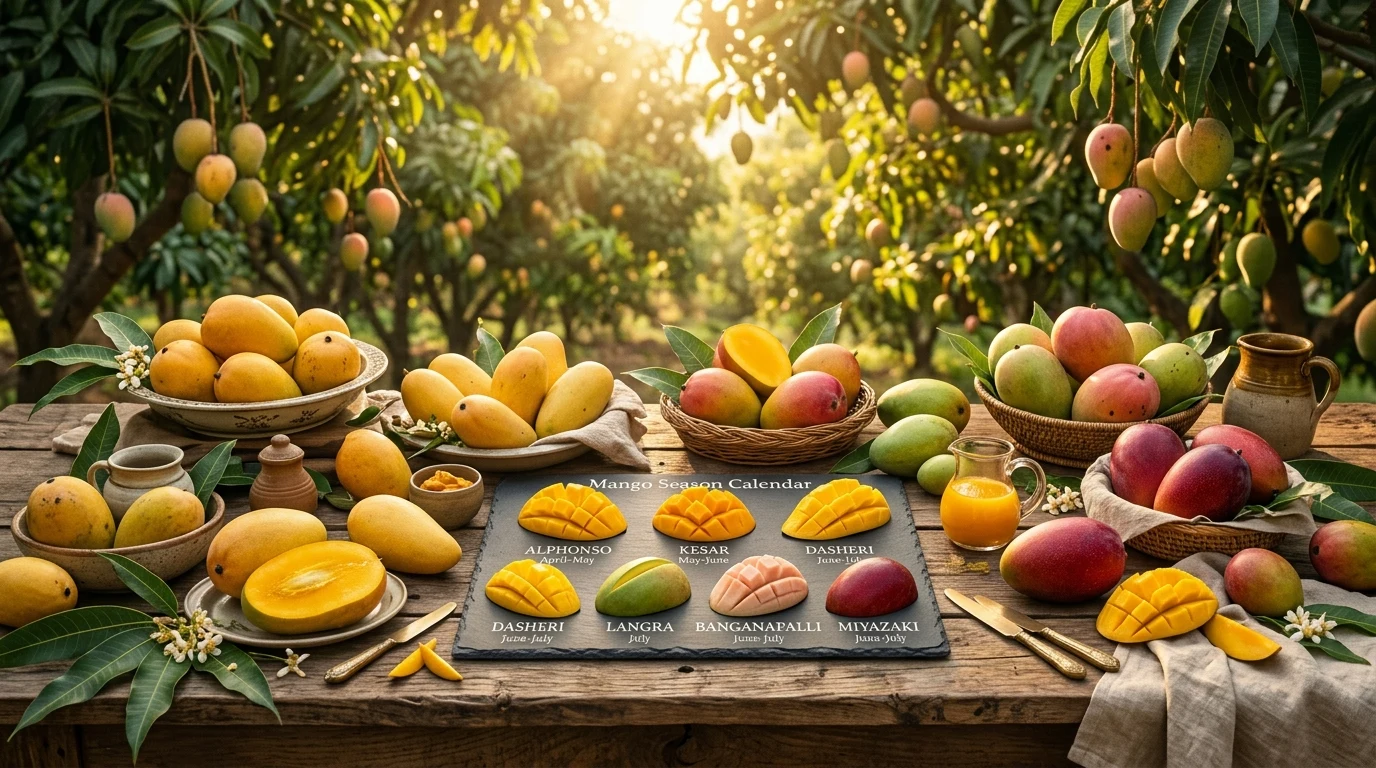
(Want to track when every regional rival hits peak season? Bookmark our visual 2027 Mango Season Calendar!)
7. Orchard & Crop Care: Protecting Alphonso Trees from Pests, Diseases & Deficiencies
Because Alphonso thrives in warm, humid coastal belts, orchardists and backyard growers must manage a specific sequence of seasonal pests and micronutrient demands. You can diagnose leaf, panicle, and fruit symptoms year-round on our Mango Crop Health Hub:
- 1. Winter Flowering & Panicle Stage (December – February):
- Mango Hopper: Nymphs and adults suck sap from tender flower panicles (mohar), causing blossom wither and secreting sticky honeydew that triggers black Sooty Mold across leaves and young fruitlets.
- Mango Mealybug & Mango Gall Midge: Apply alkathène trunk bands in late December to stop wingless mealybug nymphs from climbing into the canopy, and monitor panicle stalks for gall midge dimples.
- 2. Pea-to-Marble Fruit Stage & Soil Nutrition (February – April):
- Mango Boron Deficiency: Acidic coastal laterite soils readily leach boron, leading to poor pollen tube growth, fruit cracking, and internal brown gummy pockets that mimic Spongy Tissue.
- Mango Zinc Deficiency: Causes "little-leaf" rosetting and uneven sugar translocation during fruit expansion.
- 3. Pre-Monsoon Harvest Stage (May – Early June):
- Mango Anthracnose: Latent Colletotrichum gloeosporioides infections awaken when May humidity rises, producing sunken black tear-stain spots on ripening skin. Standard post-harvest Hot Water Treatment (52°C for 5–10 minutes) neutralizes surface spores without affecting Alphonso's delicate flavor.
- For a complete table-side visual guide to distinguishing harmless skin spots from internal stem-end rot or stone weevils, read our Mango Fruit Diseases & Consumer Safety Guide.
Is Your Mango a Real Konkan Alphonso?
Snap or upload any mango from your local mandi, supermarket crate, or orchard tree. BioLens accurately classifies the cultivar, estimates Brix sweetness, and detects surface fungal rot or artificial carbide ripening anomalies.