
Zinc Deficiency
Zincum Deficientia
How to Identify Zinc Deficiency on Mango

Visible Symptoms
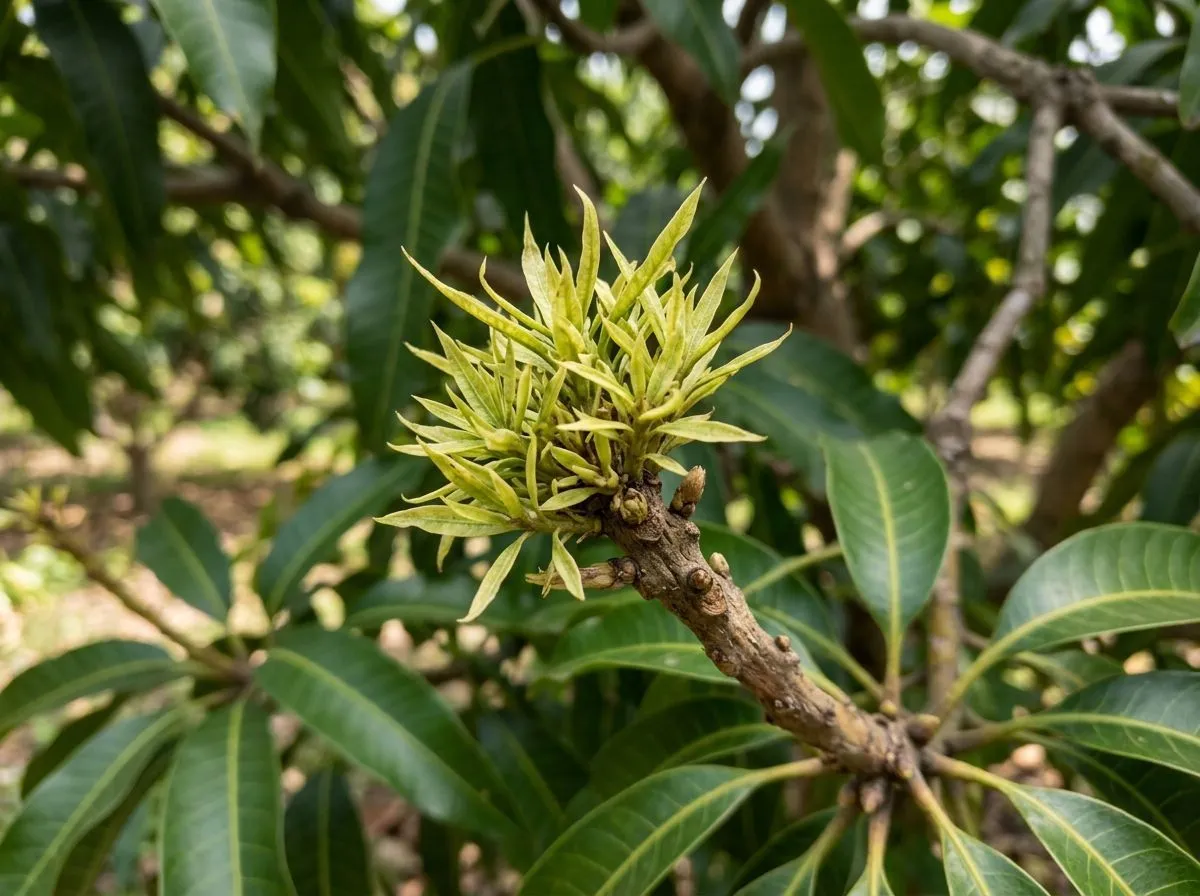
Leaves emerge extremely small, narrow, and clustered in a tight, rosette-like bundle at shoot tips (hence 'Little Leaf'). Leaves are thin and display interveinal chlorosis.
About Zinc Deficiency
Zinc deficiency is a major physiological disorder in mango trees, particularly in sandy, alkaline, or over-limed soils. It severely limits auxin hormone production, stopping shoot elongation.
Nutrient Role & Deficiency Cause
Zinc deficiency is a major physiological disorder in mango trees, particularly in sandy, alkaline, or over-limed soils. It severely limits auxin hormone production, stopping shoot elongation.
Seasonal Outbreak Calendar
Outbreak risk and activity timeline for Zinc Deficiency based on seasonal climate patterns:
Treatment & Correction Guide
Natural & Organic Methods
Chemical & Professional Control
Frequently Asked Questions
Why is zinc deficiency in mango known as 'Little Leaf' disorder?
Zinc is the essential co-factor for the synthesis of tryptophan, the biochemical precursor of indole-3-acetic acid (IAA / auxin). Without auxin, cell expansion in developing leaf buds is blocked, causing new leaves to emerge tiny, narrow, and stunted.
Why do multiple leaves form a compact 'rosette' at the tip of the mango shoot?
Auxin regulates internodal stem elongation. When zinc is deficient, the internodes between successive leaf nodes fail to lengthen, packing 10–20 tiny leaves directly against one another into a tight, brush-like rosette.
Why is foliar spraying far more effective than soil application of zinc in mango orchards?
Mature mango trees have deep, extensive root systems, and orchard soils are frequently alkaline or calcareous (pH > 7.5), which chemically locks soil-applied zinc as insoluble zinc carbonate. Foliar sprays deliver zinc directly into active photosynthetic leaf tissue through stomata.
Why must slaked lime always be added to zinc sulfate spray on mango trees?
Technical zinc sulfate is acidic (pH ~4.5). Unneutralized zinc sulfate causes severe chemical scorch, marginal burning, and premature drop of delicate young mango leaves. Adding half the weight of slaked lime (2.5 g lime per 5 g ZnSO4) neutralizes the solution to a safe pH of 6.5–7.0.
How does zinc deficiency affect mango flowering, hermaphrodite flower ratio, and fruit set?
Terminal shoots suffering from zinc starvation produce deformed, stunted panicles with an abnormally low percentage of hermaphrodite (bisexual) flowers. Over 95% of flowers emerge as male or malformed, leading to near-total failure of fruit set on deficient branches.
Recommended diagnostics based on crop family and symptoms:
Remedy Disclaimer & Safety Notice
This disease guide is for educational screening purposes only. Pathogen behavior, severity, and host susceptibility can vary dramatically based on seed variety, weather conditions, and regional microclimates. Chemical pesticides and organic treatments are subject to strict regional environmental regulations and registration mandates. Please verify all chemical registrations and review manufacturer safety labels carefully with local certified agronomists or agricultural extension service offices before applying.