
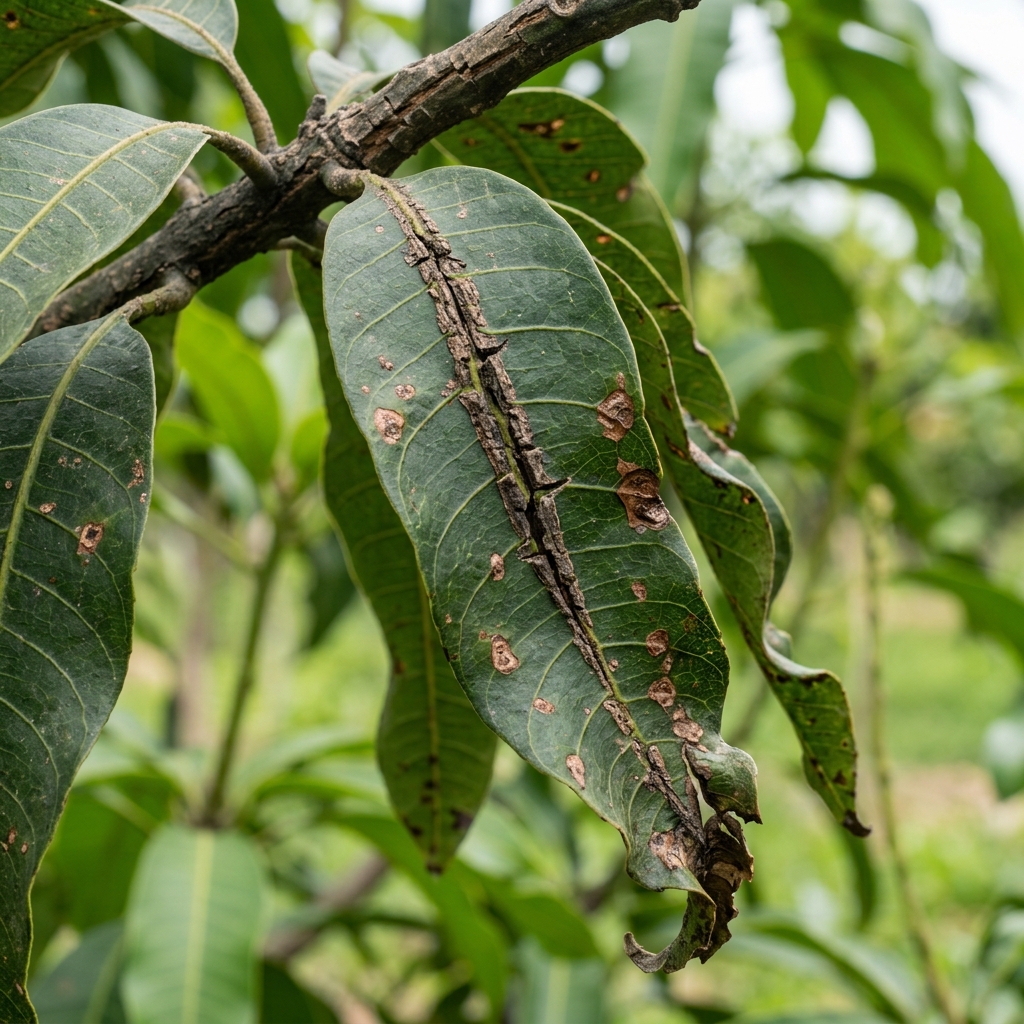
Boron Deficiency
Boron Deficientia
How to Identify Boron Deficiency on Mango

Visible Symptoms
Developing mango fruits crack open, secrete gummy ooze, and drop prematurely. Cutting the fruit reveals dark brown, corky, dead necrotic patches in the pulp near the seed.
About Boron Deficiency
Boron deficiency in mangoes leads to cell division failure in developing fruits, causing 'Internal Necrosis' where fruit pulp turns brown, dry, and corky, accompanied by severe skin cracking.
Nutrient Role & Deficiency Cause
Boron deficiency in mangoes leads to cell division failure in developing fruits, causing 'Internal Necrosis' where fruit pulp turns brown, dry, and corky, accompanied by severe skin cracking.
Seasonal Outbreak Calendar
Outbreak risk and activity timeline for Boron Deficiency based on seasonal climate patterns:
Treatment & Correction Guide
Natural & Organic Methods
Chemical & Professional Control
Frequently Asked Questions
What causes internal fruit necrosis (brown corky pulp) in developing mangoes?
Boron is mandatory for calcium pectate synthesis and cell wall cross-linking in expanding mesocarp (pulp) cells. When boron is deficient, rapid fruit expansion causes cell walls near the stone to rupture and collapse, forming dark brown, corky, dead necrotic cavities.
Why should boron sprays NEVER be applied during full bloom in mango orchards?
Mango pollination depends heavily on honeybees and native flies (Diptera). Spraying chemical solutions during open bloom washes away stigmatic nectar, damages delicate receptive stigmas, and poisons pollinator insects, resulting in drastic fruit set failure. Always spray at panicle emergence (before flowers open) or after fruit set at pea stage.
How is boron deficiency linked to the devastating 'Black Tip' disorder in mangoes?
Black Tip is primarily caused by airborne sulfur dioxide (SO2) and carbon monoxide fumes from nearby brick kilns. However, boron deficiency weakens distal fruit cell walls, making the fruit apex extraordinarily susceptible to fume necrosis. Applying 0.2% Borax or Solubor at panicle emergence significantly reduces Black Tip incidence.
What is the safe soil application dose of Borax for a mature bearing mango tree?
Apply 150 to 250 grams of Agricultural Borax (10.5% B) per mature tree (10+ years old) spread along the canopy drip line in July–August. Never exceed 300 g/tree, as mango trees are highly sensitive to boron toxicity, which causes leaf tip yellowing, marginal necrosis, and premature defoliation.
Why do developing mango fruitlets crack open and drop in March–April?
In spring, rising ambient temperatures and dry winds accelerate fruit transpiration while cells rapidly divide and expand. If boron is deficient, cell walls lack elasticity; internal turgor pressure ruptures the epidermis, creating deep longitudinal fissures that cause heavy fruitlet drop.
Recommended diagnostics based on crop family and symptoms:
Remedy Disclaimer & Safety Notice
This disease guide is for educational screening purposes only. Pathogen behavior, severity, and host susceptibility can vary dramatically based on seed variety, weather conditions, and regional microclimates. Chemical pesticides and organic treatments are subject to strict regional environmental regulations and registration mandates. Please verify all chemical registrations and review manufacturer safety labels carefully with local certified agronomists or agricultural extension service offices before applying.