Como Saber se os Amendoins Estão Ruins: Detectar Aflatoxinas e Branqueamento Químico
⚡ Veredito Rápido de 60 Segundos: Pureza do Amendoim e Aflatoxinas
Mofo de Aflatoxina B1 Cancerígena e Branqueamento de Casca: Amendoins armazenados com umidade desenvolvem o fungo Aspergillus flavus, produtor da toxina hepatotóxica aflatoxina B1. Além disso, cascas velhas são frequentemente branqueadas com cloro para parecerem colhidas recentemente.
Esfregue grãos de amendoim em papel toalha branco úmido por 20 segundos. A terra natural deixa mancha acinzentada; manchas vermelhas ou alaranjadas intensas indicam corante químico.
Coloque 20 grãos descascados em um copo com água. Grãos densos e saudáveis afundam de imediato. Grãos murchos, chochos ou com mofo flutuam na superfície (descarte os que boiarem).
Parta o grão ao meio. O interior de um amendoim bom é branco ou creme claro. Pó cinza-esverdeado ou pontos pretos na cavidade do embrião revelam contaminação por aflatoxinas.
Para saber mais sobre a segurança das nozes, leia nossos guias sobre Manteiga de amendoim, Amêndoas e Azeite de oliva.
Drop Amendoim photo here to test purity
or click to browse • Supports JPG, PNG, WEBP • Paste with Ctrl+V
Inspection Guide
Click to enlarge
Auditoria de pureza e toxinas do amendoim
Como o amendoim se desenvolve sob o solo, a colheita e o armazenamento em ambientes úmidos favorecem a proliferação fúngica. Testes caseiros essenciais:
1. Verificação com luz negra UV (365nm):
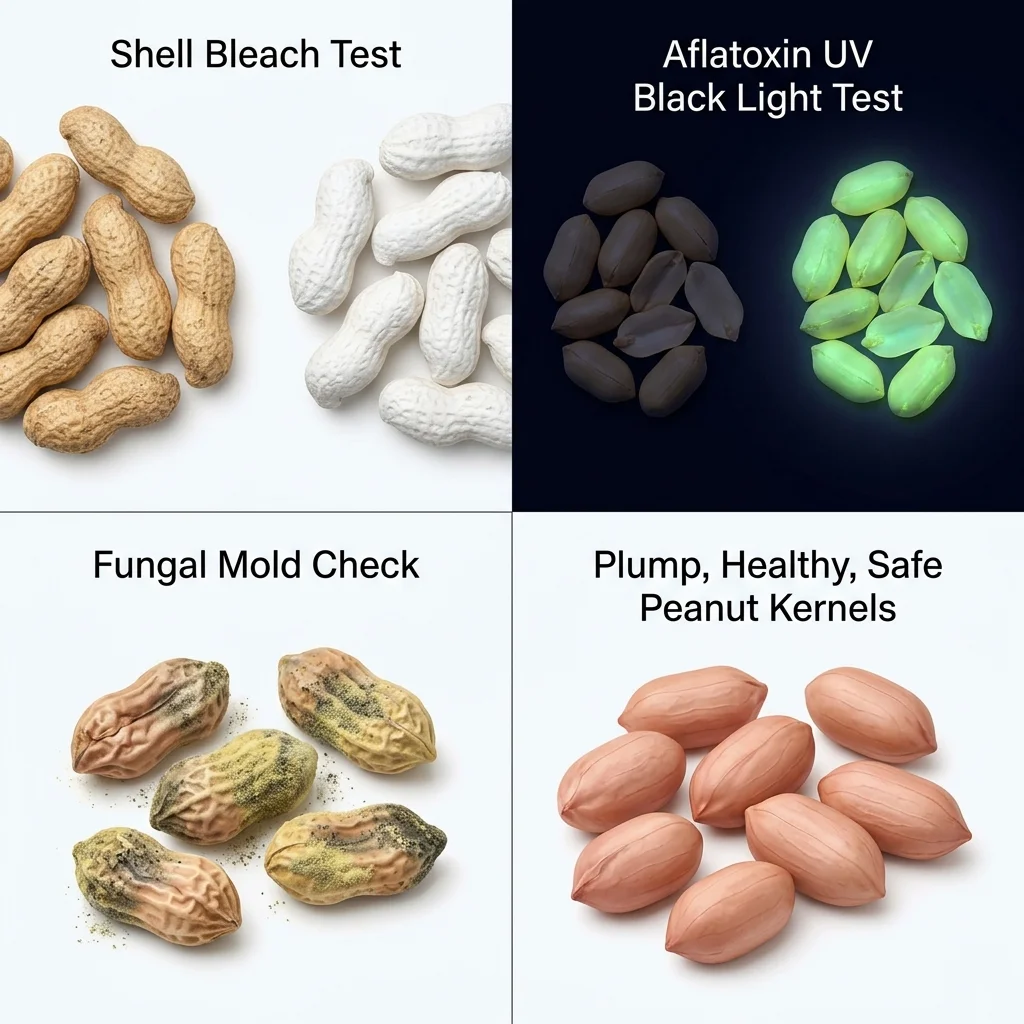
Em um quarto escuro, aponte uma lanterna UV de 365 nm diretamente nos grãos descascados. Grãos contaminados com aflatoxinas brilham com fluorescência verde-amarelada vívida. Descarte qualquer grão fluorescente.
2. Auditoria de casca branqueada com cloro:
Cascas naturais têm tom bege rústico com veios escuros de terra. Cascas totalmente brancas como giz ou com cheiro de cloro de piscina foram lavadas quimicamente com alvejantes que penetram no grão.
3. Grãos enrugados e mofo na fenda:
Abra a casca. Bons amendoins são graúdos e lisos. Rejeite grãos murchos, enrugados ou que soltem um pó cinza-esverdeado ao serem separados.
4. Auditoria de sabor amargo ou ensaboado:
Prove um único grão. Se sentir gosto amargo, azedo ou ensaboado, cuspa imediatamente e lave a boca com água. O amargor é sinal direto de aflatoxinas ou gordura rançosa.
Click to enlarge
Auditoria de frescor e alérgenos de amendoim
O consumo de gorduras oxidadas aceleram o envelhecimento celular.
1. Teste de crocância:
Amendoim recém-torrado quebra estalando com facilidade. Grãos velhos absorvem umidade do ar, tornando-se borrachudos e murchos.
2. Odor de papelão e tinta:
Cheire os grãos. O amendoim fresco exala aroma tostado agradável. O amendoim rançoso cheira a papelão velho ou tinta a óleo.
3. Aviso de alérgenos:
O amendoim é um alérgeno potente. Mantenha potes identificados para evitar contaminação cruzada.
Quick Safety Tips
- CRÍTICO: Nunca engula amendoim com gosto amargo ou ensaboado; cuspa e enxágue a boca
- Evite comprar amendoins com casca excessivamente branca (indício de cloração)
- Torrar ou cozinhar NÃO destrói as aflatoxinas; elimine sempre grãos manchados
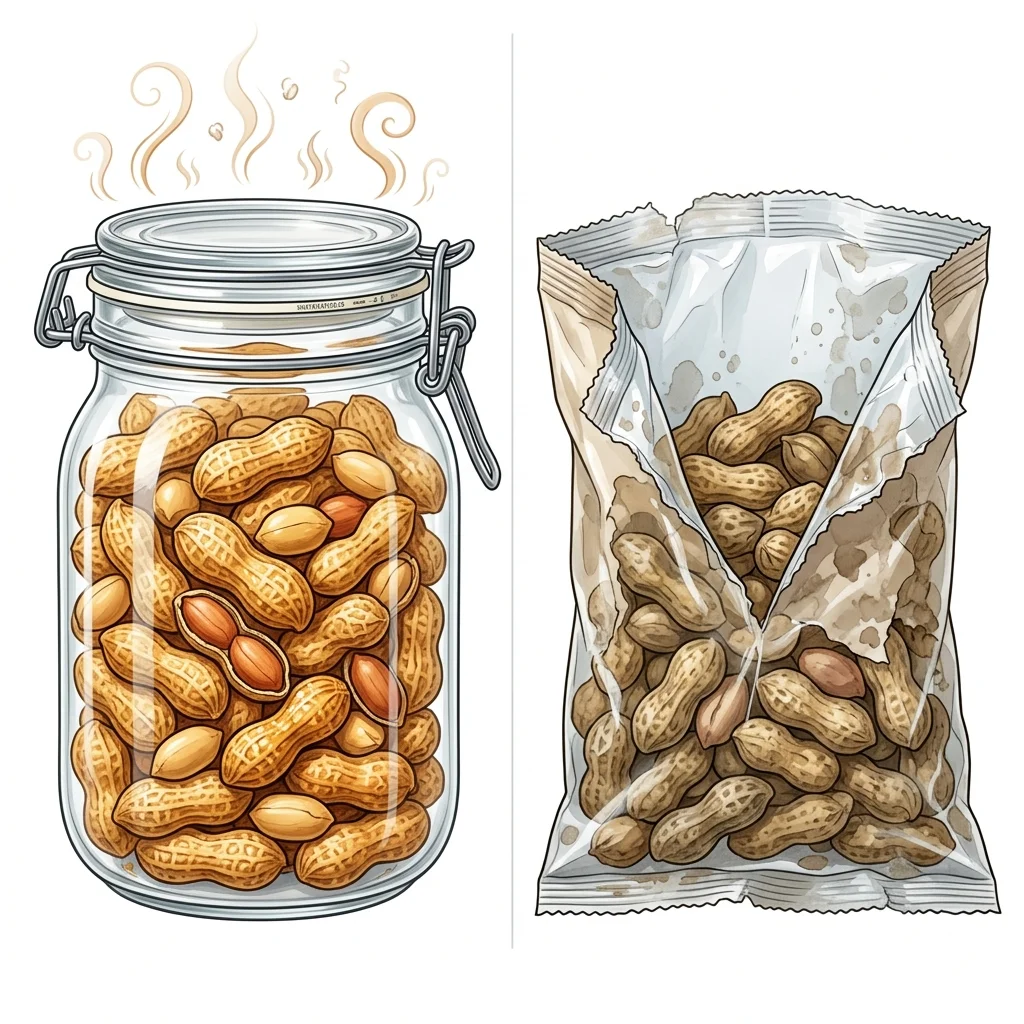
- Guarde o amendoim em potes de vidro herméticos em locais secos e arejados
Primary Chemical Concerns
Health Risks & Impacts
Multilingual Local Names
Regulatory Corner: ANVISA (Agência Nacional de Vigilância Sanitária) / MAPA / Codex Stan 193-1995
Regulation: RDC nº 729/2022 da ANVISA (Limites máximos tolerados de contaminantes em alimentos)
Legal Limit:Aflatoxina B1: Máx 10.0 ppb; Aflatoxinas totais (B1+B2+G1+G2): Máx 20.0 ppb; Umidade: Máx 7.0%; Corantes artificiais: Proibição total (0.0%)
Report Adulteration to ANVISA (Agência Nacional de Vigilância Sanitária) / MAPA / Codex Stan 193-1995