How to Test Turnip for Adulteration (Rhodamine B, Bleaching Agents, Pesticide)
⚡ Quick 60-Second Turnip (Shalgam) Purity & Wax Verdict
Synthetic Purple Dye (Rhodamine B / Carmoisine) & Paraffin Wax: Stale turnips have their purple shoulders painted with synthetic dyes and their roots coated in paraffin wax to fake fresh harvest moisture.
Rub the purple shoulder of the turnip with a cotton ball soaked in rubbing alcohol. Natural anthocyanin does not transfer through intact plant cells. A magenta or purple stain on the cotton indicates artificial dye.
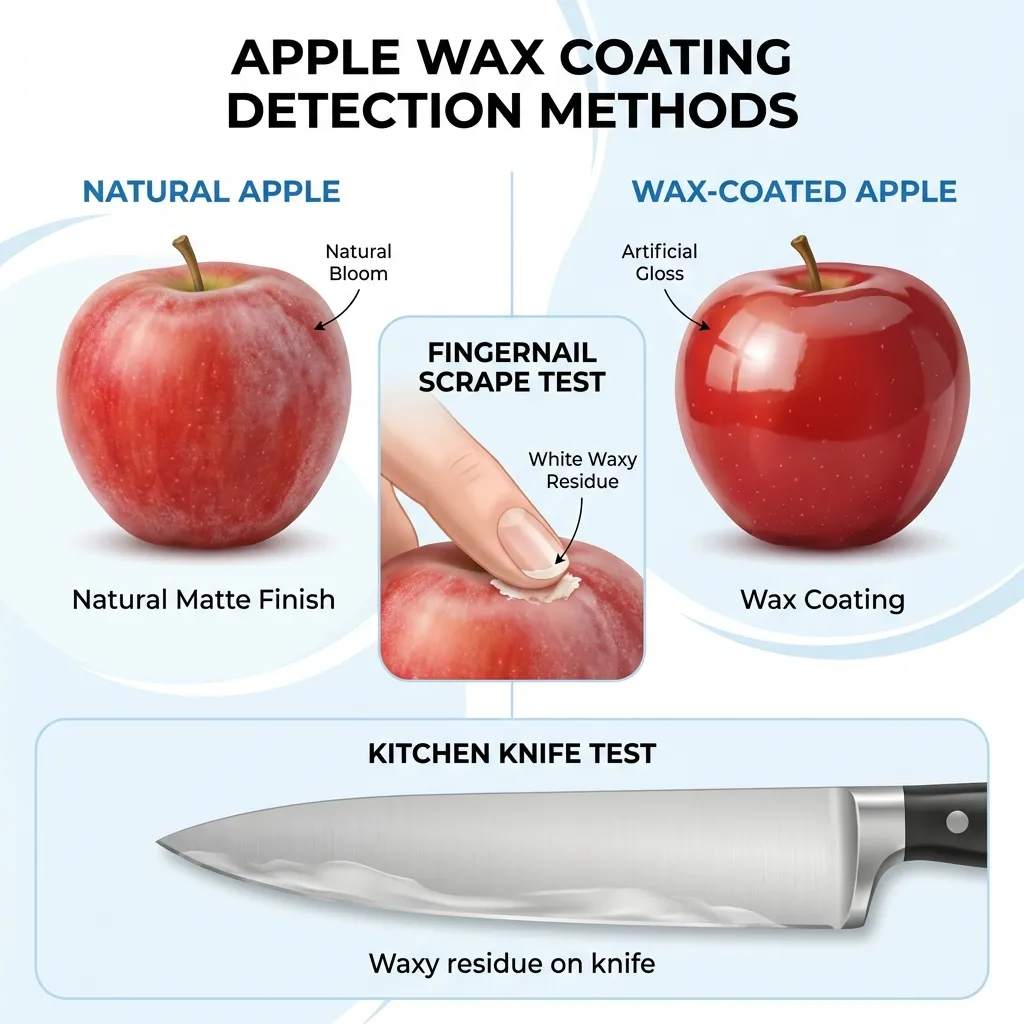
Scrape the lower white bulb with a fingernail or butter knife. If a thick, cloudy white layer of wax peels off onto the blade, the root has been coated with non-food grade industrial paraffin wax.
Hold the turnip in hand. A fresh root feels solid, dense, and heavy for its size. Lightweight turnips with spongy, yielding texture are dehydrated, pithy, and lignified inside.
To learn more about food safety tests and home adulteration detection, read our guides on Drumstick (Moringa Pod) and Brussel Sprouts.
Drop Turnip (Shalgam) photo here to test purity
or click to browse • Supports JPG, PNG, WEBP • Paste with Ctrl+V
Inspection Guide
Click to enlarge
Turnip (Shalgam) Purity & Dye Audit
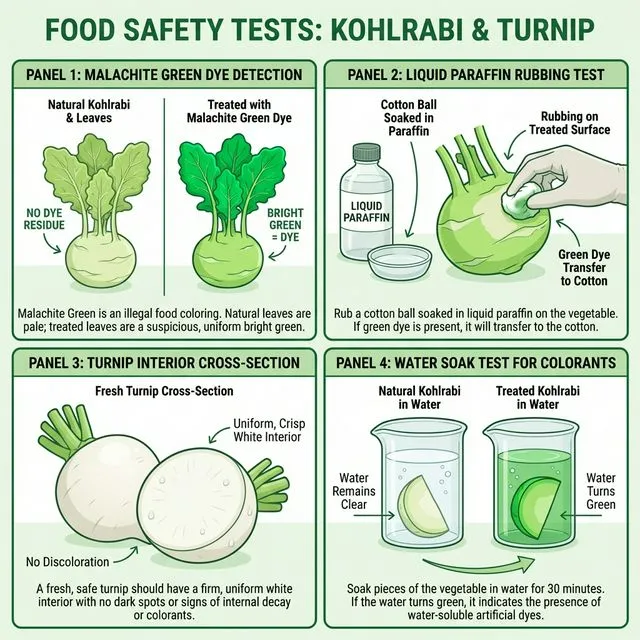
Turnips, especially those with purple tops, are sometimes treated with Rhodamine B dye to look more vibrant, while the white bottoms may be bleached for a clean look.
1. The Cotton Rub Test (Purple Top):
Take a cotton ball soaked in water or liquid paraffin and rub the purple/pink skin at the top of the turnip. If the cotton turns pink or magenta, artificial dye like Rhodamine B has been applied.
2. The Snap and internal Check:
Snap the turnip in half. The interior should be crisp and a uniform creamy white. If the core looks translucent, "woody," or has a chemical smell despite a bright exterior, suspect chemical refreshing.
3. The Surface Texture:
Examine the turnip for an unnaturally "waxed" or "polished" look. Natural turnips have a slightly matte texture and some soil residue. Perfectly clean and vibrant roots are often chemically washed or dyed.
4. The Water Soak:
Soak sliced turnips in a glass of cold water for 15 minutes. If the water turns pink or purple immediately, artificial dyes have been used. Natural pigments leach very slowly.
Quick Safety Tips
- Perform the cotton rub test on purple tops for Rhodamine B
- Avoid turnips with an unnaturally "bleached" white bottom
- Select medium-sized turnips - large ones are often woody and have high nitrates
- Always peel the skin deeply to remove surface chemical residues
Primary Chemical Concerns
Health Risks & Impacts
Multilingual Local Names
Common Storage Pests
Cabbage Maggot
low riskLarvae that tunnel into the root, causing dark, winding tracks.
Detection
- Small entry holes and brown tracks on the surface
Prevention
- Store in a cool, ventilated place
- Wash and scrub before storage
Corrective Action: What to do?
Cut away affected parts; discard if the damage is deep.
Regulatory Corner: FSSAI (Food Safety and Standards Authority of India) / Codex Alimentarius (Codex Stan 193-1995)
Regulation: Food Safety and Standards (Food Products Standards and Food Additives) Regulations 2011, Clause 2.3.1
Legal Limit:Synthetic dyes on fresh root vegetables: Prohibited (0.0 ppm); Paraffin wax / mineral hydrocarbon oils: Prohibited (0.0%); Lead MRL: Max 0.1 ppm; Cadmium: Max 0.1 ppm; Nitrates: Max 1500 ppm
Report Adulteration to FSSAI (Food Safety and Standards Authority of India) / Codex Alimentarius (Codex Stan 193-1995)