Cómo Saber si los Cacahuates Están Malos: Detectar Aflatoxinas y Blanqueamiento Químico
⚡ Veredicto Rápido de 60 Segundos: Pureza del Maní y Aflatoxinas
Moho de Aflatoxina B1 Cancerígena y Blanqueo de Cáscara: Los cacahuates almacenados en humedad desarrollan el hongo Aspergillus flavus que genera aflatoxinas altamente tóxicas para el hígado. Además, las cáscaras a menudo se tratan con cloro o sulfitos para simular frescura.
Frote cacahuates sobre una toalla de papel blanco húmeda por 20 segundos. La tierra natural deja un rastro grisáceo; manchas rojas o anaranjadas intensas indican tintes químicos añadidos.
Coloque 20 granos en un vaso de agua. Los granos densos y saludables se hunden de inmediato. Granos marchitos, huecos o mohosos flotan en la superficie (deséchelos de inmediato).
Abra el grano en dos mitades. El interior puro es blanco o crema. Polvillo negro, gris verdoso o telarañas en la cavidad del embrión revelan contaminación por aflatoxinas.
Para obtener más información sobre la seguridad de los frutos secos, lea nuestras guías sobre Mantequilla de maní, Almendras y Aceite de oliva.
Drop Cacahuates (Maní) photo here to test purity
or click to browse • Supports JPG, PNG, WEBP • Paste with Ctrl+V
Inspection Guide
Click to enlarge
Auditoría de pureza y toxinas del maní
Los maníes (cacahuates) crecen bajo tierra y son propensos a infecciones por moho durante cosechas húmedas. Pruebas prácticas para el hogar:
1. Control con luz negra UV (365nm):
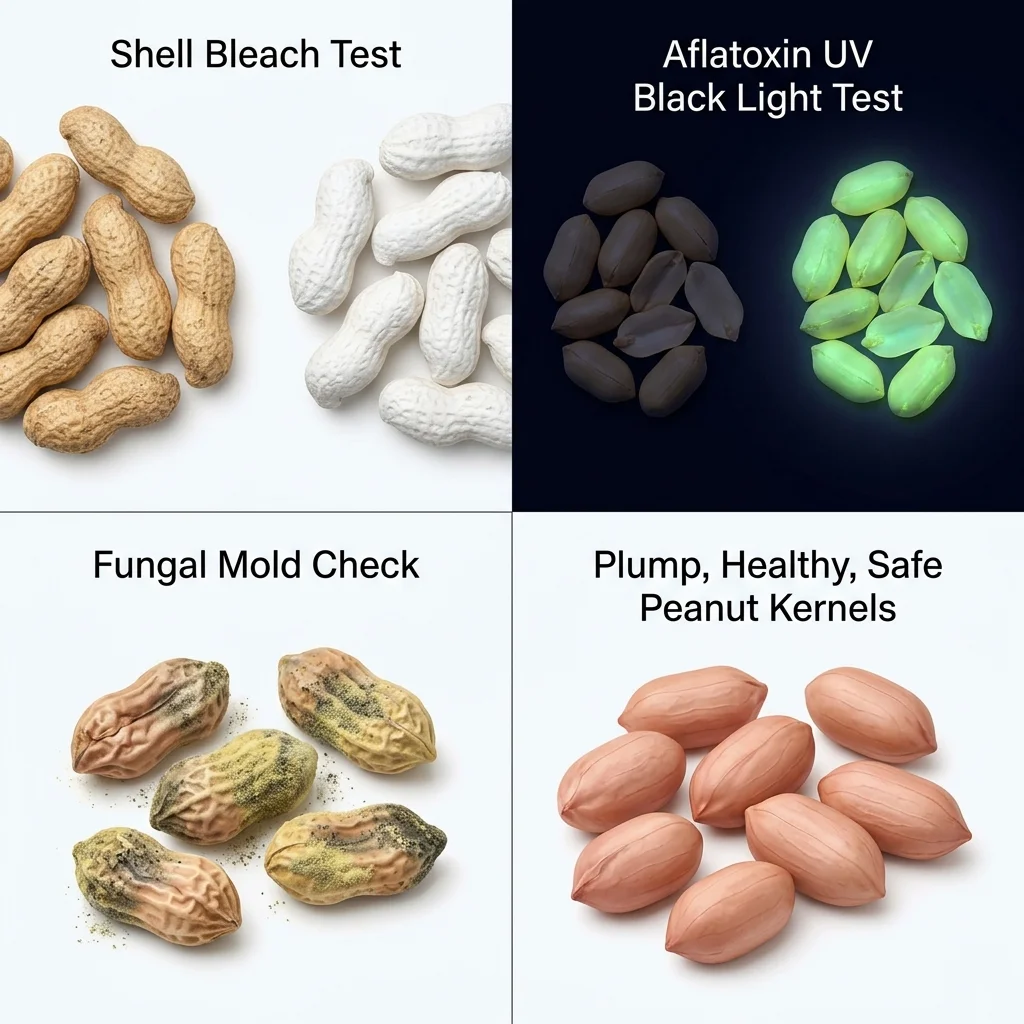
En una habitación oscura, dirija una luz ultravioleta de 365 nm sobre los granos pelados. Los granos contaminados con aflatoxinas brillarán con una fluorescencia verde amarillenta intensa. Deseche cualquier grano que emita fluorescencia.
2. Detección de cáscara blanqueada con cloro:
Las cáscaras de cacahuate naturales son de color beige rústico con vetas oscuras de tierra. Si son completamente blancas como el yeso y huelen ligeramente a cloro de piscina, han sido blanqueadas químicamente.
3. Granos arrugados y moho interno:
Abra la cáscara y examine el grano. Rechace cacahuates marchitos, arrugados o que muestren polvo verdoso en las grietas entre las dos mitades.
4. El sabor amargo o jabonoso:
Pruebe un solo grano. Si percibe un sabor amargo, agrio o jabonoso, escúpalo de inmediato y enjuáguese la boca con agua. El amargor es señal inequívoca de aflatoxinas y grasas rancias.
Click to enlarge
Auditoría de frescura y alérgenos del maní
La frescura evita el consumo de grasas oxidadas dañinas para las células.
1. Textura crujiente:
Los cacahuates recién tostados crujen con facilidad al masticar. Los viejos absorben humedad y se vuelven correosos y blandos.
2. Olor a cartón viejo o pintura:
El maní fresco tiene un aroma cálido y tostado. El maní oxidado huele a cartón húmedo o pintura al óleo.
3. Alerta de alérgenos:
El cacahuate es un alérgeno mayor. Mantenga almacenamiento separado si convive con personas alérgicas.
Quick Safety Tips
- CRÍTICO: Escupa y deseche de inmediato cualquier cacahuate con sabor amargo o jabonoso
- Evite comprar cacahuates con cáscaras anormalmente blancas que indiquen blanqueo con cloro
- El tostado o hervido NO destruye las aflatoxinas; descarte siempre los granos oscuros o mohosos
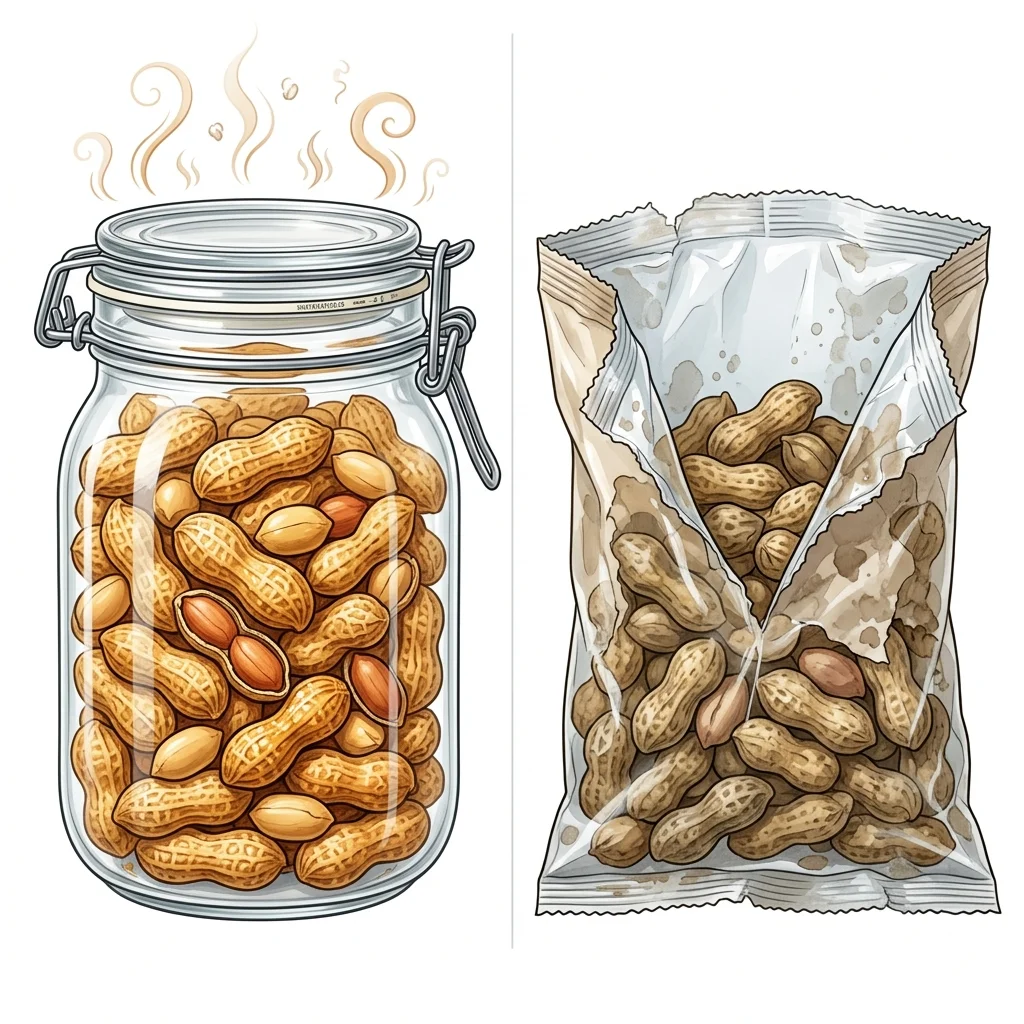
- Guarde los cacahuates en recipientes herméticos de vidrio en lugares frescos y secos
Primary Chemical Concerns
Health Risks & Impacts
Multilingual Local Names
Regulatory Corner: COFEPRIS (México) / US FDA / Codex Alimentarius (CXS 193-1995)
Regulation: Norma Oficial Mexicana NOM-187-SSA1 y regulación FDA CPG Sec. 570.250
Legal Limit:Aflatoxina B1: Máx 15.0 ppb; Aflatoxinas totales: Máx 20.0 ppb; Humedad: Máx 7.0%; Colorantes artificiales: Cero absoluto (0.0%)
Report Adulteration to COFEPRIS (México) / US FDA / Codex Alimentarius (CXS 193-1995)