How to Test Sweet Potato for Adulteration (Rhodamine B, Pesticide, Heavy Metals)
⚡ Quick 60-Second Sweet Potato Purity & Dye Verdict
Rhodamine B / Red Earth (Geru) Skin Dyeing: White-fleshed or pale sweet potatoes are coated with carcinogenic Rhodamine B or lead-laced red earth to imitate premium red/purple sweet potato varieties.
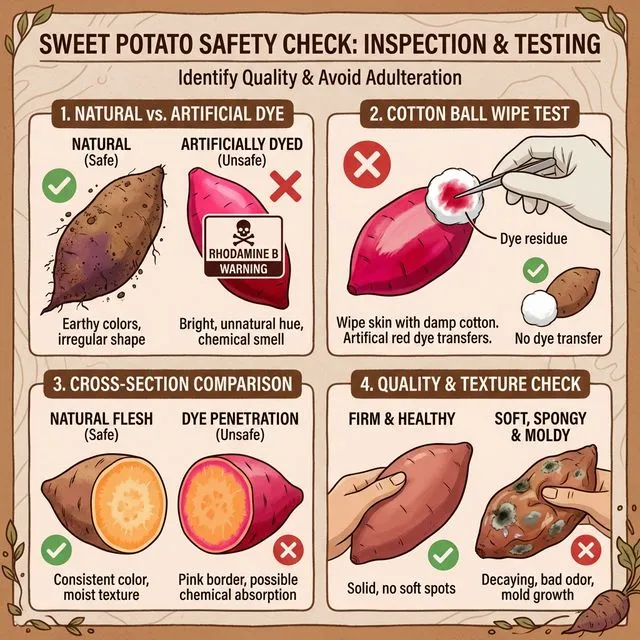
Rub the outer red/purple peel with a white cotton ball moistened with rubbing alcohol or water. Natural anthocyanin peel pigment does not transfer to the swab; a bright pink or red stain confirms chemical dye.
Lightly scratch off the outer epidermal layer with a butter knife. Genuine red sweet potato has a delicate reddish skin over a clean ivory-cream or orange subsurface. Dyed tubers show pink streaks penetrating into the white tuber meat.
Place the unpeeled sweet potato in a clear bowl of cold water for 10 minutes. If the water turns pinkish or cloudy red, synthetic colorants or industrial red ochre have been used.
To learn more about food safety tests and home adulteration detection, read our guides on Broccoli and Ridge Gourd (Turai).
Drop Sweet Potato (Shakarkand) photo here to test purity
or click to browse • Supports JPG, PNG, WEBP • Paste with Ctrl+V
Inspection Guide
Click to enlarge
Sweet Potato Purity & Dye Audit
Sweet potatoes, particularly the purple and red-skinned varieties, are often treated with Rhodamine B dye to enhance their color and mask signs of aging or poor soil quality.
1. The Cotton Rub Test:
Take a cotton ball soaked in water or liquid paraffin and rub the outer skin of the sweet potato. If the cotton turns bright pink or red, it is an artificial dye. Natural skin color does not transfer to cotton easily.
2. The Internal Uniformity Check:
Cut the sweet potato in half. A natural sweet potato has a uniform color (white, orange, or purple) throughout the flesh. If you see concentrated "streaks" of deep color radiating from the skin towards the center, it indicates dye penetration.
3. The Water Soak:
Soak a few slices of sweet potato in cold water for 15 minutes. If the water turns pink or purple immediately, suspect artificial coloring. Natural pigments (Anthocyanins) leach very slowly and only in warm/hot water.
4. The Skin Integrity:
Examine the skin for unnaturally smooth or "polished" areas. Natural sweet potatoes have some soil residue and minor imperfections. Perfectly "clean" and vibrant roots are often chemically washed or dyed.
5. Tuber Safety Comparison:
Root tubers differ significantly in their natural toxins and industrial dye risks. Compare Sweet Potato against other common root tubers below:
| Tuber Comparison | Sweet Potato (Ipomoea batatas) | White Potato (Solanum tuberosum) | Colocasia / Yam (Arum) |
|---|---|---|---|
| Botanical Family | Morning Glory family (Convolvulaceae) | Nightshade family (Solanaceae) | Arum family (Araceae) |
| Primary Adulteration Concern | Industrial Rhodamine B pink/red chemical dye wash | Solanine alkaloid toxin from light exposure & greening | Malachite Green dye and calcium oxalate itchiness |
| Clean 15 / EWG Rank | Clean 15 (#10 in US markets) | Moderate (higher pesticide retention on thin skin) | Unrated (requires deep peeling & boiling) |
| Key Home Test | Cotton rub test with liquid paraffin or alcohol | Visual green skin check & sprout eye inspection | Water leaching test for green dye runoff |
Quick Safety Tips
- Perform the cotton rub test for Rhodamine B detection
- Avoid roots with an unnaturally vibrant, neon-purple skin
- Check for internal color streaks radiating from the surface
- Always peel the skin deeply to reduce intake of surface dyes and pesticides
Primary Chemical Concerns
Health Risks & Impacts
Multilingual Local Names
Common Storage Pests
Sweet Potato Weevil (Cylas formicarius)
high riskThe most serious pest of sweet potatoes, attacking both the plant and stored roots.
Detection
- Small entry holes in the root
- Bitter taste and bad odor in affected parts
Prevention
- Store in a cool, dry, dark place
- Inspect for holes before storing
Corrective Action: What to do?
Discard infested roots as they develop a very bitter, unpalatable toxin.
Regulatory Corner: FSSAI (Food Safety and Standards Authority of India) / US FDA Compliance Guidelines / Codex Stan 193-1995
Regulation: Food Safety and Standards (Contaminants, Toxins and Residues) Regulations 2011 & FSS (Prohibition of Sales) Reg 2.1
Legal Limit:Rhodamine B & synthetic colorants: Completely banned (0.0 ppm - Zero tolerance); Lead MRL: Max 0.1 ppm; Cadmium MRL: Max 0.1 ppm; Chlorpyrifos insecticide MRL: Max 0.05 ppm
Report Adulteration to FSSAI (Food Safety and Standards Authority of India) / US FDA Compliance Guidelines / Codex Stan 193-1995