How to Test Peanut Butter for Purity: Detect Aflatoxin & Hydrogenated Oils
⚡ Quick 60-Second Peanut Butter Purity & Aflatoxin Verdict
Hydrogenated Oil Substitution & Aflatoxin Mycotoxins: Commercial peanut butters are bulked with trans-fat hydrogenated palm oils to prevent oil separation, alongside risk of toxic Aflatoxin B1 from low-grade nuts.
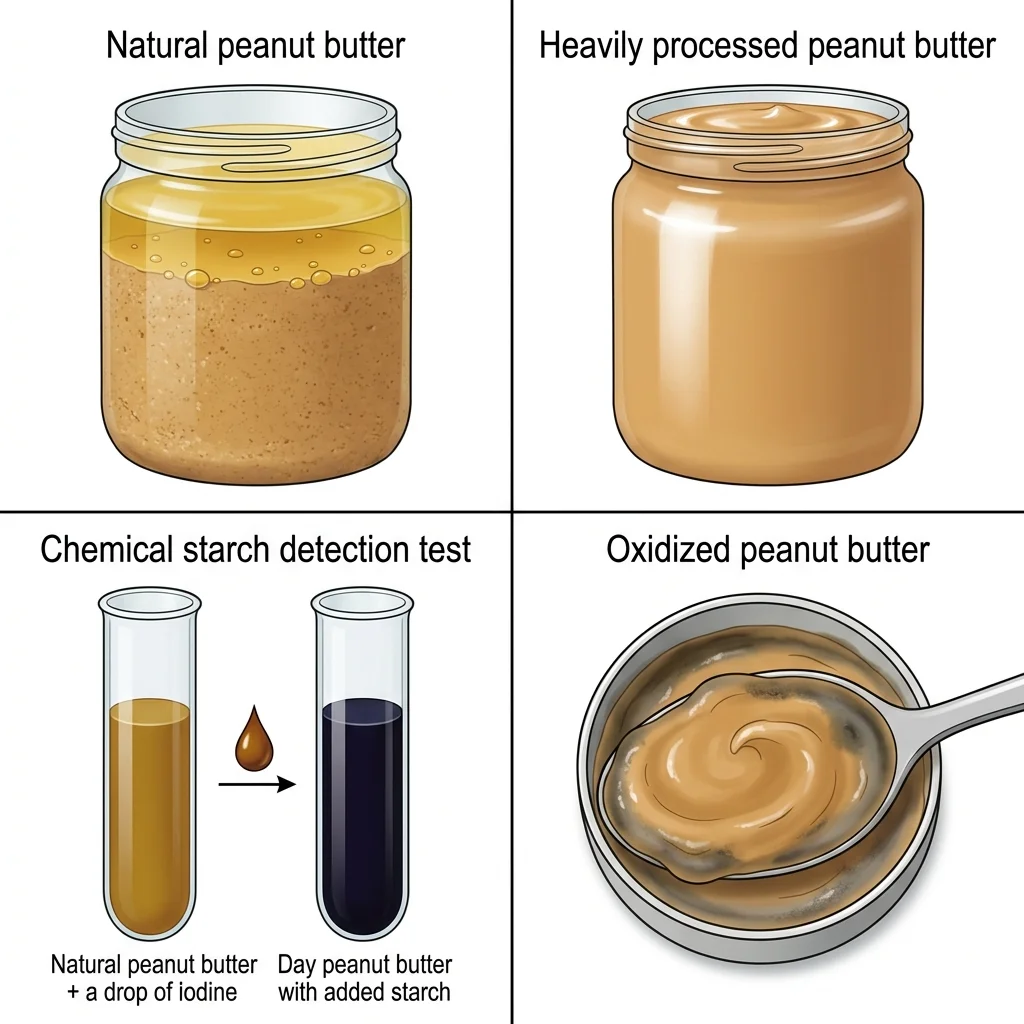
Inspect the newly opened jar. Pure 100% natural peanut butter naturally separates, forming a layer of clear golden peanut oil on top. If the butter remains rigidly homogenized and solid at room temp, hydrogenated fats were added.
Mix 1 teaspoon of peanut butter in 2 tablespoons of warm water, then add 2 drops of iodine tincture. If the mixture turns blue-black, cheap cornstarch or potato starch has been added as an illegal filler.
Smell and taste a small dab. Fresh peanut butter has a rich, sweet, freshly roasted aroma. A bitter, paint-like, or oxidized flavor indicates rancid degraded fats or aflatoxin-contaminated peanut stock.
To learn more about nut safety, read our guides on Peanuts and Almonds.
Drop Peanut Butter photo here to test purity
or click to browse • Supports JPG, PNG, WEBP • Paste with Ctrl+V
Inspection Guide
Click to enlarge
Peanut Butter Purity & Viscosity Audit
Peanut butter is a highly popular, protein-rich staple, but it is also susceptible to aflatoxin—a toxic compound produced by Aspergillus mold on raw peanuts. Furthermore, commercial brands frequently replace high-value peanut oils with cheap hydrogenated vegetable oils (trans fats) or palm oil to prevent separation, converting a healthy food into a cardiovascular hazard. Many budget brands also use starch or flour as thickeners to bulk up the product.
1. Oil Separation vs. Homogenization (Purity Check):
Pure, organic natural peanut butter contains only peanuts and a touch of salt. At room temperature, it will naturally undergo synaeresis (oil separation), where a layer of liquid, golden peanut oil rises to the top, leaving a dense, dry nut paste underneath. If your peanut butter remains perfectly smooth, creamy, and completely homogenized at room temperature without any oil separation, it is adulterated with hydrogenated oils, palm oil, or chemical emulsifiers.
2. The Heat Liquefaction Test:
Place a tablespoon of peanut butter in a small pan over low heat. Pure natural peanut butter melts smoothly, liquefying into a runny, glossy syrup within 1-2 minutes. Processed or adulterated peanut butter containing hydrogenated oils, palm oil, or starches will thicken, clump, turn rubbery, or release a heavy, sweet chemical odor instead of melting cleanly.
3. Starch and Flour Adulteration (Iodine Test):
Dissolve a teaspoon of peanut butter in a tablespoon of warm water, mix thoroughly, and add 1-2 drops of tincture of iodine. Pure peanut butter contains minimal free starch and will remain brown or tan. If the mixture turns a dark blue, blue-black, or deep purple, the peanut butter has been adulterated with added starch, flour, or maltodextrin fillers to increase its weight.
4. The Rancidity Smell and Taste Audit:
Pure, high-quality peanut butter has a rich, deeply roasted, nutty aroma and a clean, slightly sweet, savory taste. Because peanuts contain high levels of unsaturated fats, they oxidize quickly when exposed to light, heat, or oxygen. Rancid peanut butter smells strongly of cardboard, paint, or crayons, and leaves a bitter, soapy, or metallic taste in the mouth. Discard immediately to avoid consuming toxic lipid peroxides.
Click to enlarge
Peanut Butter Freshness & Oxidation Audit
Ensuring the freshness of peanut butter is vital to avoid eating rancid fats and toxic mold residues.
1. Darkened Edge Discoloration:
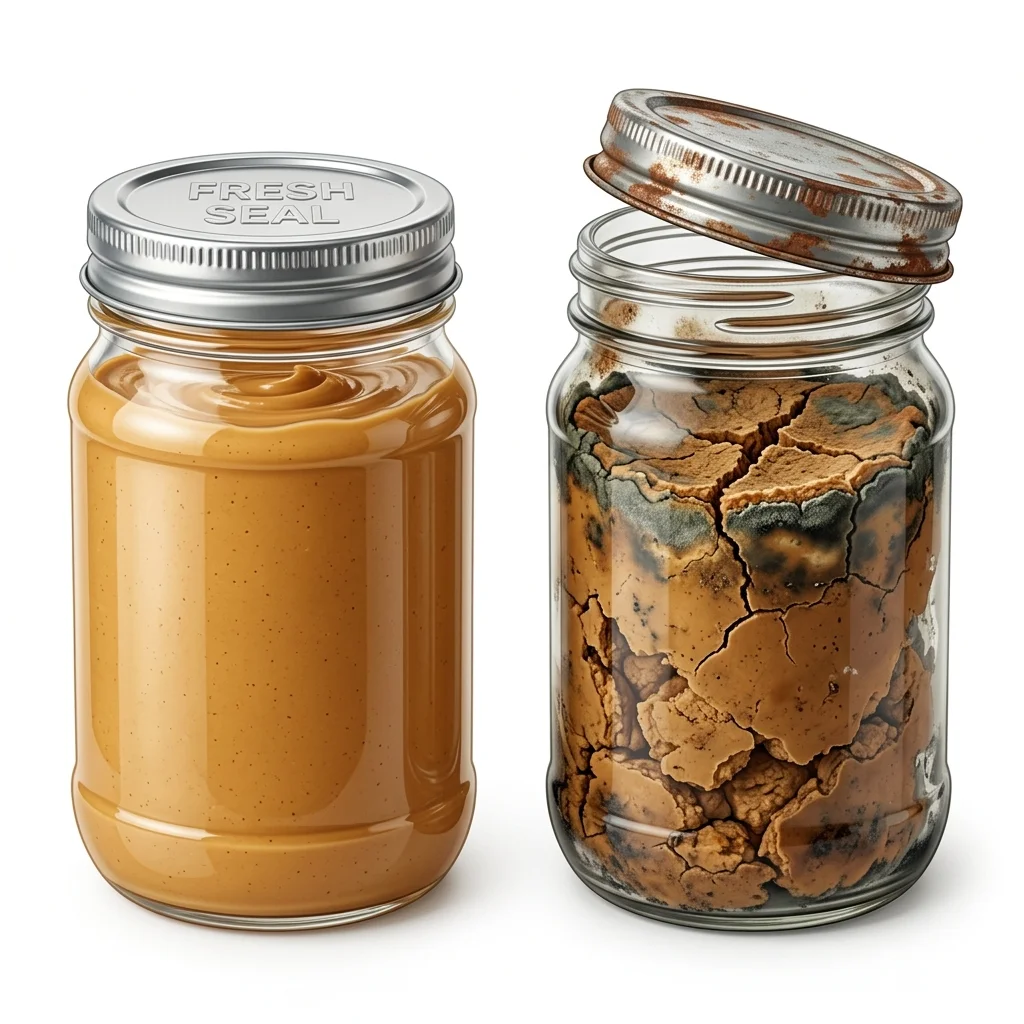
Inspect the edges of the jar and the surface layer. A dark brown or gray discoloration indicates advanced lipid oxidation and exposure to air.
2. Jar Seal Integrity:
Verify that the vacuum seal under the cap is tight and depressed. A loose or punctured seal allows moisture inside, which triggers the growth of invisible Aspergillus mold and the production of heat-stable aflatoxins.
3. Stale Texture Pliability:
Fresh natural peanut butter is highly spreadable. Stale or highly oxidized peanut butter becomes dry, stiff, chalky, and loses its rich roasted nut aroma.
Quick Safety Tips
- Look for natural oil separation at the top - it is the best indicator of a pure, emulsifier-free peanut butter
- Perform the iodine test - a blue-black color change reveals hidden starch or flour fillers
- Heat a sample: pure peanut butter should melt into a smooth liquid rather than clumping or turning rubbery
- Reject any peanut butter that smells like crayons or paint, indicating harmful rancid oil oxidation
Primary Chemical Concerns
Health Risks & Impacts
Multilingual Local Names
Regulatory Corner: US FDA (21 CFR 164.150 - Standards of Identity for Peanut Butter) / FSSAI (Food Products Standards) Reg. 2.2.16
Regulation: FDA 21 CFR 164.150 & Food Safety and Standards (Food Products Standards) Regulations 2011, Clause 2.2.16
Legal Limit:Peanut ingredients: Min 90.0%; Total fat: Max 55.0%; Hydrogenated vegetable fat / trans fat: Max 2.0% (Zero industrial trans fats); Total Aflatoxin: Max 15.0 ppb (FSSAI) / 20.0 ppb (FDA); Salmonella: Zero in 25g
Report Adulteration to US FDA (21 CFR 164.150 - Standards of Identity for Peanut Butter) / FSSAI (Food Products Standards) Reg. 2.2.16