Understanding Food Adulteration: A Modern Crisis
In today's complex agricultural supply chain, food adulteration is no longer just about adding water to milk or stones to grains. Modern adulteration involves a sophisticated range of chemical interventions designed to extend shelf life, accelerate ripening, and artificially enhance visual appeal. Sellers routinely use industrial-grade chemicals, veterinary dyes, and carcinogenic compounds to make stale, low-quality produce look premium and freshly harvested.
For the average consumer, these practices pose significant health risks, ranging from chronic digestive disorders and neurotoxicity to long-term mutagenic and carcinogenic effects. Understanding how these chemical adulterants are categorized, how they behave, and how to detect them using simple home-based protocols is your first and most critical line of defense.
Below, we break down the four primary categories of food adulteration, outline specific chemical concerns, detail step-by-step home testing methods, and provide clear safety verdicts on which items can be saved and which must be discarded.
1. Surface Coating Adulterants (Waxes & Mineral Oils)
Surface coatings are hydrophobic substances applied to the exterior of fruits and vegetables after harvest. Their primary purpose is to seal the pores of the plant skin, which dramatically slows down respiration, locks in moisture to prevent weight loss, and provides a glossy, mirror-like shine that appeals to shoppers.
Common Foods Affected
- Apples, Pears, and Plums: Frequently coated with heavy paraffin wax or shellac.
- Citrus Fruits (Oranges, Lemons, Sweet Limes): Waxed to prevent mold and dehydration during long-term cold storage.
- Cucumbers and Eggplants: Coated with mineral oils to maintain a firm texture and high-gloss appearance.
Chemical & Toxicological Concerns
While food-grade waxes (like carnauba or beeswax) are legally permitted in trace amounts under strict regulations, commercial distributors often resort to cheap, industrial-grade paraffin wax or petroleum-derived mineral oils. Chronic ingestion of these non-food-grade petroleum products can lead to:- Severe gastrointestinal tract irritation, abdominal cramps, and diarrhea.
- Accumulation of mineral hydrocarbons in the liver, spleen, and lymph nodes.
- Malabsorption of essential fat-soluble vitamins (Vitamins A, D, E, and K) in the intestinal tract.
Step-by-Step Home-Testing Protocols
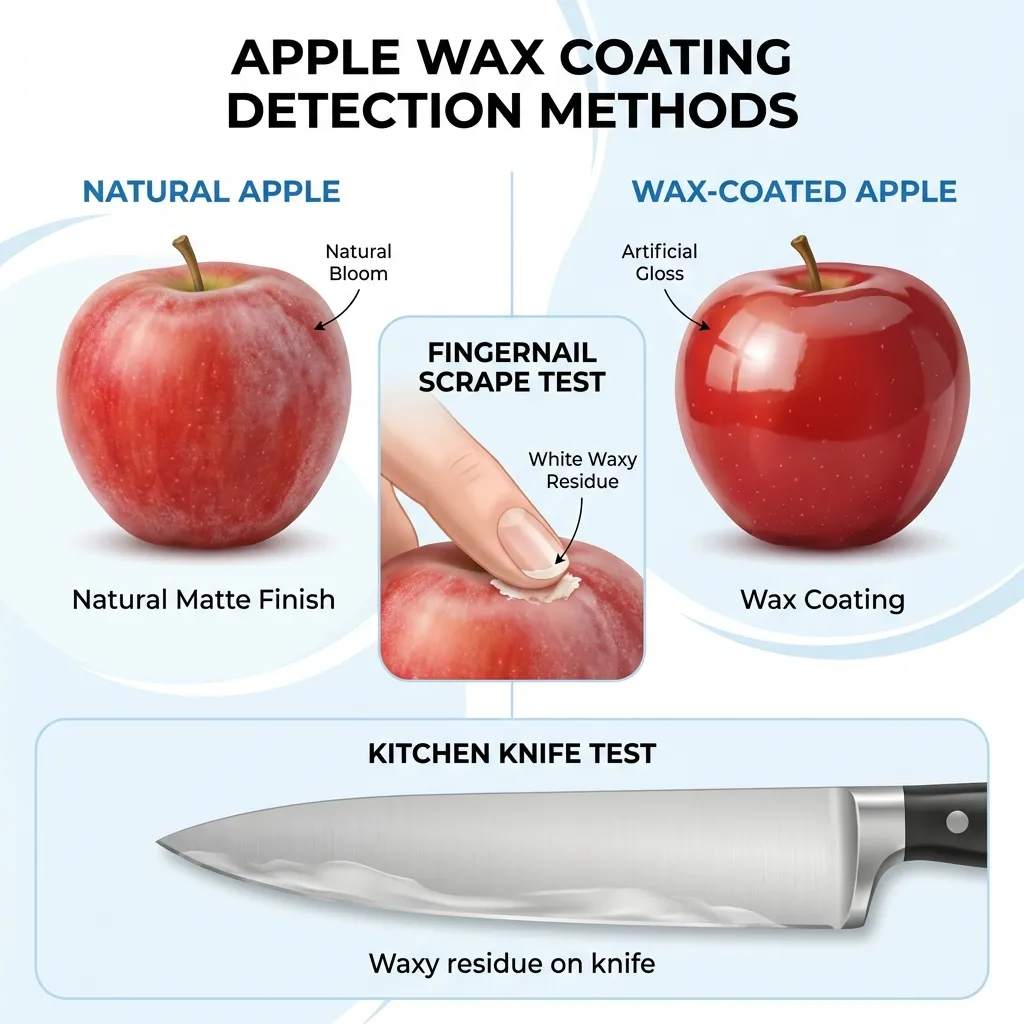
# A. The Angle Scratch Test
- Take a clean, dry fruit (like an apple) at room temperature.
- Hold a sharp blade or kitchen knife at a 45-degree angle against the skin.
- Gently scrape the surface in a single direction.
- Interpretation: If a fine, white, flaky powder accumulates on the blade, the fruit has been coated with a heavy layer of synthetic wax.
# B. The Hot Water Melting Test
- Place the suspected fruit in a heat-resistant glass bowl.
- Pour hot water (approximately 60°C to 70°C, not boiling) directly over the fruit until it is fully submerged.
- Let it sit undisturbed for 60 seconds.
- Interpretation: If a synthetic wax coating is present, the heat will cause the wax to melt, turning into an opaque, cloudy, or semi-solid white film on the skin of the fruit and floating as small oil droplets on the water surface.
# C. The Friction Paper Rub Test
- Take a dry, dark-colored paper towel or a clean black cotton cloth.
- Rub the surface of the fruit (particularly cucumbers or eggplants) vigorously for 15–20 seconds.
- Interpretation: If the cloth or paper towel develops a greasy, oily smudge, or if the fruit feels unusually slippery without releasing any natural juice, it has been treated with mineral oil.
Detailed Safety Verdict
- Verdict: SAFE AFTER PEELING OR SCRUBBING.
- Action Required: Standard cold water washing is entirely ineffective against hydrophobic waxes and oils. To consume safely:
- Soak the fruit in warm water mixed with one tablespoon of baking soda (sodium bicarbonate) and a squeeze of fresh lemon juice for 5 minutes.
- Scrub the skin vigorously using a stiff-bristled vegetable brush to strip away the wax.
- If the wax coating remains thick or sticky, peel the skin entirely before eating. While peeling removes some dietary fiber and skin nutrients, it is the only 100% reliable method to avoid ingesting petroleum hydrocarbons. Discard the fruit only if the pulp underneath smells of petroleum or has turned mushy.
2. Artificial Coloring Adulterants (Chemical Dyes)
Artificial coloring is the deliberate addition of synthetic chemical dyes to stale, discolored, or unripe produce. Vendors use these vibrant, highly stable dyes to give vegetables a deceptive appearance of peak freshness and to mimic premium regional varieties.
Common Foods Affected
- Green Peas, Okra (Ladyfinger), Spinach, and Green Chilies: Treated with Malachite Green or Brilliant Green to make yellowed, wilted crops look vibrant and fresh.
- Sweet Potatoes, Carrots, and Red Chili Powder: Dipped in or mixed with Rhodamine B, Sudan Red, or Lead Tetraoxide to give a rich, deep red or violet hue.
- Turmeric Powder, Saffron, and Pulses (Dhal): Adulterated with Metanil Yellow or Lead Chromate to produce an intense, bright golden-yellow color.
Chemical & Toxicological Concerns
Unlike surface waxes, the chemical dyes used in food adulteration are highly toxic, industrial-grade colorants that are strictly banned for food use globally:- Malachite Green: A veterinary drug and industrial dye known to be highly carcinogenic, mutagenic, and teratogenic. It causes severe respiratory toxicity and promotes thyroid tumor growth.
- Rhodamine B: A synthetic dye used in paper printing and leather dyeing. It is a suspected human carcinogen that causes cell mutation, liver damage, and severe gastrointestinal tract erosion.
- Metanil Yellow: An industrial acid dye that is a powerful neurotoxin. Chronic ingestion damages the myelin sheath of nerves, leading to cognitive deficits, brain damage, and reproductive organ toxicity.
Step-by-Step Home-Testing Protocols
# A. The Water Dissolution Test (For Green Peas & Greens)
- Take a handful of green peas or chopped green vegetables.
- Place them in a clear glass of warm water.
- Let them soak for 5 to 10 minutes without stirring.
- Interpretation: Pure, unadulterated vegetables will not color the water. If the water gradually turns a distinct green, yellow, or blue-green color, the vegetable has been treated with artificial water-soluble dyes like Malachite Green.
# B. The Cotton-Oil Rub Test (For Root Vegetables)
- Take a clean cotton ball or swab.
- Saturate the cotton with plain vegetable oil or liquid paraffin.
- Rub the outer skin of the sweet potato, carrot, or chili vigorously for 15–20 seconds.
- Interpretation: Natural plant pigments (like beta-carotene) are highly stable within the cell walls and will not transfer to oil-soaked cotton through rubbing. If the cotton turns pink, red, or violet, it confirms the presence of surface-applied synthetic dyes like Rhodamine B.
# C. The Acid Shift Test (For Turmeric & Pulses)
- Dissolve half a teaspoon of turmeric powder or yellow pulses in a glass of water.
- Add a few drops of concentrated acid (like hydrochloric acid, or strong lemon juice/concentrated white vinegar at home).
- Interpretation: If the solution immediately turns pink or violet, and remains pink even after diluting with more water, it indicates the presence of the neurotoxic dye Metanil Yellow. (Natural turmeric turns red in alkaline solutions like baking soda, but behaves differently under acid).
Detailed Safety Verdict
- Verdict: STRICTLY DISCARD.
- Action Required: Synthetic chemical dyes are highly stable, heat-resistant, and penetrate deep into the cellular structure of the produce (especially porous items like peas, okra, and ground spices). No amount of washing, scrubbing, boiling, or cooking can remove or neutralize these carcinogenic compounds. If any food item fails an artificial dye test, it is highly toxic and must be discarded immediately. Do not attempt to salvage it by peeling.
3. Artificial Ripening Agents (Calcium Carbide & Ethephon)
Artificial ripening is the practice of harvesting fruits when they are completely immature and green, transporting them easily without bruising, and then forcing them to ripen overnight using chemical gassing.
Common Foods Affected
- Mangoes and Bananas: The most frequent victims of chemical ripening during their peak seasons.
- Papayas and Sapodillas (Chiku): Harvested hard and green, then chemically gassed to soften the skin rapidly.
Chemical & Toxicological Concerns
The primary chemical used for quick ripening is Calcium Carbide (CaC2), commonly known as "masala" in regional markets.- Arsenic & Lead Contamination: Industrial-grade calcium carbide contains highly toxic impurities, including arsenic trioxide and lead. When carbide reacts with moisture, it releases acetylene gas (which mimics the natural ripening hormone ethylene) but leaves behind heavy metal residues on the fruit.
- Health Hazards: Ingestion of carbide-ripened fruits leads to mouth ulcers, severe burning sensations in the throat, gastric inflammation, and vomiting. Long-term exposure to arsenic and lead causes chronic neurotoxicity, memory loss, peripheral neuropathy, and kidney damage.
Step-by-Step Home-Testing Protocols
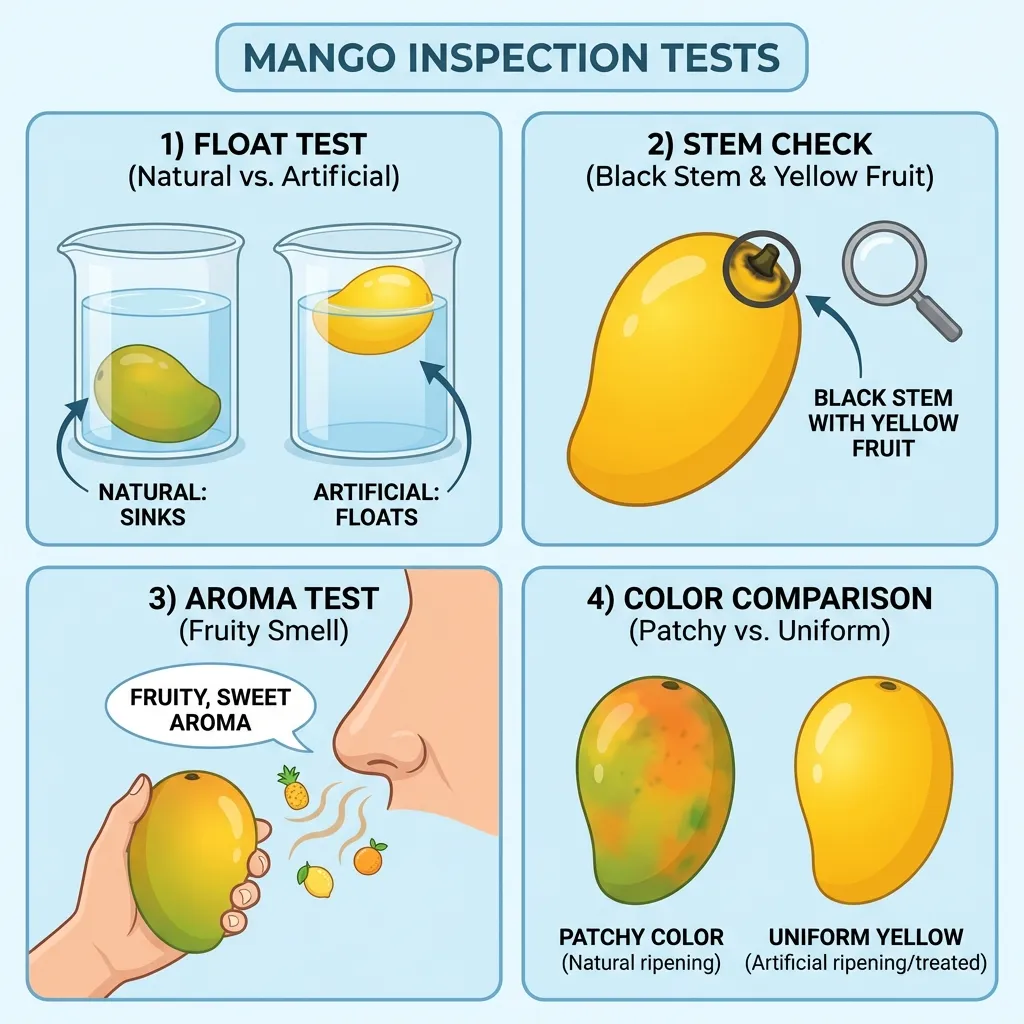
# A. The Water Buoyancy (Sinking) Test (For Mangoes)
- Fill a deep bucket or large bowl with clean tap water.
- Place the suspected mangoes gently into the water.
- Interpretation: Naturally ripened fruits accumulate high concentrations of sugars and starches, increasing their density and causing them to sink immediately to the bottom. Artificially ripened fruits are harvested green when their starch-to-sugar conversion has not occurred, leaving them less dense and containing internal air/gas pockets. If the fruit floats on the surface or suspends in the middle, it is highly likely to be chemically ripened.
# B. The Visual Gradient & Stem Check
- Inspect the color distribution of the fruit.
- Interpretation: Naturally ripened fruits ripen unevenly, showing a beautiful gradient of yellow, red, and green patches, and their stems remain dry and woody. Carbide-treated fruits exhibit a suspiciously uniform, bright lemon-yellow color across the entire skin, but their stems or tips often remain starkly dark green or black due to chemical burn.
# C. The Core Texture & Aroma Test
- Cut the fruit open and examine the pulp.
- Smell the uncut fruit near the stem.
- Interpretation: Naturally ripened mangoes have a powerful, sweet, intoxicating fragrance, and the pulp is uniformly soft, deep orange, and highly juicy. Carbide-ripened fruits have virtually no aroma, and when cut, the pulp near the core is often pale yellow, hard, dry, and fibrous despite the skin looking perfectly ripe.
Detailed Safety Verdict
- Verdict: STRICTLY DISCARD IF CARBIDE SUSPECTED.
- Action Required: If you perform the water test and the fruit floats, or if you experience a distinct tingling, metallic, or burning sensation on your tongue or throat upon tasting, discard the fruit immediately. The toxic heavy metals (arsenic and lead) from direct calcium carbide contact penetrate the skin and contaminate the pulp. If the fruit was ripened using Ethephon gassing (which is safer as it only releases ethylene gas), a thorough wash with running water followed by a thick, generous peeling makes the inner pulp safe to consume.
4. Internal Contaminants & Systemic Pesticides
Internal contaminants are chemicals that are either absorbed by the plant during its growth cycle (systemic pesticides and heavy metals) or applied post-harvest as deep-penetrating preservatives.
Common Foods Affected
- Cabbages and Cauliflowers: Frequently sprayed or dipped in Formaldehyde (Formalin) to prevent browning and rotting during transport.
- Spinach, Strawberries, Grapes, and Peaches: Known for high absorption of systemic pesticides (organophosphates and neonicotinoids) that integrate directly into the plant's internal cells.
Chemical & Toxicological Concerns
- Formaldehyde (Formalin): A powerful industrial disinfectant and tissue preservative. It is a Group 1 human carcinogen. Ingestion causes severe abdominal pain, vomiting, kidney failure, and erosion of the gastrointestinal lining.
- Systemic Pesticides: These chemicals cannot be washed off because they reside inside the plant tissues. They are linked to endocrine disruption, developmental delays in children, and chronic neurotoxicity.
Step-by-Step Home-Testing Protocols
# A. The Rot-Resistance & Texture Audit (For Cabbage & Cauliflower)
- Keep a cabbage or cauliflower at room temperature on your kitchen counter.
- Monitor its behavior over 7 to 10 days.
- Interpretation: Unadulterated leafy vegetables will naturally begin to wilt, lose moisture, turn yellow, or develop black spots within 3 to 4 days at room temperature. If the vegetable remains perfectly stiff, rubbery, and shows zero signs of decay or insect activity after a week, and emits a faint, pungent chemical odor, it has been treated with formalin.
# B. The Pungency & Odor Test
- Smell the leafy greens or mushrooms closely before washing.
- Interpretation: If there is a sharp, medicinal, or chemical odor (resembling a clinic or laboratory) instead of a natural earthy scent, the item is contaminated.
Detailed Safety Verdict
- Verdict: DISCARD IF FORMALIN DETECTED; SOAK FOR PESTICIDES.
- Action Required:
- Formalin Contamination: STRICTLY DISCARD. Formalin cross-links with the plant proteins, becoming an inseparable part of the vegetable. Washing or cooking will not make it safe.
- Systemic Pesticides: While you cannot remove pesticides that have entered the inner cells, you can eliminate up to 80-90% of surface-bound residues and systemic compounds concentrated near the skin. Soak all high-risk produce (like strawberries, grapes, and leafy greens) in a 1% baking soda (sodium bicarbonate) and water solution (1 teaspoon of baking soda per 2 cups of water) for 12 to 15 minutes, then rinse thoroughly with fresh running water.
The Food Safety Matrix: Quick Reference Guide
Use this master reference table to quickly identify adulterants, perform home tests, and make safe consumption decisions. This table is mapped directly to our detailed botanical and safety guides:
| Food Item | Adulteration Category | Chemical Concern | Simple Home Test | Safety Verdict | Action Required |
|---|---|---|---|---|---|
| Apple | Surface Coating | Paraffin & Mineral Oils | Scrape skin with blade; check for white flakes; pour hot water | Safe after Peeling | Wash with warm baking soda water or peel skin. |
| Green Peas | Artificial Coloring | Malachite Green dye | Soak in warm water for 5 minutes; check for color bleeding | Strictly Discard | Discard immediately if water turns green. |
| Mango | Artificial Ripening | Calcium Carbide (Arsenic) | Sinking test (carbide-treated floats); check for uniform yellow | Strictly Discard | Discard if it floats, lacks aroma, or burns mouth. |
| Sweet Potato | Artificial Coloring | Rhodamine B dye | Rub skin with cotton dipped in vegetable oil; check for red stain | Strictly Discard | Discard immediately if dye transfers to cotton. |
| Cabbage | Internal Preservative | Formaldehyde (Formalin) | Check for rubbery texture and unnatural rot resistance | Strictly Discard | Discard if chemical smell is present or doesn't rot. |
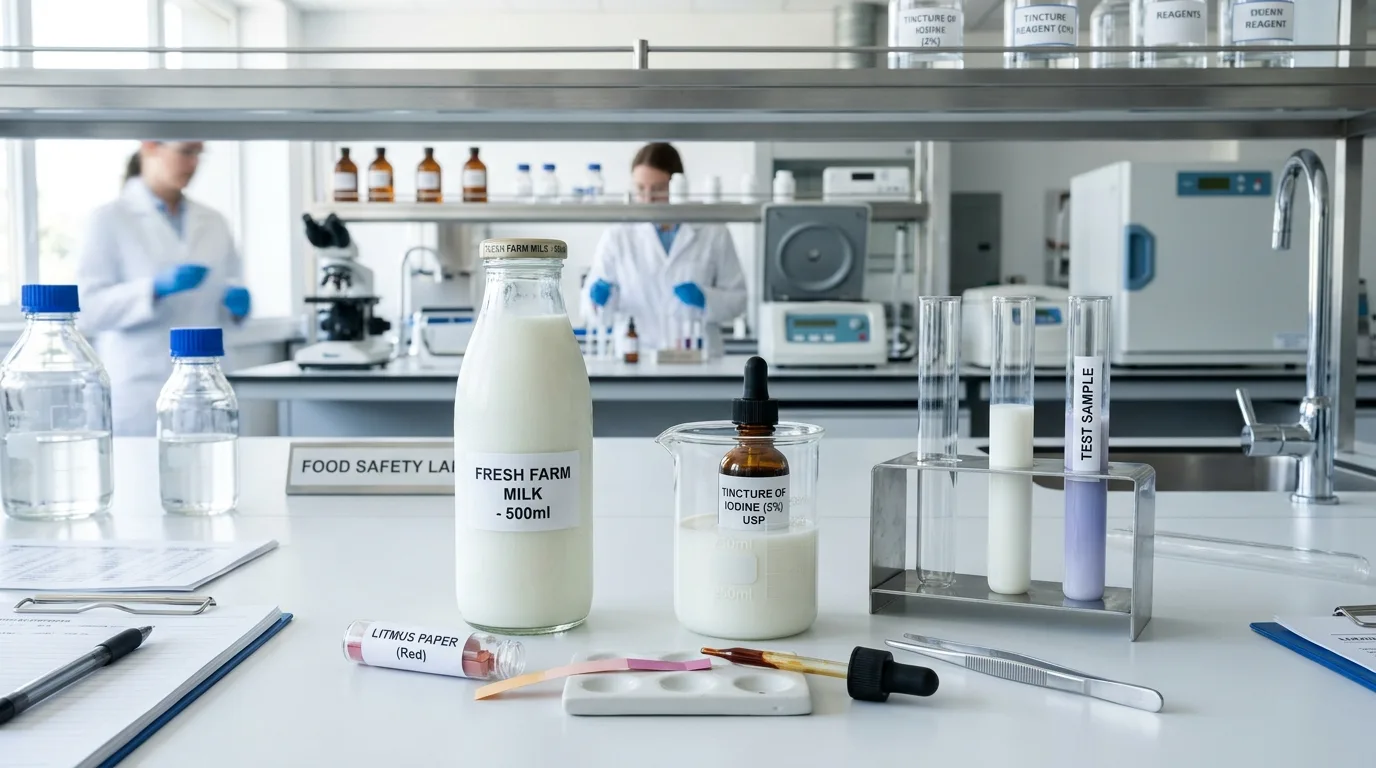
| Paneer | Internal Contaminants | Starch & Detergents | Boil with water, let cool, add Iodine; check for blue color | Strictly Discard | Discard immediately if solution turns blue. |
| Coconut Oil | Internal Contaminants | Paraffin & Argemone Oil | Place in fridge at 4°C; check if any layer remains liquid | Strictly Discard | Discard if any layer remains liquid after 24 hours. |
| Rice | Internal Contaminants | Plastic Rice & Talc | Burn a spoonful; check for melting/plastic smell or floating | Strictly Discard | Discard if it melts, burns black, or floats in water. |
| Turmeric | Artificial Coloring | Metanil Yellow dye | Add lemon juice/acid to turmeric water; check for pink color | Strictly Discard | Discard if chemical yellow dye is detected. |
| Honey | Internal Contaminants | Sugar / Rice Syrup | Water drop test (pure honey does not dissolve instantly) | Strictly Discard | Discard if it dissolves instantly or fails flame test. |
When Home Tests Fall Short
While home-based screening is highly effective for surface contaminations, physical coatings, and basic ripening checks, dedicated laboratory verification remains essential for:
- Precise Pesticide Quantification: Measuring exact parts-per-million (PPM) of chemical residues to ensure compliance with international safety standards.
- Heavy Metal Profiling: Detecting trace levels of lead, cadmium, and mercury absorbed systemically from contaminated irrigation soil.
- Microbial Pathogen Testing: Identifying invisible and odorless bacterial contaminations like Salmonella, E. coli, or Listeria that cause acute food poisoning.
For more advanced visual screening and to access our extensive library of food safety checklists, use the BioLens AI Food Guard to scan your groceries today!