How to Test Ridge Gourd for Adulteration (Malachite Green, Pesticide, Growth Hormones)
⚡ Quick 60-Second Ridge Gourd (Turai) Purity & Dye Verdict
Copper Sulfate & Malachite Green Dye Baths: Ridge gourds are commonly submerged in copper sulfate (blue vitriol) or malachite green dye baths to make dull, yellowing, or wilted gourds look freshly harvested.
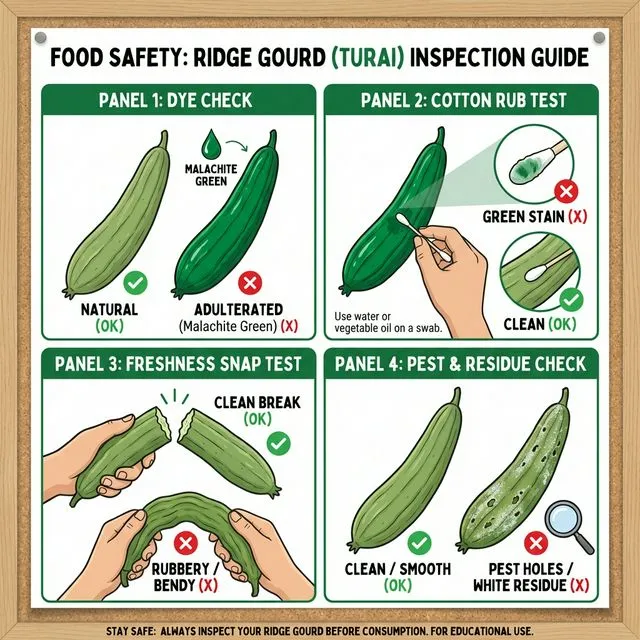
Moisten a piece of cotton with liquid paraffin or mineral oil and rub the valleys between the ridges. If the cotton turns green, the gourd has been chemically dyed with Malachite Green or synthetic colors.
Drop a slice of ridge gourd into a small bowl of water with a few drops of dilute nitric or hydrochloric acid. A bluish-green discoloration confirms the presence of toxic copper sulfate.
Snap the tip or one of the ridges with your fingers. Fresh untreated turai snaps crisply with an audible sound and exudes clear, odorless vegetable sap; dyed limp gourds bend without snapping.
To learn more about food safety tests and home adulteration detection, read our guides on Sweet Potato (Shakarkand) and Chayote (Chow Chow).
Drop Ridge Gourd (Turai) photo here to test purity
or click to browse • Supports JPG, PNG, WEBP • Paste with Ctrl+V
Inspection Guide
Click to enlarge
Ridge Gourd (Turai) Purity & Dye Audit
Ridge Gourd is frequently treated with Malachite Green to maintain an unnaturally dark green color, masking signs of wilting and aging.
1. The Cotton Rub Test:
Rub a wet cotton ball on the green skin and ridges of the turai. If the cotton picks up a green or bluish-green color, artificial dye like Malachite Green has been applied.
2. The Stem Color Check:
Examine the stem-end. A naturally fresh ridge gourd has a vibrant green, slightly moist stem. If the stem is dark brown, dry, or shriveled while the rest of the vegetable is bright green, it has been dyed.
3. The Water Bleed:
Soak sliced ridge gourd in warm water for 15 minutes. If the water turns green, artificial coloring is confirmed. Natural green pigments do not leach easily into warm water.
4. The Ridge Texture:
The ridges should be firm and "sharp." If they feel soft, spongy, or have "slimy" patches despite a vibrant green color, the vegetable is old stock chemically preserved.
5. Gourd Family Adulteration:
Like other members of the gourd family such as Bitter Gourd, Ivy Gourd, and Bottle Gourd, ridge gourd is prone to the same toxic green dyes. Ensure you perform a purity test to safeguard your health.
Quick Safety Tips
- Perform the cotton rub test for Malachite Green detection
- Avoid ridge gourds with unnaturally dark or "neon" green color
- Choose gourds that are firm and have "sharp" ridges
- Soak in salt water for 20 minutes before cooking to reduce surface pesticides
Primary Chemical Concerns
Health Risks & Impacts
Multilingual Local Names
Common Storage Pests
Cucumber Beetle
low riskSmall beetles that feed on the leaves and fruit of gourds.
Detection
- Small holes or sunken spots on the skin
Prevention
- Inspect for skin damage
- Store in a cool, ventilated area
Corrective Action: What to do?
Cut away affected parts; the internal flesh is usually safe.
Regulatory Corner: FSSAI (Food Safety and Standards Authority of India) / FSS (Contaminants, Toxins and Residues) Regulations
Regulation: Food Safety and Standards (Food Products Standards and Food Additives) Regulations 2011, Clause 2.3.1 & Sec 23 of FSS Act
Legal Limit:Malachite Green & Copper Sulfate: Zero tolerance (0.0 ppm - Prohibited adulterants); Oxytocin injection: Strictly prohibited under Drugs and Cosmetics Act; Lead MRL: Max 0.1 ppm
Report Adulteration to FSSAI (Food Safety and Standards Authority of India) / FSS (Contaminants, Toxins and Residues) Regulations