Rasgulla Purity & Freshness Guide: Detect Synthetic Chhena, Starch, Chemical Bleach & Ropy Syrup
You can test Rasgulla (Roshogolla) at home for synthetic milk solids (urea/detergent chhena), excess starch, maida, or arrowroot filler, chemical optical brighteners (titanium dioxide, hydrosulphite bleach), and bacterial syrup ropiness/spoilage using the Sponge Rebound Squeeze Test, the Rinsed-Core Iodine Drop Test, and the Warm Water Froth & Residue Audit. Confirming exact protein-fat ratios and quantifying synthetic preservatives requires certified laboratory FSSAI analysis.
Drop Rasgulla photo here to test purity
or click to browse • Supports JPG, PNG, WEBP • Paste with Ctrl+V
Inspection Guide
Click to enlarge
How to Test Rasgulla for Synthetic Chhena, Starch & Chemical Bleach at Home
🔬 Scientific Home Adulteration Tests
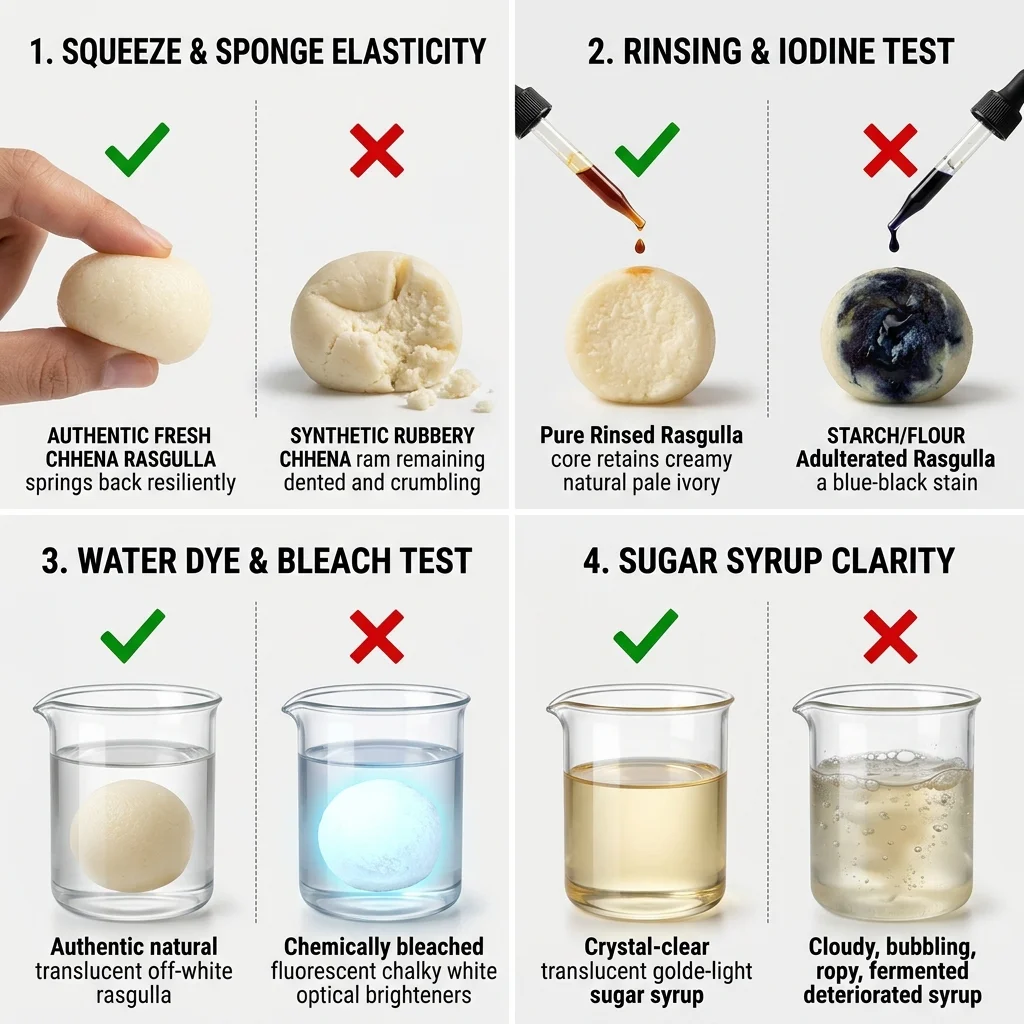
1. Gentle Squeeze & Sponge Elasticity Memory Test (Quadrant 1)
Remove a single rasgulla from the syrup, place it between your thumb and index finger, and gently squeeze until most of the absorbed sugar syrup drips out into a bowl. Release your fingers immediately and observe the ball's mechanical rebound.
- Pure Cow-Milk Chhena Rasgulla: Compresses softly like an organic sponge, releasing translucent syrup. The instant finger pressure is released, it springs back effortlessly into its original spherical shape without cracking, denting, or disintegrating.
- Synthetic Chhena / High-Maida Adulterated: Feels rubbery, stiff, or doughy. When squeezed, it either remains permanently flattened, cracks into crumbly chunks, or exhibits a dense rubber-ball chewiness indicating synthetic polymers or excessive maida.
2. Rinsed-Core Iodine Starch Detection Test (Quadrant 2)
Cut a rasgulla in half with a clean knife. Scoop a pea-sized piece from the innermost core, rinse it under a gentle stream of lukewarm water for 10 seconds to wash away exterior sucrose, mash it in a small porcelain saucer with 1 teaspoon of water, and add 2 drops of Povidone-Iodine solution.
- Authentic Pure Chhena: Casein curd contains virtually zero starch (< 1.5% from traditional trace binder). The mash retains a pale milky-amber or natural yellow-tan iodine color.
- Starch / Arrowroot / Potato Adulterated: Turns an immediate, intense ink-blue or dark indigo-black, exposing heavy starch bulking agents added to save milk costs.
3. Warm Water Detergent & Foam Slick Audit (Quadrant 3)
Mash half a rasgulla into half a cup of warm purified water (50°C), shake or stir vigorously with a fork for 30 seconds, and allow it to settle for 2 minutes.
- Pure Dairy Sweet: The liquid becomes cloudy white with a pleasant milk-sweet aroma and a thin, delicate dairy film that dissipates cleanly without foaming.
- Synthetic Chhena (Detergent / Soda): Generates a thick, persistent white soap lather or frothy ring that does not collapse after resting. The surface may show a greasy chemical sheen, accompanied by a faint alkaline or bitter soapy odor.
4. Visual Bleach & Optical Brightener Check (Quadrant 4)
Inspect the dry surface of the rasgulla under natural daylight, alongside a spoonful of the steeping syrup.
- Natural Cow-Milk Curd: Exhibits a soft, gentle ivory-cream or warm off-white shade, and the sugar syrup remains crystal-clear or pale golden.
- Bleached Sweet: Possesses an unnatural, chalky "dazzling printer-paper white" or bluish-white fluorescent glare—indicating treatment with banned sodium hydrosulphite ("safolite") or titanium dioxide to mask inferior gray buffalo milk or curd.
Click to enlarge
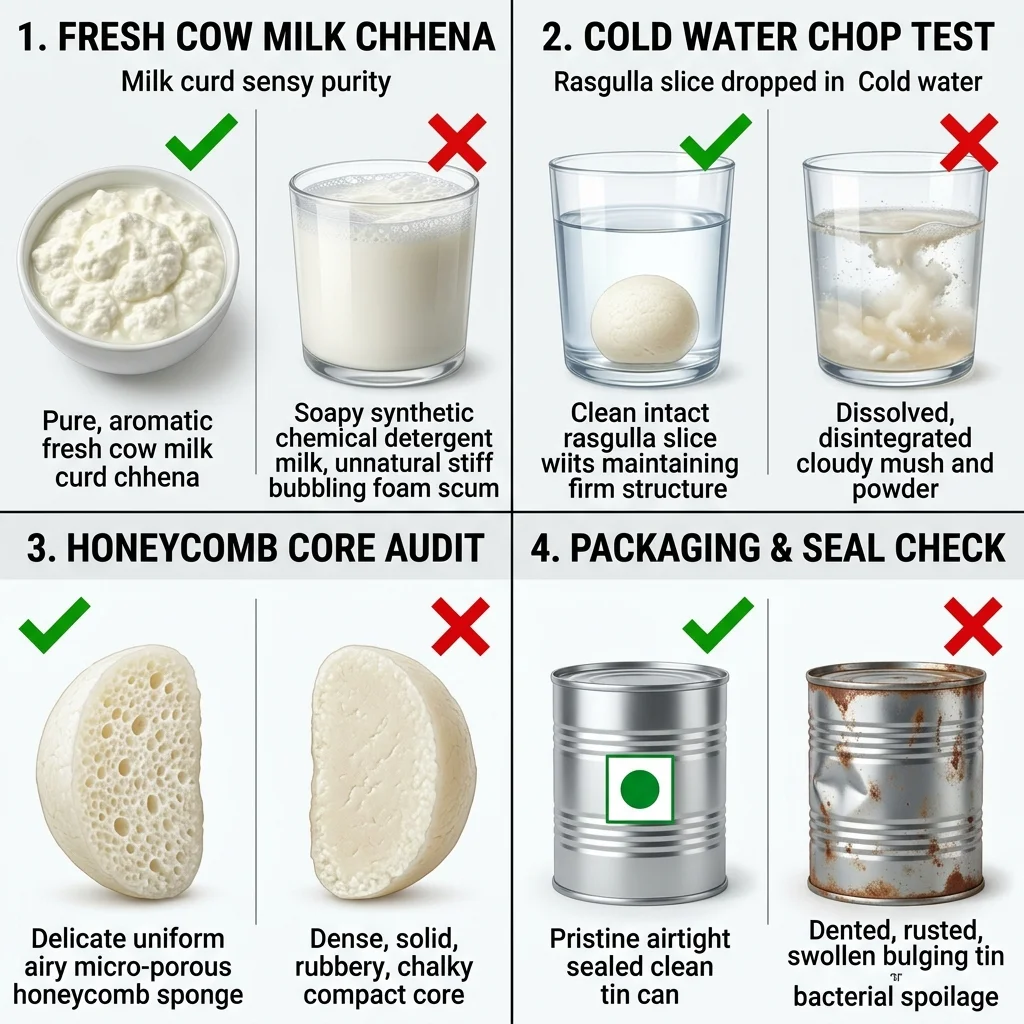
How to Judge Rasgulla Freshness, Sponginess & Syrup Spoilage
📊 Freshness & Quality Comparison
| Quality Indicator | Fresh Artisanal Rasgulla | Stale / Spoiled / Fermented Rasgulla |
|---|---|---|
| Sponge Texture | Resilient, light, micro-porous honeycomb; bounces back immediately | Slimy outer coat, waterlogged mush, or hard, dry rubbery center |
| Cold Water Behavior | Sinks to the bottom of a cold water glass, then slowly expands | Floats erratically due to bacterial gas fermentation, or dissolves into cloudy crumbs |
| Sugar Syrup (Chashni) | Clear, luminous, fluid syrup with clean sweetness and cardamom aroma | Cloudy, frothy with rising micro-bubbles, slimy/ropy threads, or sour fermented odor |
| Milk Curd Scent | Mild, sweet, clean dairy-casein aroma | Sour curdled milk smell, pungent yeasty alcohol note, or rancid fat odor |
🏠 Proper Storage & Shelf-Life Guidelines
- Fresh Halwai / Loose Rasgulla: Because rasgulla has high moisture content (~50–55%) and milk proteins in a light sugar syrup, it has a short shelf life. Keep at room temperature for no more than 12–18 hours in summer. Refrigerate in a tightly covered food-grade glass bowl at 2–5°C for up to 3–4 days.
- Commercially Canned Tins: Unopened hermetic retort tins remain stable for 6 to 12 months at room temperature. Once opened, never leave the sweets in the metal can; transfer all rasgullas with syrup into a non-reactive container and refrigerate, consuming within 3 days.
- Serving Precaution: Never introduce unwashed hands, saliva, or wet tap-water spoons into the rasgulla container, as Leuconostoc bacteria multiply rapidly and cause syrup rope formation.
Quick Safety Tips
- Always inspect the center of a rasgulla before eating: it should have an evenly porous, honeycomb-like spongy texture, never a dense, slimy, or chalky lump.
- Check the sugar syrup: if it appears cloudy, bubbly, or forms sticky elastic mucus threads (ropiness) when lifted with a spoon, discard the sweet immediately.
- Transfer canned or tin rasgullas immediately into a glass or ceramic container upon opening; never store opened sweets in tin cans.
- Refrigerate fresh loose rasgullas below 5°C and consume within 48 to 72 hours.
- Cross-check constituent ingredients like paneer, milk, sugar, and cardamom on BioLens Food Guard.
Primary Chemical Concerns
Health Risks & Impacts
Test Individual Raw Ingredients in Rasgulla
Unlike single raw commodities, prepared sweets and bakery items can harbor adulteration across multiple base ingredients. Click any raw ingredient below to run its dedicated kitchen purity test:
Multilingual Local Names
Common Storage Pests
Ropy-Slime Bacteria (Leuconostoc mesenteroides) & Wild Osmophilic Yeasts
high riskSugar-tolerant microbes that rapidly ferment high-moisture sweet syrups containing dissolved milk proteins.
Detection
- Cloudiness and fizzy gas bubbles rising from the sugar syrup
- Syrup pulls into viscous, mucilaginous slimy strings when scooped
- Sharp sour, vinegary, or fermented alcohol odor
Prevention
- Keep rasgulla continuously refrigerated below 5°C
- Never dip fingers, used spoons, or unboiled water into the storage container
Corrective Action: What to do?
Discard the entire container immediately. Re-boiling does not destroy heat-stable bacterial enterotoxins.
Fruit Flies (Drosophila melanogaster) & Sugar Ants
medium riskInsects attracted to open sugary trays in unhygienic sweet shops, vectoring pathogenic coliforms.
Detection
- Insects hovering over open sweet trays or trapped along container rims
- Black specks or insect debris suspended in the syrup
Prevention
- Only purchase from licensed shops with enclosed, refrigerated glass display counters
- Store at home in airtight containers with silicone sealing gaskets
Corrective Action: What to do?
Discard any sweet or syrup contaminated by insect contact.
Regulatory Corner: FSSAI / Bureau of Indian Standards (BIS)
Regulation: Food Safety and Standards (Food Products Standards and Food Additives) Regulations — Chhena & Chhena-Based Sweets (IS 4079)
Legal Limit:Must contain minimum 5.0% milk fat and minimum 5.0% milk protein by weight in syrup; zero tolerance for urea, detergent, caustic soda, synthetic colors, or sodium hydrosulphite bleach.
Report Adulteration to FSSAI / Bureau of Indian Standards (BIS)