The Hidden Crisis in Everyday Milk
Milk is an essential daily dietary staple for millions of households, serving as a vital source of protein, calcium, and essential minerals for growing children and adults alike. However, rapid commercialization and supply chain pressures have turned milk into one of the most frequently adulterated food products globally.
Adulteration in milk ranges from simple dilution with unhygienic tap water to sophisticated, highly dangerous chemical concoctions known as synthetic milk. Unscrupulous vendors mix laundry detergent, urea, caustic soda, starch, and cheap vegetable oils to mimic the density, whiteness, and fat content of genuine cow or buffalo milk.
Consuming adulterated milk over extended periods causes severe gastrointestinal damage, kidney impairment, liver toxicity, and developmental delays in children. The good news is that you do not need an expensive laboratory to verify your milk's purity. Using basic kitchen items, you can perform authentic, household tests to confirm whether your milk is pure or contaminated.
Summary of Milk Adulterants & Health Risks
Before diving into the tests, review the primary chemical contaminants routinely added to milk:
| Adulterant Category | Common Substances Added | Purpose of Adulteration | Health Hazards |
|---|---|---|---|
| Diluents | Contaminated Tap Water, Pond Water | Increases total liquid volume | Typhoid, cholera, gastroenteritis, heavy metal toxicity |
| Thickeners & Viscosity Enhancers | Starch, Flour, Arrowroot, Chalk | Restores thickness after watering milk | Diarrhea, stomach cramps, digestive blockage |
| Emulsifiers & Foaming Agents | Laundry Detergent, Soap Solutions | Creates artificial creamy lather and fat illusion | Gastrointestinal lining erosion, stomach ulcers, kidney distress |
| Nitrogen Inflators | Industrial Urea, Fertilizer Compounds | Artificially inflates protein / SNF readings | Severe liver & kidney toxicity, acid-base imbalance |
| Synthetic Bases | Caustic Soda, Oil, Hydrogen Peroxide | Prevents milk from souring, mimics milk fat | Chemical throat burns, stomach lining damage, metabolic toxicity |
Visual Color & Boiling Cream (Malai) Examination
Before conducting chemical tests, carefully examine your raw and boiled milk using visual and tactile checks:
1. Raw Milk Color Audit
- Bluish-White Tint: Indicates heavy water dilution or that natural butterfat has been skimmed off.
- Stark Chalky White: Indicates added starch, chalk powder, or chemical whitening agents.
- Pale Ivory / Soft Cream Off-White: Natural unadulterated color from cow or buffalo milk fat.
2. Boiling Color & Cream Layer (Malai) Analysis
- Does Yellowing After Boiling Mean Pure Milk? Yes — pure natural milk (especially cow milk containing beta-carotene) develops a soft pale-golden creamy tint when boiled on low heat. Crucially, pure milk forms a thick, soft, rich cream skin (malai) floating on top as the milk fats separate and rise. A thick, sweet-smelling malai layer confirms rich fat content and low dilution.
- Chemical Yellowing (Synthetic Milk): Milk adulterated with urea, caustic soda, or detergent turns an intensely dark yellow or brownish color upon boiling, emits a faint chemical or soapy odor, leaves an oily scum or rubbery film instead of soft malai, and tastes distinctly bitter or astringent.
5 Step-by-Step Household Purity Tests
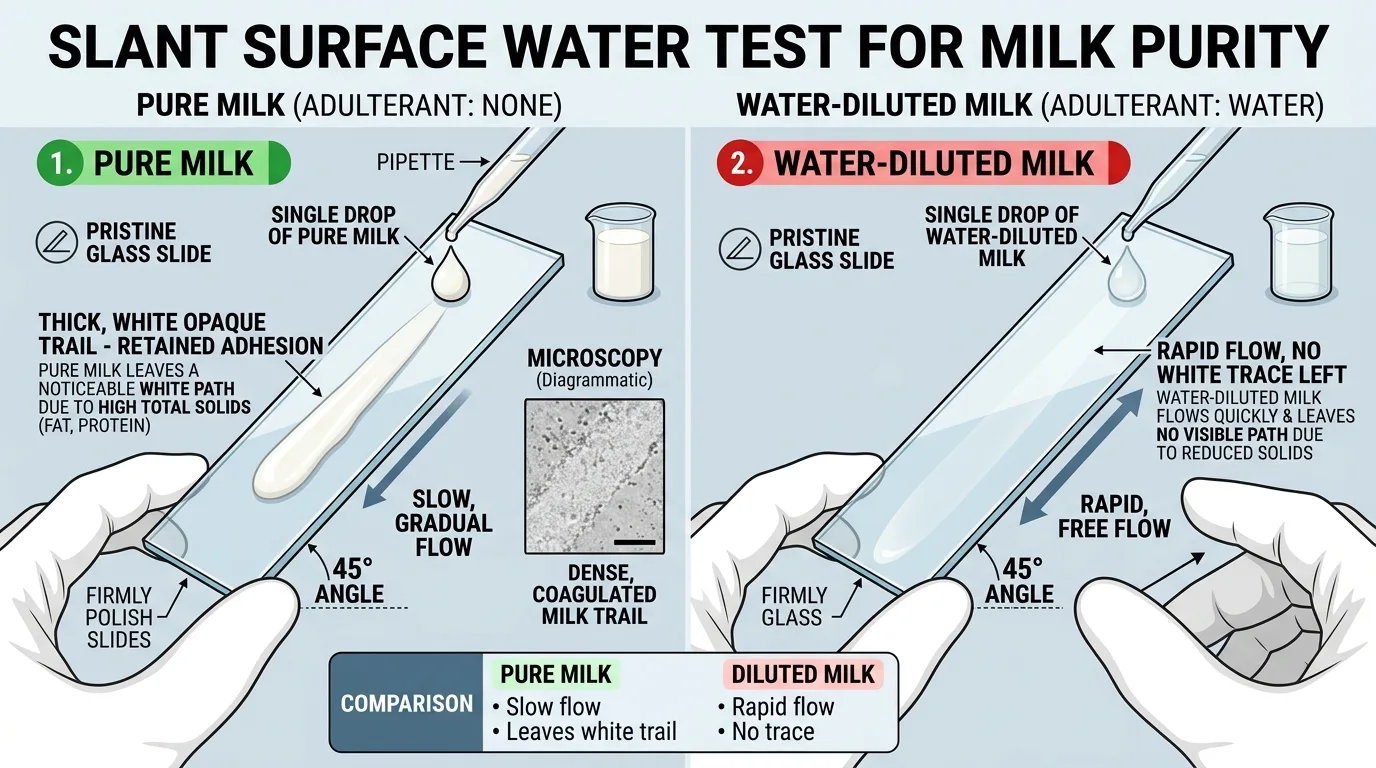
1. The Slant Surface Water Test (Detects Added Water)
Water is the single most common diluent added to milk to increase volume. Tap water used by unverified vendors often contains bacterial pathogens and heavy metals.
# Scientific Principle
Pure milk contains complex fat globules and proteins (casein) suspended in water, giving it a high viscosity and surface tension. When dropped onto a smooth surface, pure milk adheres slightly and leaves a visible white film as it flows down. Watered-down milk loses this surface tension and viscosity.# Step-by-Step Protocol
- Take a clean, dry glass or ceramic plate and hold it at a 45-degree slanting angle.
- Using a clean spoon or dropper, place 2 to 3 drops of milk near the top edge of the slanted plate.
- Observe the flow speed and the trail left on the surface.
# Diagnostic Verdict
- ✅ Pure Milk: Flows slowly down the incline, leaving a distinct, continuous white trail behind it.
- ❌ Watered Milk: Flows down rapidly and smoothly without leaving any white trail, behaving almost like plain water.
2. The Shake & Lather Detergent Test (Detects Synthetic Detergent)
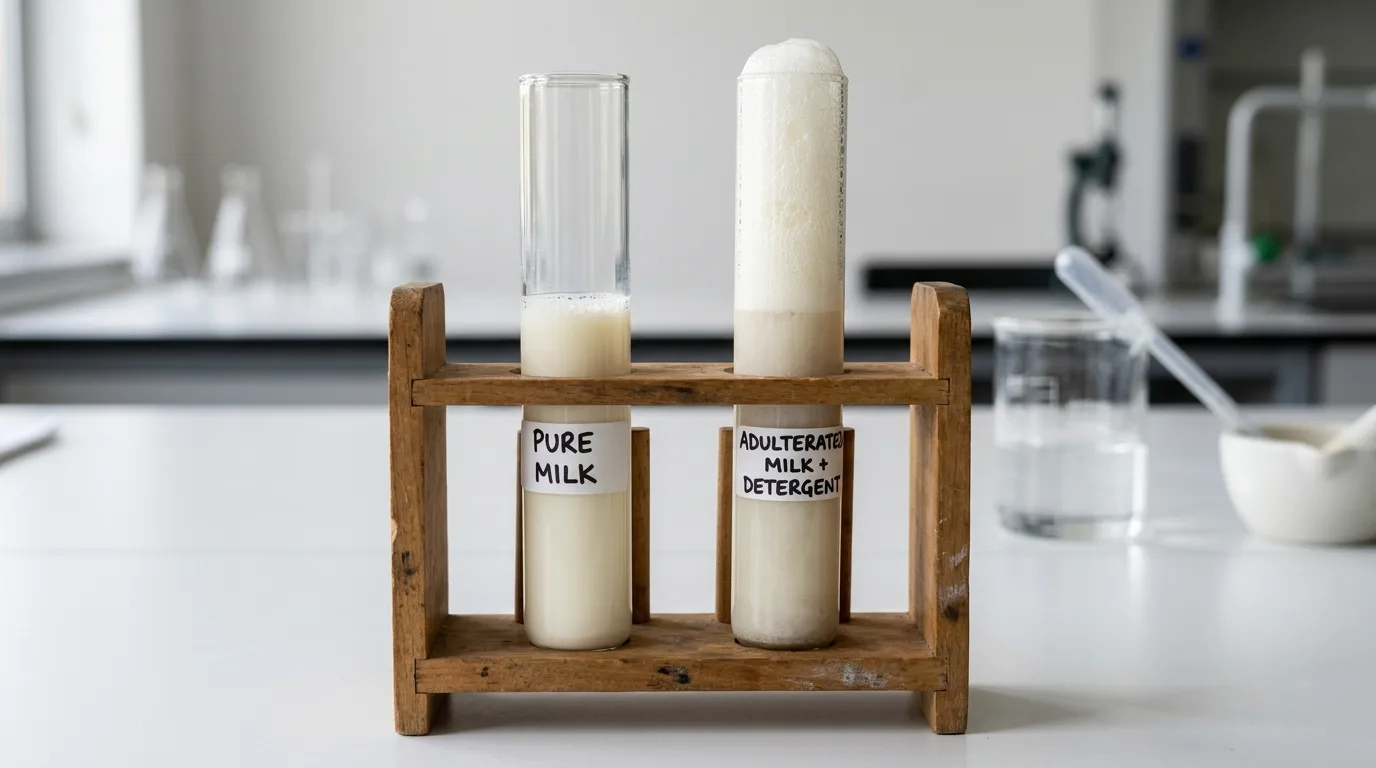
Detergents and liquid soaps are frequently added to watered milk to emulsify added oils and produce a creamy appearance with a rich foam head.
# Scientific Principle
Detergents contain synthetic surfactants that lower surface tension and entrap air bubbles, creating long-lasting, stable lather that does not collapse easily.# Step-by-Step Protocol
- Take a clean, transparent glass vial or small water bottle.
- Pour 5 to 10 ml of raw or boiled milk into the bottle.
- Add an equal amount of clean room-temperature water (5 to 10 ml).
- Cap the bottle tightly and shake vigorously for 15 seconds.
- Set the bottle on a flat table and observe the top foam layer.
# Diagnostic Verdict
- ✅ Pure Milk: Develops a very thin layer of natural foam bubbles that dissipates rapidly within 30 to 60 seconds.
- ❌ Detergent Adulterated: Forms a dense, thick, soapy lather that remains stable and does not collapse even after several minutes.
3. The Iodine Starch Detection Test (Detects Added Starch & Flour)
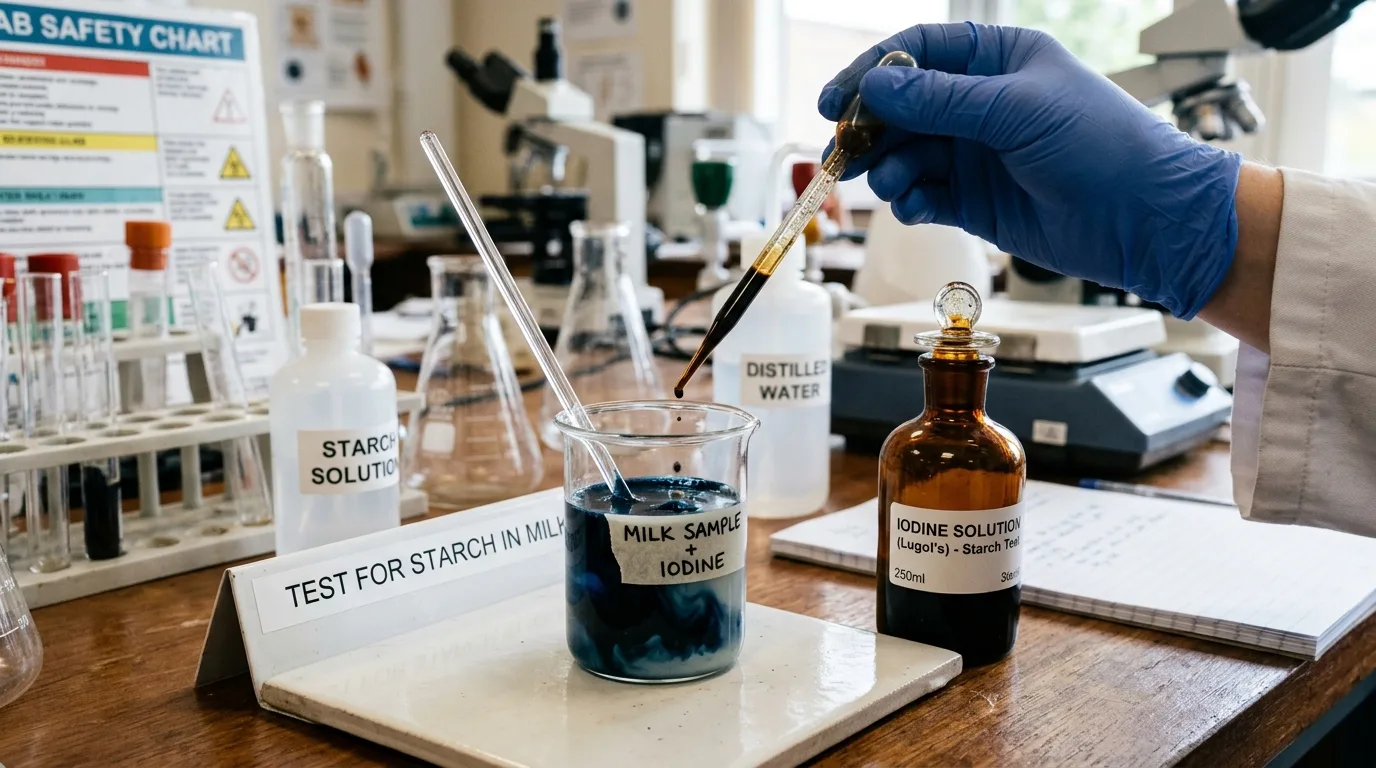
Vendors add starch (such as cornstarch, wheat flour, arrowroot, or potato powder) to watered milk to raise its Solids-Not-Fat (SNF) density reading.
# Scientific Principle
Starch contains amylose, a helical polymer of glucose. When iodine solution is introduced, iodine molecules fit inside the amylose helix, forming a deep blue-black chemical complex.# Step-by-Step Protocol
- Take 5 ml of milk in a heat-resistant glass container.
- Boil the milk sample for 1 minute to release starches, then let it cool completely to room temperature.
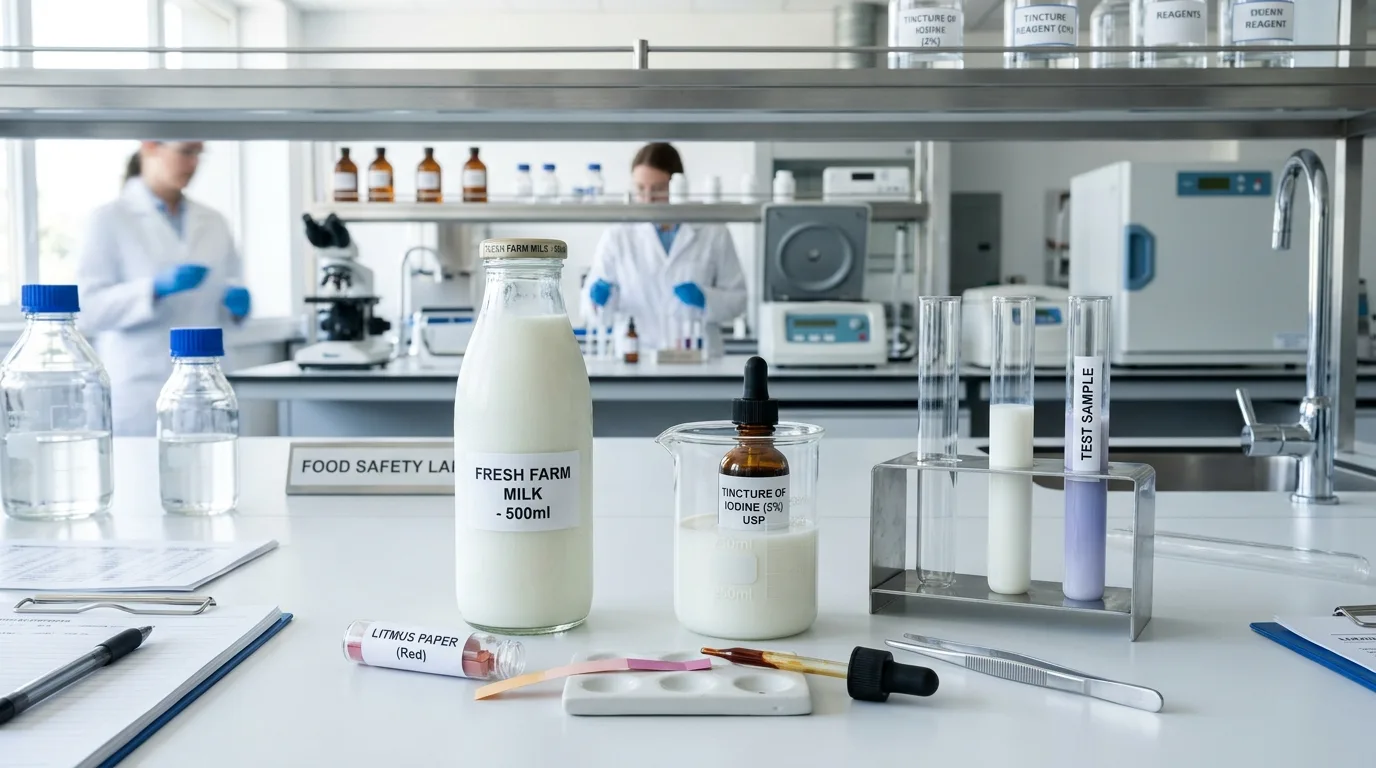
- Add 2 to 3 drops of Tincture of Iodine (easily available at any local pharmacy or medical store).
- Stir gently and observe color changes.
# Diagnostic Verdict
- ✅ Pure Milk: Retains a light yellowish-brown color from the iodine solution with zero blue discoloration.
- ❌ Starch Adulterated: Turns an unmistakable intense deep blue or purple color immediately upon contact with iodine.
4. The Soybean Powder Urea Test (Detects Toxic Urea)
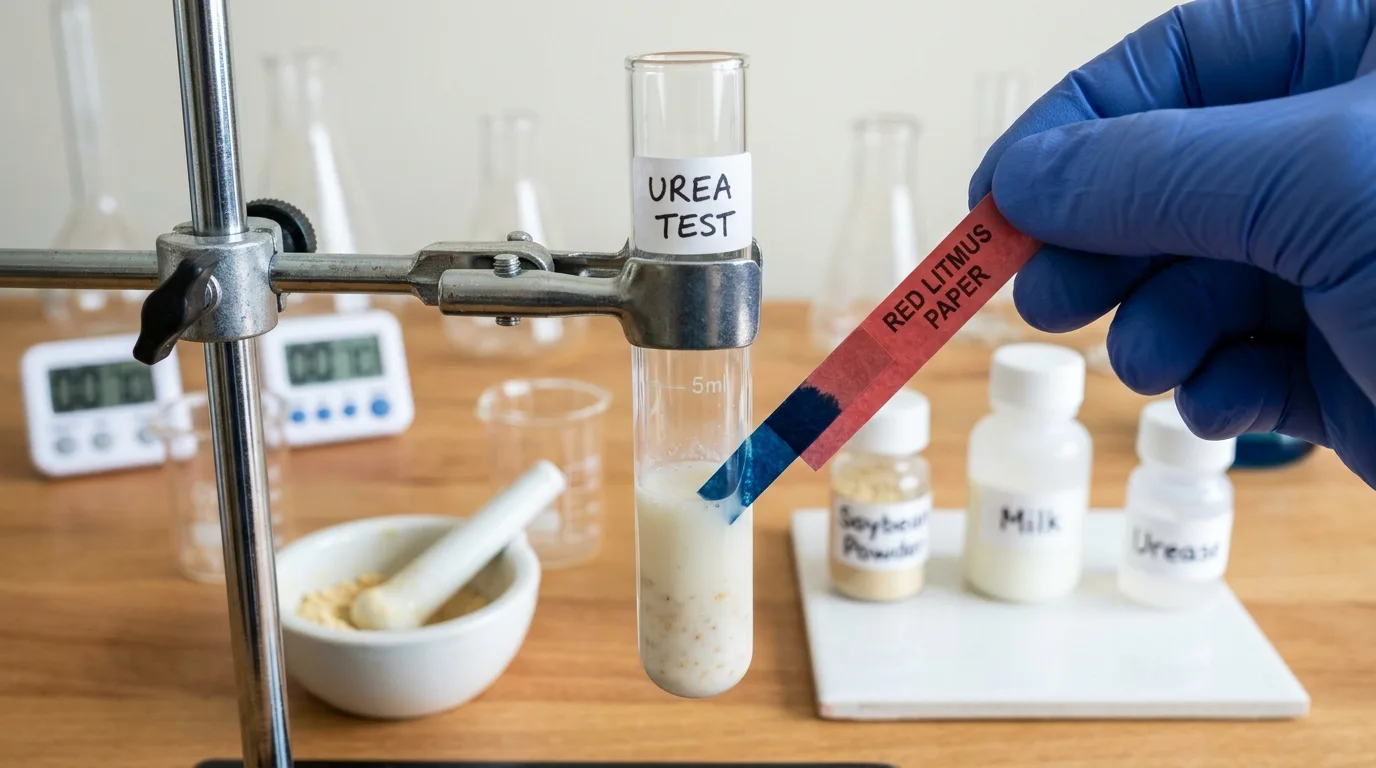
Urea is a commercial fertilizer compound added to milk to artificially boost non-protein nitrogen readings during lactometer tests.
# Scientific Principle
Soybean powder and arhar dal powder contain high amounts of the enzyme urease. Urease rapidly hydrolyzes urea into ammonia and carbon dioxide. Ammonia is strongly alkaline, raising the solution pH and turning red litmus paper blue.# Step-by-Step Protocol
- Take 5 ml of milk in a small clean cup or test tube.
- Add half a teaspoon of soybean powder or finely ground arhar dal powder.
- Shake or mix the solution thoroughly and allow it to sit undisturbed for 5 minutes.
- Dip a strip of red litmus paper into the mixture for 10 seconds.
# Diagnostic Verdict
- ✅ Pure Milk: The red litmus paper remains unchanged or turns slightly orange/red (milk is naturally slightly acidic, pH 6.5–6.7).
- ❌ Urea Adulterated: The red litmus paper turns bright blue, confirming the presence of alkaline ammonia released from urea breakdown.
5. The Heat & Friction Synthetic Milk Test (Detects Synthetic Oil & Chemical Milk)
Synthetic milk is a dangerous chemical fake made by mixing caustic soda, urea, detergent, glucose, and refined vegetable oil. It contains zero natural dairy content.
# Scientific Principle
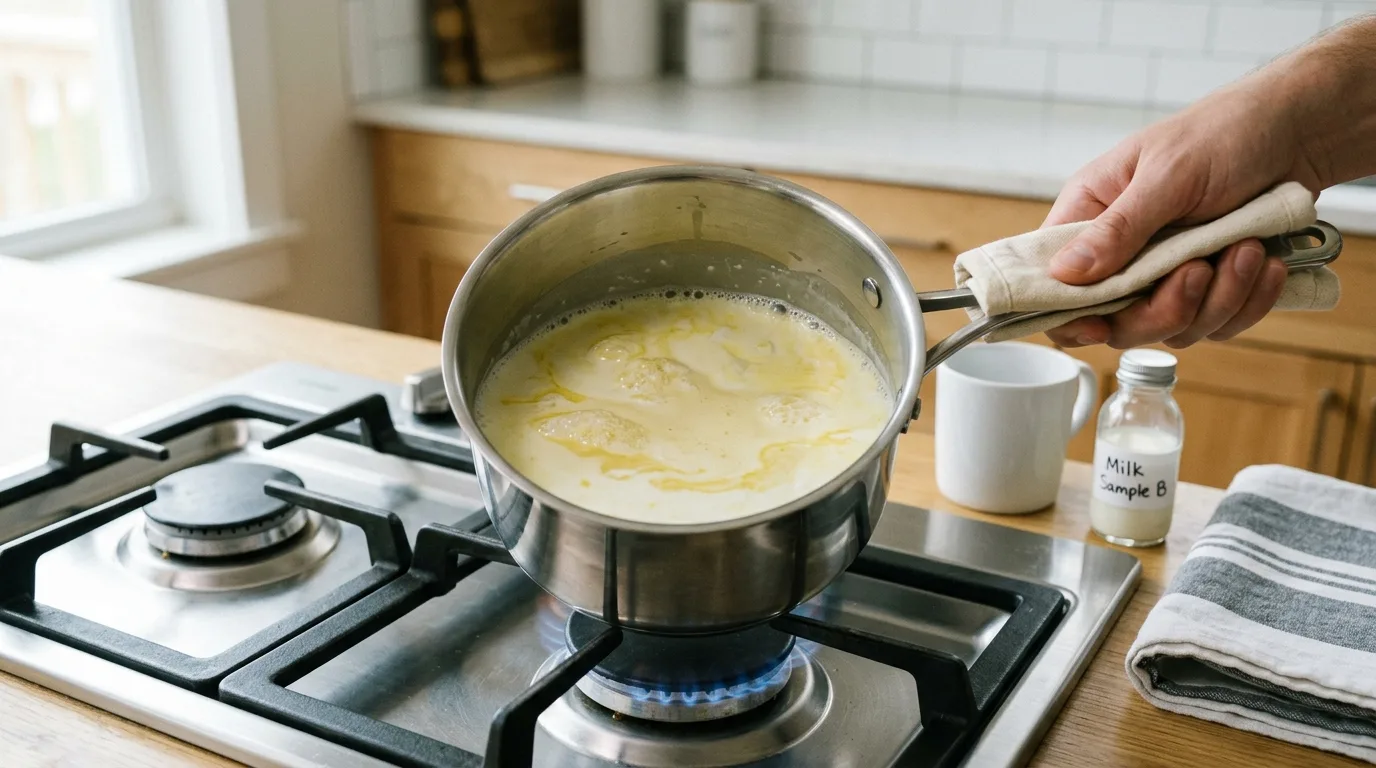
Synthetic milk relies on chemical emulsifiers to keep vegetable oil suspended in water. Heating or mechanical friction breaks this synthetic emulsion, separating the chemical dyes and unmasking the soapy texture.# Step-by-Step Protocol
- Friction Rub Check: Put 2 drops of milk on your palm and rub vigorously between your thumb and index finger for 10 seconds.
- Boiling Heat Check: Pour 50 ml of milk into a clean stainless steel pan and bring to a boil on low heat. Observe the color and odor during heating.
# Diagnostic Verdict
- ✅ Pure Milk: Feels smooth and non-greasy when rubbed. Remains clean white or creamy white after boiling, with a pleasant natural sweet aroma.
- ❌ Synthetic Milk: Feels soapy, slippery, and slimy when rubbed. Turns distinctly yellowish after boiling, smells faintly chemical or soapy, and leaves a heavy oily film on the pan.
How to Detect Contaminated or Sewage Water Addition
When milk is diluted, unscrupulous distributors rarely use purified RO water; they frequently tap untreated borewell water, open canal water, or unhygienic storage tanks.
1. Microbial Boiling Curdle Test (Bacterial Load Check)
- Protocol: Take 100 ml of raw, unpasteurized milk sample and heat it on low flame.
- Interpretation: Pure fresh milk boils smoothly without curdling. If the milk curdles or breaks into watery whey and rubbery clots at low heat (before reaching a boil), it indicates heavy microbial contamination from sewage or unhygienic water sources.
2. Sensory Pond Water Odor Test
- Protocol: Gently warm 50 ml of milk to 45°C in a clean glass.
- Interpretation: Pure milk has a fresh, mild, sweet cream aroma. Milk diluted with contaminated surface water releases a faint muddy, earthy, or stagnant water scent when warmed.
3. Rapid Room-Temperature Souring Audit
- Protocol: Leave 50 ml of unboiled raw milk sample at room temperature (25°C) in a clean glass.
- Interpretation: Pure unboiled milk remains stable for 4 to 6 hours before natural lactic acid souring begins. Milk diluted with contaminated water sours, thickens, or emits a foul odor within 1 to 2 hours due to massive initial bacterial counts.
Master Household Milk Purity Reference Table
Use this quick reference table to audit your daily milk supply at home:
| Test Name | Key Reagent / Tool | Positive Result for Pure Milk | Negative Result (Adulterated) | Target Contaminant |
|---|---|---|---|---|
| Visual & Boiling Check | Stainless Pan / Eyes | Soft pale ivory; thick, rich malai skin | Dark yellowing, soapy odor, oily scum | Synthetic Milk / Detergents |
| 1. Slant Water Test | Glass / Ceramic Slide | Leaves thick white trail as it flows | Rapid flow, no white trail left | Added Tap Water |
| 2. Detergent Shake | Glass Vial + Water | Thin foam ring that vanishes in 60s | Thick, stable, soapy foam layer | Laundry Detergent |
| 3. Starch Iodine | Iodine Tincture Drops | Remains light yellow-brown | Turns intense deep blue / purple | Starch, Flour, Arrowroot |
| 4. Urea Litmus | Soybean Powder + Red Litmus | Red litmus remains red/orange | Red litmus turns bright blue | Urea Fertilizer |
| 5. Heat & Rub Test | Stainless Pan / Fingers | Smooth touch, stays white when boiled | Soapy touch, turns yellow when boiled | Synthetic Chemical Milk |
| Contaminated Water Test | Gentle Heat / Souring | Boils smoothly; sours in 4–6 hrs | Curdles at low heat; sours in <2 hrs | Sewage / Pond Water |
Where to Report Adulteration & Regional Testing Authorities
If your home test indicates chemical adulteration or sewage water contamination, report it immediately to your regional food safety authority to initiate market sampling and vendor inspections:
🇮🇳 India (FSSAI)
- Primary Body: Food Safety and Standards Authority of India (FSSAI).
- Reporting Helpline: National Consumer Helpline: 1915 (Toll-Free).
- Online Portal: FSSAI Food Safety Connect Portal (
foodlicensing.fssai.gov.in). - Local Action: File a written complaint with your District Food Safety Officer (FSO) or visit your nearest NABL-accredited State Public Health Laboratory for official testing.
🇺🇸 United States (FDA & USDA)
- Primary Body: FDA Center for Food Safety and Applied Nutrition (CFSAN) & USDA Grade A PMO.
- Reporting Helpline: FDA Consumer Complaint Coordinator in your state.
- Local Action: Contact your State Department of Agriculture Dairy Inspection Division or County Public Health Department.
🇬🇧 United Kingdom & 🇪🇺 Europe (FSA & EFSA)
- Primary Body: Food Standards Agency (FSA) & European Food Safety Authority (EFSA).
- Reporting Portal: FSA online reporting tool (
food.gov.uk). - Local Action: Report directly to your Local Authority Trading Standards Office or Environmental Health Department.
🇦🇺 Australia & New Zealand (FSANZ)
- Primary Body: Food Standards Australia New Zealand (FSANZ).
- Reporting Contact: State Food Authority Hotlines (e.g., NSW Food Authority or PrimeSafe Victoria).
- Local Action: Submit samples to local Municipal Council Public Health Inspectors.
🇸🇦 Middle East & 🇸🇬 Southeast Asia
- Saudi Arabia / UAE: Saudi Food and Drug Authority (SFDA) / Dubai Municipality Food Safety Department.
- Singapore / Malaysia: Singapore Food Agency (SFA) / Ministry of Health Malaysia Food Safety Division.
Protect Your Kitchen with BioLens Food Guard
While simple kitchen tests are ideal for instant screening, modern food verification requires comprehensive safety tools. Because adulterated milk is frequently processed into concentrated dairy products and traditional sweets, always inspect companion dairy staples including Liquid Dairy Milk, Sweetened Condensed Milk, Khoya / Mawa (Dried Milk Solids), Fresh Paneer / Chhena, Desi Ghee, Butter, Yogurt (Curd / Dahi), Doodh Peda, Rasgulla, Gujiya (Karanji), and Sheer Khurma. Explore our food safety guides, chemical breakdown matrixes, and ingredient verification checklists on BioLens:
BioLens Food Guard Hub
Explore interactive purity checklists, 60-second kitchen chemistry tests, freshness comparison guides, and multilingual safety profiles across 15+ languages.