
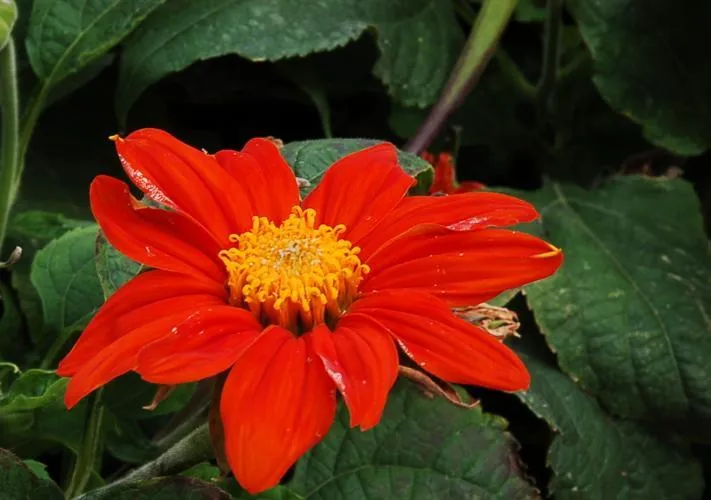
Orange Dahlia
Dahlia × hortensis
How to Identify Orange Dahlia
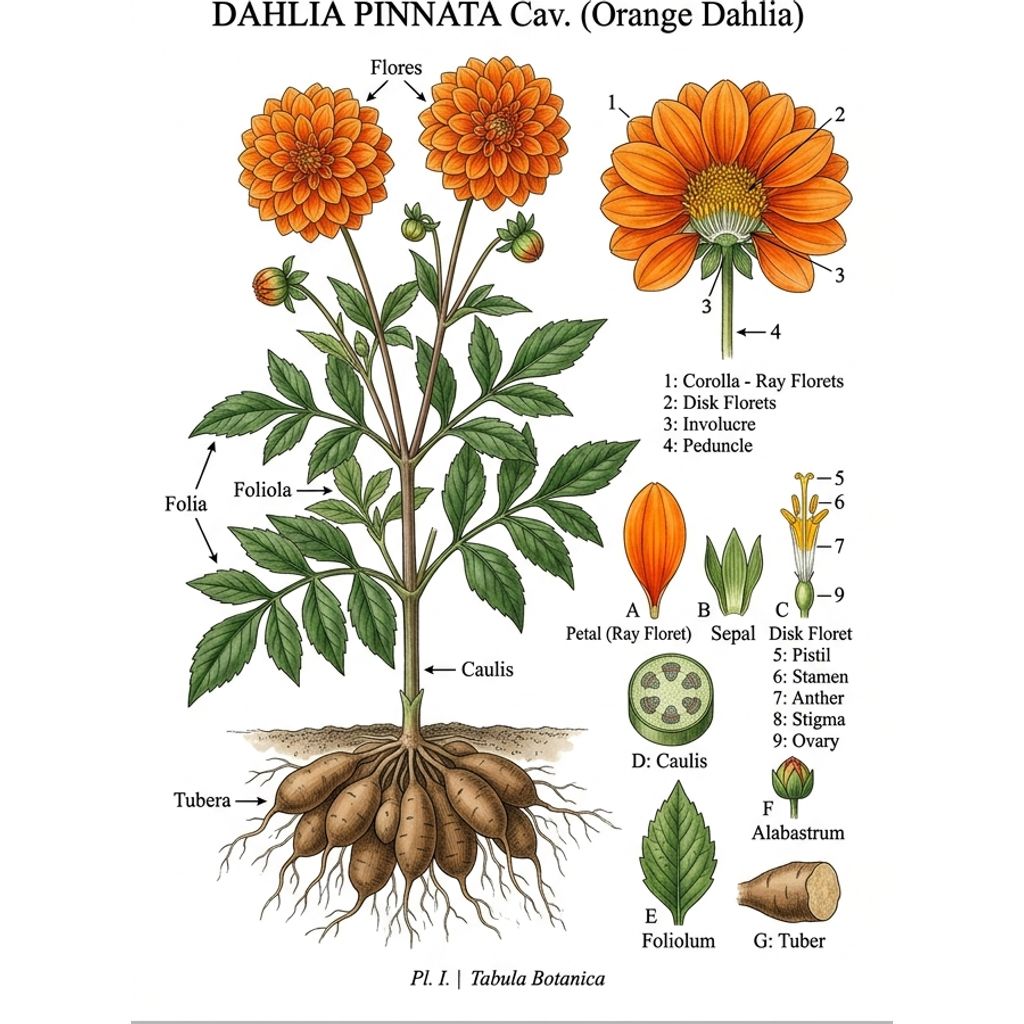
A detailed guide to identifying Orange Dahlias (Dahlia hybrids) by their key botanical features:
- Geometrical Flower Heads: Perfectly structured circular flower heads measuring 2 to 10 inches across, with overlapping concentric circles of petals.
- Amber & Sunset Hues: Blooms display radiant, warm colors including bright tangerine-orange, warm peach, copper, and amber-bronze.
- Hollow Stems & Divided Leaves: Slender, rigid, hollow green stems supporting opposite, pinnately compound green leaves with toothed edges.
- Fleshy Underground Tubers: Grows from a cluster of thick, potato-like tubers that store water and nutrients.
Types & Sub-types of Dahlias
Dahlia flower heads are categorized into distinct structural forms defined by the Royal Horticultural Society:
- By Flower Form:
- Decorative Dahlias: Large double flowers with broad, flat petals that slightly roll or curve back at the edges.
- Cactus & Semi-cactus Dahlias: Double flowers with narrow, pointed petals that are rolled backward (revolute) along their length, resembling spines.
- Ball & Pompon Dahlias: Perfectly spherical or globe-like double flowers with inward-curving, cup-shaped petals.
- Waterlily Dahlias: Double blooms with broad, flat, cup-like petals, giving them a shallow appearance similar to a water lily.
Care & Growing Guide
Orange Dahlia Care & Growing Guide:
- Light: Full direct sun (6–8 hours daily) for sturdy stems and vibrant blooms.
- Soil: Rich, organic-rich, exceptionally well-draining soil (pH 6.5–7.0).
- Watering: Water deeply 2–3 times weekly; avoid waterlogging tuber bases.
- Winter Storage: In USDA zones below 8, dig tubers after first autumn frost and store in dry peat moss in a cool basement.
Seasonal Blooming & Hardiness
Seasonal Blooming Calendar:
- Peak Bloom: Mid-summer to late autumn (July until first hard frost).
- Planting Time: Plant tubers outdoors in late spring after all danger of frost has passed.
Bloom Timeline
About Orange Dahlia
The Orange Dahlia, botanically designated under the genus Dahlia (particularly hybrids of Dahlia pinnata), is an exceptionally spectacular, highly vibrant tuberous perennial. Belonging to the family Asteraceae (the daisy or sunflower family, tribe Coreopsideae), this high-color classic is native to the mountainous, volcanic valleys of Mexico and Central America, where it was cultivated by the Aztecs before taking the horticultural world by storm in the 19th century.
Standing 1 to 5 feet (30 to 150 cm) tall depending on the cultivar, this bushy, herbaceous plant grows from a cluster of thick underground tubers. It features opposite, pinnately compound, and deep green leaves with serrated margins. From mid-summer through autumn (July until frost), sturdy hollow stems arise, topped by massive, intricate, and geometrically perfect flower heads (capitula) measuring 2 to 10 inches across.
These blossoms exhibit a stunning spectrum of warm, glowing shades of amber, copper, bright tangerine-orange, and sunset-bronze. The flower heads are composed of hundreds of sterile, flat or rolled outer ray florets (petals) arranged in complex, overlapping concentric circles surrounding a central disc of tubular yellow florets. The family-specific floral formula is EBr ⊕ ⚿ K0 C(5) A(5) G̅(2). This states that the flower heads are ebracteate, radially symmetrical, and bisexual (for disc florets). The calyx is reduced to K0, and the corolla has 5 fused petals. The 5 stamens have fused anthers, and the 2 fused carpels form an inferior ovary.
Cultivating Dahlias requires full direct sun (at least 6 to 8 hours daily) and rich, deep, organic-rich, and exceptionally well-draining soils with a neutral pH. They are heavy feeders and drinkers, requiring regular watering and balanced fertilizing throughout the growing season. Tall varieties require sturdy stakes to support the heavy flowers. They are hardy outdoors only in USDA zones 8 through 11; in colder northern climates, the tubers must be dug up in autumn and stored in a cool, dry, frost-free basement.
The genus name Dahlia honors the famous 18th-century Swedish botanist Anders Dahl. Famed as the national flower of Mexico, it was traditionally cultivated by the Aztecs for its edible tubers (which store water) and medicinal properties. Famed in Sanskrit as Dahlia (डाहलिया) and in Hindi as Narangi Dahlia (नारंगी डाहलिया), it represents inner strength, creativity, dignity, and eternal gratitude in the Victorian language of flowers.
For pet owners, the Orange Dahlia requires caution. All parts of the Dahlia plant are TOXIC to dogs, cats, and horses due to the presence of phototoxic polyacetylene compounds. Ingestion causes mild stomach irritation, drooling, vomiting, and diarrhea. Additionally, contact with the plant's sap can trigger mild skin irritation or contact dermatitis, which is worsened by exposure to sunlight. For complete safety guidelines, visit our general Pet Guard page. It is distinguished from zinnias by its large underground tubers. It looks stunning in autumn borders beside Salvia or Sunflower. To explore more Asteraceae composites, browse our Flower Identifier.
For more botanical profiles and flower identification features, see our guides on Mussaenda and Oxeye Daisy.
Floral Formula & Features
Ebracteate, radially symmetrical, bisexual, calyx modified to pappus, 5 fused petals (ray or disc florets), 5 stamens fused into tube, 2 fused carpels with inferior ovary. Composite flower head
- Named for Swedish botanist Anders Dahl. National flower of Mexico. Over 42 dahlia species, thousands of cultivars. Orange varieties include 'Firepot,' 'Orange Nugget,' 'Prince of Orange'
- Flowers 2-10 inches (5-25 cm) across depending on type. Forms: decorative, cactus, semi-cactus, ball, pompon, waterlily. Colors: bright orange, tangerine, peach, salmon, bronze-orange. Blooms July-frost
- Herbaceous perennial grown from tubers. Hollow stems, compound leaves. Dies back after frost. Tubers must be dug in cold climates (zones below 8). Store in cool, dry place over winter
- Grows 1-6 feet (30-180 cm) tall depending on variety. Dwarf types 1-2 feet, tall types 4-6 feet. Lifespan of tubers: many years with proper storage. Propagated from tubers or cuttings
- Native to Mexico and Central America, particularly mountain valleys. Cultivated worldwide as ornamental. Grows best in temperate climates with warm summers, cool nights
- Requires full sun (6-8 hours). Needs rich, well-drained soil. Regular watering (not waterlogged). Fertilize monthly during growth. Stake tall varieties. Deadhead for continuous blooms. Hardy zones 8-11, grown as annual elsewhere
- Excellent cut flowers lasting 5-7 days. Attracts butterflies and bees. Deer resistant. Popular in borders, beds, containers. Dig tubers after first frost, store indoors over winter in cold climates
- Symbolizes elegance, dignity, and inner strength. Popular in late summer/fall gardens when many flowers fade. Easy to grow. Requires tuber division every 2-3 years for best blooms
- Internal Links: Compare key differences in our Dahlia vs Zinnia comparison, or try our instant Flower Identifier.
Names in Different Languages
Botanical Classification: Orange Dahlia belongs to the Asteraceae family. Learn how to identify its floral symmetry, stamen arrangement, and structural formulas in our Botanical Family Classification Guide.
Toxicity & Safety
Always keep toxic plants out of reach of children and pets. Consult a veterinarian or medical professional immediately if ingestion is suspected.
Pet Safety Guide: For detailed toxicity symptoms, first-aid measures, and safe garden alternatives, see our full Pet Guard Profile for Orange Dahlia.
Frequently Asked Questions
What is Floral Formula?
A floral formula is a symbolic representation of a flower's structure using letters, numbers, and special symbols. It provides a concise way to describe the arrangement and number of floral parts.
This formula describes the flower's symmetry, sepals, petals, stamens, and carpels in a standardized format.
Formula Sequence
- Bract: Br or Ebr
- Bracteole: Brl or Ebrl
- Symmetry: % (Radial) or ⊕ (Bilateral)
- Sex: ♀ (Female), ♂ (Male), or ⚥ (Bisexual)
- Calyx/Sepal: K<number> (Free or Fused)
- Corolla/Petal: C<number> (Free or Fused)
- Androecium: A<number> (Free or Fused)
- Gynaecium: G<number> (Superior or Inferior Ovary)
Symbol Meanings
- Numbers: Indicate quantity of parts
- Parentheses (): Parts are fused together
- Plus (+): Parts in different whorls
- Underline: Superior ovary position
- Overline: Inferior ovary position
- ∞: Numerous parts (too many to count)
Understanding floral formulas helps botanists quickly identify and classify flowers based on their structural characteristics.
Similar Flowers
Discover flowers that share botanical characteristics
Same Genus
2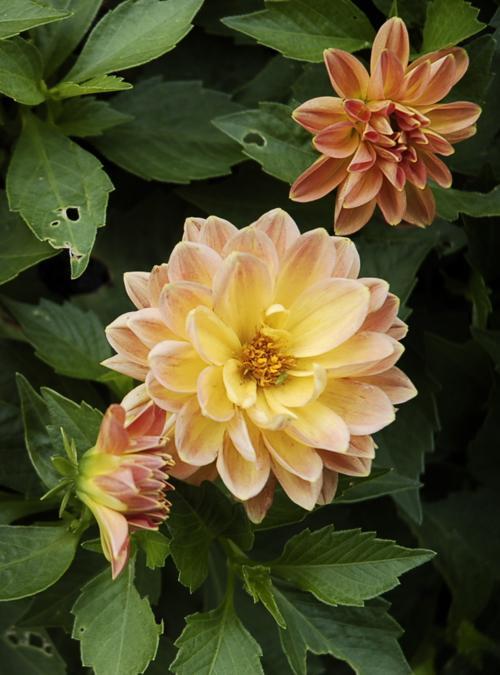
Pink-Yellow Dahlia
Dahlia pinnata (Hybrid)
The Pink-Yellow Dahlia is a spectacular, tuberous herbaceous perennial belonging to the vast Asteraceae family. Native to the mountainous highlands of Mexico and Central America, Dahlias have been heavily hybridized by botanists to produce an astonishing variety of geometric forms and vivid color...
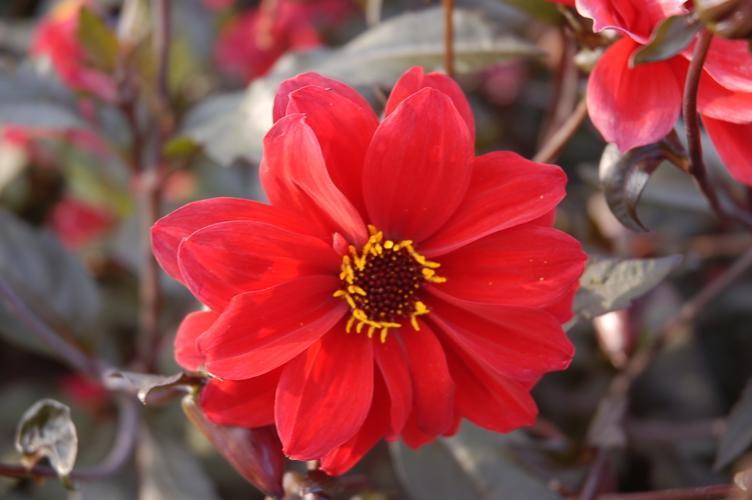
Dahlia 'Bishop of Llandaff'
Dahlia 'Bishop of Llandaff'
The Dahlia 'Bishop of Llandaff', a stunning member of the Asteraceae family, is a highly prized tuberous perennial native to the mountainous regions of Mexico. First introduced in the 1920s, it remains one of the most famous and beloved Dahlia cultivars in the world. It is renowned not just for i...
Same Family
4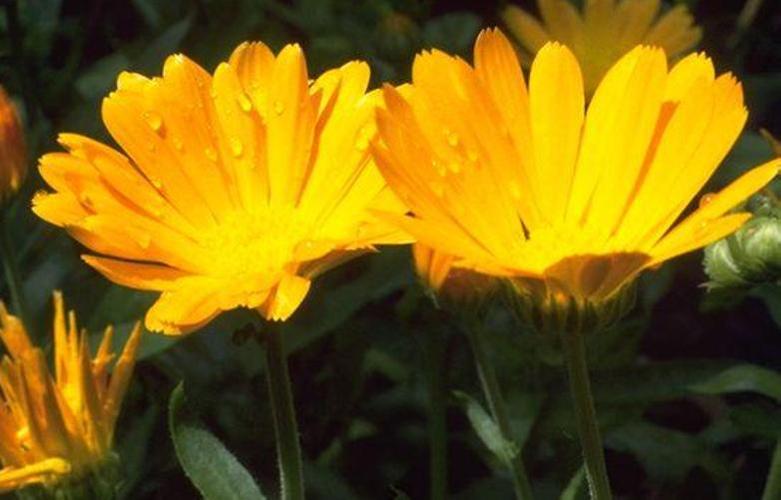
English Marigold (Calendula)
Calendula officinalis
The English Marigold (Calendula officinalis), widely known as the Pot Marigold, is a cheerful and incredibly versatile annual (or short-lived perennial in mild climates) belonging to the Asteraceae family. Native to southern Europe and the Mediterranean region, it has been a staple of traditional...
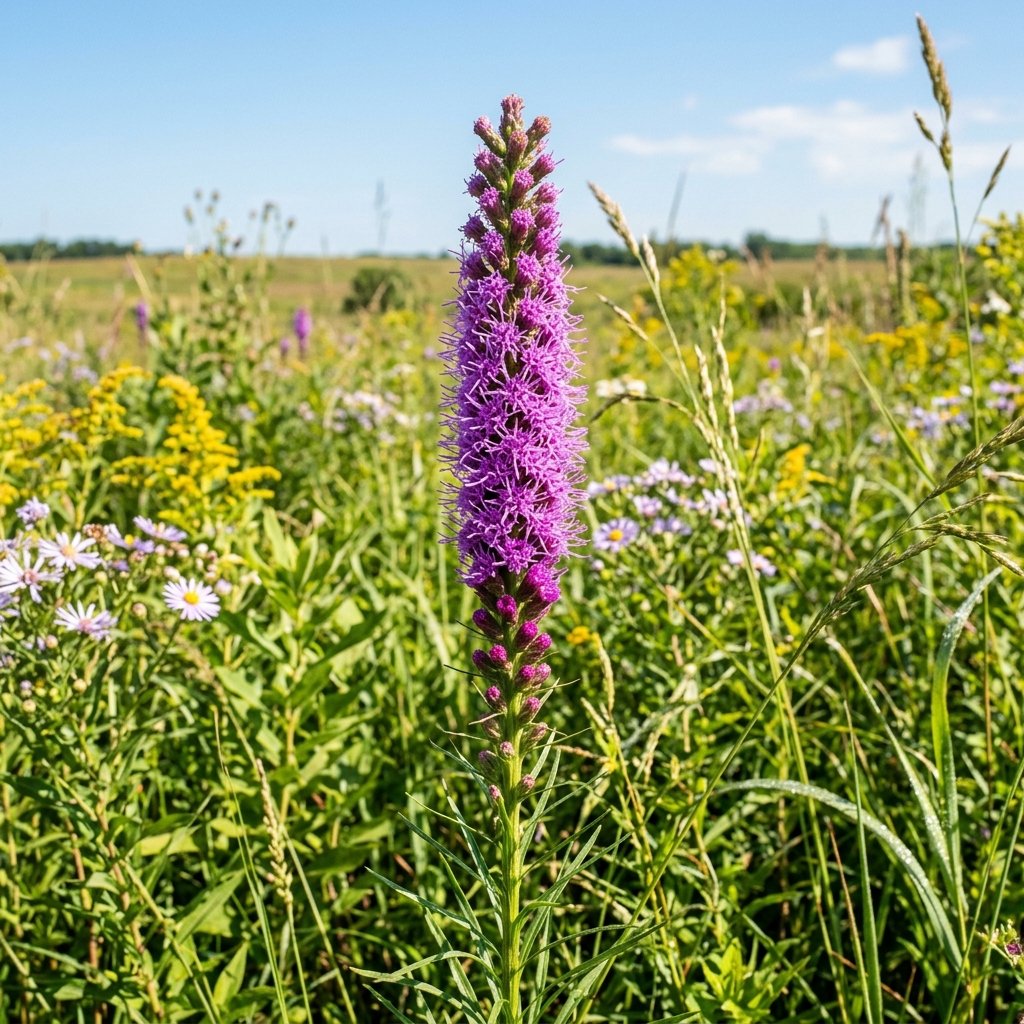
Blazing Star (Liatris)
Liatris spicata
Blazing Star, or Liatris (*Liatris spicata* and related species), is one of the most distinctive and architecturally striking native wildflowers of the North American prairie and meadow, producing tall, rigid spikes of rosy-purple to magenta flower heads that bloom from the top of the spike downw...
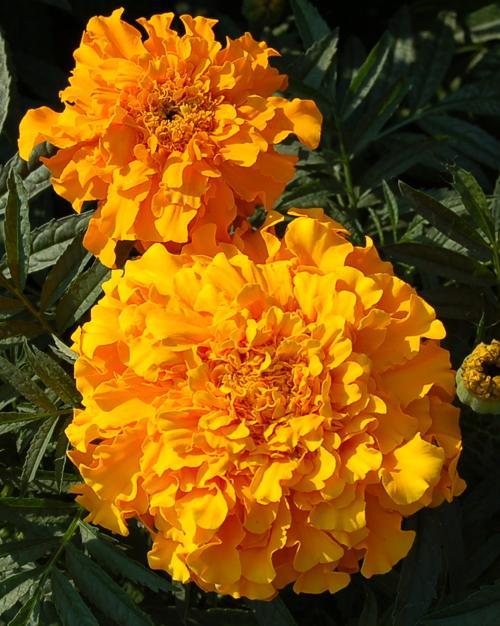
Marigold
Tagetes erecta
The Marigold, botanically classified under the genus Tagetes within the highly diverse Asteraceae (daisy or composite) family, is a cheerful, robust, and exceptionally popular herbaceous annual flower. Native to the warm, sun-drenched grasslands, mountain valleys, and open meadows of Mexico and C...
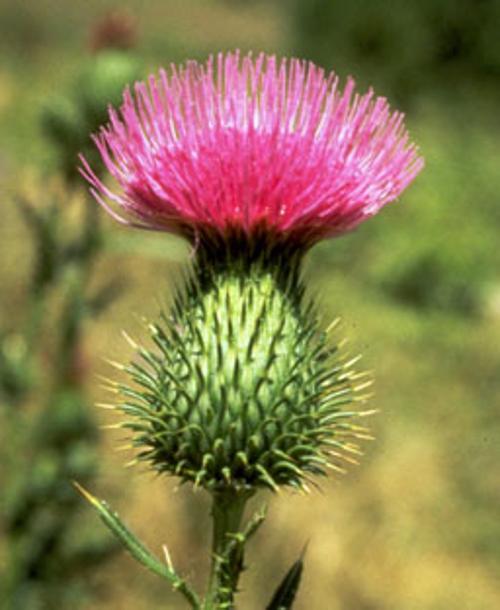
Spear Thistle (Bull Thistle)
Cirsium vulgare
The Spear Thistle, botanically designated as Cirsium vulgare (and commonly referred to as the Bull Thistle), is a robust and highly spiny biennial herb belonging to the family Asteraceae (the daisy or composite family). Native to the meadows, forest edges, and rocky valleys of Europe, western Asi...
Similar Characteristics
4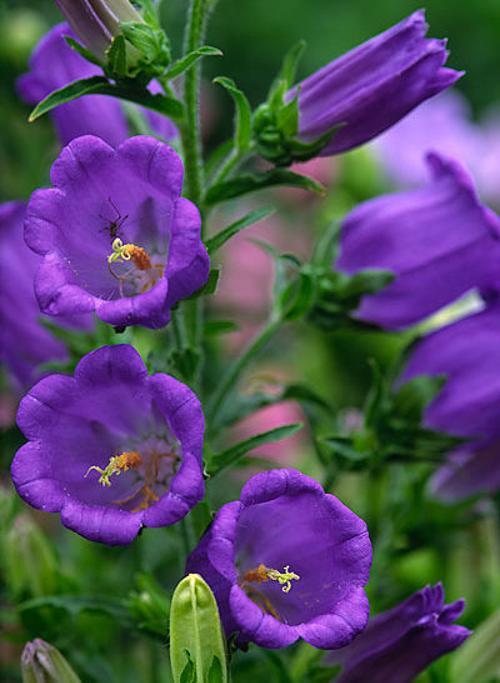
Canterbury bells
Campanula medium
Campanula medium, commonly known as Canterbury Bells, is a quintessential cottage garden biennial that brings a sense of Victorian elegance and whimsical charm to any landscape. Belonging to the Campanulaceae family, this species is native to the sun-drenched hills of Southern Europe, particularl...
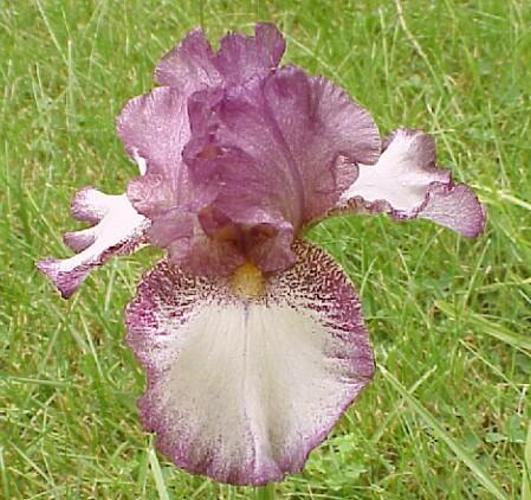
Bearded Iris
Iris germanica
The Bearded Iris, botanically designated under the genus *Iris* (particularly *Iris germanica*), is an exceptionally elegant, highly popular hardy perennial. Belonging to the family Iridaceae (the iris family, tribe Irideae), this spectacular garden favorite is native to the dry, sunny slopes and...
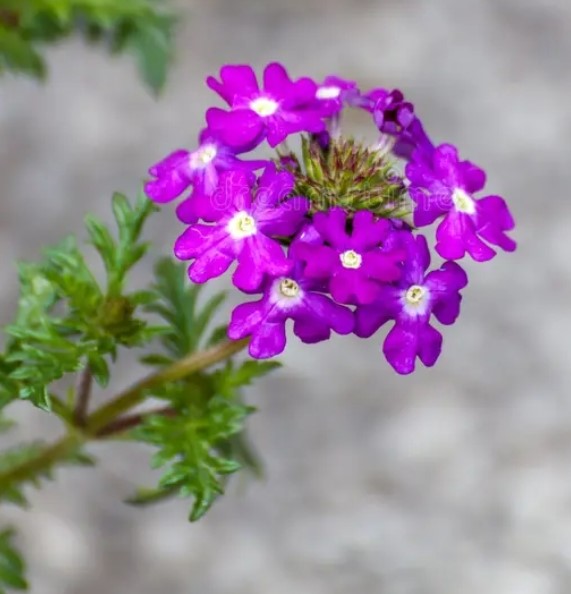
Verbena
Verbena
The Verbena, botanically classified under the genus Verbena and belonging to the family Verbenaceae (the verbena or vervain family), is an exceptionally tough, colorful, and resilient perennial (often cultivated as a warm-season annual in cooler temperate zones). Native primarily to the sunny gra...
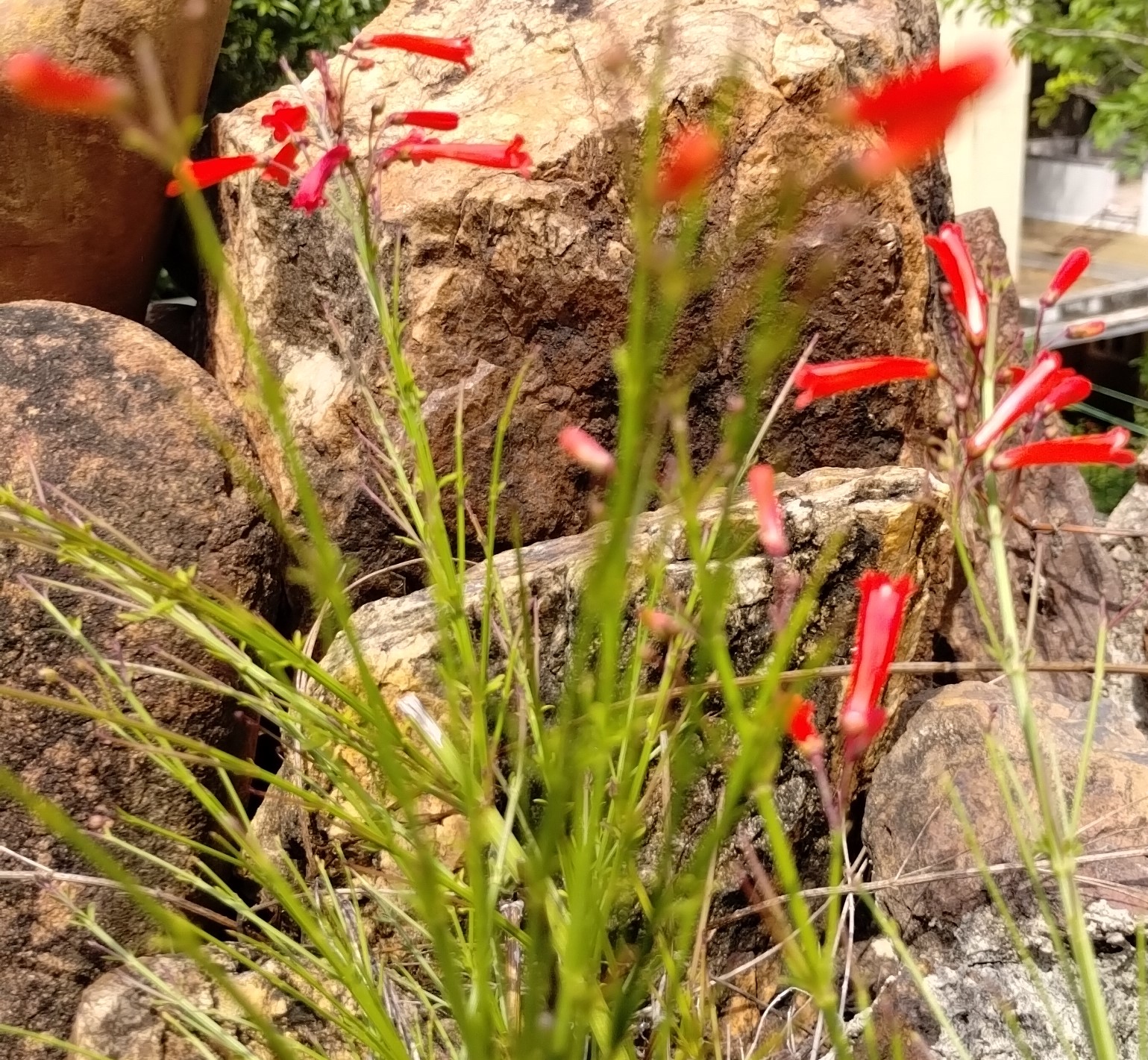
Russelia (Coral Fountain)
Russelia equisetiformis
Russelia, botanically designated as Russelia equisetiformis and popularly celebrated as the Coral Fountain or Firecracker Plant, is a spectacular, weeping tropical subshrub belonging to the Plantaginaceae (plantain) family. Native to the warm, sun-drenched woodlands and dry limestone rocky cliffs...