
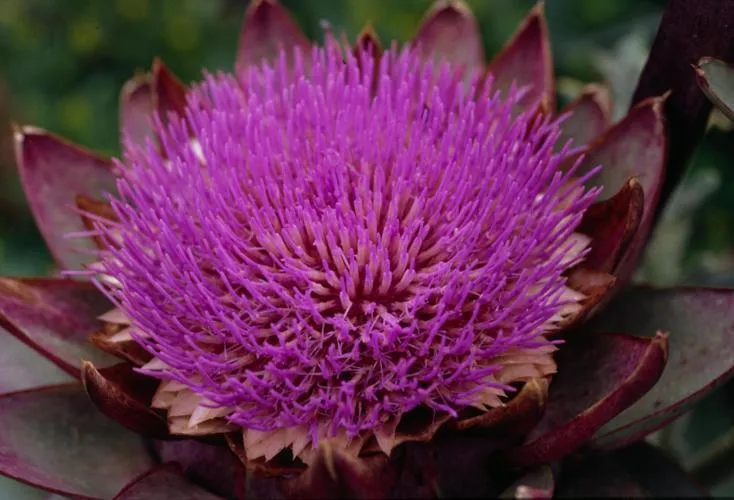
Artichoke
Cynara scolymus
How to Identify Artichoke
Care & Growing Guide
Seasonal Blooming & Hardiness
Seasonal Blooming Calendar:
- Peak Bloom: Late winter to early spring.
- Planting Time: Sow seeds directly outdoors in early spring after the last frost, or transplant nursery starts in late spring.
Bloom Timeline
About Artichoke
The Artichoke, botanically designated as Cynara cardunculus (Scolymus Group) and commonly known as the Globe Artichoke, French Artichoke, or Green Artichoke, is a highly dramatic perennial thistle. Belonging to the family Asteraceae (the daisy or sunflower family, tribe Cynareae), this architectural powerhouse is native to the warm, sunny Mediterranean basin, where it has been cultivated for thousands of years as both a culinary delicacy and a spectacular garden ornamental.
Standing 3 to 5 feet (90 to 150 cm) tall and spreading up to 4 feet wide, the plant features giant, deeply lobed, silver-green to grayish foliage with a soft, woolly texture that adds a dramatic, bold texture to sunny borders. During mid-to-late summer, it produces thick, ribbed stalks topped by massive flower buds composed of overlapping, triangular green or purple-tinted bracts. If not harvested for food, these buds open into spectacular, brilliant purple thistle-like heads (capitula) measuring up to 6 inches in diameter.
The fully opened bloom consists of hundreds of tiny, vibrant violet tubular disc florets that emerge from a central fleshy receptacle (the artichoke 'heart'). The radially symmetrical reproductive morphology is summarized by the family formula ⊕ ⚥ K(pappus) C(5) A(5) G̅(2). This formula states that the florets are actinomorphic and bisexual. The calyx is modified into a hairy pappus, and the corolla has 5 fused petals forming a tubular mouth. The androecium contains 5 stamens with fused anthers (syngenesious), and the gynoecium contains 2 fused carpels with an inferior ovary.
Cultivating Globe Artichokes requires full direct sun (at least 6 hours daily) and rich, deep, highly fertile, and exceptionally well-draining soils with a neutral pH. They are heavy feeders and require consistent soil moisture during bud development. While hardy in USDA zones 7 through 11, their crowns must be heavily mulched with straw in cold winter zones to protect them from killing frost, or grown strictly as annuals.
The name 'Artichoke' is believed to derive from the Arabic al-kharshuf via the Spanish alcachofa. Famed in Sanskrit as Vajrāngī (वज्राङ्गी) and in Hindi as Hathichak (हाथीचक), it is a major symbol of hospitality and refined culinary taste. The leaves and buds contain high levels of cynarin and silymarin, prized in traditional herbal medicine for liver support and digestion. Non-toxic to pets, it is a perfect selection for edible landscapes. For detailed safety guidance, visit our general Pet Guard page.
Artichoke is a spectacular background plant. It pairs beautifully with Lavender or Parijat-night_jasmine-coral_jasmine. To discover more bold architectural thistles, browse our Flower Identifier.
For more botanical profiles and flower identification features, see our guides on Masterwort and Barberton Daisy.
Floral Formula & Features
Radially symmetrical, bisexual, sepals modified into pappus (hair-like bristles), 5 fused petals forming tubular florets, 5 stamens with fused anthers forming tube around style, 2 fused carpels with inferior ovary typical of Asteraceae
- Botanical Heritage: The Artichoke belongs to the Asteraceae (daisy/sunflower) family and the genus Cynara. The name 'Artichoke' is believed to derive from the Arabic 'al-kharshuf' via Spanish 'alcachofa.' In Greek mythology, the plant originated when Zeus, after being rejected by a beautiful woman named Cynara, transformed her into this thorny thistle. It has been cultivated in the Mediterranean for millennia, prized by ancient Romans and Greeks alike.
- Identification: Artichokes are identifiable by their large, deeply lobed, grayish-green leaves that have a soft, woolly texture. The flower stalks are thick and ribbed, growing 3 to 5 feet tall. The flower bud is composed of overlapping green or purple-tinted bracts. When it blooms, a dense cushion of purple 'hair' (the florets) emerges from the center. The edible 'heart' is the fleshy receptacle at the base of the flower head.
- Floral Formula: As a member of the Asteraceae, its floral formula is ⊕ ⚥ K∞ [C(5) A(5)] G(2). This denotes a radially symmetrical floret with an inferior ovary, a pappus (modified sepals appearing as hairs), and fused petals and stamens forming a floral tube. The hundreds of florets work together to present a single large visual 'flower' to pollinators.
- Growing Conditions: Artichokes thrive in USDA zones 7–11, though they can be grown as annuals in cooler climates. They require full sun and deep, fertile, well-drained soil with a slightly acidic to neutral pH. They are heavy feeders and require consistent moisture, especially during the development of the flower buds. In cold-winter areas, the crowns must be heavily mulched to survive the frost.
- Cultural and Culinary Value: Beyond its role in Italian and French cuisine, the Artichoke is a symbol of hospitality and refined taste. In medicine, particularly herbalism, the leaves and flower parts are used for liver support and digestion, containing compounds like cynarin. As an ornamental, it provides a bold, silvery texture that contrasts beautifully with fine-foliage plants and grasses.
- Pet Safety Status: The Artichoke is generally considered NON-TOXIC to cats and dogs. While the plant is safe, the high fiber content of the leaves or bracts can cause mild stomach upset if a large amount is ingested. The spines on certain varieties can also cause mechanical injury. For a complete list of safe garden plants, visit our Pet Guard section.
- Look-alikes: Often confused with the Cardoon (Cynara cardunculus var. altilis), its close relative. Cardoons are larger, thirstier, and grown primarily for their edible leaf stalks rather than the flower buds. The flowers are nearly identical but slightly smaller and more intensely colored. It also resembles the Wild Thistle (Onopordum acanthium), which is much spinnier and considered a weed.
- Garden Utility and SEO: Artichokes are perfect for the back of the border where their height and silver foliage can shine. They attract bumblebees and butterflies in droves. Pair them with Lavender, Oleander, and Parijat for a fragrant, texture-rich Mediterranean escape. Check our Flower Identifier for more Asteraceae family members.
Names in Different Languages
Botanical Classification: Artichoke belongs to the Asteraceae family. Learn how to identify its floral symmetry, stamen arrangement, and structural formulas in our Botanical Family Classification Guide.
Toxicity & Safety
Frequently Asked Questions
What is Floral Formula?
A floral formula is a symbolic representation of a flower's structure using letters, numbers, and special symbols. It provides a concise way to describe the arrangement and number of floral parts.
This formula describes the flower's symmetry, sepals, petals, stamens, and carpels in a standardized format.
Formula Sequence
- Bract: Br or Ebr
- Bracteole: Brl or Ebrl
- Symmetry: % (Radial) or ⊕ (Bilateral)
- Sex: ♀ (Female), ♂ (Male), or ⚥ (Bisexual)
- Calyx/Sepal: K<number> (Free or Fused)
- Corolla/Petal: C<number> (Free or Fused)
- Androecium: A<number> (Free or Fused)
- Gynaecium: G<number> (Superior or Inferior Ovary)
Symbol Meanings
- Numbers: Indicate quantity of parts
- Parentheses (): Parts are fused together
- Plus (+): Parts in different whorls
- Underline: Superior ovary position
- Overline: Inferior ovary position
- ∞: Numerous parts (too many to count)
Understanding floral formulas helps botanists quickly identify and classify flowers based on their structural characteristics.
Similar Flowers
Discover flowers that share botanical characteristics
Same Family
4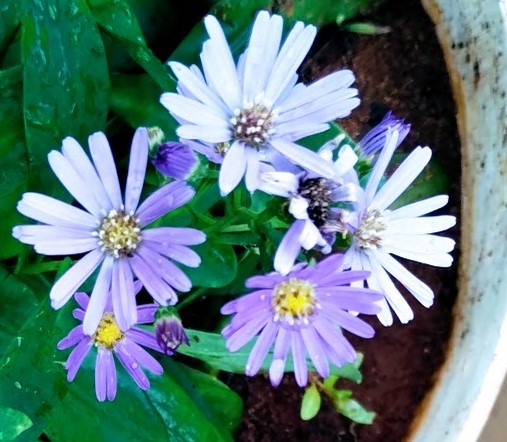
Aster (Michaelmas Daisy)
Symphyotrichum (formerly Aster)
The Aster, commonly known as the Michaelmas Daisy, is a quintessential late-summer and autumn bloomer belonging to the vast Asteraceae family. Native primarily to North America and Eurasia, these resilient perennials are absolute magnets for pollinators. Earning their name from the ancient Greek...
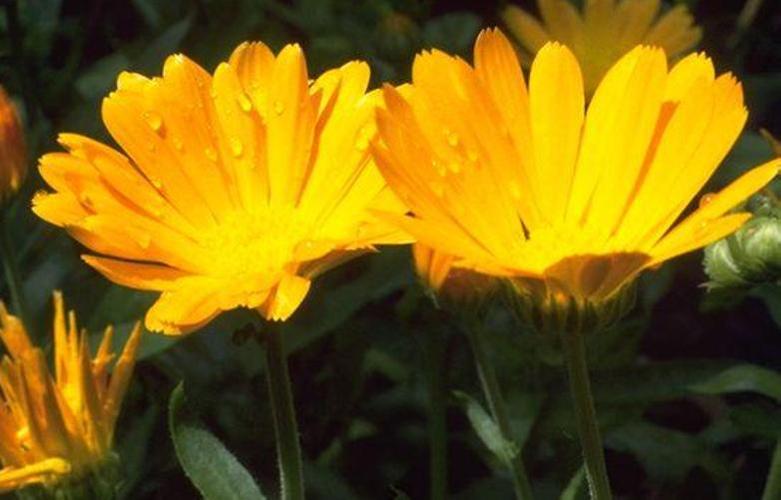
English Marigold (Calendula)
Calendula officinalis
The English Marigold (Calendula officinalis), widely known as the Pot Marigold, is a cheerful and incredibly versatile annual (or short-lived perennial in mild climates) belonging to the Asteraceae family. Native to southern Europe and the Mediterranean region, it has been a staple of traditional...
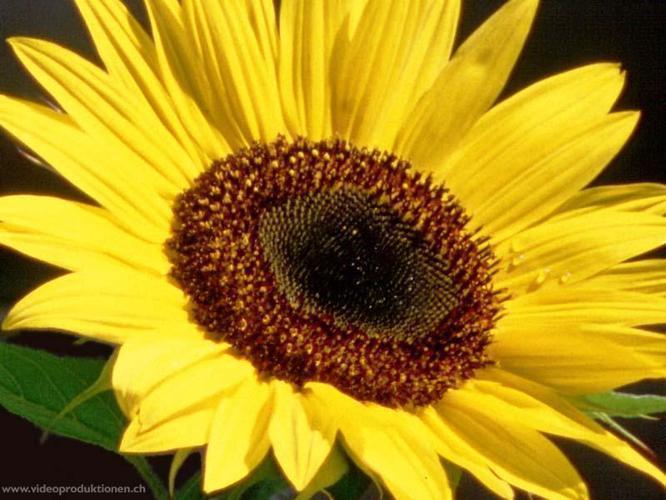
Sunflower
Helianthus annuus
The Sunflower, botanically classified as Helianthus annuus and commonly known as the Common Sunflower, is an exceptionally iconic, robust, and fast-growing annual plant. Belonging to the family Asteraceae (the daisy, aster, or composite family), this famous wildflower is native to the fertile pra...
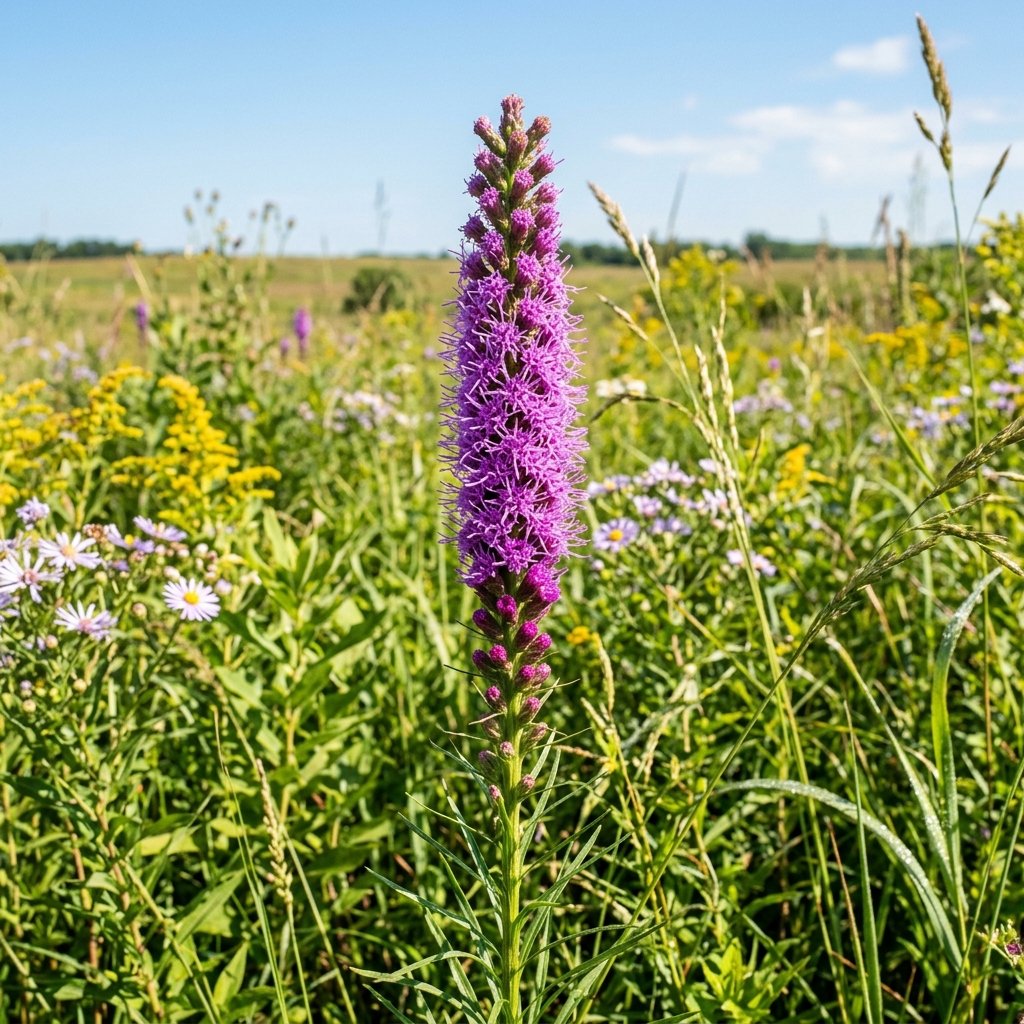
Blazing Star (Liatris)
Liatris spicata
Blazing Star, or Liatris (*Liatris spicata* and related species), is one of the most distinctive and architecturally striking native wildflowers of the North American prairie and meadow, producing tall, rigid spikes of rosy-purple to magenta flower heads that bloom from the top of the spike downw...
Similar Characteristics
4
Daisy
Bellis perennis
The Common Daisy, botanically designated as *Bellis perennis* (and including related garden favorites like the English Daisy or Lawn Daisy), is an exceptionally cheerful, highly resilient herbaceous perennial. Belonging to the family Asteraceae (the daisy or sunflower family, tribe Astereae), thi...
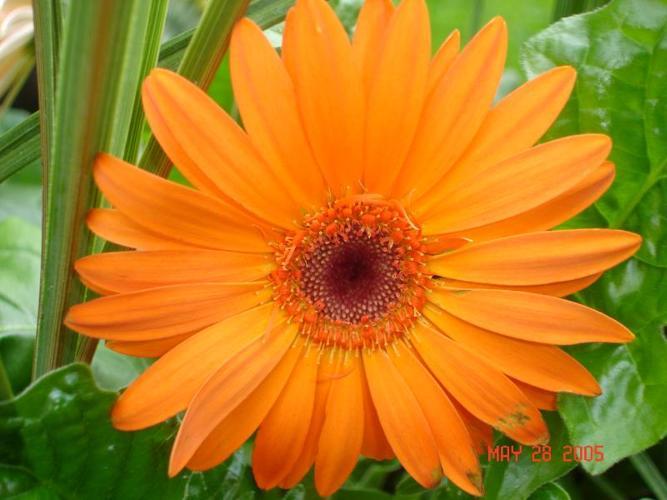
Barberton Daisy
Gerbera jamesonii
The Barberton Daisy, botanically known as Gerbera jamesonii and widely cherished as the Gerbera Daisy or Transvaal Daisy, is an exceptionally cheerful and colorful herbaceous perennial in the Asteraceae (sunflower) family. Native to the rich, subtropical valleys and grassy slopes of South Africa'...
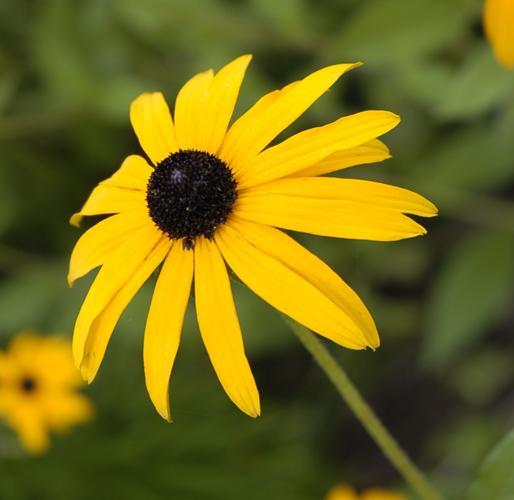
Black eyed Susan
Rudbeckia hirta
Rudbeckia hirta, famously known as the "Black-Eyed Susan" or "Yellow Ox-Eye Daisy," is a quintessentially American wildflower that brings a burst of radiant sunshine to North American landscapes. A member of the Asteraceae (Daisy) family, this resilient species is native to much of the central an...
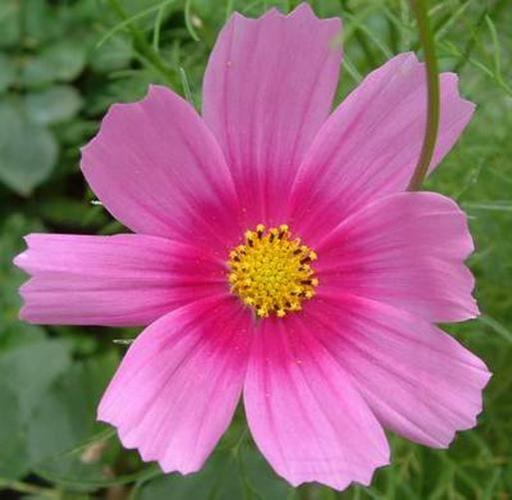
Mexican Aster
Cosmos bipinnatus
The Mexican Aster, botanically designated as Cosmos bipinnatus and commonly referred to as Garden Cosmos or simply Cosmos, is an exceptionally graceful, fast-growing, and heavy-blooming annual. Belonging to the family Asteraceae (the daisy or composite family), this beautiful plant is native to t...