
Gaillardia
Gaillardia
How to Identify Gaillardia
NON-TOXIC. 100% safe for cats, dogs, and horses, making them a safe and brilliant addition to family wildflower gardens.
Care & Growing Guide
Seasonal Blooming & Hardiness
Seasonal Blooming Calendar:
- Peak Bloom: Summer (typically June through September).
- Planting Time: Sow seeds directly outdoors in early spring after the last frost, or transplant nursery starts in late spring.
Bloom Timeline
About Gaillardia
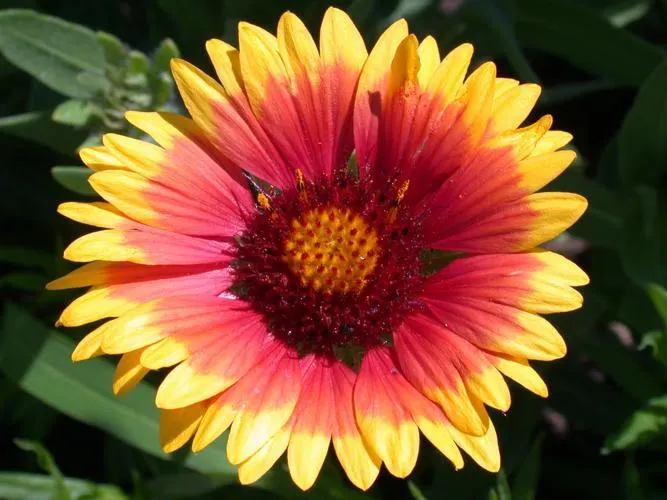
Gaillardia, botanically classified within the genus Gaillardia in the Asteraceae (sunflower) family and popularly known as the Blanket Flower or Indian Blanket, is a group of exceptionally cheerful, sun-loving annuals and short-lived perennials. Native to the dry prairies, sandy plains, and pine barrens of North and South America, this highly resilient wildflower has captured the hearts of gardeners worldwide. Celebrated for its daisy-like blossoms painted in bold, blazing concentric bands of red, orange, and yellow, it stands as a premier choice for high-impact summer borders.
Growing in multi-stemmed, bushy mounds that reach 1 to 3 feet in height and spread up to 18 inches, Gaillardia is characterized by its rough, hairy, grey-green lanceolate leaves. From early summer through first frost (June to October), the plant produces an endless profusion of solitary composite flower heads measuring 2 to 4 inches across. The ray florets feature a distinctive three-toothed flared tip, displaying bold, bicolor patterns of crimson-red bases with bright golden-yellow margins, surrounding a dark burgundy-purple central disc.
The reproductive architecture of the Blanket Flower capitulum is represented by the botanical floral formulas: Ray florets: Br % ♀/⚥ K0 C∞ A0 G(2) ; Disc florets: Br ⊕ ⚥ K0 C(5) A(5) G(2). This formula indicates that the outer ray florets are female or sterile, zygomorphic, and have 3-lobed petals with no stamens. The central disc florets are bisexual, actinomorphic, and tubular, featuring 5 fused petals, 5 stamens with fused anthers, and a syncarpous gynoecium composed of 2 fused carpels with an inferior ovary.
Horticulturally, Gaillardia is an incredibly tough, low-maintenance plant that thrives on neglect. It requires full, intense, direct sunlight, needing a minimum of 6 to 8 hours of direct daily exposure to produce its massive flush of blooms. It demands poor, sandy, rocky, or gravelly soils with exceptional drainage; planting it in rich, fertile, or highly fertilized soils will cause weak, floppy growth and significantly shorten its lifespan. Once established, it is extremely drought and heat tolerant across USDA zones 3 through 10.
The genus name Gaillardia honors Gaillard de Charentonneau, an influential 18th-century French magistrate and patron of botanical research. The common name 'Blanket Flower' was inspired by the striking, warm color patterns of the blossoms, which closely resemble the traditional hand-woven wool blankets of Native American tribes. Famed on the Indian subcontinent as Blanket Flower (ब्लांकेट फ्लावर) and in classical Sanskrit as Bahuvarnapushpam (बहुवर्णपुष्पम्), it serves as a symbol of bright optimism, warmth, and resilience.
For pet-owning families, the Blanket Flower is a safe and joyful landscaping choice. Gaillardia species are classified as completely NON-TOXIC to cats, dogs, and horses by leading veterinary safety databases, including the ASPCA. While the fine hairs on the leaves can occasionally cause a mild, mechanical skin irritation (contact dermatitis) if dogs brush against them heavily, the plant contains no toxic systemic chemicals. To discover more safe, drought-tolerant, and pollinator-friendly landscape options, please visit our Pet Guard catalog.
Blanket Flower is occasionally confused with wild Sunflowers (Helianthus) or Marigolds (Tagetes). It is easily distinguished because Gaillardia features three-toothed tips on its ray petals and distinctive burgundy-burgundy centers, whereas marigolds have highly aromatic, deeply dissected leaves and ruffled petals. It pairs beautifully in sunny rock gardens beside other heat-lovers; we suggest planting it with Gazania, low-growing Cigar Flower, or feathery Mexican Aster (Cosmos). Find more sun-loving Asteraceae in our Flower Identifier.
Floral Formula & Features
Ray florets - bilaterally symmetrical, female, calyx modified to scales (K0), petals forming 3-lobed strap, inferior ovary. Disc florets - radially symmetrical, bisexual, calyx modified to scales, 5 fused petals, 5 fused stamens, 2 fused carpels with inferior ovary
- Scientific Name & Classification: Gaillardia (Asteraceae). Commonly known as Blanket Flower, Indian Blanket, and Firewheel.
- Identification Markers: Hairy, grey-green lanceolate leaves. Solitary daisy-like blooms with three-toothed ray petals in blazing concentric rings of crimson-red and yellow.
- Floral Formula (Ray: Br % ♀/⚥ K0 C∞ A0 G(2) ; Disc: Br ⊕ ⚥ K0 C(5) A(5) G(2)): Complex head with colorful outer ray florets and tubular, bisexual disc florets.
- Growing Requirements: Full, intense sun (6-8 hours); requires poor, dry, sandy, or gravelly soil with sharp drainage. Avoid fertile soil and overwatering (Zones 3-10).
- Cultural Significance: Named after French botanist patron Gaillard de Charentonneau. Colors resemble woven Native American blankets; Oklahoma's state wildflower.
- Safety & Toxicity: NON-TOXIC. 100% safe for cats, dogs, and horses, making them a safe and brilliant addition to family wildflower gardens.
- Common Look-alikes: Confused with Marigolds or wild Sunflowers, but easily distinguished by the three-toothed ray petal tips and concentric bicolor patterns.
- Internal Links: Pairs magnificently in dry xeriscapes with other colorful sun-lovers like Gazania, Cigar Flower, or Mexican Aster; find more in our Flower Identifier.
Names in Different Languages
Botanical Classification: Gaillardia belongs to the Asteraceae family. Learn how to identify its floral symmetry, stamen arrangement, and structural formulas in our Botanical Family Classification Guide.
Toxicity & Safety
Frequently Asked Questions
What is Floral Formula?
A floral formula is a symbolic representation of a flower's structure using letters, numbers, and special symbols. It provides a concise way to describe the arrangement and number of floral parts.
This formula describes the flower's symmetry, sepals, petals, stamens, and carpels in a standardized format.
Formula Sequence
- Bract: Br or Ebr
- Bracteole: Brl or Ebrl
- Symmetry: % (Radial) or ⊕ (Bilateral)
- Sex: ♀ (Female), ♂ (Male), or ⚥ (Bisexual)
- Calyx/Sepal: K<number> (Free or Fused)
- Corolla/Petal: C<number> (Free or Fused)
- Androecium: A<number> (Free or Fused)
- Gynaecium: G<number> (Superior or Inferior Ovary)
Symbol Meanings
- Numbers: Indicate quantity of parts
- Parentheses (): Parts are fused together
- Plus (+): Parts in different whorls
- Underline: Superior ovary position
- Overline: Inferior ovary position
- ∞: Numerous parts (too many to count)
Understanding floral formulas helps botanists quickly identify and classify flowers based on their structural characteristics.
Similar Flowers
Discover flowers that share botanical characteristics
Same Family
4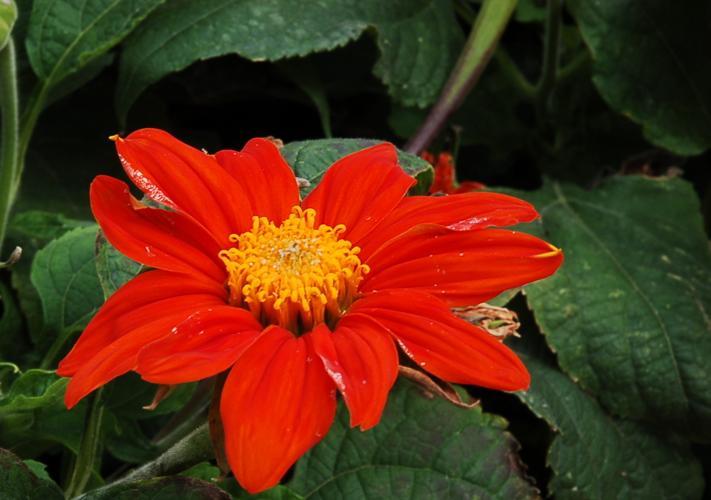
Orange Dahlia
Dahlia × hortensis
The Orange Dahlia, botanically designated under the genus *Dahlia* (particularly hybrids of *Dahlia pinnata*), is an exceptionally spectacular, highly vibrant tuberous perennial. Belonging to the family Asteraceae (the daisy or sunflower family, tribe Coreopsideae), this high-color classic is nat...
Oxeye Daisy
Leucanthemum vulgare
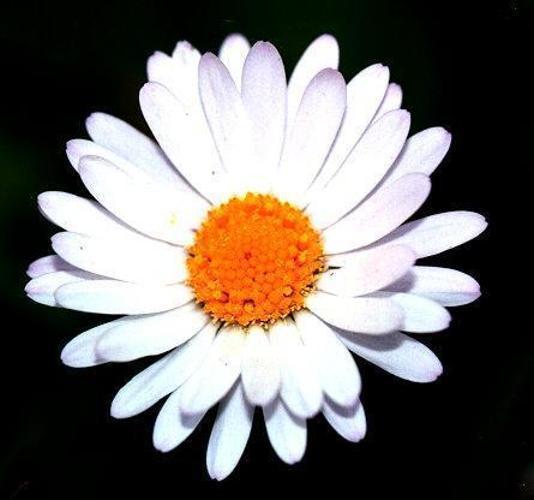
The Oxeye Daisy, botanically classified as Leucanthemum vulgare and historically celebrated as the Moon Daisy or Dog Daisy, is an exceptionally cheerful, rhizomatous herbaceous perennial belonging to the Asteraceae (daisy or composite) family. Native to the sweeping fields, dry pastures, and sunn...
Blazing Star (Liatris)
Liatris spicata
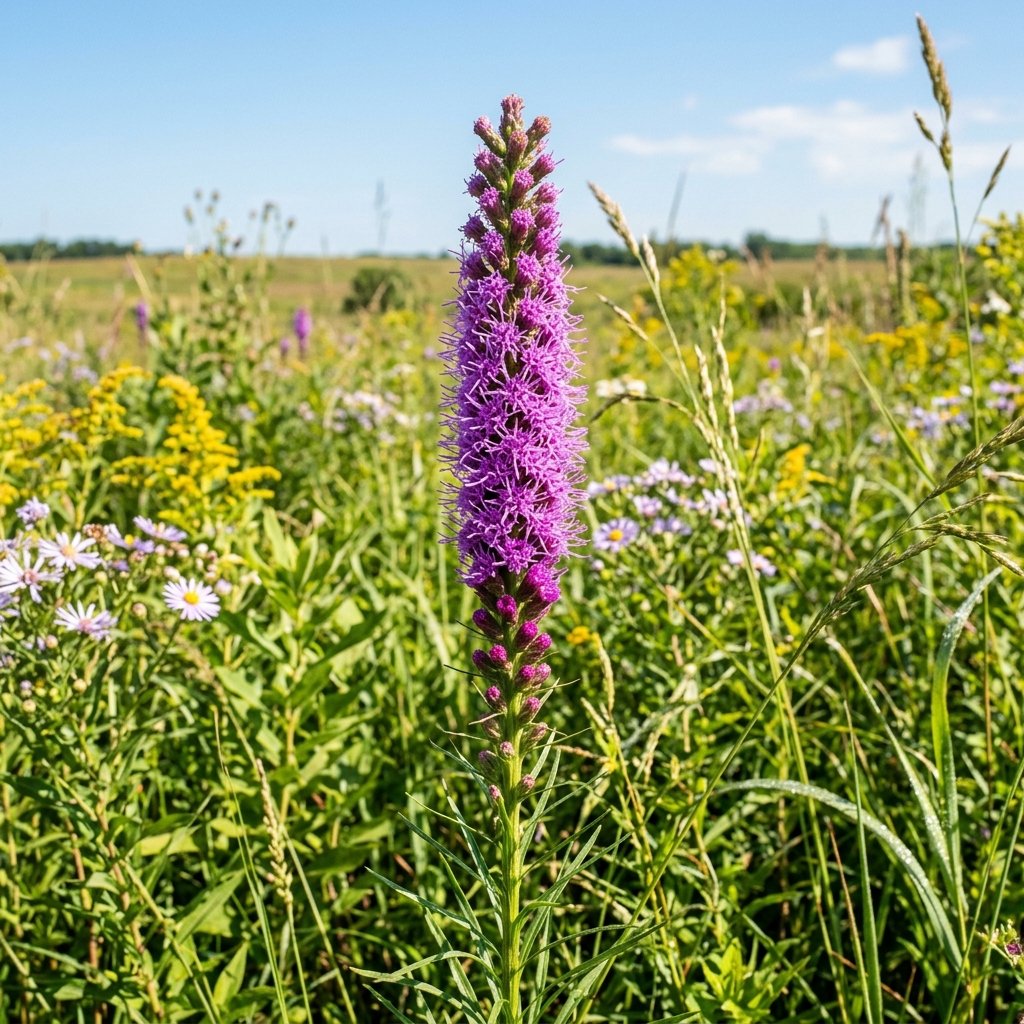
Blazing Star, or Liatris (*Liatris spicata* and related species), is one of the most distinctive and architecturally striking native wildflowers of the North American prairie and meadow, producing tall, rigid spikes of rosy-purple to magenta flower heads that bloom from the top of the spike downw...
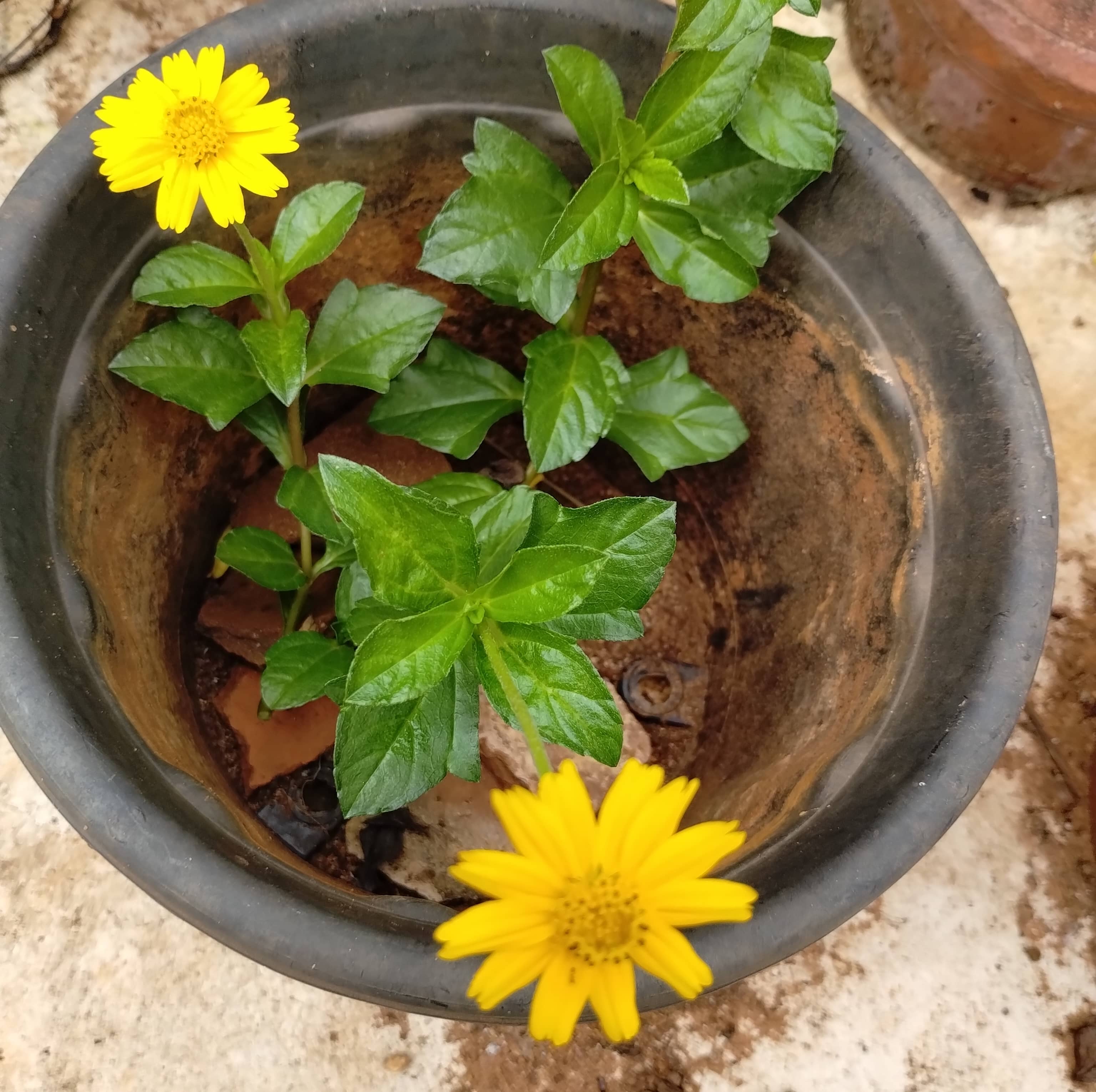
Wedelia Trilobata
Sphagneticola trilobata
Wedelia Trilobata, botanically classified as Sphagneticola trilobata and commonly known as the Creeping Daisy, Singapore Daisy, Trailing Daisy, or Creeping Oxeye, is an exceptionally fast-growing, mat-forming perennial herbaceous groundcover. Belonging to the family Asteraceae (the daisy or sunfl...
Similar Characteristics
4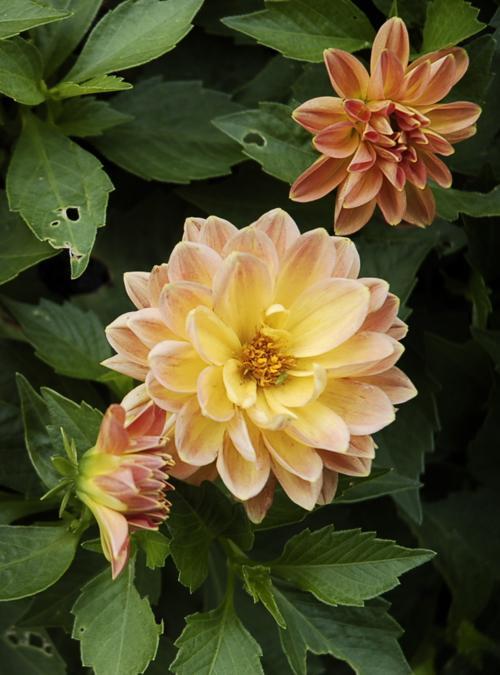
Pink-Yellow Dahlia
Dahlia pinnata (Hybrid)
The Pink-Yellow Dahlia is a spectacular, tuberous herbaceous perennial belonging to the vast Asteraceae family. Native to the mountainous highlands of Mexico and Central America, Dahlias have been heavily hybridized by botanists to produce an astonishing variety of geometric forms and vivid color...
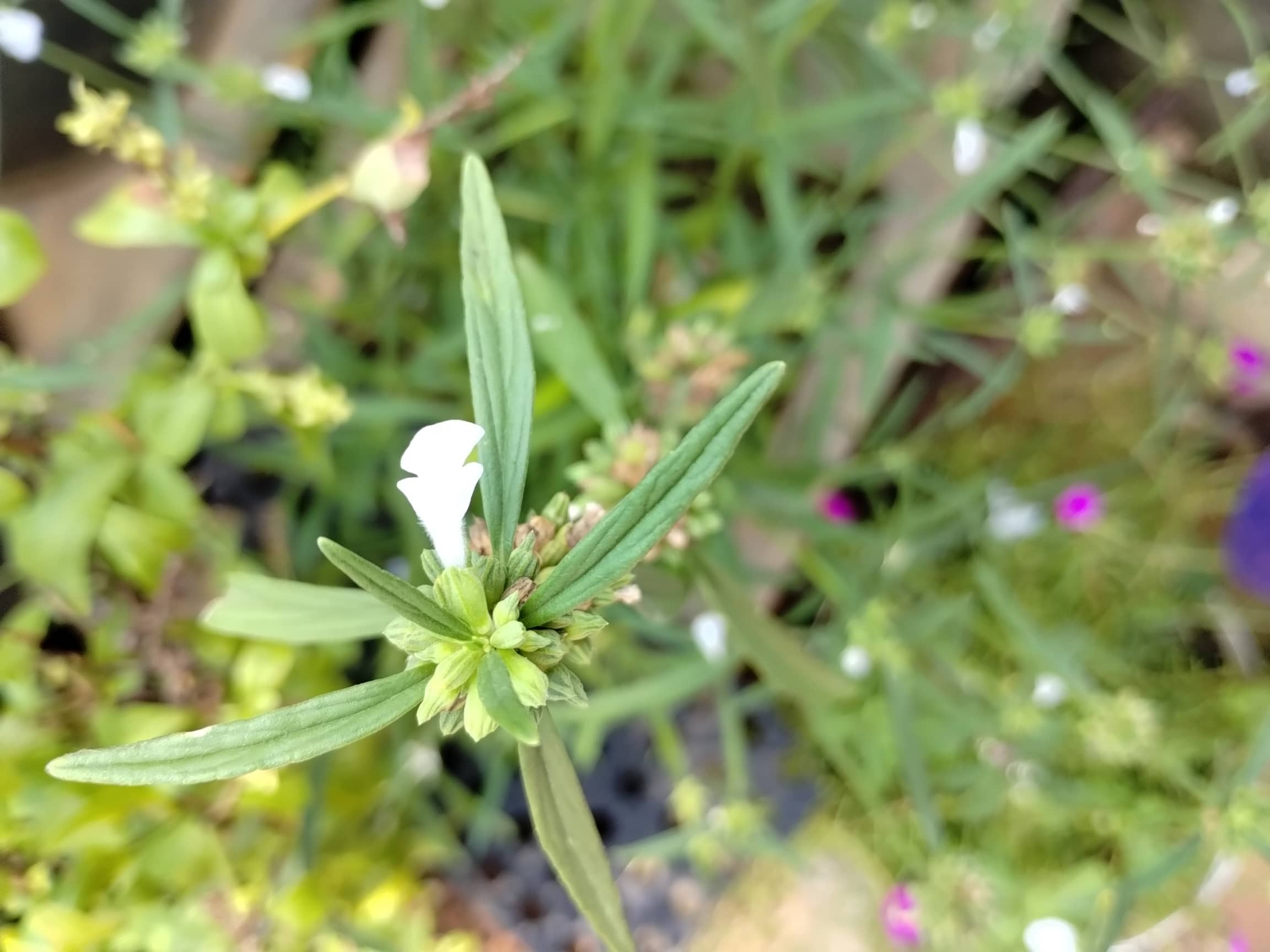
Leucas Aspera
Leucas aspera
Leucas Aspera, botanically classified as Leucas aspera and celebrated in Tamil heritage as Thumbai or in Sanskrit as Dronapushpi, is an exceptionally valuable, resilient, and highly aromatic annual or short-lived perennial herb. Belonging to the family Lamiaceae (the mint family, tribe Leucadeae)...
Blazing Star (Liatris)
Liatris spicata
Blazing Star, or Liatris (*Liatris spicata* and related species), is one of the most distinctive and architecturally striking native wildflowers of the North American prairie and meadow, producing tall, rigid spikes of rosy-purple to magenta flower heads that bloom from the top of the spike downw...
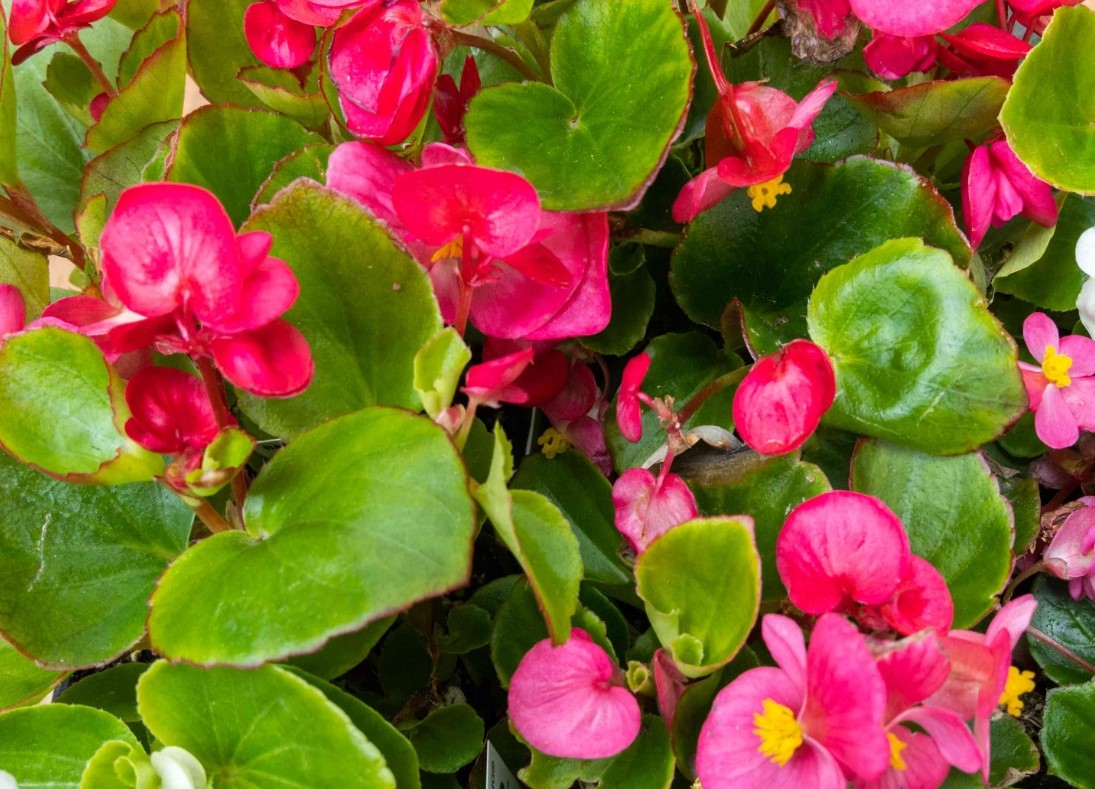
Begonia
Begonia
The Begonia, belonging to the remarkably diverse Begoniaceae family, is one of the most popular and versatile genera in the horticultural world, prized equally for its spectacular blossoms and dramatic, ornamental foliage. Comprising over 2,000 distinct species and thousands of cultivated varieti...