
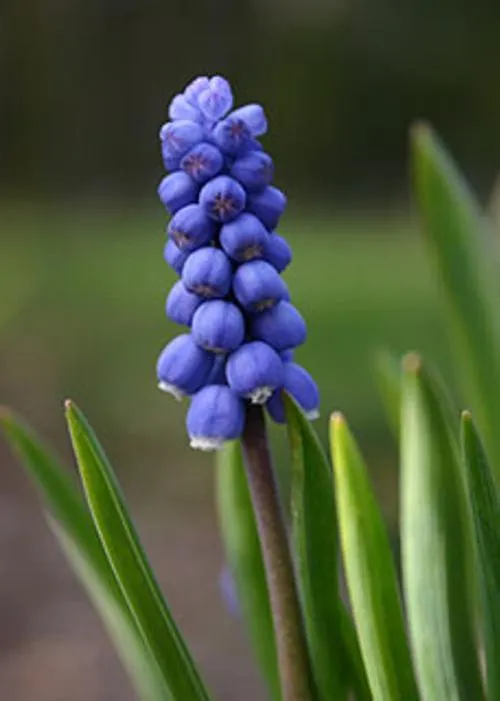
Grape hyacinth
Muscari
How to Identify Grape hyacinth
Care & Growing Guide
Seasonal Blooming & Hardiness
Seasonal Blooming Calendar:
- Peak Bloom: Spring to early summer (typically April through June).
- Planting Time: Sow seeds directly outdoors in early spring after the last frost, or transplant nursery starts in late spring.
Bloom Timeline
About Grape hyacinth
Grape Hyacinth, botanically classified under the genus Muscari and represented primarily by Muscari armeniacum, is a highly charming, clump-forming spring bulb belonging to the Asparagaceae (asparagus) family. Native to the rich mountain meadows, rocky woodlands, and grassy slopes of the Mediterranean basin, Southern Europe, Turkey, and Western Asia, this extremely resilient minor bulb is globally celebrated for forming dense, colorful carpets of blue in early spring.
Growing to compact heights of 6 to 10 inches, Grape Hyacinth produces narrow, fleshy, strap-like green leaves that emerge in late autumn and persist throughout winter. In early spring (March to May), each bulb produces 1 to 2 sturdy, leafless stems capped with a dense, cylindrical flower spike measuring 2 to 3 inches in length. The spike is packed with dozens of tiny, urn-shaped, downward-nodding blossoms that resemble miniature bunches of grapes, emitting a sweet fragrance.
The reproductive architecture of the Grape Hyacinth is represented by the botanical floral formula EBr ⊕ ⚥ P(3+3) A3+3 G(3). This formula indicates that the flower is ebracteate, radially symmetrical (actinomorphic), and bisexual. The perianth consists of 6 tepals arranged in two whorls of 3 that are fused into a fleshy, urn-shaped tube with a constricted mouth. The androecium contains 6 stamens in two whorls of 3, surrounding a superior ovary of 3 fused carpels.
Horticulturally, Muscari is one of the easiest, most reliable, and virtually carefree spring-blooming bulbs. It performs magnificently in full morning sun to partial afternoon shade, thriving in average, medium-moisture, well-drained soils of all types. The bulbs should be planted 3 to 4 inches deep in early autumn, naturalizing rapidly to form dense, sprawling colonies over time. It is highly cold-hardy and rodent-resistant, performing reliably in USDA zones 4 through 8.
The genus name Muscari is derived from the Greek word 'moschos' (meaning musk), a direct reference to the sweet, musky-grape fragrance produced by some species, while the common name highlights its resemblance to mini grapes and true hyacinths. Famed on the Indian subcontinent as Grep Haiyasinth (ग्रेप हाइअसिन्थ) and in Sanskrit as Kshirika (क्षीरिक), it serves in folklore as a symbol of deep trust, youthful playfulness, and pure joy.
For pet owners, Grape Hyacinth is a wonderfully safe spring selection. Unlike highly toxic true Hyacinths (Hyacinthus orientalis), Muscari armeniacum is completely non-toxic to cats and dogs. Even if a pet digs up a bulb or nibbles on the foliage, there is no risk of poisoning. For detailed safety information and comparisons, read our specific Pet Guard Grape Hyacinth Profile.
Grape Hyacinth is occasionally confused with true Hyacinths, Squill, or Spanish Bluebells. It is easily distinguished because Muscari features tightly packed, urn-shaped nodding blossoms that look like miniature grapes, whereas true hyacinths have much larger, open star-shaped petals. It looks stunning when naturalized in carpets beneath deciduous trees beside Dandelion or yellow Yellow Iris. Find more spring-flowering options in our Flower Identifier.
Floral Formula & Features
Ebracteate, actinomorphic, bisexual, 6 fused tepals in two whorls forming an urn-shaped perianth, 6 stamens, 3 fused carpels with superior ovary
- Scientific Name & Classification: Muscari armeniacum (Asparagaceae). Famed as Grape Hyacinth, Bluebell, and Muscari.
- Identification Markers: Fleshy, narrow strap-like leaves emerging in autumn. Slender stems capped with dense, grape-like spikes of tiny, urn-shaped blue flowers.
- Floral Formula (EBr ⊕ ⚥ P(3+3) A3+3 G(3)): Radially symmetrical, bisexual flowers with 6 fused tepals forming an urn tube, 6 stamens, and a superior ovary.
- Growing Requirements: Full sun to partial shade; prefers average, well-draining moist soils. Plant bulbs 3-4 inches deep in autumn (Zones 4-8).
- Cultural Significance: Genus name Muscari derived from Greek 'moschos' (musk), referencing fragrance. Symbolizes trust, playfulness, and spring's arrival.
- Safety & Toxicity: SAFE & NON-TOXIC. Completely safe for cats and dogs, unlike true toxic Hyacinths. Read more in our Pet Guard Grape Hyacinth Guide.
- Common Look-alikes: Confused with true Hyacinths, but distinguished by much smaller, urn-shaped blossoms clustered tightly like a miniature bunch of grapes.
- Internal Links: Creates a spectacular spring contrast carpet when naturalized underneath trees beside Dandelion or Yellow Iris; find more in our Flower Identifier.
Names in Different Languages
Toxicity & Safety
Always keep toxic plants out of reach of children and pets. Consult a veterinarian or medical professional immediately if ingestion is suspected.
Pet Safety Guide: For detailed toxicity symptoms, first-aid measures, and safe garden alternatives, see our full Pet Guard Profile for Grape hyacinth.
Frequently Asked Questions
What is Floral Formula?
A floral formula is a symbolic representation of a flower's structure using letters, numbers, and special symbols. It provides a concise way to describe the arrangement and number of floral parts.
This formula describes the flower's symmetry, sepals, petals, stamens, and carpels in a standardized format.
Formula Sequence
- Bract: Br or Ebr
- Bracteole: Brl or Ebrl
- Symmetry: % (Radial) or ⊕ (Bilateral)
- Sex: ♀ (Female), ♂ (Male), or ⚥ (Bisexual)
- Calyx/Sepal: K<number> (Free or Fused)
- Corolla/Petal: C<number> (Free or Fused)
- Androecium: A<number> (Free or Fused)
- Gynaecium: G<number> (Superior or Inferior Ovary)
Symbol Meanings
- Numbers: Indicate quantity of parts
- Parentheses (): Parts are fused together
- Plus (+): Parts in different whorls
- Underline: Superior ovary position
- Overline: Inferior ovary position
- ∞: Numerous parts (too many to count)
Understanding floral formulas helps botanists quickly identify and classify flowers based on their structural characteristics.
Similar Flowers
Discover flowers that share botanical characteristics
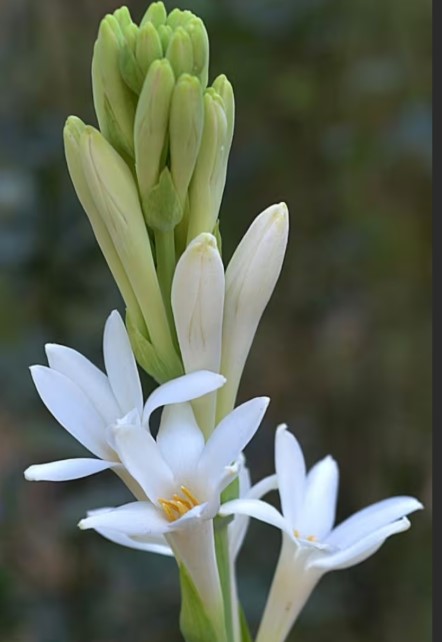
Similar Characteristics
4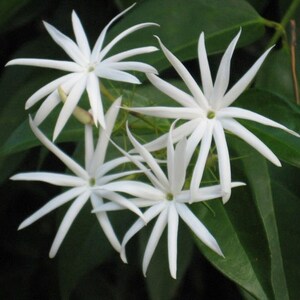
AngelWing Jasmine (Star Jasmine)
Jasminum laurifolium, Jasminum nitidum
The Angelwing Jasmine, botanically classified as Jasminum nitidum (and often associated with Jasminum laurifolium), is an exceptionally beautiful and intensely fragrant evergreen sprawling shrub. Native to the warm, tropical lowlands, coastal woodlands, and river valleys of the Indian Subcontinen...
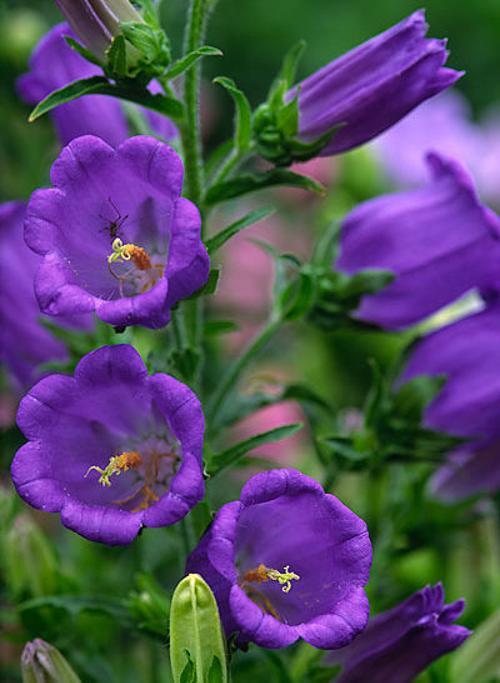
Canterbury bells
Campanula medium
Campanula medium, commonly known as Canterbury Bells, is a quintessential cottage garden biennial that brings a sense of Victorian elegance and whimsical charm to any landscape. Belonging to the Campanulaceae family, this species is native to the sun-drenched hills of Southern Europe, particularl...
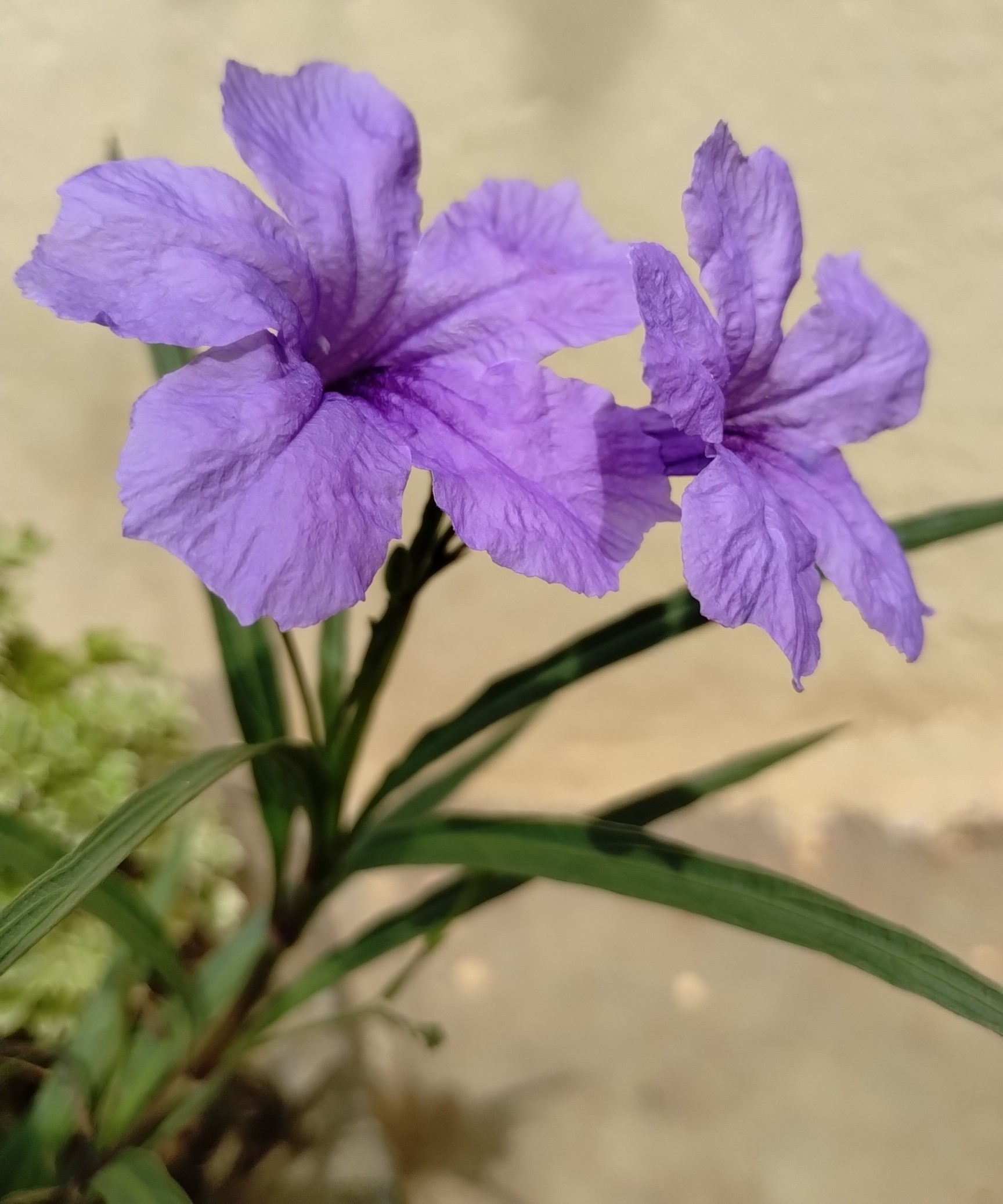
Mexican Petunia
Ruellia simplex
The Mexican Petunia, botanically classified as Ruellia simplex (and historically referred to as Ruellia brittoniana), is an exceptionally vigorous, upright herbaceous perennial belonging to the Acanthaceae (acanthus) family. Native to the warm, moisture-rich woodlands, riverbanks, and wet meadows...
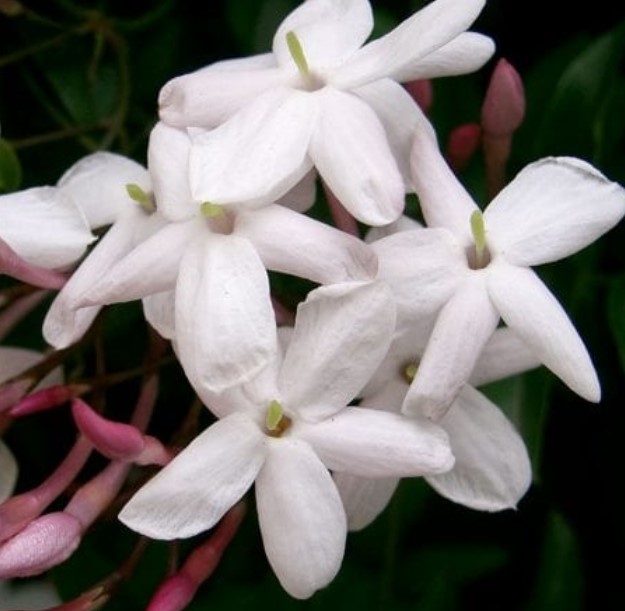
Spanish Jasmine (Royal Jasmine)
Jasminum grandiflorum
Spanish Jasmine, botanically classified as Jasminum grandiflorum and widely known as Royal Jasmine, Catalan Jasmine, or Scented Jasmine, is an exceptionally fragrant semi-evergreen woody vine belonging to the Oleaceae (olive) family. Believed to have originated in the high valleys of the Himalaya...