
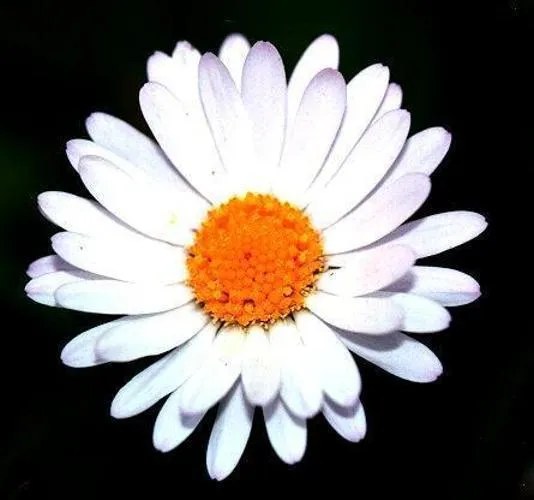
Oxeye Daisy
Leucanthemum vulgare
How to Identify Oxeye Daisy
TOXIC. Contains pyrethrins and sesquiterpene lactones that cause drooling, vomiting, and skin allergies in cats and dogs.
Care & Growing Guide
Seasonal Blooming & Hardiness
Seasonal Blooming Calendar:
- Peak Bloom: Spring to early summer (typically April through June).
- Planting Time: Sow seeds directly outdoors in early spring after the last frost, or transplant nursery starts in late spring.
Bloom Timeline
About Oxeye Daisy
The Oxeye Daisy, botanically classified as Leucanthemum vulgare and historically celebrated as the Moon Daisy or Dog Daisy, is an exceptionally cheerful, rhizomatous herbaceous perennial belonging to the Asteraceae (daisy or composite) family. Native to the sweeping fields, dry pastures, and sunny roadsides of Europe and temperate regions of Asia, this highly resilient wildflower has naturalized widely across North America, Australia, and New Zealand, admired for its classic, simple beauty and exceptional tolerance of poor soils.
Growing in dense, upright clumps that reach heights of 1 to 3 feet, Leucanthemum vulgare emerges from a creeping rhizome and produces a basal rosette of dark-green, spoon-shaped, serrated leaves measuring 2 to 5 inches in length. Throughout late spring and the entire summer season, the plant sends up slender, rigid, unbranched stems crowned with solitary, classic daisy flower heads. Each iconic bloom measures 1 to 2 inches in diameter, featuring 20 to 30 pure-white ray petals radiating from a flat, golden-yellow central disc.
The reproductive morphology of this composite flower head is represented by the botanical floral formula EBr ⊕ ⚥ K(0) C(5) A(5) G̅(2). This formula indicates that the flower is ebracteate, radially symmetrical (actinomorphic), and bisexual. The calyx is completely absent (or modified into a tiny rim), and the corolla features 5 petals fused into a tube (yellow in disc florets, forming flat white rays in female florets). The androecium contains 5 stamens fused by their anthers, surrounding a 2-carpellate inferior ovary.
Horticulturally, the Oxeye Daisy is an incredibly tough, low-maintenance plant that performs best in full, blazing sun, needing at least 6 to 8 hours of direct light to fuel its profuse blooming cycle. It is highly drought-tolerant once established, thriving in poor, sandy, or rocky soils with neutral to slightly alkaline pH levels (pH 6.5 to 8.0) and sharp drainage. It requires minimal watering and is exceptionally cold-hardy, thriving across USDA hardiness zones 3 through 9.
The genus name Leucanthemum is derived from the ancient Greek words 'leukos' (meaning white) and 'anthemon' (meaning flower), while the common name 'Oxeye' highlights the flat, round yellow central disc that resembles the wide eye of an ox. Famed on the Indian subcontinent as Safed Gulbahar (सफेद गुलबहार) and in Sanskrit as Gonetra (गोनेत्र), it is the traditional flower used for the iconic childhood petal-plucking game of 'loves me, loves me not,' symbolizing innocence and new beginnings.
For homeowners and land managers, it is extremely important to practice careful pet and pasture safety when cultivating the Oxeye Daisy. Leucanthemum vulgare is classified as TOXIC to cats, dogs, and horses by leading veterinary safety organizations, including the ASPCA. The plant contains organic pyrethrins, sesquiterpene lactones, and irritating essential oils that cause oral drooling, vomiting, diarrhea, dermatitis, and poor coordination if ingested. To learn more about pet safety, consult our Pet Guard catalog.
Oxeye Daisy is occasionally confused with Chamomile, Feverfew, or Shasta Daisy. It is easily distinguished because Chamomile has highly dissected feathery leaves and an aromatic fragrance, and Feverfew has much smaller, multi-clustered flowers, while Shasta Daisy is a much larger, cultivated garden hybrid. It looks spectacular in naturalized meadows beside yellow Yellow Iris or purple Dandelion. To discover more wild meadow-blooming perennials, visit our Flower Identifier.
For more botanical profiles and flower identification features, see our guides on Orange Dahlia and Peruvian Lily.
Floral Formula & Features
Ebracteate, actinomorphic disc florets, bisexual, calyx absent, 5 fused petals forming a tube, 5 syngenesious stamens, 2 fused carpels with inferior ovary typical of Asteraceae composite heads
- Scientific Name & Classification: Leucanthemum vulgare (Asteraceae). Famed as Oxeye Daisy, Moon Daisy, and Safed Gulbahar.
- Identification Markers: Spoon-shaped dark green serrated leaves. Slender stems crowned with solitary white flowers featuring a flat, golden-yellow central disc.
- Floral Formula (EBr ⊕ ⚥ K(0) C(5) A(5) G̅(2)): Radially symmetrical composite flowers with 5 fused petals, 5 syngenesious stamens, and an inferior ovary.
- Growing Requirements: Full sun (6-8 hours); thrives in poor, dry, sandy, or clay soils with exceptional drainage. Highly cold-hardy (Zones 3-9).
- Cultural Significance: Name derived from Greek 'leukos' (white). Famed as the 'loves me, loves me not' flower, symbolizing innocence and youth.
- Safety & Toxicity: TOXIC. Contains pyrethrins and sesquiterpene lactones that cause drooling, vomiting, and skin allergies in cats and dogs.
- Common Look-alikes: Confused with Chamomile, but distinguished by its larger, solitary flowers and spoon-shaped leaves instead of feathery scent leaves.
- Internal Links: Creates a beautiful summer wildflower meadow when paired with bright Yellow Iris or persistent Dandelion; find more in our Flower Identifier.
Names in Different Languages
Botanical Classification: Oxeye Daisy belongs to the Asteraceae family. Learn how to identify its floral symmetry, stamen arrangement, and structural formulas in our Botanical Family Classification Guide.
Toxicity & Safety
Always keep toxic plants out of reach of children and pets. Consult a veterinarian or medical professional immediately if ingestion is suspected.
Frequently Asked Questions
What is Floral Formula?
A floral formula is a symbolic representation of a flower's structure using letters, numbers, and special symbols. It provides a concise way to describe the arrangement and number of floral parts.
This formula describes the flower's symmetry, sepals, petals, stamens, and carpels in a standardized format.
Formula Sequence
- Bract: Br or Ebr
- Bracteole: Brl or Ebrl
- Symmetry: % (Radial) or ⊕ (Bilateral)
- Sex: ♀ (Female), ♂ (Male), or ⚥ (Bisexual)
- Calyx/Sepal: K<number> (Free or Fused)
- Corolla/Petal: C<number> (Free or Fused)
- Androecium: A<number> (Free or Fused)
- Gynaecium: G<number> (Superior or Inferior Ovary)
Symbol Meanings
- Numbers: Indicate quantity of parts
- Parentheses (): Parts are fused together
- Plus (+): Parts in different whorls
- Underline: Superior ovary position
- Overline: Inferior ovary position
- ∞: Numerous parts (too many to count)
Understanding floral formulas helps botanists quickly identify and classify flowers based on their structural characteristics.
Similar Flowers
Discover flowers that share botanical characteristics
Same Family
4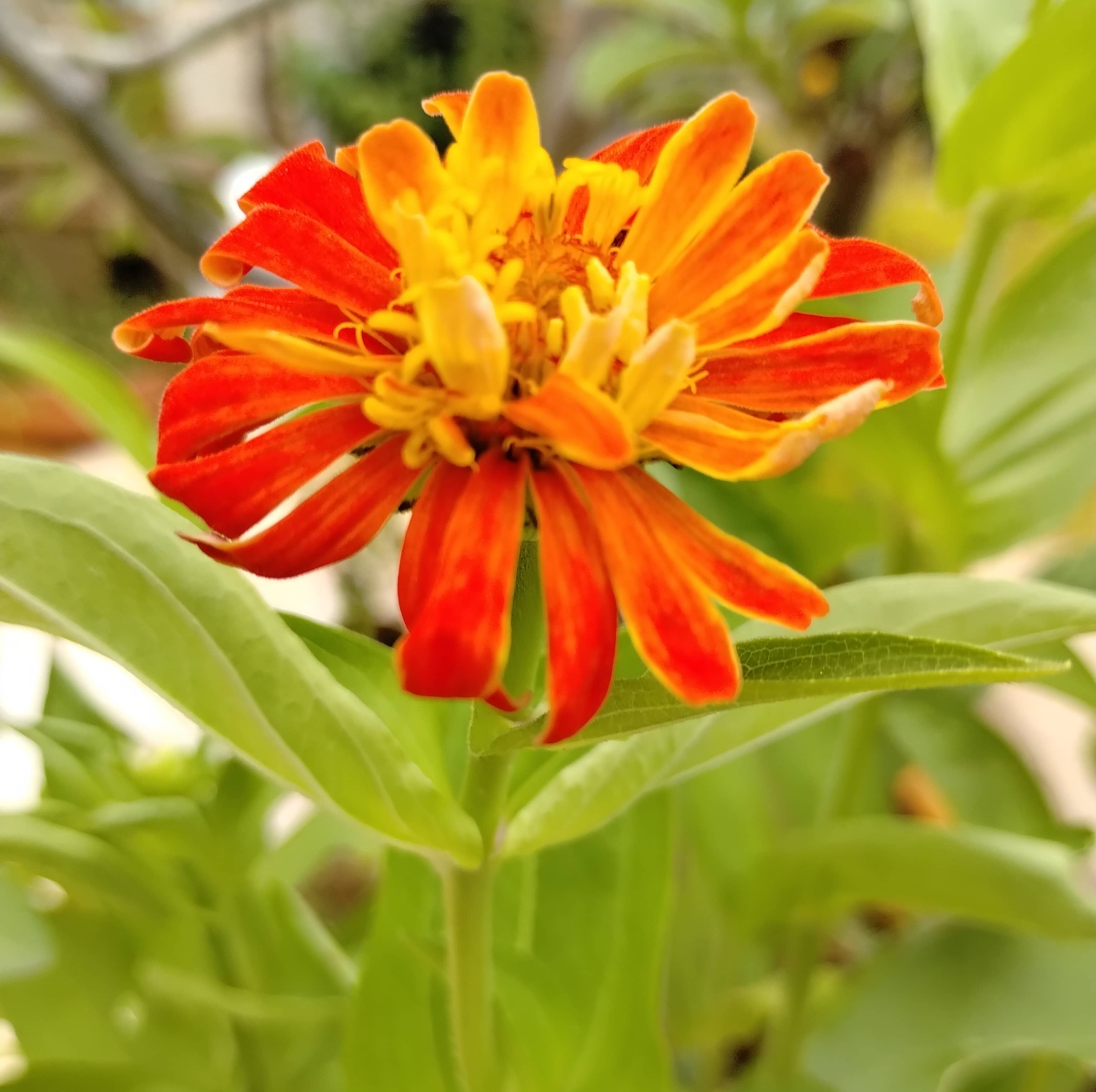
Zinnia
Zinnia elegans
Zinnias (Zinnia elegans), belonging to the Heliantheae tribe within the massive Asteraceae family, are among the most colorful, resilient, and popular warm-season annual flowers in modern horticulture. Native to the scrublands and dry grasslands of Mexico and Central America, these sun-loving pla...
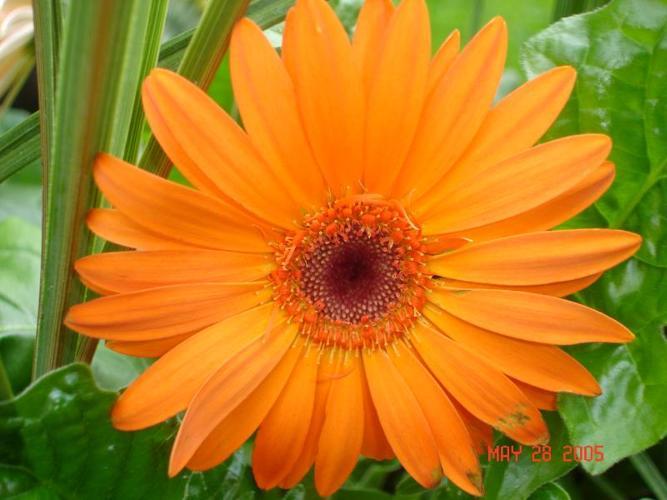
Barberton Daisy
Gerbera jamesonii
The Barberton Daisy, botanically known as Gerbera jamesonii and widely cherished as the Gerbera Daisy or Transvaal Daisy, is an exceptionally cheerful and colorful herbaceous perennial in the Asteraceae (sunflower) family. Native to the rich, subtropical valleys and grassy slopes of South Africa'...
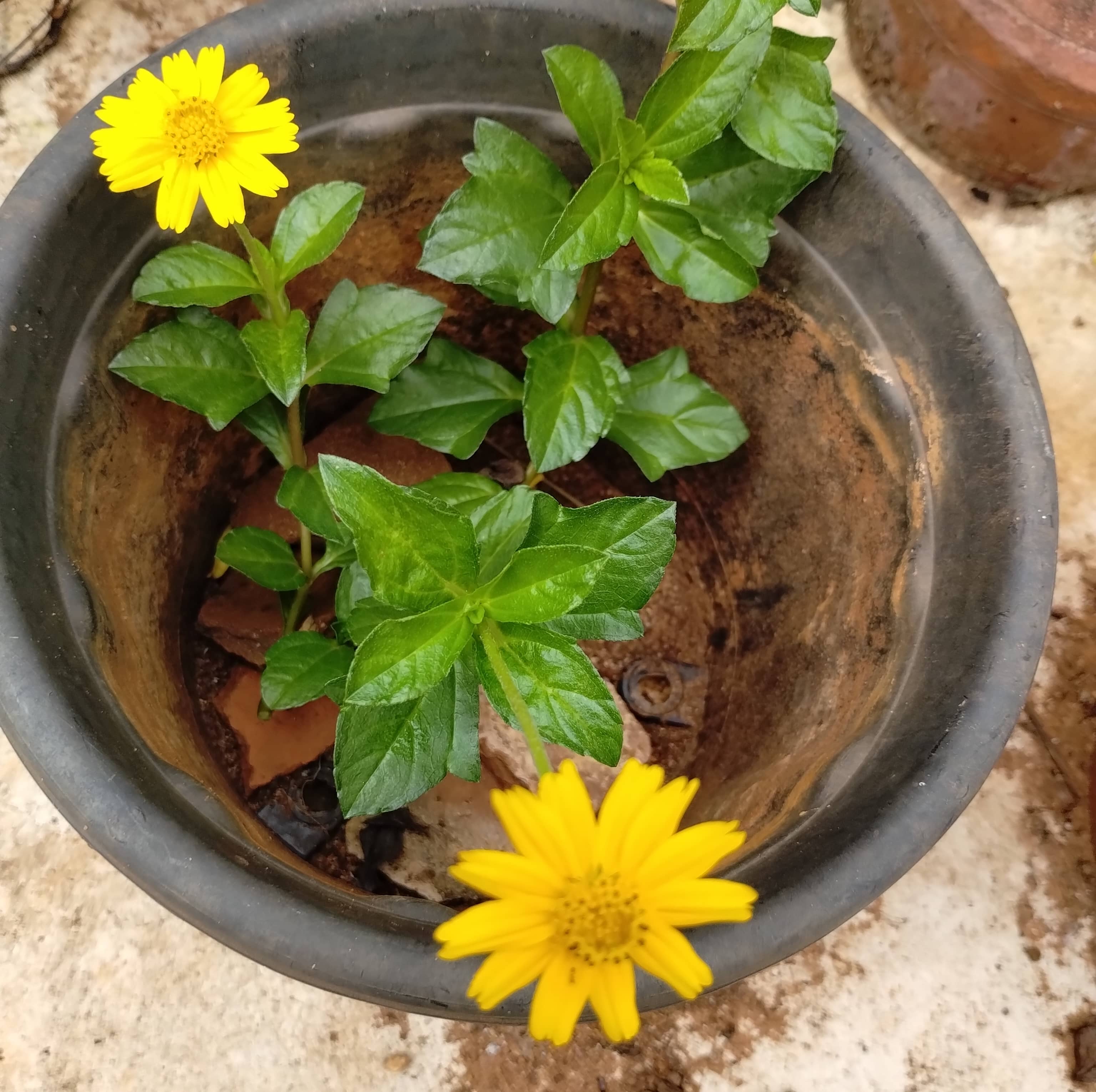
Wedelia Trilobata
Sphagneticola trilobata
Wedelia Trilobata, botanically classified as Sphagneticola trilobata and commonly known as the Creeping Daisy, Singapore Daisy, Trailing Daisy, or Creeping Oxeye, is an exceptionally fast-growing, mat-forming perennial herbaceous groundcover. Belonging to the family Asteraceae (the daisy or sunfl...
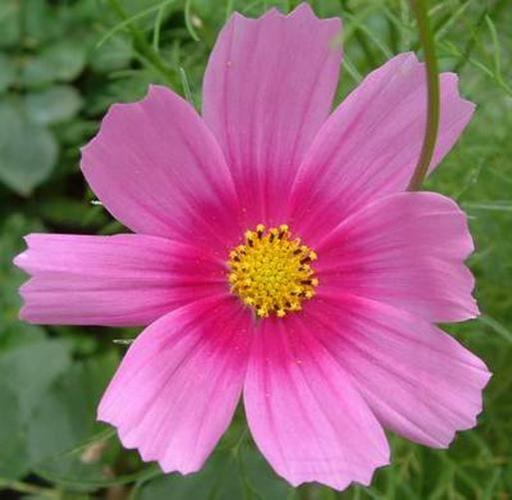
Mexican Aster
Cosmos bipinnatus
The Mexican Aster, botanically designated as Cosmos bipinnatus and commonly referred to as Garden Cosmos or simply Cosmos, is an exceptionally graceful, fast-growing, and heavy-blooming annual. Belonging to the family Asteraceae (the daisy or composite family), this beautiful plant is native to t...
Similar Characteristics
4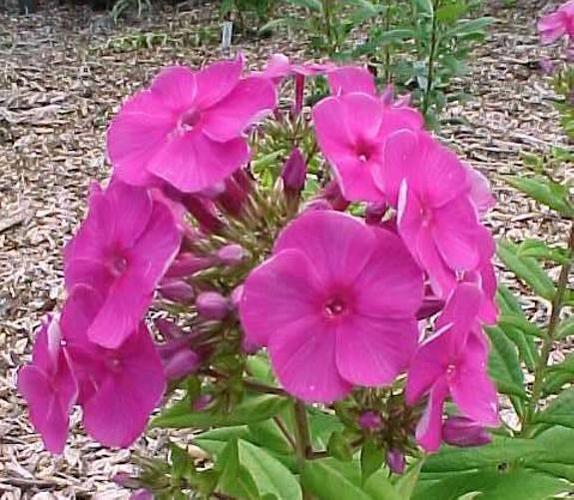
Phlox
Phlox paniculata
The genus Phlox, a cornerstone of the North American garden, encompasses a diverse array of species ranging from low-growing ground covers to towering, stately perennials. Derived from the Greek word for 'flame,' the name perfectly captures the vibrant, fiery intensity of their clustered blossoms...
Wild Pansy
Viola tricolor
The Wild Pansy, scientifically known as Viola tricolor and popularly referred to as Johnny Jump Up or Heartsease, is an endearing European wildflower belonging to the Violaceae family. Native to Europe and temperate regions of Asia, this resilient little bloom has captured human hearts for centur...
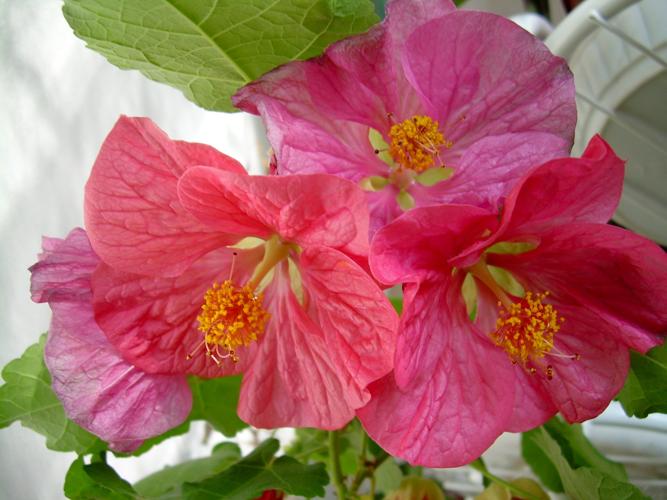
Mallow
Malva sylvestris
The Mallow, botanically designated as Malva sylvestris and commonly known as Common Mallow, High Mallow, Tall Mallow, or Cheeseweed, is an exceptionally versatile, hardy, and resilient biennial to short-lived perennial herb. Belonging to the family Malvaceae (the mallow family), this ancient plan...
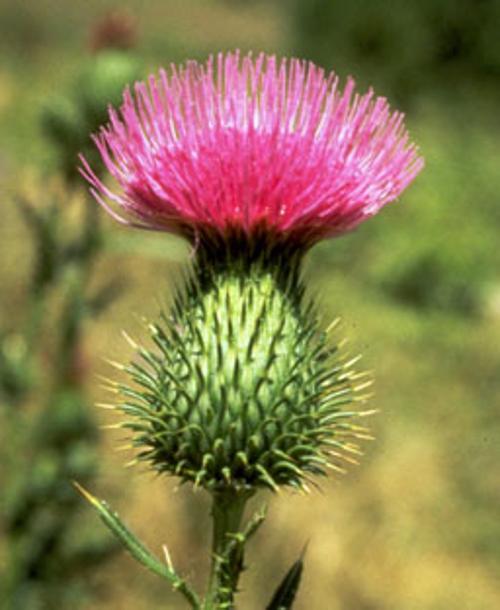
Spear Thistle (Bull Thistle)
Cirsium vulgare
The Spear Thistle, botanically designated as Cirsium vulgare (and commonly referred to as the Bull Thistle), is a robust and highly spiny biennial herb belonging to the family Asteraceae (the daisy or composite family). Native to the meadows, forest edges, and rocky valleys of Europe, western Asi...