
Rice (Paddy)
Rice is the primary staple food for over half of the world's population. Paddy cultivation requires warm, humid conditions with abundant water. Managing pests, fungal outbreaks, and nutrient balances (especially nitrogen and zinc) is critical to maintaining yield quality and quantity.
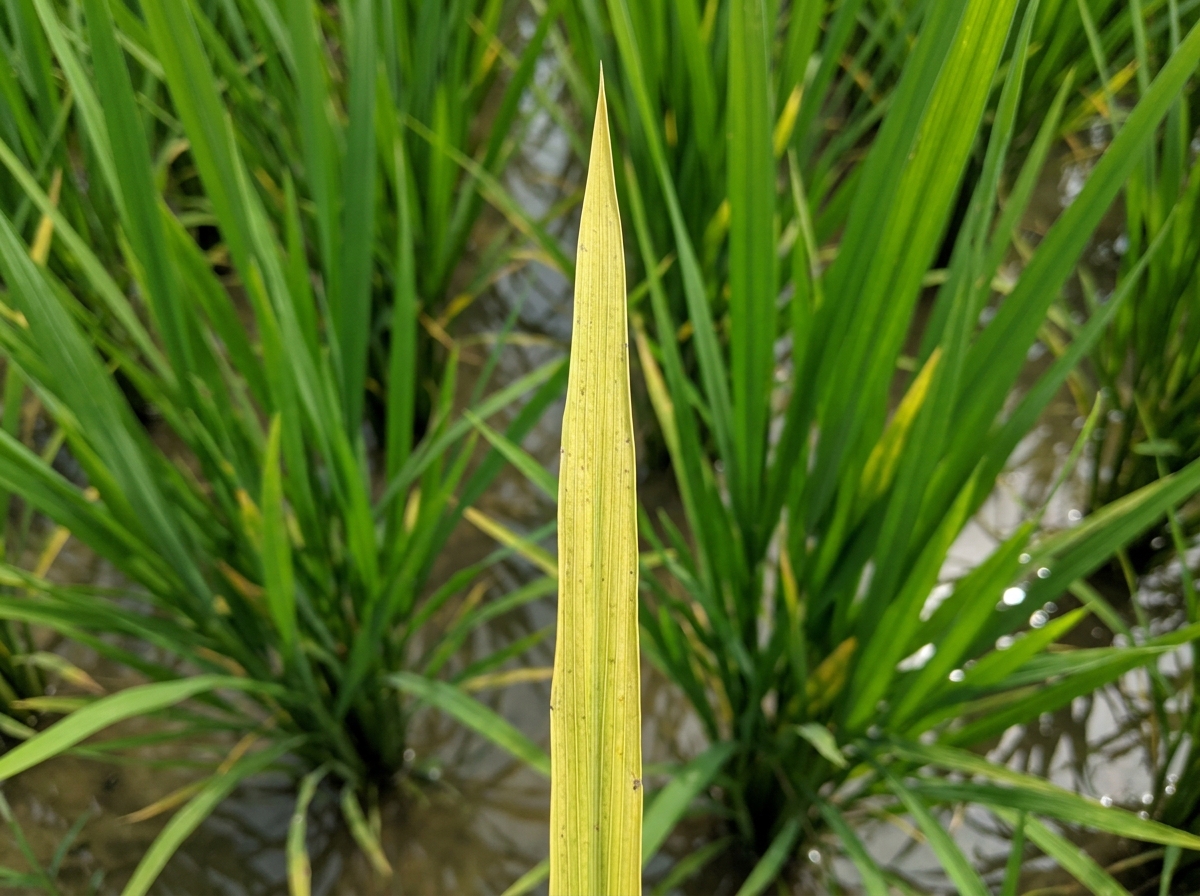
Nitrogen Deficiency
Nitrogen Deficientia
Key Visual Symptoms
Uniform light green to chlorotic yellow discoloration starting at older lower leaves while upper leaves remain pale green. Stems become thin, spindly, and erect, and hills produce significantly fewer productive tillers with short, lightweight panicles.
- Old Leaves Yellowing First: Symptoms start uniformly on older leaves at the bottom of the plant, while younger leaves remain light green.
- Reduced Tillering: Stems are thin and erect; plants produce very few tillers, leading to thin stands.
- Lighter Grains: Panicles are small, short, and grains fail to fill completely, reducing grain weight.
Organic Remedy
- Incorporate Sesbania aculeata (Dhaincha) or Crotalaria juncea green manure (8–10 t/acre) during puddling to supply steady organic nitrogen and improve soil structure.
- Inoculate paddy standing water with fresh Azolla pinnata (200 kg/acre) 7 days after transplanting; incorporate into mud at maximum tillering to release bio-nitrogen.
- Use a standardized 4-panel Leaf Color Chart (LCC) weekly starting from 14 DAT to calibrate nitrogen top-dressing according to actual crop canopy demand.
- Apply neem cake (150 kg/acre) blended with basal manure; natural azadirachtin slows nitrification and reduces nitrogen leaching in permeable soils.
Chemical Correction
- Apply Neem-Coated Urea in three split doses: 50% basal incorporated into the reduced puddle layer, 25% at active tillering (20–25 DAT), and 25% at Panicle Initiation (PI, 45–50 DAT).
- Drain standing water to a shallow film (1–2 cm) before top-dressing urea; hold water off for 24 hours to ensure urea is adsorbed onto clay colloids before reflooding.
- On sodic or alkaline paddies (pH > 8.0), substitute urea with Ammonium Sulfate (21% N, 24% S at 40 kg/acre) to avoid ammonia volatilization losses.
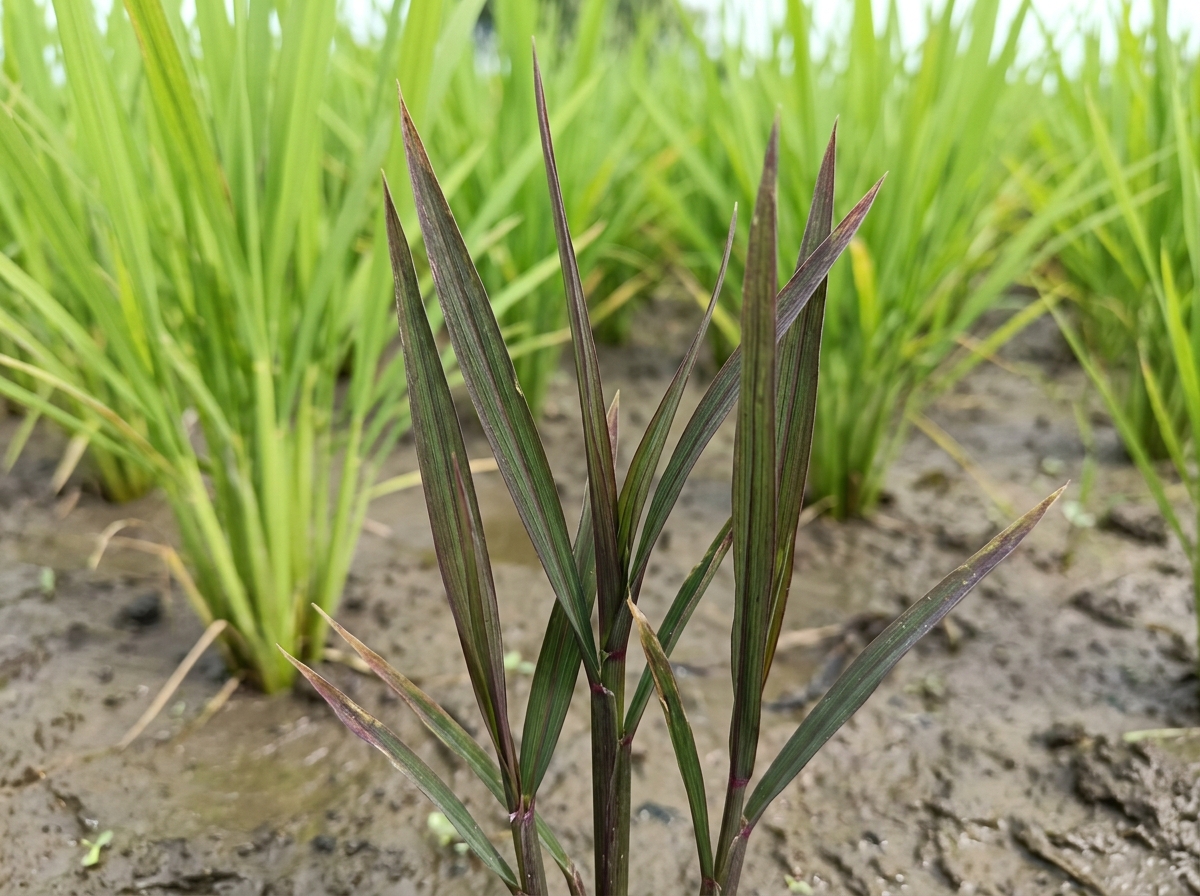
Phosphorus Deficiency
Phosphorus Deficientia
Key Visual Symptoms
Stunted plants with narrow, short, erect leaves that display an abnormally dark green or dirty green color. Older leaves may develop a red-purple tint, especially along the leaf margins and veins.
- Purplish Pigmentation: Leaves develop distinct purplish-red tints due to anthocyanin accumulation under P stress.
- Extremely Delayed Maturity: Crops take significantly longer to flower and mature, causing harvest delays.
- Stunted Roots: Poor root elongation and lack of lateral roots limit water and nutrient uptake.
Organic Remedy
- Incorporate rock phosphate (150–200 kg/acre) in acidic paddies (pH < 6.0) 3 weeks before flooding; soil acidity slowly dissolves tricalcium phosphate into plant-available monocalcium phosphate.
- Inoculate soil with Phosphate-Solubilizing Bacteria (PSB, Bacillus / Pseudomonas at 2 kg/acre) mixed with farmyard manure to unlock fixed iron and aluminum phosphates.
- In wet nurseries, apply VAM mycorrhizal biofertilizer to seedbeds to establish early root colonization, ensuring vigorous phosphorus foraging after transplanting.
- Avoid continuous severe water stagnation in cold weather; aerating the soil surface warms root beds and enhances root metabolic phosphate uptake.
Chemical Correction
- Apply 100% of required phosphorus (30–40 kg P2O5/acre via Single Superphosphate or DAP) strictly as a basal dressing during final land preparation before transplanting.
- In sulfur-deficient or calcareous soils, prefer Single Superphosphate (SSP) over DAP; SSP provides 16% P2O5 along with 11% sulfur and 19% calcium in readily available forms.
- If phosphorus deficiency appears in the standing crop, foliar spray water-soluble Monopotassium Phosphate (0:52:34 MKP at 4–5 g/L) twice at 10-day intervals, as top-dressed soil P will not reach active roots.
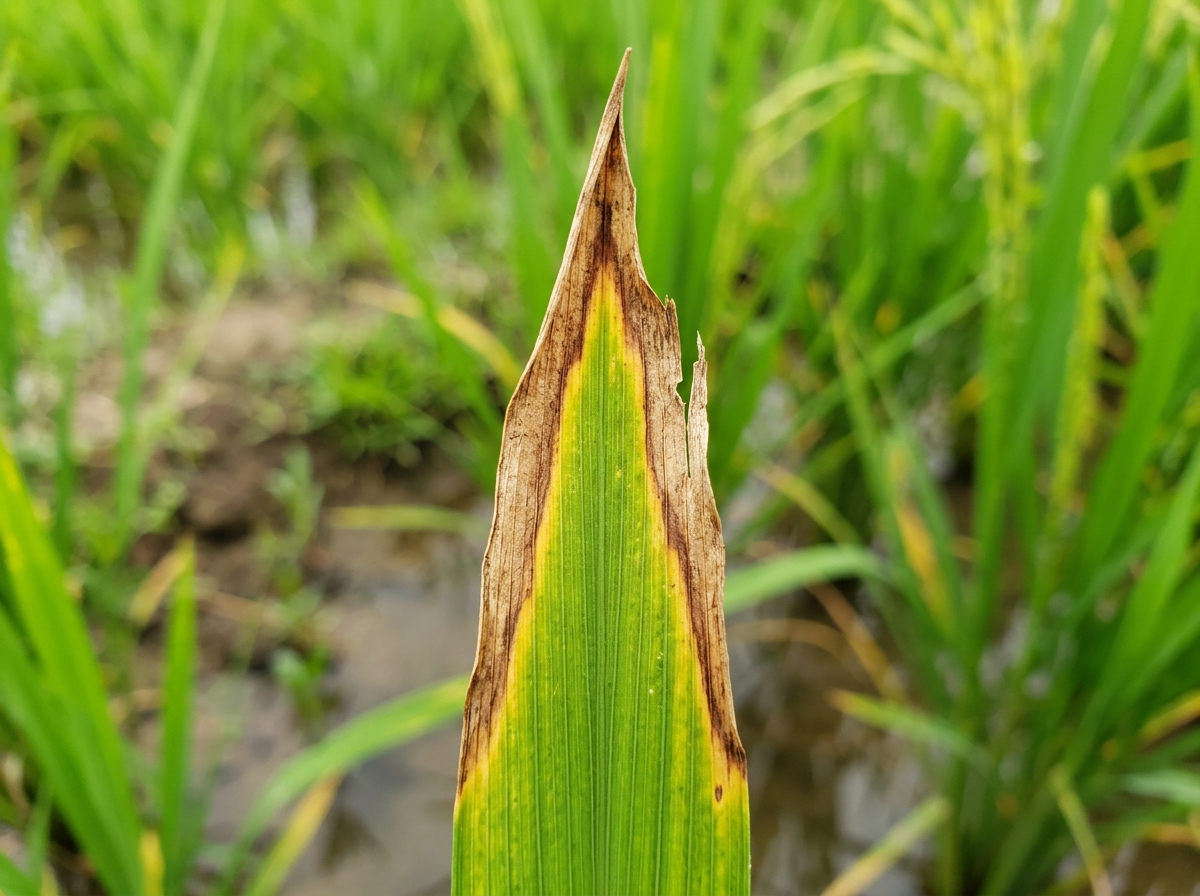
Potassium Deficiency
Potassium Deficientia
Key Visual Symptoms
Yellowing of older leaf margins starting from the tips and progressing downwards. The yellowed edges eventually turn brown and dry up (leaf scorch). Dark brown necrotic spots may appear across leaf blades.
- Symmetrical Margin Scorch: Searing and browning occurs symmetrically along older leaf edges starting from the tip.
- Weak Stalks & Lodging: Lower stems become hollow and weak, causing the crop to fall over under wind/rain.
- Increased Fungal Infection: K-deficient plants show a high rate of brown spot and leaf blast infections.
Organic Remedy
- Incorporate paddy straw (2–3 t/acre) into dry soil at least 30 days prior to puddling; paddy straw contains over 80% of the potassium absorbed by the previous crop.
- Apply rice husk ash or biomass ash (200–300 kg/acre) during puddling to supply potassium carbonate along with soluble silica, which hardens stem epidermis.
- Avoid continuous stagnant flooding; intermittent wetting and drying (AWD) improves root respiration and enhances active potassium uptake.
- Sow green manure crops (dhaincha, sunn hemp) in the fallow window to recycle subsoil potassium to the surface layer.
Chemical Correction
- Apply Muriate of Potash (MOP, 60% K2O) at 40 to 50 kg/acre in two split doses: 50% as basal during puddling and 50% at Panicle Initiation (45–50 DAT).
- On coarse-textured or sandy soils with high leaching rates, split potassium into three applications (basal, active tillering, and panicle initiation).
- Foliar spray technical Potassium Nitrate (13:0:45 at 5 g/L) or Monopotassium Phosphate (0:52:34 at 4 g/L) at boot leaf and panicle emergence stages to fill terminal spikelets.
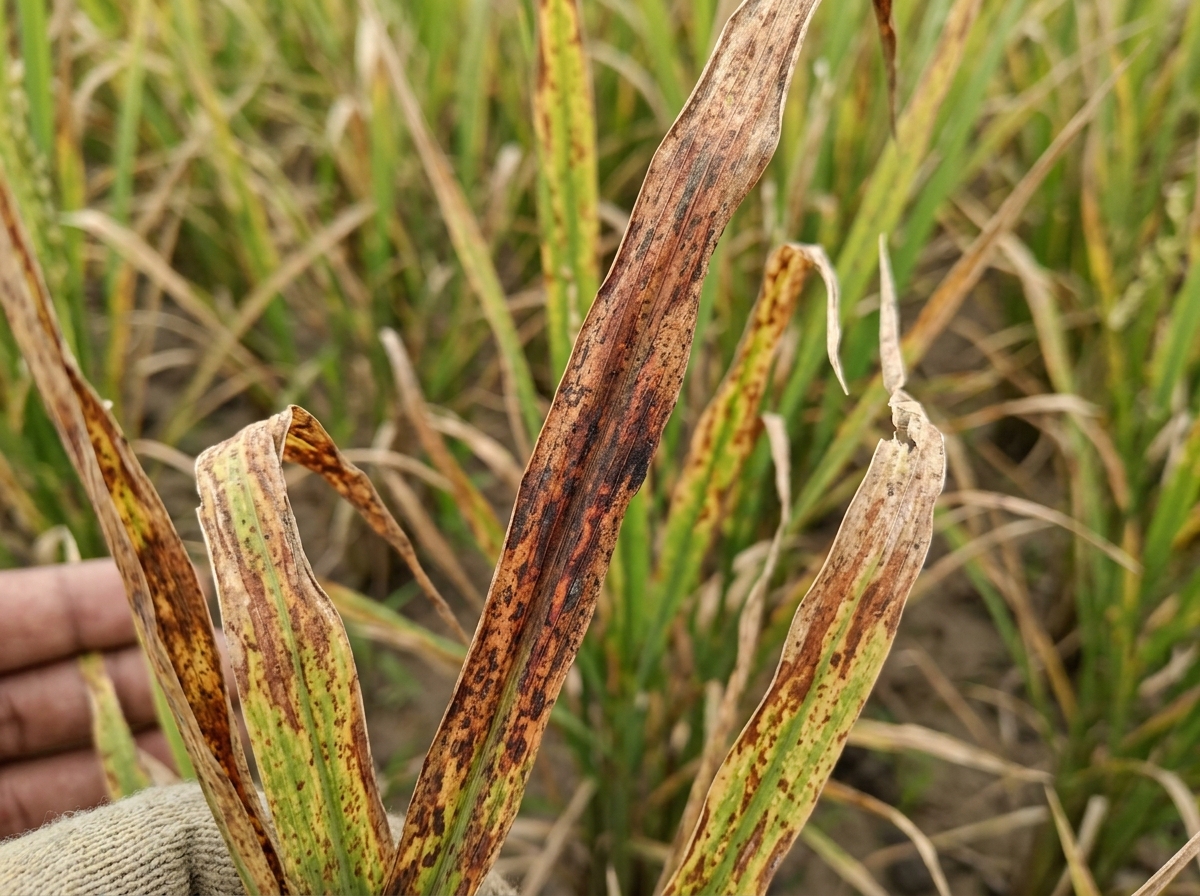
Zinc Deficiency
Zincum Deficientia
Key Visual Symptoms
Dusty brown spots or blotches appearing on older leaves 2-4 weeks after transplanting. The midribs turn yellow, and leaves become brittle. Affected crops remain severely stunted and grow unevenly.
- Khaira Disease Symptoms: Dusty, rusty-brown spots coalesce on the leaves, giving the crop a scorched, copper appearance.
- Stunted Rosette Growth: Short internodes force leaves to cluster together, forming a compact rosette.
- Delayed Panicle Emergence: Severely slows down crop development, resulting in uneven heading and empty grains.
Organic Remedy
- Drain the field temporarily for 3–5 days at the first sign of rusty leaf bronzing; exposing the mud to atmospheric oxygen oxidizes toxic sulfides and mobilizes native zinc.
- Incorporate organic green manure (Sesbania) or farmyard manure (4–5 t/acre) pre-incubated with zinc sulfate to prevent chemical fixation in alkaline or calcareous soils.
- Avoid continuous, non-stop flooding throughout the year; practicing Alternate Wetting and Drying (AWD) prevents persistent soil reduction and zinc immobilization.
- Dip seedling roots in a 1% Zinc Oxide (ZnO) suspension at transplanting to provide localized zinc protection during early establishment.
Chemical Correction
- Broadcast Zinc Sulfate (21% Zn at 10–12 kg/acre or 33% Zn at 6–7 kg/acre) during final puddling; do not combine directly with DAP or SSP in the same spreader.
- For emergency rescue in standing crops showing Khaira symptoms, foliar spray 0.5% Zinc Sulfate (5 g/L) neutralized with 0.25% slaked lime (2.5 g/L) or 1% Urea early in the morning.
- Repeat the foliar zinc spray 7 to 10 days later; new leaves will emerge healthy and dark green, resuming normal tiller production.
Rice Diagnostic Guide: Diseases vs. Deficiencies
Visual symptoms on paddy leaves can easily be confused. Use this key diagnostic matrix to distinguish between fungal/bacterial infections and nutrient deficiencies before choosing remedies.
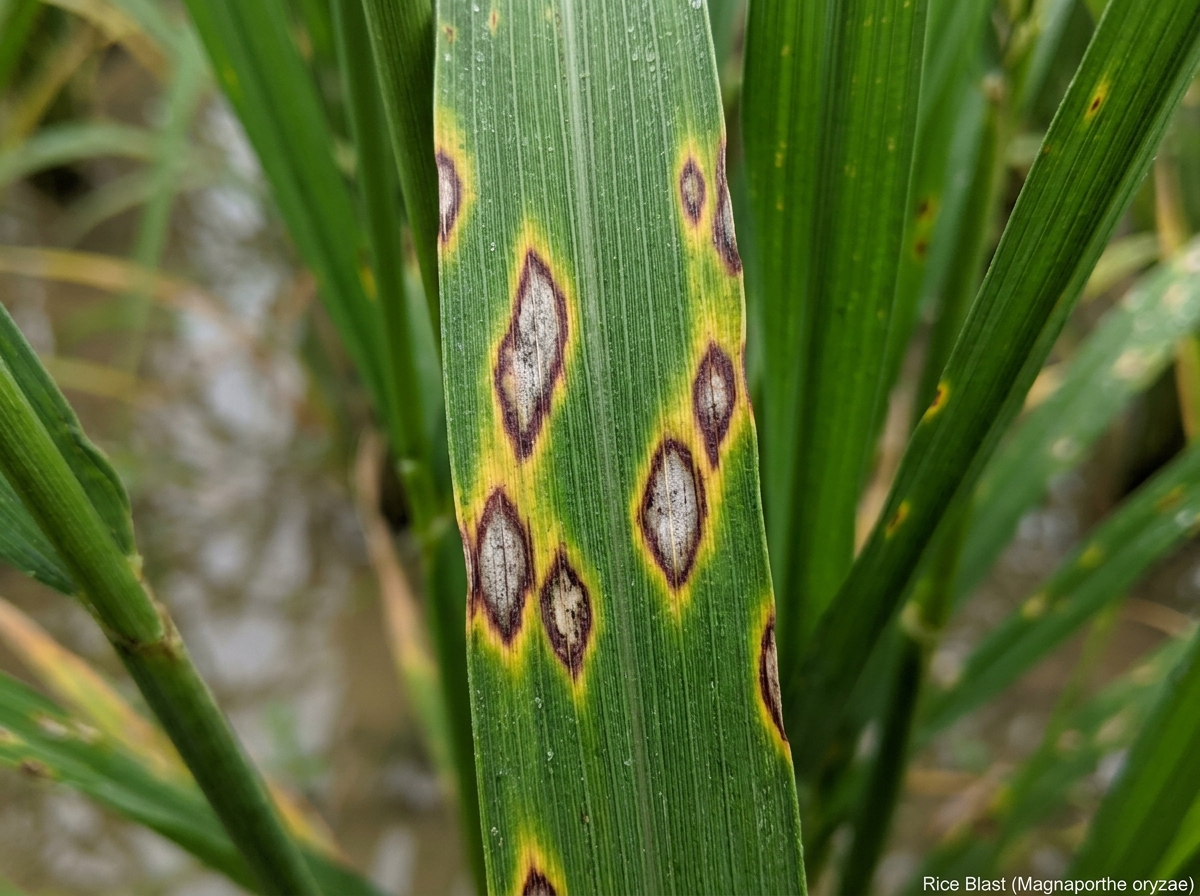
Rice Blast Lesions
Zinc (Khaira) Rusting
Key Indicators to Look For:
- Leaf Position: Nutrient deficiencies start uniformly on older bottom leaves (as the plant moves mobile nitrogen/potassium to new shoots). Fungal/bacterial spots can appear anywhere on the plant.
- Lesion Boundaries: Pathogen lesions (like Rice Blast or Brown Spot) have sharp, defined spindle-shaped or circular edges with a yellow halo. Nutritional yellowing is soft and blends gradually into green tissue.
- Symmetry: Nutritional leaf tip burn (Potassium) or general yellowing (Nitrogen) occurs symmetrically on both sides of the leaf midrib. Pathogen streaks or lesions are usually asymmetrical and irregular.
Diagnose Your Rice (Paddy) Crop Instantly
Take or upload a photo of your leaf or field damage to let our AI model scan for diseases, insect pests, or nutritional deficiencies.
Seasonal Outbreak Calendar
Track peak infestation and disease risk months by geographic region. Access the interactive dashboard to see what diseases are active this month.
Explore Disease CalendarFeatured Agronomy Guide
Read our complete field manual on identifying, preventing, and organically curing Rice Blast epidemics during high-humidity monsoon cycles.
Read Agronomy ArticleExplore Other Crop Hubs
Wheat Hub
Cereal growth guides, rust diagnosis, and soil prep.
Tomato Hub
Solanaceous care, fruit rots, and calcium fixes.
Coconut Hub
Palm care, potassium checks, and organic pest remedies.
Mango Hub
Mango variety guides, zinc sprays, and leaf curl tips.
Onion Hub
Allium health, bulb expansions, and sulfur timing.