
Zinc Deficiency
Zincum Deficientia
How to Identify Zinc Deficiency on Rice (Paddy)

Visible Symptoms
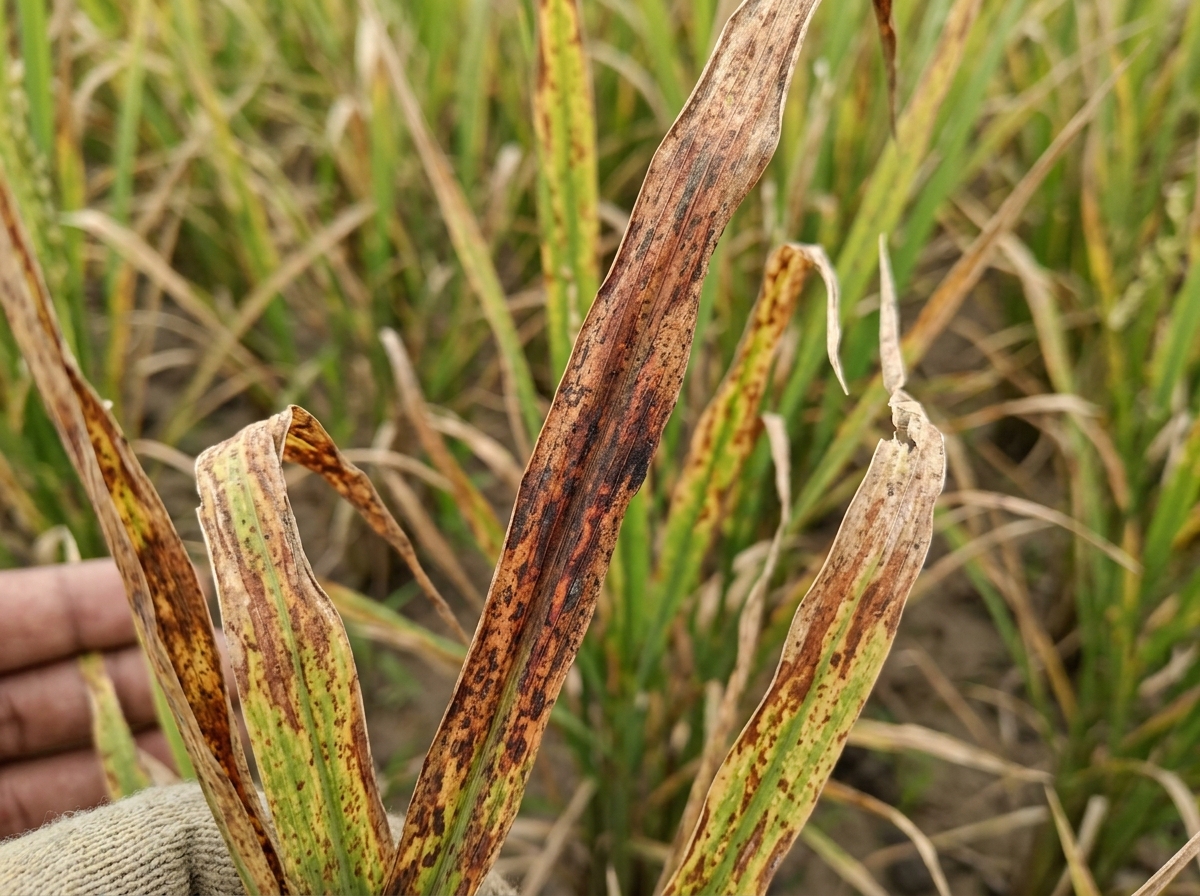
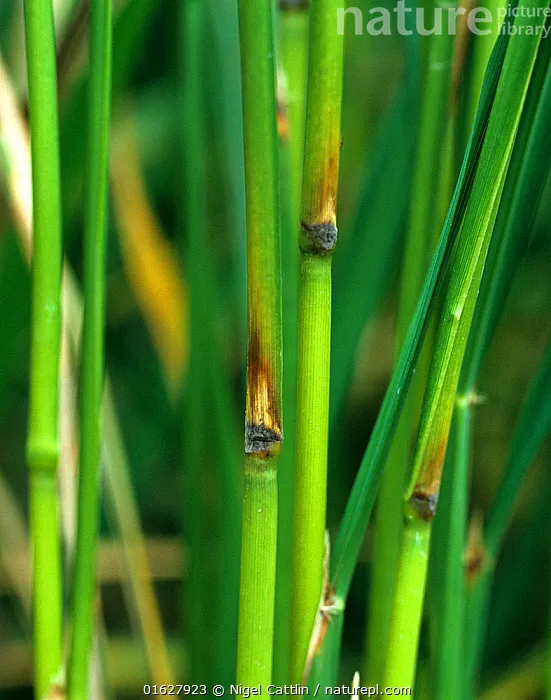
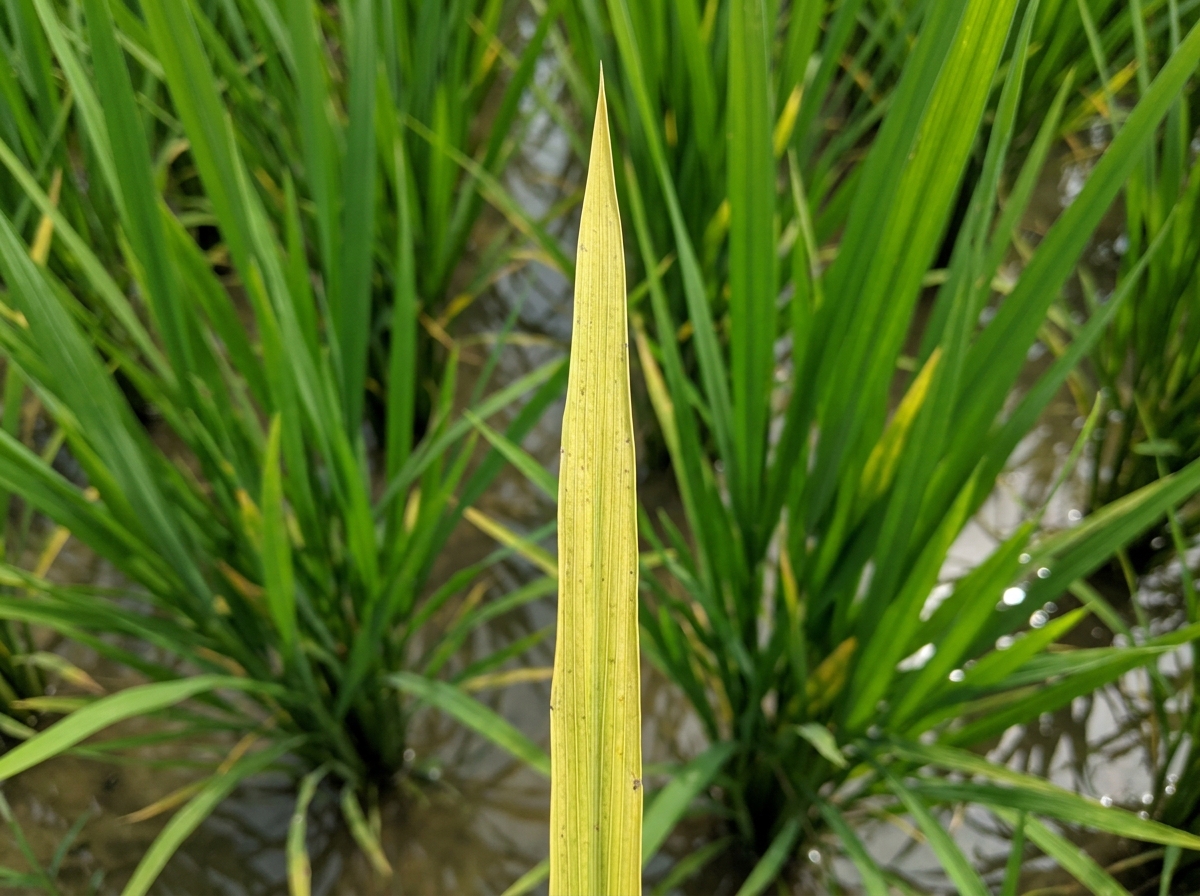
Dusty brown spots or blotches appearing on older leaves 2-4 weeks after transplanting. The midribs turn yellow, and leaves become brittle. Affected crops remain severely stunted and grow unevenly.
About Zinc Deficiency
Zinc deficiency, historically known across South Asia as Khaira Disease, is the most widespread micronutrient disorder in wetland rice. Continuous soil submergence and high pH immobilize zinc into insoluble zinc sulfide and hydroxide forms, causing rusty-brown leaf blotching and stunted growth 2-4 weeks after transplanting.
Nutrient Role & Deficiency Cause
Zinc deficiency, historically known across South Asia as Khaira Disease, is the most widespread micronutrient disorder in wetland rice. Continuous soil submergence and high pH immobilize zinc into insoluble zinc sulfide and hydroxide forms, causing rusty-brown leaf blotching and stunted growth 2-4 weeks after transplanting.
Seasonal Outbreak Calendar
Outbreak risk and activity timeline for Zinc Deficiency based on seasonal climate patterns:
Treatment & Correction Guide
Natural & Organic Methods
Chemical & Professional Control
Frequently Asked Questions
What is Khaira disease in rice, and why does it occur 2 to 3 weeks after transplanting?
First discovered by Dr. Y.L. Nene in 1966 at Pantnagar, Khaira is nutritional zinc starvation in wetland rice. It manifests 2 to 3 weeks after transplanting because early seedling zinc reserves are exhausted, while prolonged submerged anaerobic conditions in the paddy produce bicarbonates and sulfides that precipitate soil zinc into unabsorbable forms.
Why must slaked lime or urea always be mixed with Zinc Sulfate foliar spray in rice?
Zinc sulfate heptahydrate dissolves into an acidic solution (pH ~4.5). Spraying it unbuffered causes severe leaf burning (acid scorch) on delicate rice foliage. Adding 0.25% slaked lime (calcium hydroxide) or 1% urea neutralizes the spray solution and accelerates cuticular zinc absorption.
Why does temporarily draining a flooded paddy field help cure zinc deficiency?
Draining standing water allows atmospheric oxygen to penetrate the root zone, re-oxidizing the reduced soil. This breaks down toxic hydrogen sulfide (H2S) into soluble sulfate and liberates bound zinc ions for root uptake within 5 to 7 days.
Can I apply Zinc Sulfate together with DAP or SSP fertilizer?
NEVER mix zinc sulfate directly with phosphatic fertilizers (DAP or SSP). Water-soluble phosphate reacts instantly with zinc cations to form insoluble Zinc Phosphate (Zn3(PO4)2), rendering both phosphorus and zinc completely unavailable to rice roots.
What soil types are most prone to Khaira zinc deficiency?
Calcareous soils with high free calcium carbonate (CaCO3), alkali/sodic soils (pH > 8.0), continuously submerged waterlogged lowlands, and light sandy soils depleted of organic matter are most susceptible to severe zinc deficiency.
Recommended diagnostics based on crop family and symptoms:

Remedy Disclaimer & Safety Notice
This disease guide is for educational screening purposes only. Pathogen behavior, severity, and host susceptibility can vary dramatically based on seed variety, weather conditions, and regional microclimates. Chemical pesticides and organic treatments are subject to strict regional environmental regulations and registration mandates. Please verify all chemical registrations and review manufacturer safety labels carefully with local certified agronomists or agricultural extension service offices before applying.