
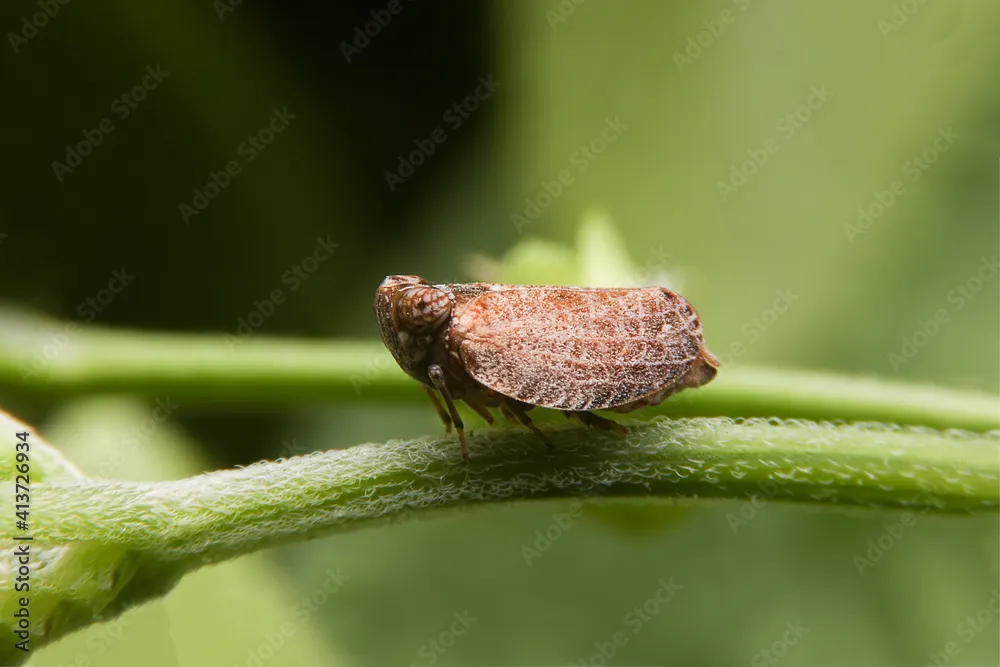
Brown Planthopper (Rice)
Nilaparvata lugens
About Brown Planthopper (Rice)
The Brown Planthopper (*Nilaparvata lugens*), a highly specialized hemipteran insect belonging to the family *Delphacidae*, is the single most destructive and economically devastating sucking insect pest of rice (*Oryza sativa*) globally. These tiny, sap-feeding planthoppers settle at the base of rice tillers just above the water level, using needle-like stylets to pierce plant stems and feed directly on phloem sap. High populations deprive the plant of moisture and nutrients, causing leaves to turn yellow and dry up, leading to a catastrophic field-wide collapse known as 'hopperburn.' They also serve as highly efficient vectors for major viral diseases.
Identifying a brown planthopper infestation requires close monitoring of the lower canopy of the rice crop. BPH adults are small (2–4.5 mm), light-to-dark brown insects with a characteristic pale band across the middle of their backs. They exist in two forms: long-winged migratory forms and short-winged highly reproductive forms. On-field damage is highly diagnostic: patches of the paddy field suddenly turn yellow, wilt, and dry out completely, turning a crisp straw-brown in circular 'hopperburn' patterns. Stems at the crop base are often coated in white egg masses and sticky sugary honeydew.
The brown planthopper is highly specialized, feeding almost exclusively on cultivated and wild rice species, though it occasionally shelters on nearby weeds.
| Affected Crops / Plants | Severity Rating | Damage Symptoms |
|---|---|---|
| Oryza sativa (Cultivated Rice) | Extreme (⭐⭐⭐) | Hopperburn patches, plant collapse, transmission of grassy stunt virus |
| Wild Rice (Oryza latifolia) | High (⭐⭐) | Sucking injury, minor yellowing, serving as overwintering host |
| Leersia oryzoides (Rice Cutgrass) | Medium (⭐) | Cosmetic sap draining, temporary insect sheltering |
Brown planthoppers have a rapid, high-density lifecycle. A single female lays up to 700 eggs inside leaf sheaths, which hatch into highly active nymphs in 7 to 9 days, completing their lifecycle in 20 to 25 days under humid, warm conditions (25°C to 30°C). Under crowded conditions, long-winged migratory adults develop, capable of flying hundreds of kilometers on monsoon winds. Organic control starts with planting resistant rice varieties (IR64), wide spacing of hills to allow wind flow, and draining the field for 3-4 days during early infestations. Conserving natural predators like wolf spiders and mirid bugs provides 80%+ control. Chemical control should use selective feeding blockers like pymetrozine or dinotefuran to protect beneficial predators. For complete pest support, check our Plant Disease Identifier Hub, or explore related crop threat profiles like Rice Blast, Bacterial Leaf Blight (Rice), and Thrips.
Taxonomy & Features
- Lethal Hopperburn: High-density sucking feeding drains plant sap completely, causing circular patches of rice fields to turn yellow, shrivel, and dry up in days.
- Migratory Wing Polymorphism: Exists in two wing forms—long-winged (macropterous) for long-range wind migration and short-winged (brachypterous) for rapid reproduction.
- Stem-Base Feeding: Pests cluster exclusively on the lower tillers just above the field water line, avoiding direct sunlight and hot breezes.
- Double Virus Vector: Transmits two highly destructive viral pathogens—Rice Grassy Stunt Virus and Rice Ragged Stunt Virus—through feeding probes.
- Wolf Spider Predation: Wolf spiders (Lycosidae) are highly effective natural predators, with a single spider consuming up to 10-15 planthoppers daily.
- Field Drainage Relief: Draining fields for 3-4 days during early nymphs emergence dramatically disrupts their moisture-dependent breeding cycle.
Seasonal Outbreak Calendar
Outbreak risk and activity timeline for Brown Planthopper (Rice) based on seasonal climate patterns:
Names in Different Languages
Affected Plant Species
Vegetables & Crops
- None
Flowers & Ornamentals
- None
Fruits & Berries
- None
Prevention & Cure
Natural & Organic Methods
- Wide Spacing: Plant rice seedlings with wider spacing (20x15 cm) or leave 'alleyways' every 2 meters to increase light and air flow.
- Intermittent Irrigation: Drain the field for 3 to 4 days when planthoppers are spotted; BPH requires high humidity at tiller bases.
- Predator Protection: Avoid early-season broad-spectrum spraying to protect beneficial BPH predators like wolf spiders and mirid bugs.
- Resistant Varieties: Plant high-yielding BPH-resistant cultivars like IR64, ASD 16, or Jyothi.
Chemical & Professional Control
- Feeding Blockers: Spray Pymetrozine (Plenum) which selectively paralyzes BPH feeding sucking stylets without harming spiders.
- Systemic Insecticides: Apply Dinotefuran or Triflumicoxacil at the tiller base for rapid curative knockdown during severe hopperburn outbreaks.
- Fipronil Drench: Apply fipronil formulations to target systemic nymph outbreaks in standing water.
Frequently Asked Questions
What is 'hopperburn' in rice fields?
Hopperburn is a severe condition caused by high densities of feeding brown planthoppers. As they suck sap from tiller bases, the plants dry up and die, forming distinct circular patches of yellowed, dry, straw-colored crops that look as if they have been scorched by fire. These patches expand rapidly, leading to complete lodging and field collapse.
Why do BPH outbreaks sometimes worsen after spraying insecticides?
This is called 'pest resurgence.' Applying broad-spectrum synthetic pyrethroids early in the season kills the natural predators of BPH (like wolf spiders and predatory mirid bugs) while leaving BPH eggs and some resistant planthoppers unharmed. Deprived of predators and boosted by nitrogen, BPH multiplies at explosive rates.
How do BPH travel over long distances?
BPH produces two wing types. When food is abundant, they produce short-winged brachypterous forms. However, when the field becomes crowded or the crop matures, they hatch as long-winged macropterous forms. These winged adults fly high into the atmosphere and migrate hundreds of kilometers on seasonal monsoon winds.
Recommended diagnostics based on crop family and symptoms:
Remedy Disclaimer & Safety Notice
This disease guide is for educational screening purposes only. Pathogen behavior, severity, and host susceptibility can vary dramatically based on seed variety, weather conditions, and regional microclimates. Chemical pesticides and organic treatments are subject to strict regional environmental regulations and registration mandates. Please verify all chemical registrations and review manufacturer safety labels carefully with local certified agronomists or agricultural extension service offices before applying.