
Nitrogen Deficiency
Nitrogen Deficientia
How to Identify Nitrogen Deficiency on Rice (Paddy)

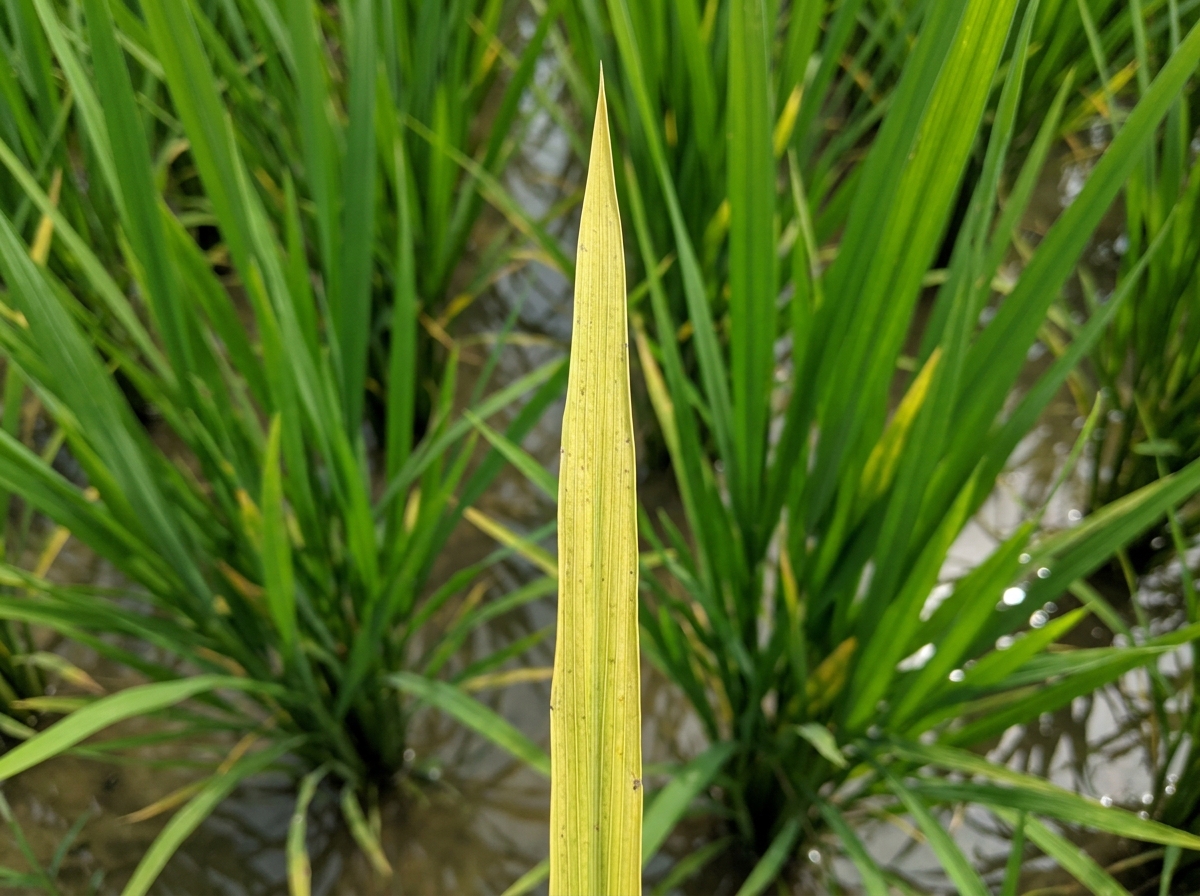
Visible Symptoms
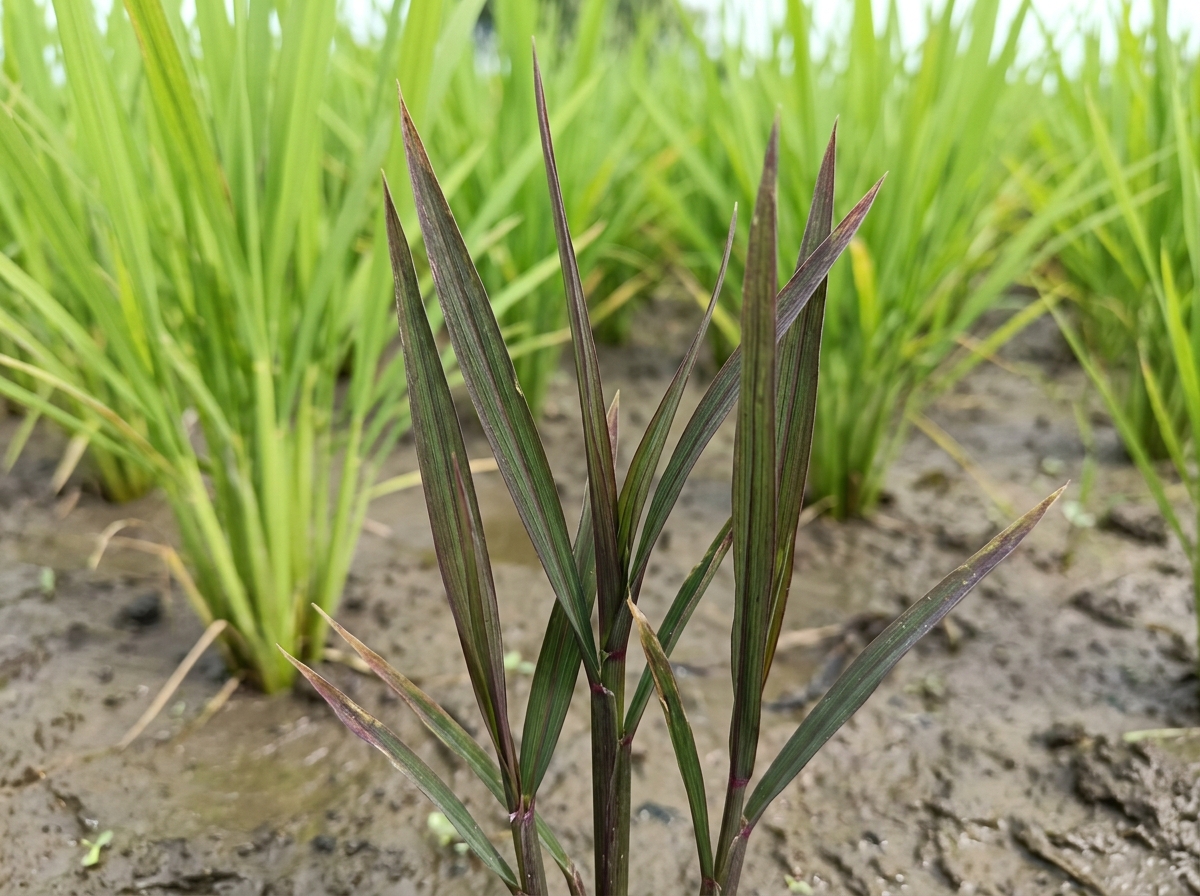
Uniform light green to chlorotic yellow discoloration starting at older lower leaves while upper leaves remain pale green. Stems become thin, spindly, and erect, and hills produce significantly fewer productive tillers with short, lightweight panicles.
About Nitrogen Deficiency
Nitrogen deficiency is the most widespread nutrient limitation in flooded paddy cultivation. Because flooded wetland soils cause rapid denitrification and ammonia volatilization, available nitrogen depletes rapidly. Starvation restricts photosynthetic green area, reduces productive tiller counts per hill, and causes incomplete panicle grain filling. For a side-by-side comparison on telling nitrogen deficiency apart from water stress or disease, see our Symptom Diagnosis Guide.
Nutrient Role & Deficiency Cause
Nitrogen deficiency is the most widespread nutrient limitation in flooded paddy cultivation. Because flooded wetland soils cause rapid denitrification and ammonia volatilization, available nitrogen depletes rapidly. Starvation restricts photosynthetic green area, reduces productive tiller counts per hill, and causes incomplete panicle grain filling. For a side-by-side comparison on telling nitrogen deficiency apart from water stress or disease, see our Symptom Diagnosis Guide.
Seasonal Outbreak Calendar
Outbreak risk and activity timeline for Nitrogen Deficiency based on seasonal climate patterns:
Treatment & Correction Guide
Natural & Organic Methods
Chemical & Professional Control
Frequently Asked Questions
Why should nitrate fertilizers (like Calcium Nitrate) never be used in flooded rice paddies?
Submerged paddy soil is strongly anaerobic (reduced layer). Under these oxygen-free conditions, denitrifying soil bacteria convert nitrate (NO3⁻) into nitrous oxide (N2O) and nitrogen gas (N2), resulting in 50% to 70% gaseous nitrogen loss within days. Only ammoniacal nitrogen (NH4⁺) and Urea are stable in wetland paddy soils.
What is the Leaf Color Chart (LCC) and how does it optimize nitrogen in rice?
The Leaf Color Chart (developed by IRRI) is a standardized 4-panel or 6-panel green shade guide. Farmers assess the color of the topmost fully expanded leaf on 10 random hills under shade every 7–10 days. Urea is applied only when the average leaf color drops below threshold shade 4 (for semi-dwarf varieties), preventing both deficiency and over-fertilization.
Why does nitrogen deficiency cause severely reduced tillering in paddy crops?
Tillering requires high cellular concentrations of nitrogen and cytokinins at the basal crown nodes. Under nitrogen starvation, tiller bud elongation halts, reducing productive panicle-bearing culms from a normal 15–20 per hill down to only 4–6 weak culms.
How does Azolla dual cropping supply nitrogen to flooded rice fields?
Azolla is a floating aquatic water fern that lives in symbiosis with nitrogen-fixing cyanobacteria (Anabaena azollae). Inoculating 200 kg/acre of fresh Azolla 7 days after transplanting creates a dense floating carpet that fixes 25–30 kg of atmospheric nitrogen per acre. When incorporated into the mud, it rapidly decomposes to feed the rice roots.
When is the strict cutoff time for nitrogen application in rice to prevent blast and lodging?
All nitrogen applications must be completed by the early heading / flowering stage. Late nitrogen applications after panicle emergence create succulent, thin-walled flag leaves highly vulnerable to Rice Blast fungus (Magnaporthe oryzae) and cause weak, spongy lower internodes that lodge (collapse) under autumn winds.
Recommended diagnostics based on crop family and symptoms:
Remedy Disclaimer & Safety Notice
This disease guide is for educational screening purposes only. Pathogen behavior, severity, and host susceptibility can vary dramatically based on seed variety, weather conditions, and regional microclimates. Chemical pesticides and organic treatments are subject to strict regional environmental regulations and registration mandates. Please verify all chemical registrations and review manufacturer safety labels carefully with local certified agronomists or agricultural extension service offices before applying.