
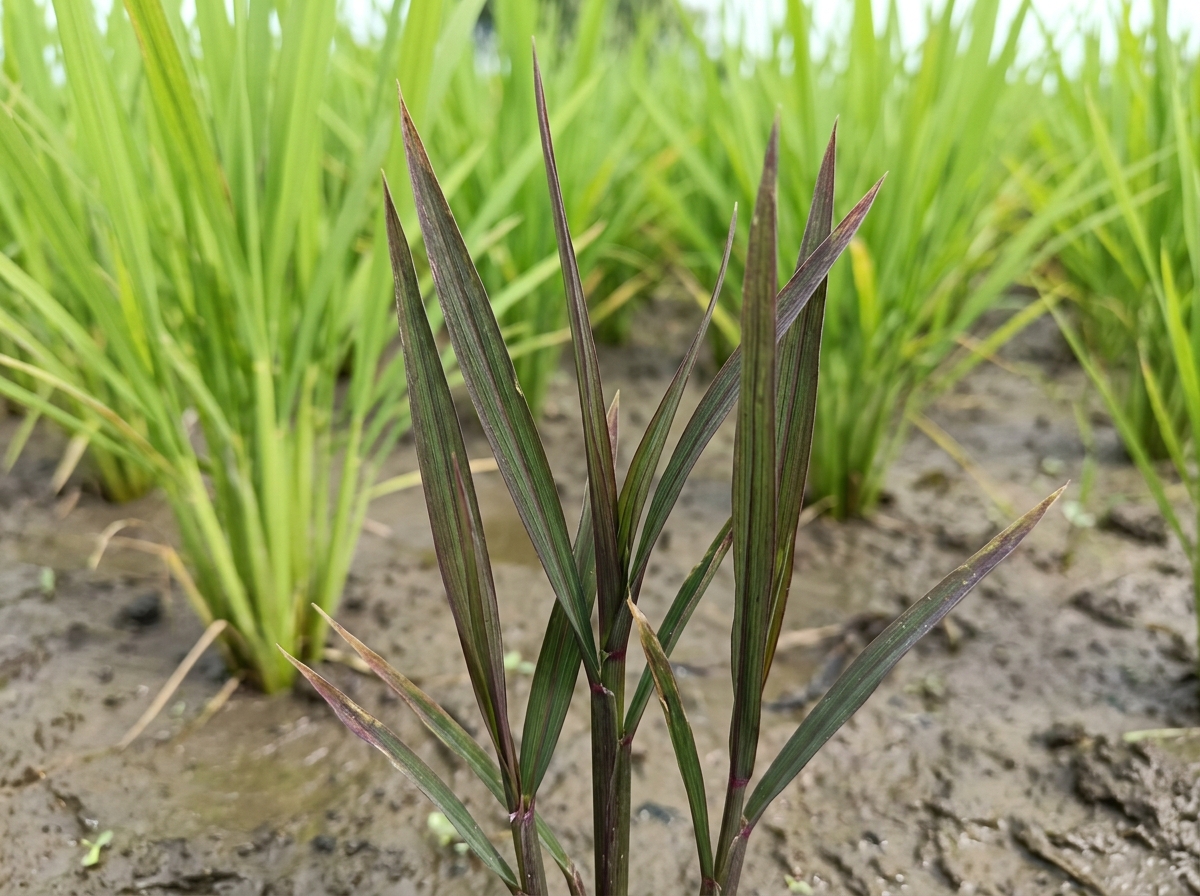
Phosphorus Deficiency
Phosphorus Deficientia
How to Identify Phosphorus Deficiency on Rice (Paddy)

Visible Symptoms
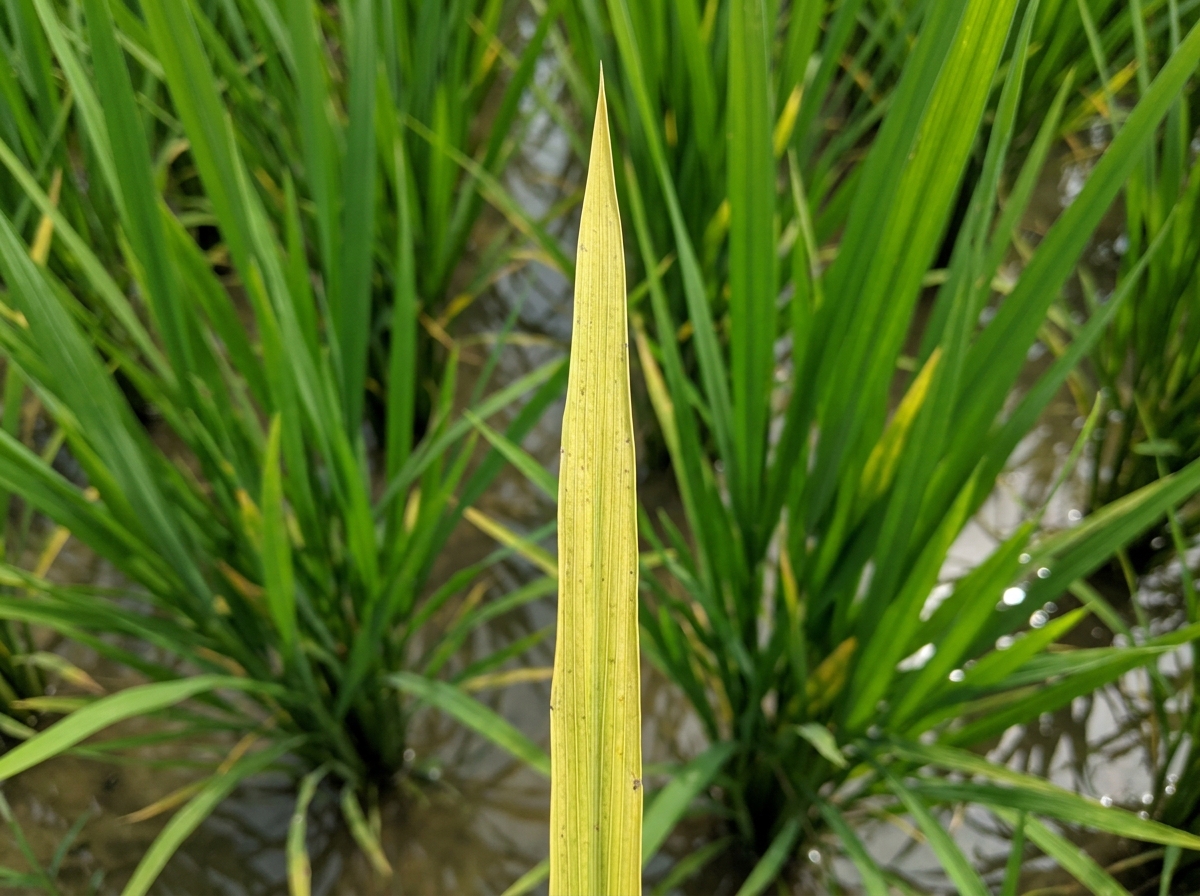
Stunted plants with narrow, short, erect leaves that display an abnormally dark green or dirty green color. Older leaves may develop a red-purple tint, especially along the leaf margins and veins.
About Phosphorus Deficiency
Phosphorus deficiency restricts cellular energy transfer (ATP) and root elongation in flooded rice soils. Highly acidic or alkaline wetland soils severely bind available phosphorus, resulting in stunted, spindly hills, dark dirty-green leaves with purple anthocyanin margins, and delayed flowering.
Nutrient Role & Deficiency Cause
Phosphorus deficiency restricts cellular energy transfer (ATP) and root elongation in flooded rice soils. Highly acidic or alkaline wetland soils severely bind available phosphorus, resulting in stunted, spindly hills, dark dirty-green leaves with purple anthocyanin margins, and delayed flowering.
Seasonal Outbreak Calendar
Outbreak risk and activity timeline for Phosphorus Deficiency based on seasonal climate patterns:
Treatment & Correction Guide
Natural & Organic Methods
Chemical & Professional Control
Frequently Asked Questions
Why must all chemical phosphorus fertilizer be applied as a basal dose during final puddling in rice?
Phosphorus ions are virtually immobile in soil. When top-dressed into standing water, dissolved phosphate binds tightly to the top 2 millimeters of the oxidized surface mud layer and cannot move down to active root zones (5–15 cm deep). Incorporating P into the puddle before transplanting places it directly where developing roots can access it.
Why do phosphorus-deficient rice leaves turn abnormally dark 'dirty' green instead of yellow?
Phosphorus deficiency halts cell division and structural tissue expansion while chlorophyll synthesis continues temporarily. This concentrates chlorophyll molecules into smaller, denser leaf blades, producing an abnormally dark, dull, or dirty bluish-green color, followed by purple anthocyanin accumulation along leaf margins.
How does cold water or low temperature induce phosphorus deficiency in wet paddy fields?
Phosphorus uptake in rice is an active metabolic process requiring root respiration. When irrigation water or soil temperatures drop below 18°C (64°F), root metabolic activity slows and phosphorus diffusion through soil pores falls by over 50%, inducing severe temporary phosphorus deficiency even in P-rich soils.
What is the advantage of Single Superphosphate (SSP) over DAP in rice paddies?
Single Superphosphate (SSP) provides 16% P2O5 along with 11% sulfate-sulfur and 19% calcium. In areas where sulfur deficiency is prevalent or in saline/calcareous soils, SSP prevents secondary sulfur deficiency, whereas DAP contains only nitrogen and phosphorus without sulfur.
Can over-applying phosphorus trigger zinc deficiency (Khaira) in paddy fields?
Yes, very frequently. Excess available phosphate in the soil solution competitively inhibits root zinc uptake and precipitates zinc inside the plant root tissue as insoluble zinc phosphate (Zn3(PO4)2), triggering severe Khaira disease.
Recommended diagnostics based on crop family and symptoms:
Remedy Disclaimer & Safety Notice
This disease guide is for educational screening purposes only. Pathogen behavior, severity, and host susceptibility can vary dramatically based on seed variety, weather conditions, and regional microclimates. Chemical pesticides and organic treatments are subject to strict regional environmental regulations and registration mandates. Please verify all chemical registrations and review manufacturer safety labels carefully with local certified agronomists or agricultural extension service offices before applying.