

Brown Spot (Rice)
Bipolaris oryzae
About Brown Spot (Rice)
Brown Spot of Rice, caused by the necrotrophic fungal pathogen *Bipolaris oryzae* (teleomorph *Cochliobolus miyabeanus*, formerly *Helminthosporium oryzae*), is one of the most widely distributed foliage and grain diseases affecting paddy crops (*Oryza sativa*) across tropical and subtropical regions. Historically linked to the Great Bengal Famine of 1943, this disease primarily attacks nutrient-starved, drought-stressed, or potassium-deficient rice crops, causing severe leaf blighting, seedling mortality, and darkened, unmarketable grains.
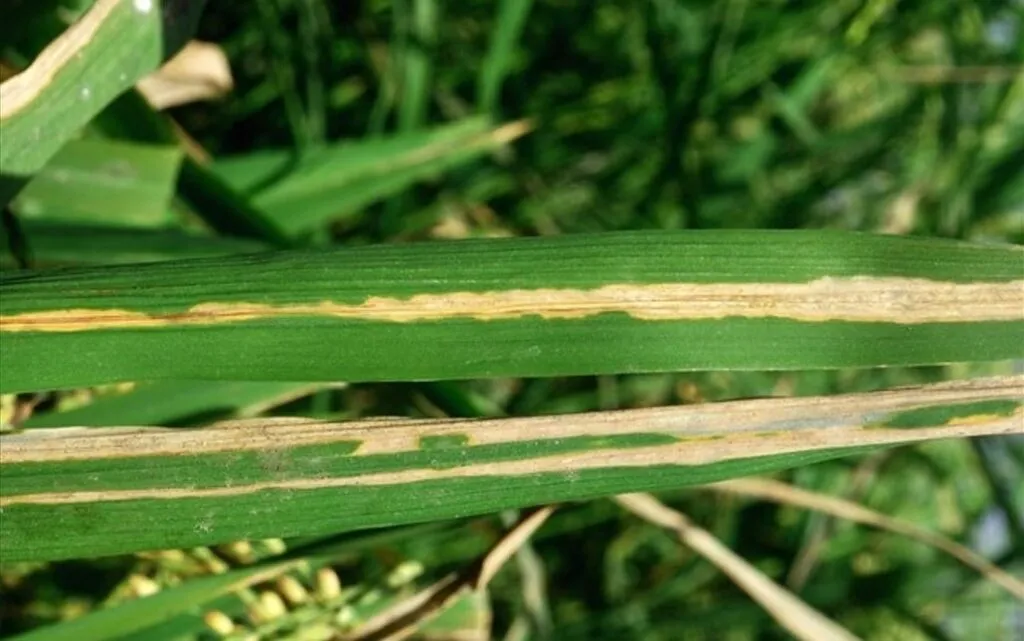
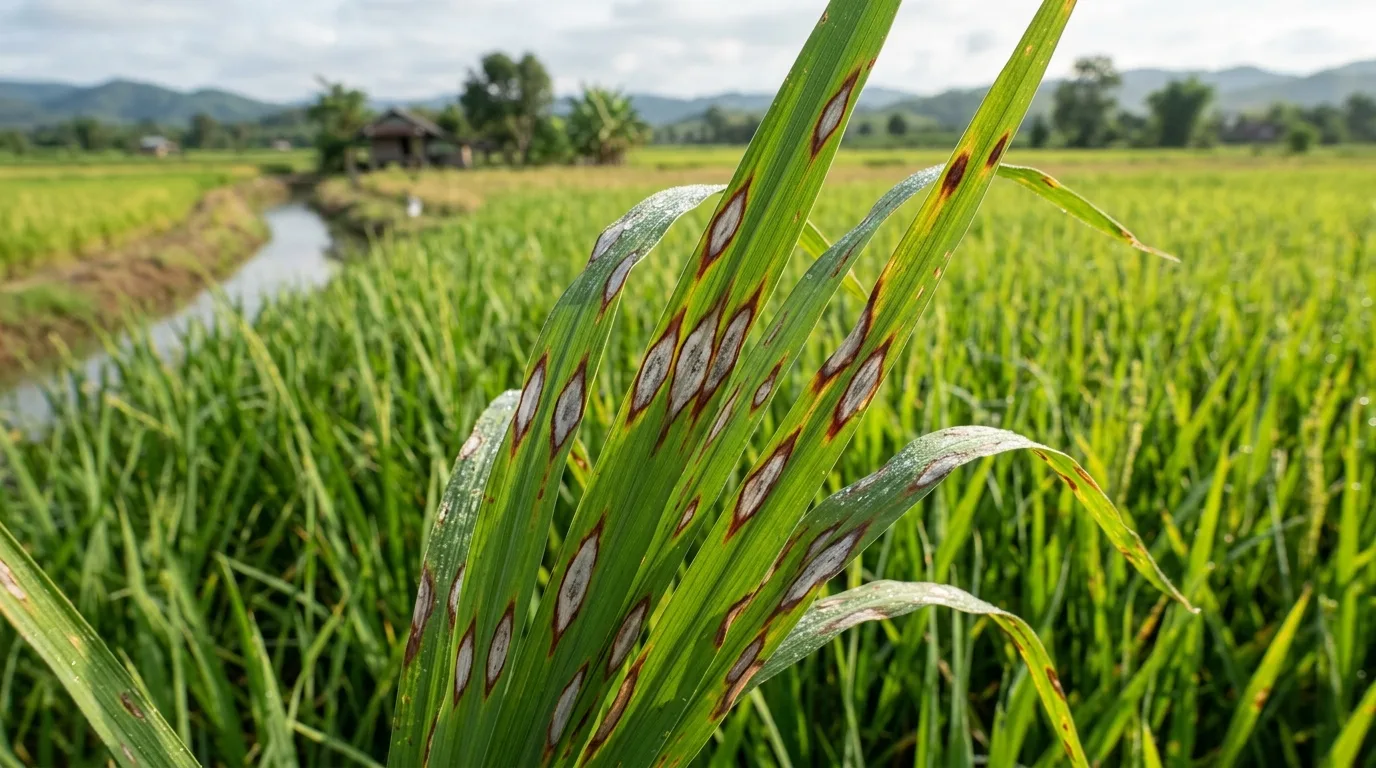
Identifying Brown Spot involves looking for numerous small, oval, dark brown or sesame-seed-shaped spots distributed across leaf blades. Young lesions start as tiny reddish-brown specks that quickly expand into circular or oval lesions (0.5 to 1 cm long) featuring a dark brown-to-maroon border surrounded by a prominent light yellow halo. Unlike the spindle-shaped, grey-centered lesions of Rice Blast, Brown Spot lesions remain distinctly dark brown throughout. On mature grains, the fungus causes black discoloration, glume spot rot, and empty grain filling ('pecky rice').
The fungus overwinters on infected seed coats, crop residues, and wild grass hosts. Spores are dispersed rapidly by wind and splashing rain under high humidity (>88% RH) and temperatures between 25°C and 30°C. Disease severity is strongly correlated with physiological plant stress, particularly low soil potassium, silicon, or nitrogen. Organic control relies on biological seed treatment with *Pseudomonas fluorescens*, soil applications of potash and rice husk ash (bio-silica), and crop rotation. Chemical management includes foliar sprays of mancozeb, edifenphos, or iprodione. For comprehensive field diagnostic guides, read our blog post on Rice Blast & Paddy Disease Identification, or explore related crop threat profiles like Rice Blast and Bacterial Leaf Blight (Rice).
Taxonomy & Features
- Sesame-Seed Lesions: Distinct circular-to-oval reddish-brown spots with prominent yellow halos covering leaf blades.
- Nutritional Stress Marker: Outbreaks correlate strongly with severe potassium, silicon, or micronutrient soil deficiencies.
- Glume & Grain Spotting: Pathogen infects grain husks, causing blackish 'pecky rice' discoloration and hollow seeds.
- Seed-Borne Transmission: Resting fungal spores survive on seed coats, causing pre-emergence damping-off of seedlings.
- Wind-Dispersed Conidia: Spores are airborne and spread rapidly during warm monsoon showers.
Seasonal Outbreak Calendar
Outbreak risk and activity timeline for Brown Spot (Rice) based on seasonal climate patterns:
Names in Different Languages
Prevention & Cure
Natural & Organic Methods
- Seed Bio-Priming: Soak seeds in Pseudomonas fluorescens or Trichoderma harzianum bio-fungicide solution (10g/kg seed) before sowing to eradicate seed-borne fungal spores.
- Bio-Silica & Potash Enrichment: Incorporate rice husk ash (200 kg/ha) and balanced potassium to strengthen epidermal cell walls against spore penetration.
- Soil Fertility Restoration: Correct potassium, silicon, and organic matter deficiencies, as Brown Spot predominantly attacks stressed, nutrient-depleted paddy crops.
Chemical & Professional Control
- Chemical Seed Dressing: Treat seeds with Thiram or Carbendazim (2g/kg seed) to eliminate resting mycelium on glumes.
- Foliar Fungicide Spray: Apply Mancozeb (2.5g/L) or Iprodione at early leaf spotting to prevent canopy blighting.
- Tricyclazole / Hexaconazole: Apply systemic triazole fungicides during tillering and panicle emergence if wet weather favors epidemic spread.
Frequently Asked Questions
Why was Brown Spot of rice associated with the Great Bengal Famine of 1943?
In 1942-1943, unceasing monsoon rains, persistent cloud cover, and catastrophic soil nutrient depletion triggered an unprecedented epidemic of Bipolaris oryzae across Bengal, destroying 50-90% of paddy yields and causing widespread food shortages.
Why is Brown Spot often called a disease of poor soils?
Unlike Rice Blast which thrives on excess nitrogen, Brown Spot is an indicator of severe nutritional stress—specifically deficiencies in potassium, silicon, manganese, or zinc, as well as drought-stressed aerobic soils.
What is pecky rice caused by Brown Spot?
Pecky rice refers to rice grains that have developed dark brown or black necrotic discolorations on the husk and kernel due to Bipolaris infection during flowering, resulting in chalky, brittle, unmarketable grain.
Recommended diagnostics based on crop family and symptoms:
Remedy Disclaimer & Safety Notice
This disease guide is for educational screening purposes only. Pathogen behavior, severity, and host susceptibility can vary dramatically based on seed variety, weather conditions, and regional microclimates. Chemical pesticides and organic treatments are subject to strict regional environmental regulations and registration mandates. Please verify all chemical registrations and review manufacturer safety labels carefully with local certified agronomists or agricultural extension service offices before applying.