
How to Test Leafy Greens for Adulteration (Copper Sulfate, Malachite Green, Pesticide)
⚡ Quick 60-Second Leafy Greens Purity & Dye Verdict
Copper Sulfate & Malachite Green Dyes: Leafy greens (spinach, methi, palak) are frequently dipped in copper sulfate or malachite green solutions to restore artificial emerald color to wilted batches, alongside excessive pesticide and nitrate accumulation.
Moisten a white cotton ball with liquid paraffin or mineral oil and rub the leaf surface and stems. A green dye transfer onto the cotton proves artificial cosmetic coloring; natural chlorophyll does not rub off on oil.
Soak 5-6 leaves in warm water with a teaspoon of white vinegar for 10 minutes. If the water turns blue-green, copper sulfate or synthetic dyes have leached out. Pure leaves leave water clear.
Bend the main stalk. Fresh organic greens snap crisply with clear moisture. Spongy, rubbery stems that refuse to break indicate prolonged refrigerated storage revived with water spraying.
To learn more about food safety tests and home adulteration detection, read our guides on Capsicum (Bell Pepper) and Okra (Ladyfinger).
Drop Leafy Greens (Spinach/Palak) photo here to test purity
or click to browse • Supports JPG, PNG, WEBP • Paste with Ctrl+V
Inspection Guide
Click to enlarge
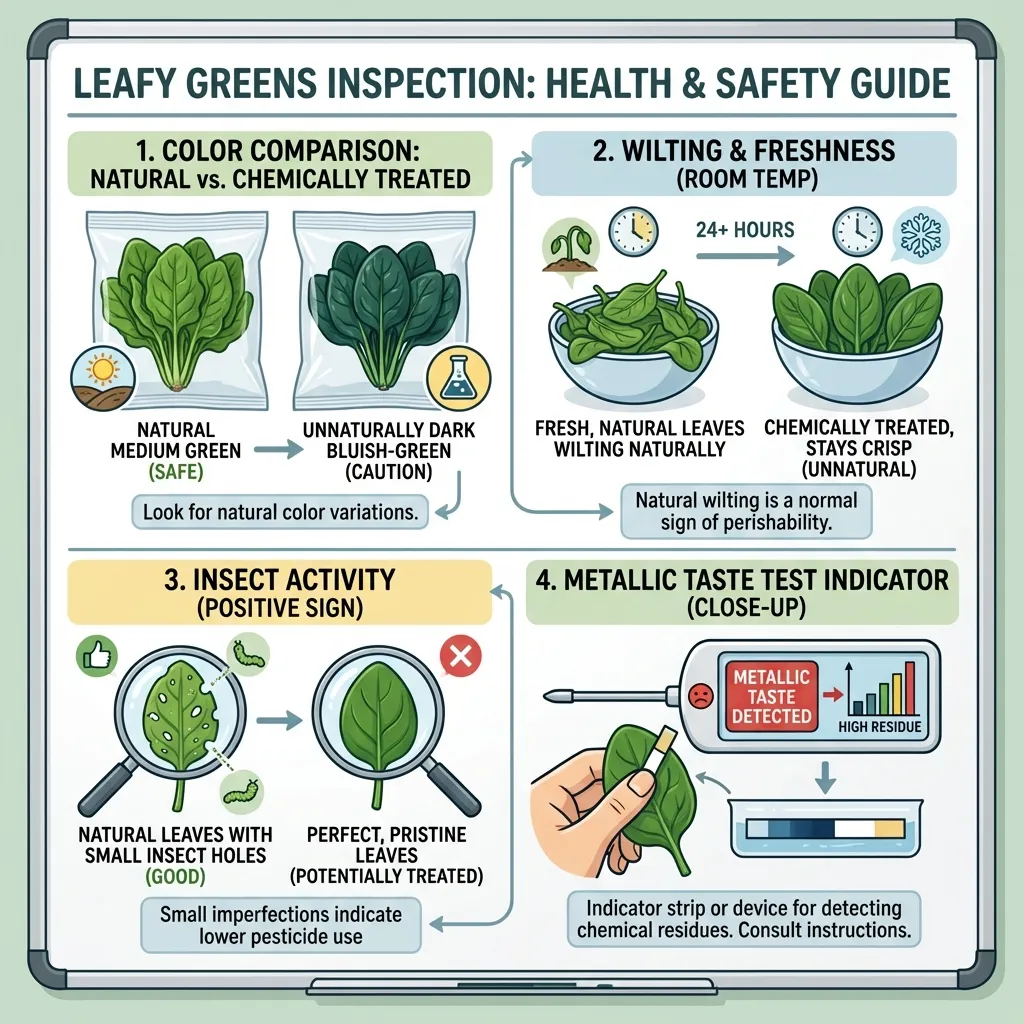
Leafy Greens Purity & Dye Audit
Leafy greens like Spinach (Palak) are high-risk vegetables often sprayed with Copper Sulfate (Nila Thotha) or Malachite Green to maintain an unnaturally vibrant green look even after wilting.
1. The Cotton Rub Test:
Take a cotton ball soaked in water or liquid paraffin and rub the surface of the leaves. If the cotton turns green or bluish-green, artificial dyes like Malachite Green or Copper Sulfate have been applied.
2. The Water Wash (Color Bleed):
Soak the leaves in a bowl of water for 15 minutes. If the water turns bluish-green or a vibrant, unnatural green, suspect chemical coloring. Natural chlorophyll does not leach into cold water easily.
3. The Texture Check:
Naturally fresh leafy greens wilt within 3-4 hours at room temperature. If the greens look vibrant and "stiff" but have no root hydration or have been out for a long time, suspect chemical "refreshing" agents.
4. The Stem Color:
Check the cut end of the stems. If they show a bluish or deep green tint that looks different from the leaf color, it indicates the absorption of Copper Sulfate solutions.
5. Shared Herb/Greens Risks:
Dye enhancement is a shared risk among green vegetables and herbs. Refer to our guides on Curry Leaves and Coriander Leaves for specific testing instructions.
Quick Safety Tips
- Perform the cotton rub test - natural green does not transfer
- Avoid leaves that look "too vibrant" or bluish-green
- Soak in salt and vinegar water for 20 minutes to reduce pesticide load
- Wash at least 3 times in running water to remove soil and surface chemicals
Primary Chemical Concerns
Health Risks & Impacts
Multilingual Local Names
Common Storage Pests
Aphids / Leaf Miners
medium riskSmall insects that feed on the sap or tunnel through the leaf tissue.
Detection
- Sticky residue on leaves
- Small white/yellow winding tracks in the leaf
Prevention
- Wash thoroughly before storage
- Store in a breathable bag in the crisper drawer
Corrective Action: What to do?
Discard heavily infested leaves; minor leaf miner tracks can be cut away.
Regulatory Corner: FSSAI (Food Safety and Standards Authority of India) / Codex Alimentarius / EU Commission (Reg 2023/915)
Regulation: Food Safety and Standards (Contaminants, Toxins and Residues) Regulations 2011 & Codex Stan 193-1995
Legal Limit:Lead: Max 0.3 ppm; Cadmium: Max 0.2 ppm; Nitrates: Max 3500 mg/kg (fresh spinach); Copper sulfate / Malachite green: Prohibited (0.0 ppm - Zero tolerance)
Report Adulteration to FSSAI (Food Safety and Standards Authority of India) / Codex Alimentarius / EU Commission (Reg 2023/915)