How to Test Capsicum for Adulteration (Malachite Green, Paraffin Wax, Pesticide)
⚡ Quick 60-Second Capsicum Wax & Pesticide Verdict
Heavy Pesticide Load (Dirty Dozen) & Synthetic Wax: Bell peppers have delicate porous skin that absorbs agricultural fungicides (Acephate, Boscalid), sealed in with synthetic commercial paraffin wax.
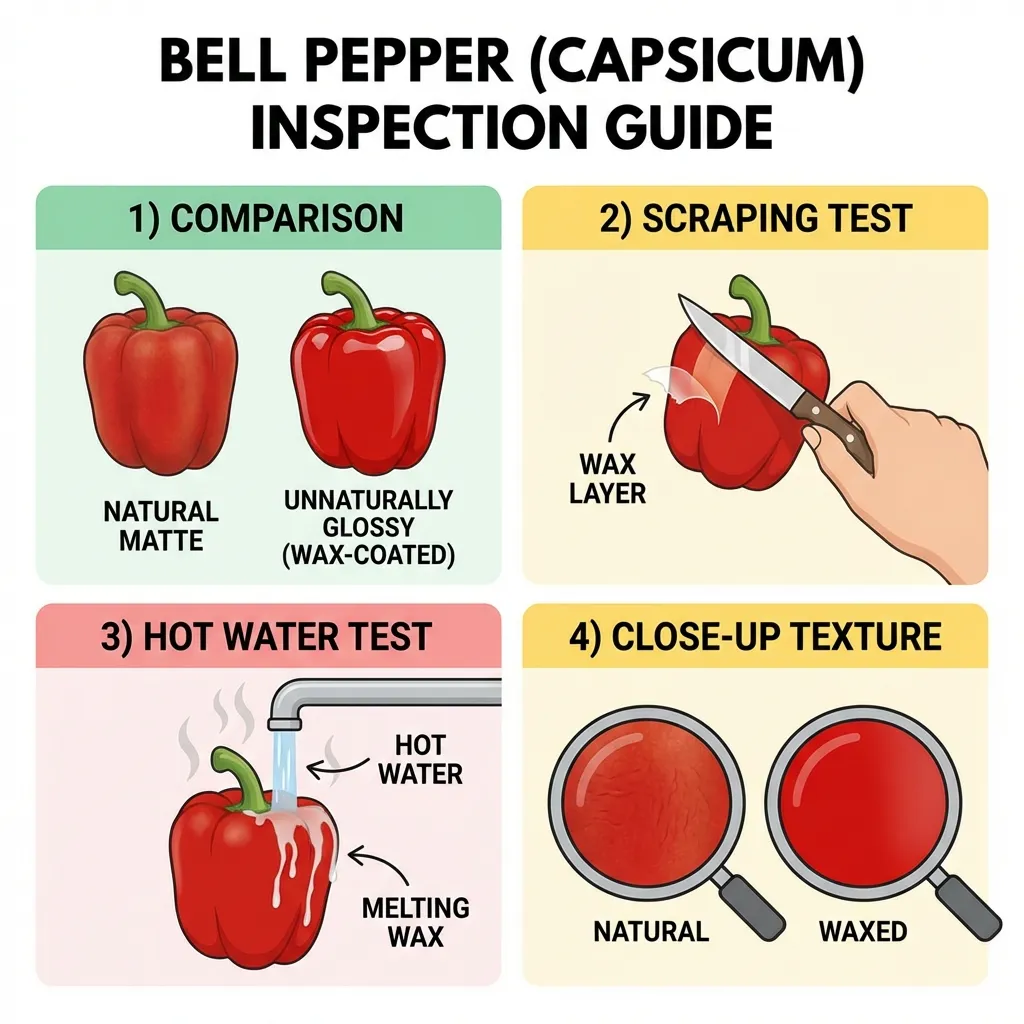
Gently scrape the slick outer skin with your thumbnail. If a white, flaky, waxy substance gathers under your nail, synthetic post-harvest paraffin wax has been applied to trap moisture.
Sniff the green calyx and stem. Fresh vine-picked bell peppers release a crisp, grassy, pungent bell pepper aroma. Chemically preserved peppers have shriveled, moldy, or odorless stems.
Soak in 1 tsp baking soda per 2 cups cold water for 12 minutes before cooking to break down surface organophosphates that water alone cannot remove.
To learn more about food safety tests and home adulteration detection, read our guides on Cauliflower and Leafy Greens (Spinach/Palak).
Drop Capsicum (Bell Pepper) photo here to test purity
or click to browse • Supports JPG, PNG, WEBP • Paste with Ctrl+V
Inspection Guide
Click to enlarge
Capsicum (Bell Pepper) Purity & Dye Audit
Capsicums are frequently treated with Malachite Green to maintain an unnaturally dark green color and coated with wax to prevent moisture loss and maintain a glossy appearance.
1. The Cotton Rub Test (Dye Check):
Rub a wet cotton ball on the green skin of the capsicum. If the cotton picks up a green or bluish-green tint, artificial dye like Malachite Green has been applied. Natural color does not transfer easily.
2. The Scrape Test (Wax Check):
Gently scrape the surface with a dull knife. If a white, flaky substance comes off, it is an industrial wax coating. Pure capsicums have a natural sheen but don't produce flakes when scraped.
3. The Stem Color and Freshness:
Look at the stem. A naturally fresh capsicum has a vibrant green, firm stem. If the capsicum body is bright green but the stem is dark brown, dry, and shriveled, it indicates the fruit was dyed to look fresh.
4. The Water Soak:
Soak capsicum in warm water for 15 minutes. If the water turns green or bluish, suspect artificial coloring. Natural chlorophyll does not leach easily into warm water.
Quick Safety Tips
- Perform the cotton rub test for Malachite Green
- Scrape to check for wax coatings
- Avoid capsicums with a brown, shriveled stem despite a vibrant body
- Soak in a solution of baking soda and water to remove surface pesticides
Primary Chemical Concerns
Health Risks & Impacts
Multilingual Local Names
Common Storage Pests
Aphids / Thrips
low riskSmall insects that can live on the skin or inside the cavity.
Detection
- Sticky residue on the skin
- Small dark insects inside the fruit
Prevention
- Store in a cool, ventilated place
- Wash before use
Corrective Action: What to do?
Wash thoroughly; the internal flesh is usually safe if the damage is superficial.
Regulatory Corner: US FDA / EPA / FSSAI (Schedule 2 Pesticide Residues)
Regulation: 21 CFR Part 112 (Standards for Produce Safety) & EPA 40 CFR 180.110 Tolerances
Legal Limit:Acephate: Max 0.2 ppm; Boscalid: Max 1.5 ppm; Copper sulfate artificial greening: 0.0%; Non-declared synthetic petroleum waxes: 0.0%
Report Adulteration to US FDA / EPA / FSSAI (Schedule 2 Pesticide Residues)