How to Test Star Anise for Adulteration (Japanese Star Anise, Anisatin Toxin, Artificial Dyes)
⚡ Quick 60-Second Star Anise & Toxic Japanese Anise Verdict
Lethal Japanese Star Anise (Illicium anisatum) Adulteration: Edible Chinese Star Anise is dangerously substituted with toxic Japanese Star Anise, which contains potent neurotoxins (anisatin) that cause severe neurological seizures and vomiting.
Edible Chinese star anise has 8 boat-shaped carpels with blunt, rounded tips. Toxic Japanese anise has 10–14 smaller, irregular carpels with sharply hooked or curved beak-like tips.
Break a carpel. True star anise has a sweet, warm, pleasant licorice/fennel fragrance. Toxic Japanese anise smells harsh, woody, medicinal, and resembles kerosene or turpentine.
Touch a tiny piece of pod to tip of tongue (do not swallow). True anise tastes sweet and aromatic. Toxic Japanese star anise tastes intensely bitter, sour, and numbs the tongue.
To learn more about food safety tests and home adulteration detection, read our guides on Saffron (Kesar) and Turmeric (Haldi).
Drop Star Anise photo here to test purity
or click to browse • Supports JPG, PNG, WEBP • Paste with Ctrl+V
Inspection Guide
Click to enlarge
How to Inspect Star Anise for Safety
Star Anise is a powerful spice, but it is frequently adulterated with Japanese Star Anise, which is highly toxic and looks almost identical.
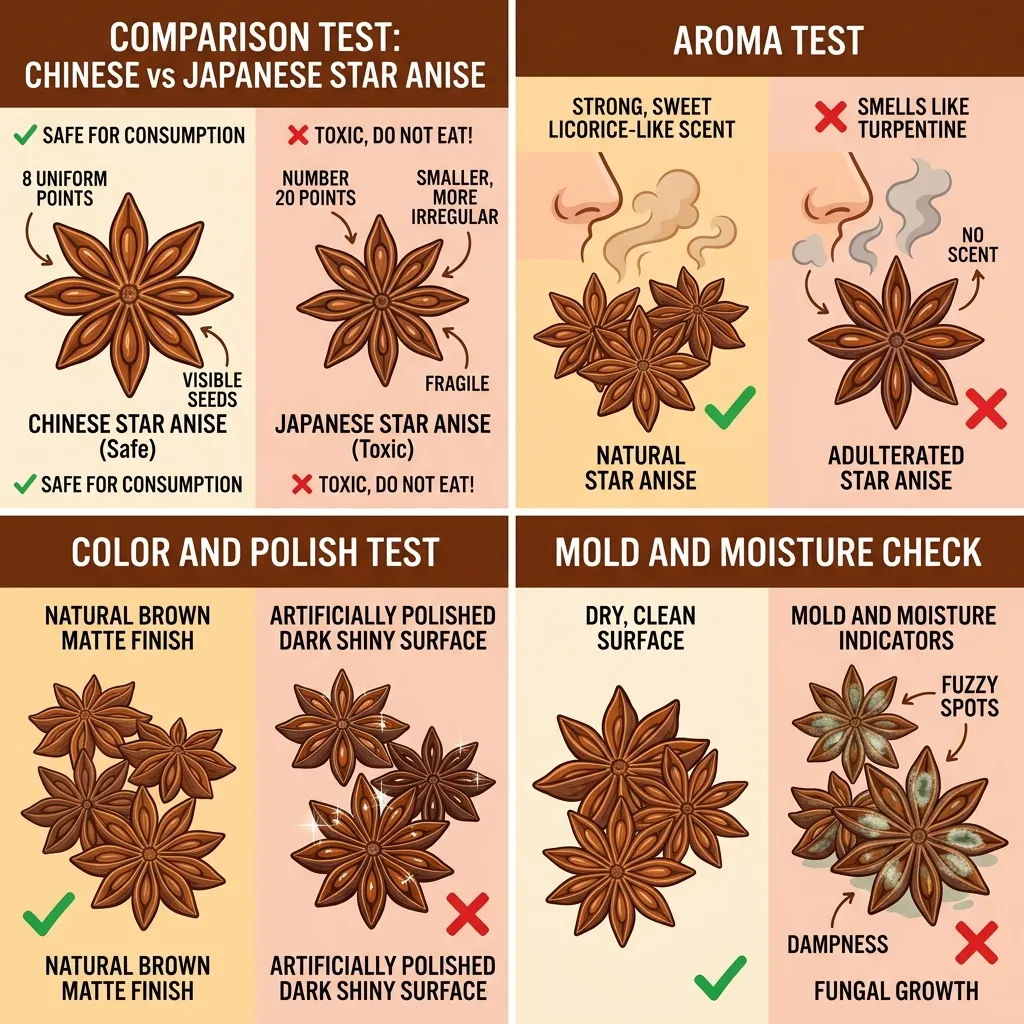
1. The Variety Comparison:
Check the shape carefully. Safe Chinese Star Anise (Illicium verum) usually has 8 points/petals, is robust, and has seeds visible in the boat-like pods. Toxic Japanese Star Anise is smaller, more fragile, and often has more irregular points.
2. The Aroma (Smell) Test:
Natural safe star anise has a strong, sweet, pleasant licorice/fennel-like scent. Japanese star anise has a completely different smell—bitter, turpentine-like, or similar to cardamom/cinnamon but with a harsh edge.
3. Surface Polish & Color:
Natural star anise is rust-brown with a matte finish. If the spice looks unnaturally dark, shiny, or polished, it may have been treated with oil or synthetic dyes to hide age.
4. Mold & Moisture Check:
Inspect the crevices between the pods. If you see fuzzy white or gray spots, or if the spice feels damp or soft, it indicates fungal growth. Quality star anise should be bone-dry and crisp.
5. Seeds Inspection:
Natural seeds are shiny, smooth, and yellowish-brown. If seeds are missing from almost all pods or appear shriveled and black, the spice is old or of very poor quality.
Quick Safety Tips
- Look for 8 points and sweet licorice scent
- Avoid smaller, irregular, turret-shaped pods
- Ensure the spice is dry and brittle
- Buy full stars rather than broken fragments
Primary Chemical Concerns
Health Risks & Impacts
Multilingual Local Names
Common Storage Pests
Saw-toothed Grain Beetles
low riskSmall, flat beetles that can infest dried pods.
Detection
- Small brown beetles crawling in the jar
- Fine debris at the bottom
Prevention
- Store in airtight glass jars
- Keep in a cool, dry place
Corrective Action: What to do?
Sieve out any debris and freeze the stars for 48 hours to kill any eggs or beetles.
Regulatory Corner: FSSAI (Food Safety and Standards Authority of India) / US FDA
Regulation: Food Safety and Standards (Food Products Standards) Regulations 2011, Clause 2.9.29: Star Anise & FDA Import Alert 54-15
Legal Limit:Volatile oil: Min 7.0% (v/w); Anethole content: Min 80.0% of volatile oil; Toxic Japanese Star Anise (Illicium anisatum containing convulsant neurotoxin anisatin): 0.0% (Absolute zero tolerance)
Report Adulteration to FSSAI (Food Safety and Standards Authority of India) / US FDA