How to Test Cauliflower for Adulteration (Chlorine Bleach, Sulfite Treatment, Pesticide)
⚡ Quick 60-Second Cauliflower Pesticide & Bleach Verdict
Sulfur Dioxide Fumigation & High-Toxicity Pesticides: Cauliflower heads are heavily dusted with toxic Quinalphos and Chlorpyrifos to kill diamondback moth larvae, and sulfur-bleached for cosmetic snow-white curd.
Sniff the center curd of the raw cauliflower. Natural cauliflower has an earthy, mild brassica scent. A sharp, stinging, matchstick-like sulfur smell reveals industrial sulfur fumigation.
Submerge cut florets in warm water with 1 tbsp salt + 1 tsp baking soda for 15 minutes. This dislodges hidden caterpillars and neutralizes up to 90% of acidic surface pesticide sprays.
Inspect the base stem and floret junctions. Clean, safe cauliflower has firm, creamy florets with green, supple leaves. Avoid curds with soft brown necrotic spots or slimy hollow stems.
To learn more about food safety tests and home adulteration detection, read our guides on Potato and Capsicum (Bell Pepper).
Drop Cauliflower photo here to test purity
or click to browse • Supports JPG, PNG, WEBP • Paste with Ctrl+V
Inspection Guide
Click to enlarge
Cauliflower Purity & Chemical Audit
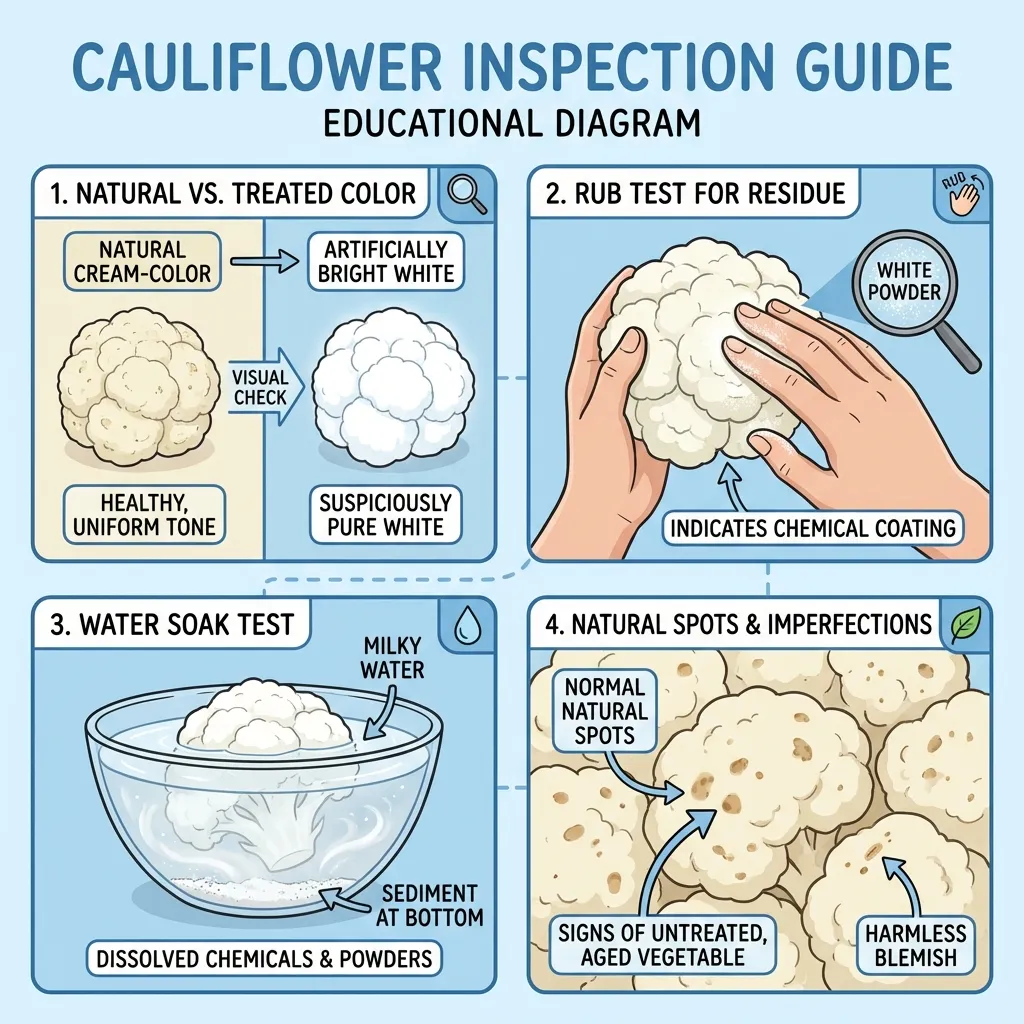
Cauliflowers are often treated with chlorine bleach or sulfites to maintain a "stark white" appearance, masking natural yellowing or brown spots that occur with age.
1. The Color and Brilliance:
Naturally fresh cauliflower has a creamy-white to slightly yellowish color. If the cauliflower is "neon white" or looks "bleached" with zero natural imperfections, suspect a chlorine or sulfite wash.
2. The Smell Test:
Pure cauliflower has a mild, earthy, and slightly sulfur-like natural aroma. If you detect a sharp "laboratory" or "pool-water" chemical smell, suspect chlorine bleaching.
3. The Leaf Freshness:
Examine the leaves surrounding the curd. They should be vibrant green and crisp. If the cauliflower curd is bright white but the leaves are dark brown, dry, or shriveled, it indicates the curd was chemically "refurbished."
4. The Water Soak (Residue Check):
Soak the cauliflower florets in warm water for 15 minutes. If a white, filmy residue develops on the water's surface, it indicates heavy pesticide or chemical wash treatment.
Quick Safety Tips
- Avoid cauliflower that looks "stark white" or bleached
- Check for a chemical or chlorine-like smell
- Select heads with vibrant green, crisp surrounding leaves
- Soak in warm salt and turmeric water for 20 minutes to remove hidden insects and surface chemicals
Primary Chemical Concerns
Health Risks & Impacts
Multilingual Local Names
Common Storage Pests
Cabbage Worms / Aphids
medium riskSmall green caterpillars and insects that live inside the florets.
Detection
- Small green caterpillars
- Sticky residue or black spots inside the florets
Prevention
- Wash thoroughly before use
- Store in a cool, ventilated place
Corrective Action: What to do?
Cut away heavily infested parts; the rest is safe after a thorough salt-water soak.
Regulatory Corner: FSSAI (Food Safety and Standards Authority of India) / Codex Alimentarius
Regulation: Food Safety and Standards (Contaminants, Toxins and Residues) Regulations 2011, Schedule 2: Pesticide Tolerances in Brassica Vegetables
Legal Limit:Quinalphos: Max 0.01 ppm; Chlorpyrifos: Max 0.01 ppm; Synthetic sulfur dioxide bleach on fresh heads: 0.0 ppm; Foreign matter / rot: Max 1.0%
Report Adulteration to FSSAI (Food Safety and Standards Authority of India) / Codex Alimentarius